


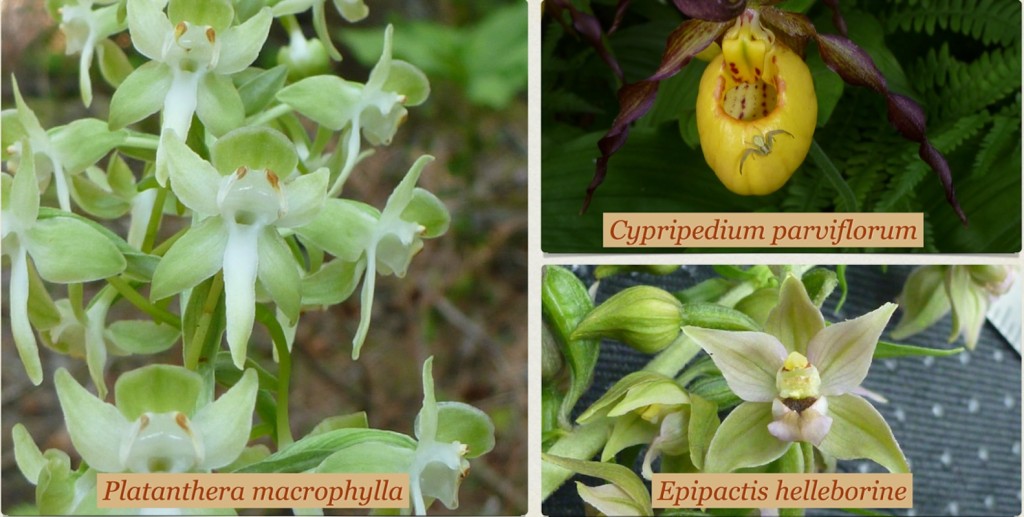
Out in the forest, come summer, we happily stop in front of a wild orchid just long enough to snap a photo, never suspecting that we’re watching a hard-nosed sales negotiation. Because the flower isn’t waiting for us: it’s waiting for one very particular insect, and over millions of years it has worked out a remarkably effective sales pitch. Three of our forest orchids — well, almost, more on that in a moment — illustrate three completely different strategies for reaching exactly the same goal.
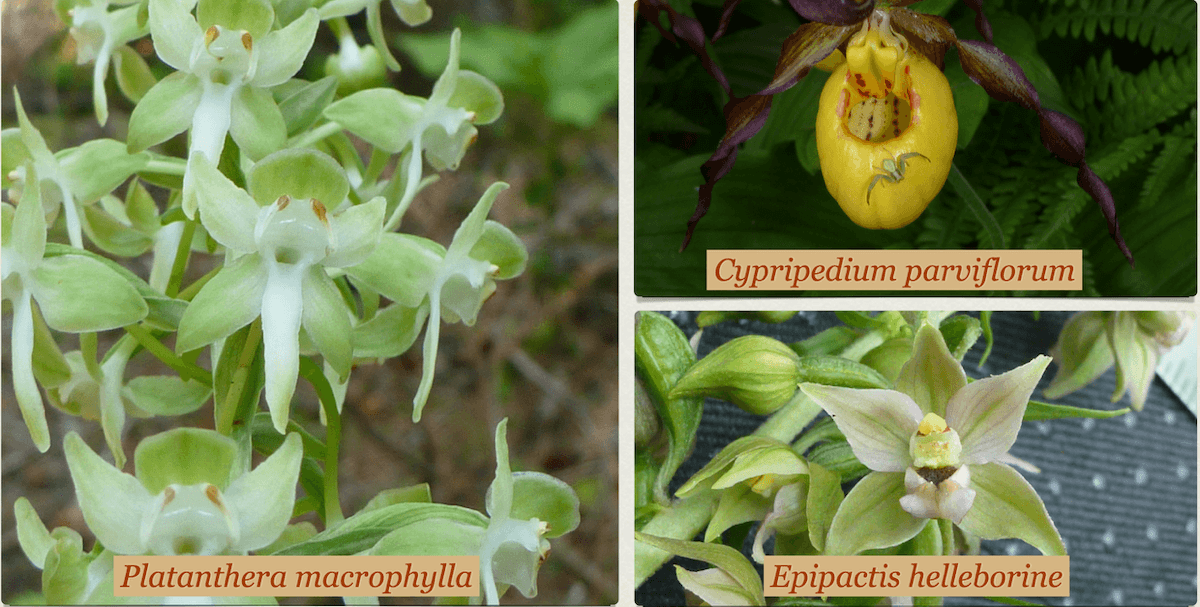
A flower nailed to the ground that must hand its pollen to a stranger
First, let’s frame the problem, because it’s the same for all of them. A plant can’t move. To reproduce, it nonetheless has to send its pollen traveling to another flower of the same species, sometimes dozens of meters away (tens of yards). Most plants settle the matter by releasing clouds of pollen on the wind: a carpet-bombing strategy, imprecise and very costly in raw material.
Orchids took the opposite route: bespoke delivery. Their pollen isn’t a powder but a compact parcel, the pollinium, glued in a single block onto the visitor’s body. Picture a factory that, instead of shipping its output in bulk, hands it to one lone courier and sticks the package to his back. The whole challenge then becomes recruiting the right courier, then fixing the parcel in just the right spot — not too high, not too low — so that it comes loose precisely on the stigma of the next flower. An error of a few millimeters, and the delivery fails.
That left the commercial question to settle: how do you convince the courier to work? Two schools compete. You can pay — that is, offer nectar in exchange for the service. Or you can cheat — that is, promise a reward that doesn’t exist. Surprisingly, deception is widespread in the family: botanists like Jana Jersáková and Steven Johnson estimate that roughly one orchid in three gives its pollinators strictly nothing. Our three species line up neatly along that axis, from the most honest to the most devious.
The platanthera, or the perfectly honest contract
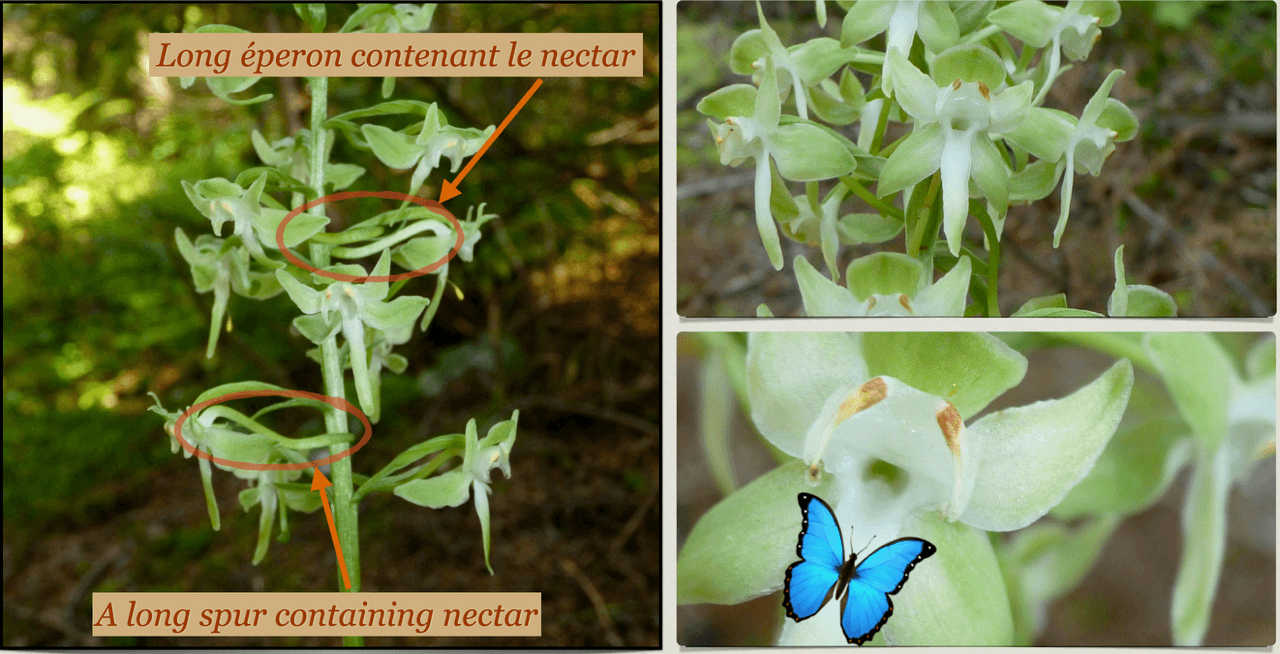
Let’s start with the straightest of the three. The platanthera (genus Platanthera) plays fair: it offers real nectar, sugary and entirely genuine. It doesn’t, however, leave it within reach of just anyone. The nectar sits right at the bottom of a long, narrow tube — the spur — sometimes more than a centimeter long (about half an inch). Only an insect equipped with a long enough “straw” can reach it.
That detail is no accident. The spur acts like a lock: the flower screens its clientele by its depth. And the key, here, is the proboscis of moths. These pale flowers, often greenish or whitish, give off most of their scent at dusk, exactly when night-flying moths come into action. The fragrance works as an olfactory billboard, and the flower’s pale color serves as a lighthouse in the gloom.
When the moth plunges its proboscis into the spur to drink, it leaves with the pollinia stuck to it — not just anywhere, but on the proboscis itself, or even on the eyes, depending on the species. The precision is “surgical.” In the workshop, we’d call it a tight fit between two parts machined for each other. This is coevolution in all its glory: the flower pays its dues, but it chooses its delivery driver with great care.
The cypripedium, or the trap without the slightest reward
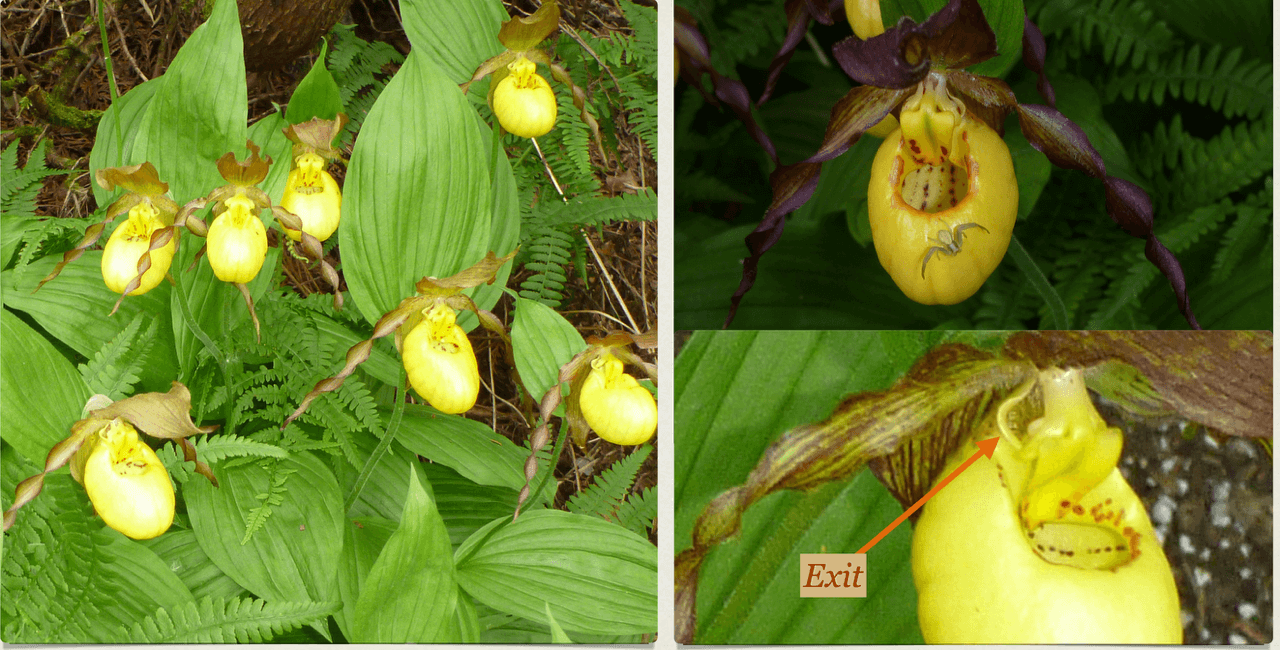
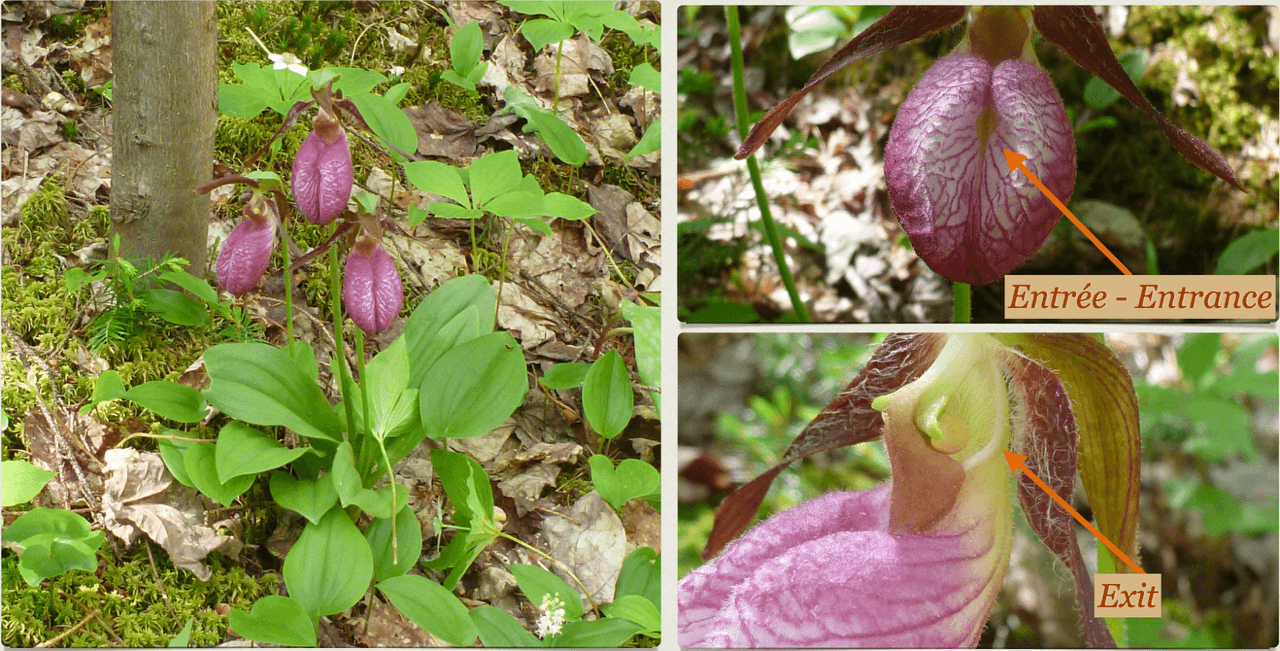
Next comes an altogether different philosophy. The cypripedium (genus Cypripedium), our famous lady’s slipper, pays nothing at all. Its flower is a con pure and simple, doubled with a mechanical trap.
The big pouch-shaped lip, swollen into the form of a slipper, is not the welcoming cushion it pretends to be: it’s a one-way trapdoor. The insect — most often a native bee or a bumblebee — is drawn in by the color and the scent, which suggest a nourishing flower. It lands, slides down inside the slipper… and finds there’s nothing to drink. Worse: it can’t get back out the way it came in, the walls being smooth and the rim curled inward. The only exit is a narrow corridor, marked out by guide hairs, that forces it to pass first under the stigma — where it deposits pollen from an earlier visit — then under the anther, which sticks a fresh parcel onto its back. The visitor leaves empty-handed, yet loaded despite itself.
This is what specialists call generalized food deception: the flower mimics no particular species, it simply exploits the expectation of a reward. The trick therefore works mainly on inexperienced insects, typically the young queens of spring, who haven’t yet learned to be wary. The size of the opening, for its part, filters the build of the candidates: too small, and the insect leaves without touching anything; too big, and it gets stuck. We’re a long way from the platanthera’s honest contract. Here, the plant pockets the service without ever opening its wallet.
The epipactis, or the most sophisticated con of them all
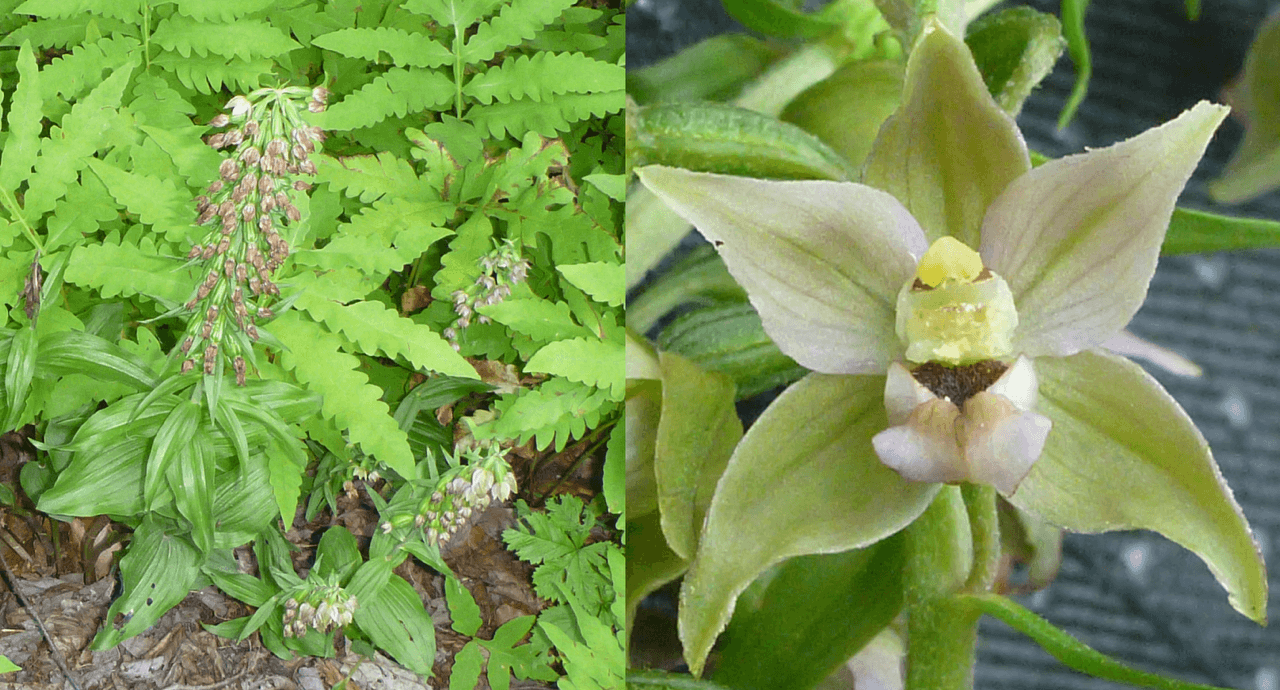
And finally, the most twisted case, the one that combines both worlds. The broad-leaved helleborine (Epipactis helleborine) does offer a real and even generous reward: abundant nectar. You’d think we’d circled back to honesty. Wrong. The cunning hides in the way it draws its customers in.
A small aside for accuracy, because it matters: unlike the previous two, this orchid isn’t truly native here. Originally from Eurasia, it naturalized in Europe and then in North America, where you’ll run into it even in urban and disturbed settings, to the point that it’s sometimes called invasive. And its success as an immigrant rests precisely on its pollination trick.
Darwin had already noticed something odd: despite its generous nectar, the helleborine was shunned by most insects. Only one group rushed to it regularly — a wasp of the genus Vespula. The mystery held for more than a century, until researchers analyzed what the flower gives off. It emits a scent of fresh meat that’s downright irresistible to the wasp. She comes racing in, hunting mode engaged… and finds no prey, only nectar. But beware: that nectar contains a powerful drug, an opiate (close to oxycodone) said to be stronger than morphine.
The amount, though small, is enough to leave the wasp a little woozy — disoriented — and, by the same token, to make her stumble through the pollinia of the inflorescence. After lingering a while to gather her wits, she finally leaves the flower, her body heavily loaded with pollen, headed for her next den of iniquity. Hard to be a more effective delivery service than that. 😉
Three answers to one and the same question
In short: three orchids, a single problem, three opposite solutions. The platanthera rewards honestly and sorts its moths by the length of its spur. The cypripedium rewards nothing and captures its bees in a one-way slipper. The epipactis rewards for real, but it lies on the signboard to lure in hungry wasps.
You might think deception is absurd: why would an insect keep visiting a flower that swindles it? In fact, lying carries a quiet advantage. A disappointed visitor doesn’t linger: it heads off elsewhere, farther afield, and carries the pollen a good distance away. That reduces the risk of the plant fertilizing itself, which would impoverish its offspring. The honest flower, by contrast, keeps its customer around longer, at the risk that it works several flowers of the same plant. Each strategy thus has its own accounting logic, and none is “better” in absolute terms: they answer different constraints.
As for the epipactis, its blend of genuine reward and sensory lure makes it an opportunist without equal. That’s exactly the kind of profile that helps a species establish itself on a new continent, where its original partners are missing.
Watching without harming
Here are a few tips for enjoying these marvels without doing them any harm.
- Never pick a cypripedium, and above all don’t try to move it to your garden. It depends on very specific mycorrhizal fungi present in its soil; uprooted, it almost certainly dies. A flower admired where it stands is worth a thousand times a flower dead at home.
- Adjust your calendar to multiply your encounters: lady’s slippers in late spring and early summer in the cool understory (around mid-June in Quebec), platanthera at the height of summer (July), helleborines from mid- to late summer (August and September in Quebec), sometimes along the edge of a trail or even in town.
- •If you take photos, aim for the insect at work rather than the picked flower, and note the date and place. After a few seasons of observation, you end up knowing your neighborhood orchids like old neighbors.
The next time a wild orchid stops you in your tracks, take a second look: behind its quiet beauty hides a negotiator who, for her part, has left nothing to chance.