

How far we’ve come from the days when you had to choose between a standard or non-standard “P.G.” hydrangea! Since the immense popularity of Hydrangea paniculata ’Grandiflora’, dozens and dozens of new panicle hydrangea varieties flood the market every year. So how do you choose?
In the top 10 of easiest plants
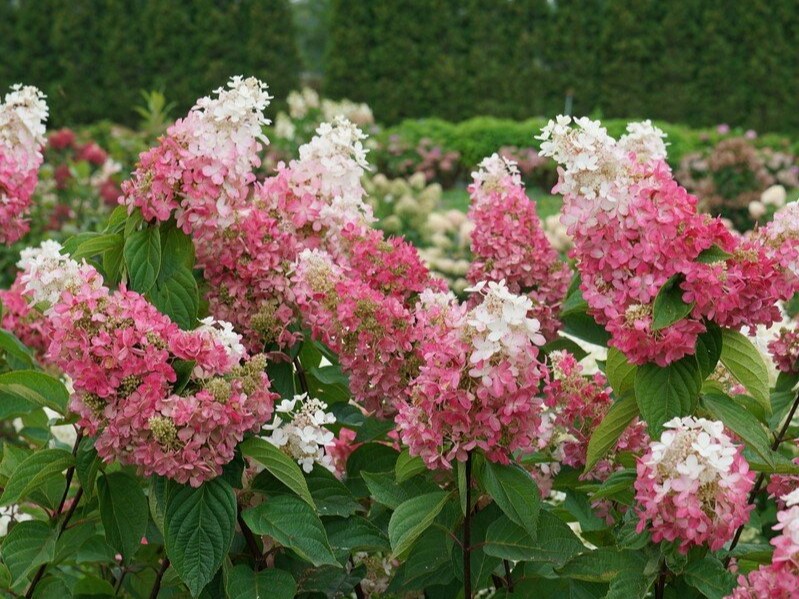
The panicle hydrangea is one of the best plants to recommend to any beginner gardener. These shrubs tolerate a variety of soil conditions, thrive in both sun and partial shade, and are rarely affected by insects or diseases. They are also easy to care for, staying put without self-seeding or spreading by aggressive rhizomes. In short, they are the perfect shrub!
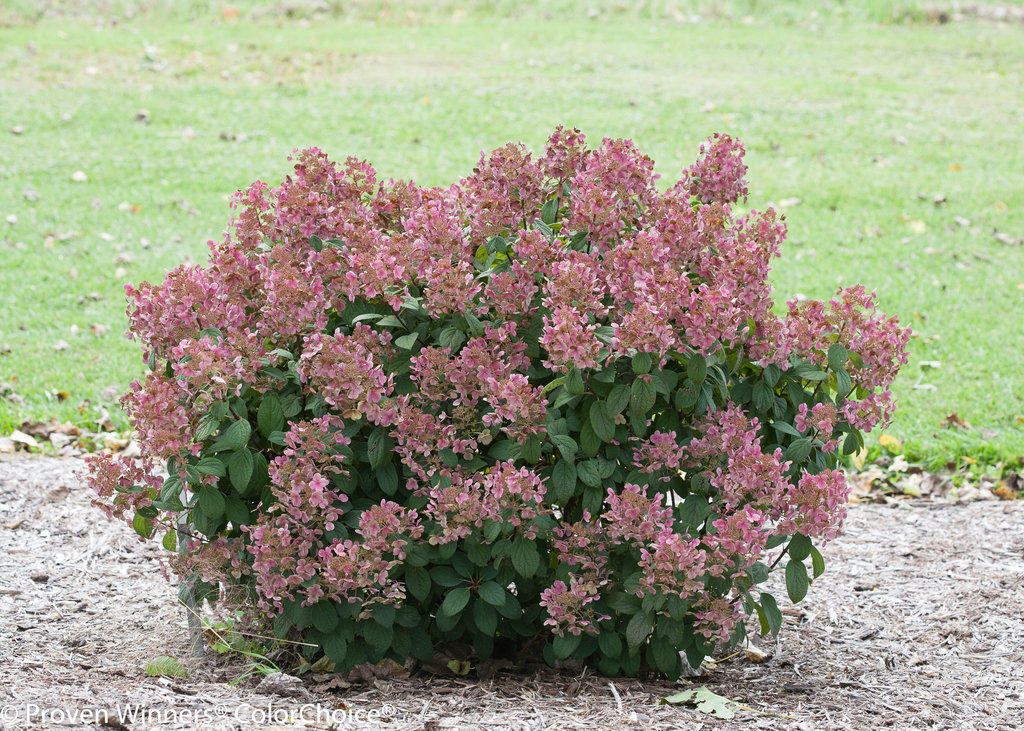
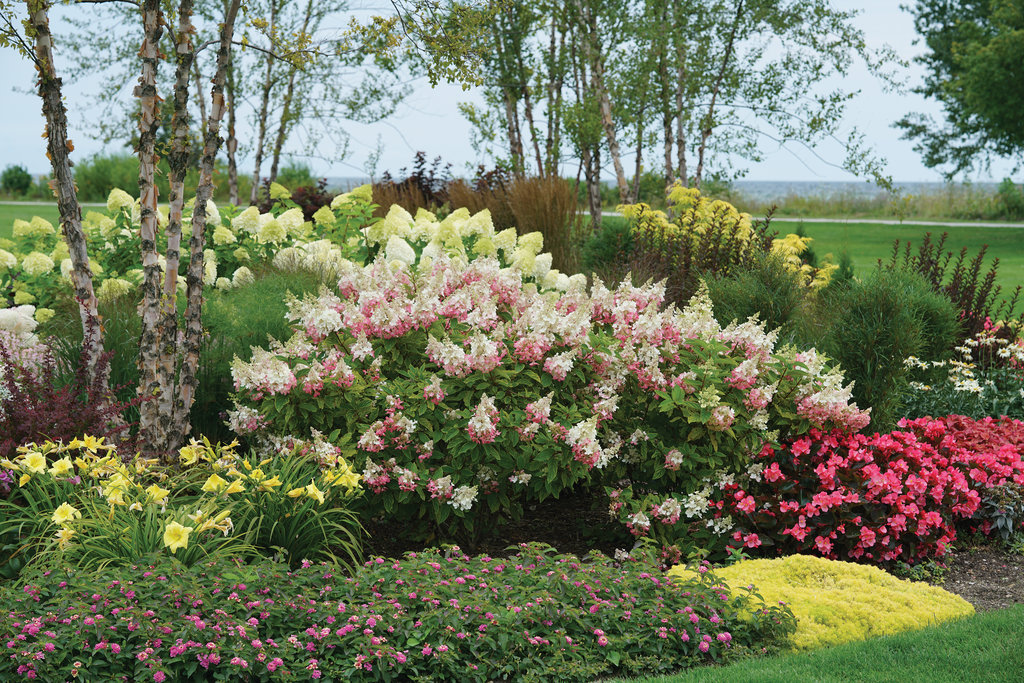
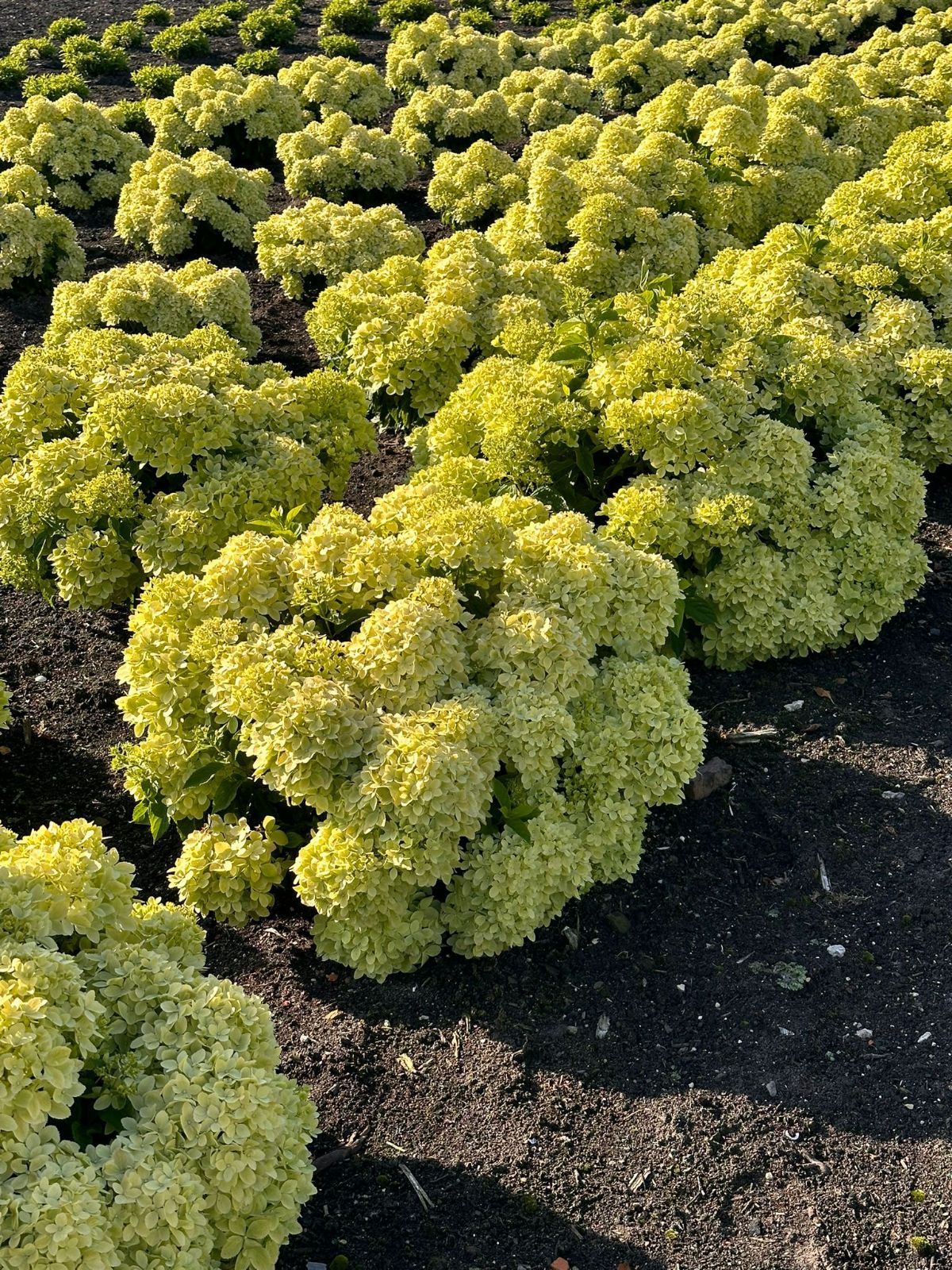
Hydrangeas begin to bloom in July and continue until autumn. The flower cone starts out white or lime green, then turns shades of pink, sometimes carmine red. While panicle hydrangeas are often said to bloom in autumn, it’s actually the season when they display their vibrant colours!
Although the general appearance is the same among all cultivars of this species, there are some variations in size, flower colour, and cone density. Therefore, your choice can be refined according to the available space and the desired effect in the garden.
Giant version
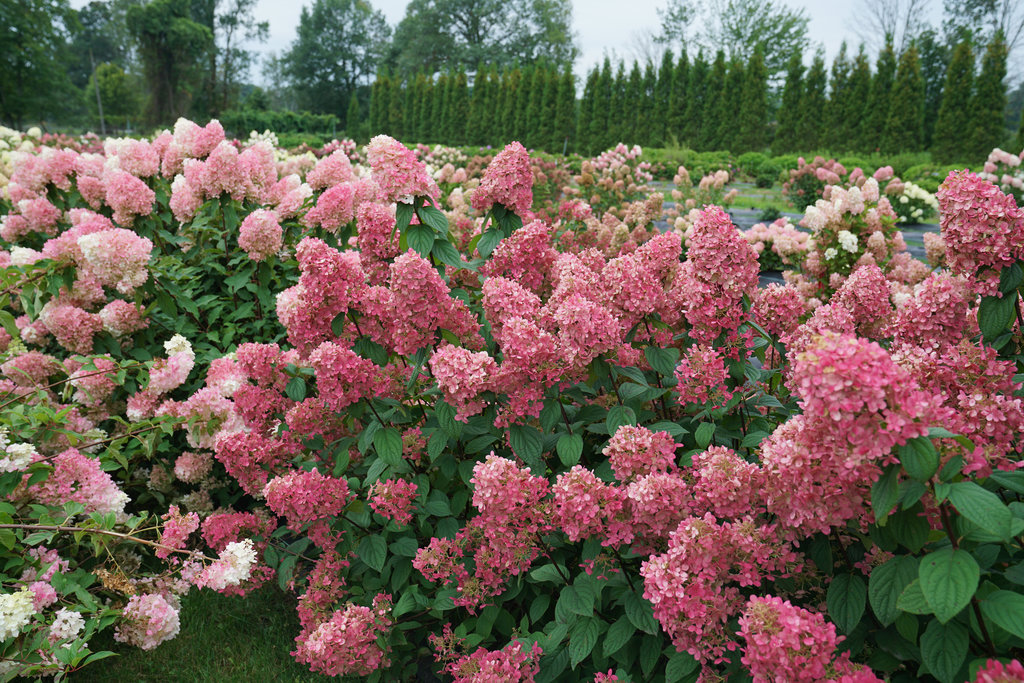
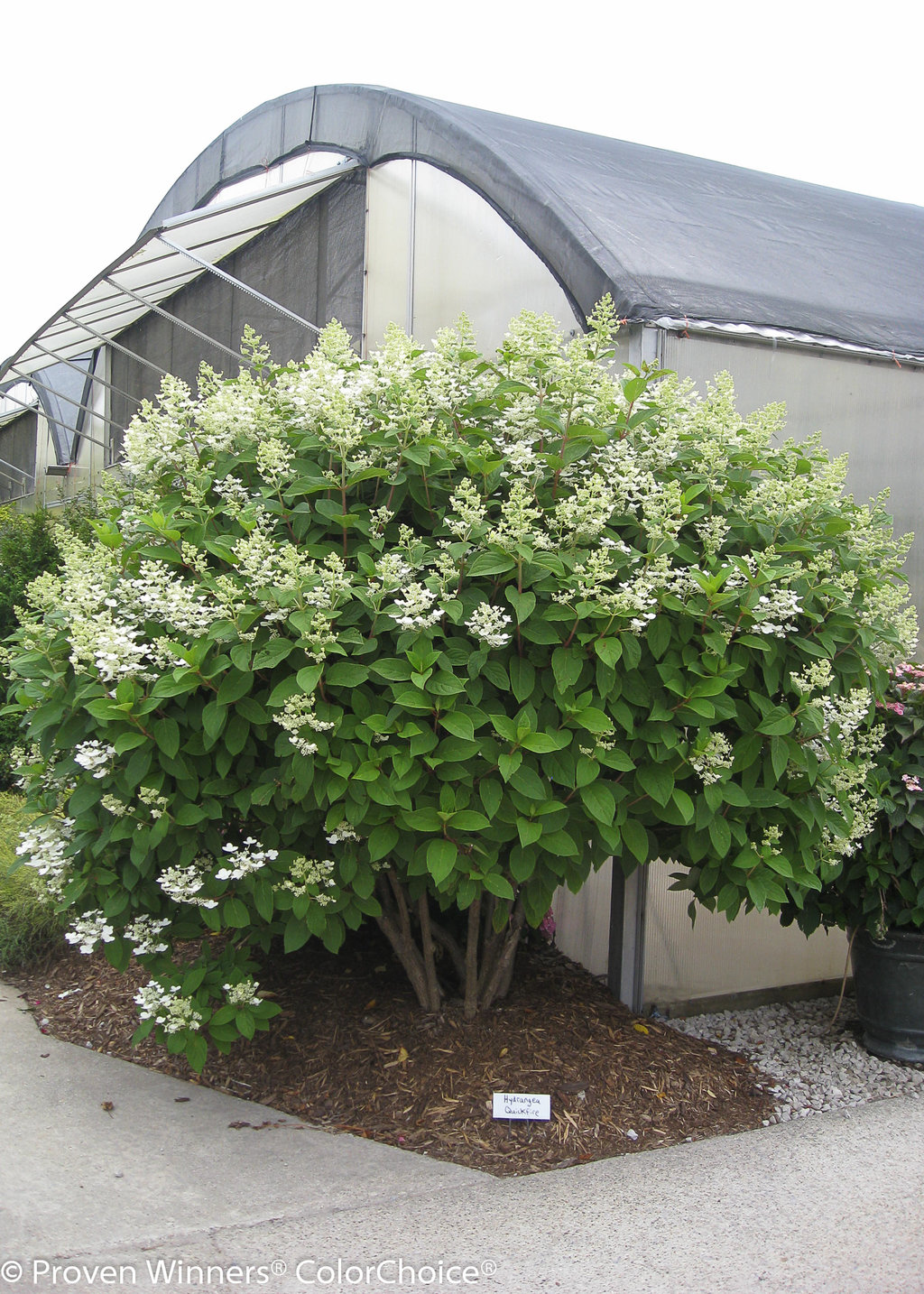
Some panicle hydrangeas can reach impressive proportions, exceeding two metres (6 feet) in height. It’s important to be familiar with these varieties, as they can quickly outgrow a space not intended for such plants. However, they are perfect for adding interest to corners of the house (instead of the classic ‘Smaragd’ cedars) or for creating privacy screens at the back of a yard. The larger varieties make a magnificent backdrop for dwarf conifers or mixed perennial plantings.
‘Fire Light’: This is a classic variety, highly prized by gardeners. The flowers turn a very dark pink in autumn. Height: 2 m (6 feet); Width: 2 m (6 feet); Zone 3
‘Kyushu’: The ‘Kyushu’ inflorescence features a mix of sterile and fertile flowers, giving the blooms a light and airy appearance. Height: 2.25 m (7 feet); Width: 2.5 m (8 feet); Zone 4
‘Pink Diamond’: A reliable cultivar whose flowers turn a beautiful, deep pink at the end of the season. Height: 2 m (6 feet); Width: 1.5 m (5 feet); Zone 4
‘Quick Fire’: With its early blooms that quickly turn deep pink, this variety has rapidly become a gardener’s favourite. Height: 2 m (6 feet); Width: 2.5 m (8 feet); Zone 4
‘Unique’: An old variety with very conical and airy flowers, somewhat like ‘Kyushu’. The pink of the flowers intensifies to carmine red at the end of the season. Height: 3 m (10 feet); Width: 3.5 m (11 feet); Zone 4
Medium-sized
Reaching approximately 1.5 metres in height, these hydrangeas are perfect for planting near the house. They are often just the right height for planting beneath windows without blocking the view. They are also excellent plants for creating large, low-maintenance plantings that become quite spectacular when in bloom.
‘Candelabra’: True candles! The blooms appear as a narrow, elongated cone, creating an interesting effect in the garden. At the end of the season, the flower head displays a beautiful gradient, changing from carmine red to creamy white. Height: 1.5 m (5 feet); Width: 1.5 m (5 feet); Zone 3
‘Little Quick Fire’: This is the shorter version of ‘Quick Fire’. An early bloomer, it produces medium-sized cones that quickly turn dark pink. Height: 1.5 m (5 feet); Width: 1.2 m (4 feet); Zone 4
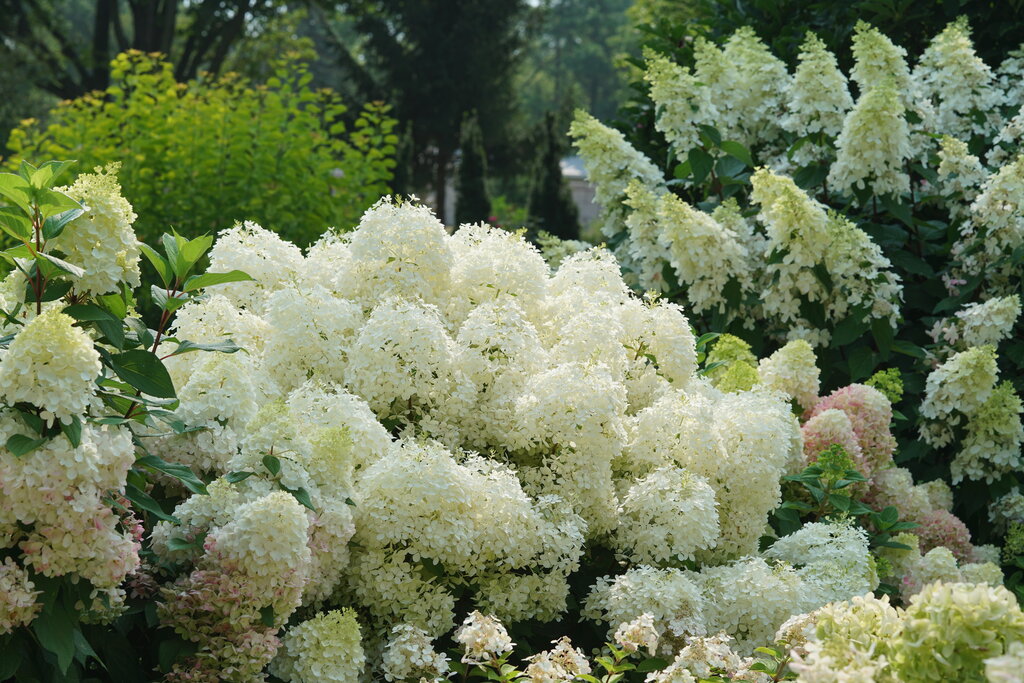
‘Moonrock’: This variety produces dense flower clusters with tips strongly tinged with lime green. The flowers turn pink in autumn. Height: 1.5 m (5 feet); Width: 1.5 m (5 feet); Zone 3
‘Pinky Winky’: A two-tone bloom! The base of the flower head turns dark pink, while the tip remains white for some time. Height: 1.5 m (5 feet); Width: 1 m (3 feet); Zone 4
‘Puffer Fish’: More rounded inflorescences with smaller flowers. It retains its white colour in autumn. Height: 1.5 m (5 feet); Width: 1.5 m (5 feet); Zone 3
In mini version
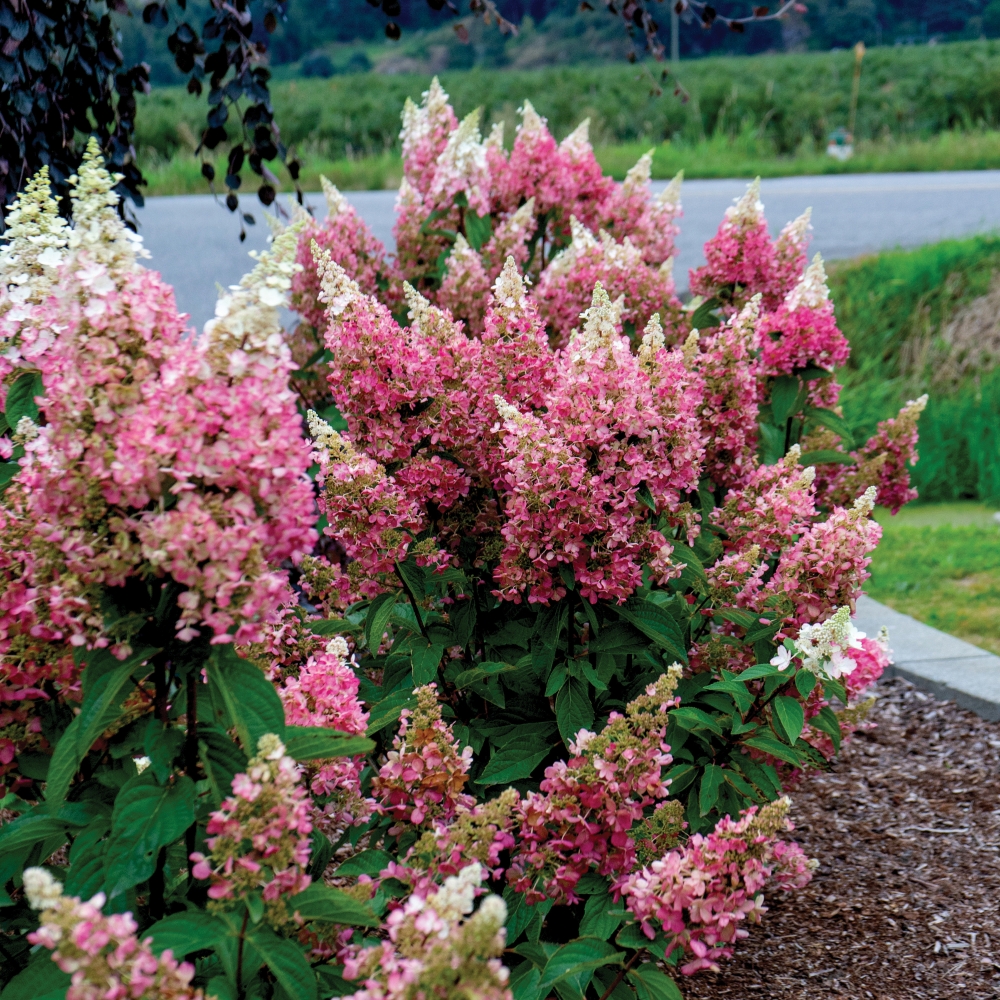
Let’s be clear, even the smallest hydrangeas will still reach 90 cm in height. The 30 cm-tall version hasn’t been developed yet! These smaller varieties are very attractive for adding interest to the lower part of a porch or a commercial display. They also fit nicely among the perennials in a flower bed.
‘Bombshell’: This is said to be the shortest of all hydrangeas. It is also known for its earlier and very abundant flowering. Height: 0.75 m (2?-6? feet); Width: 0.9 m (3 feet); Zone 3
‘Dragon Baby’: A compact variety with abundant blooms. The flowers emerge creamy white and lime green, literally igniting into deep pink hues in autumn. Height: 0.9 m (3 feet); Width: 0.9 m (3 feet); Zone 3
‘Flare’: With its very pointed flower cones, the plant looks as if it’s on fire! These inflorescences contain a mix of fertile (and possibly sterile) and sterile flowers, resulting in a less full cone. The flowers turn dark pink in the fall. Height: 0.9 m (3 feet); Width: 0.9 m (3 feet); Zone 3
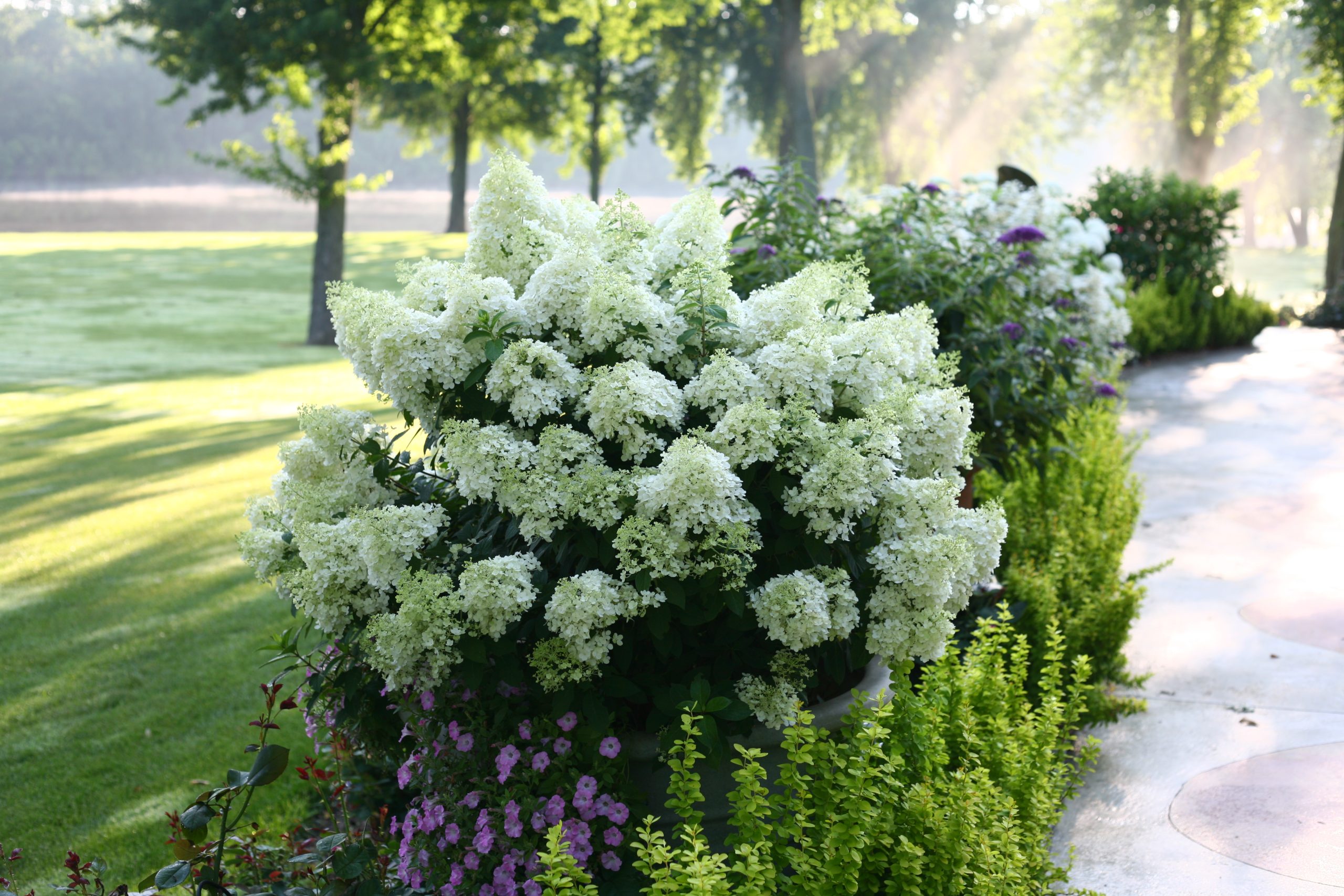
‘Bobo’: This cultivar stands out for its very large flowers supported by short, rigid stems. It has become a classic and is much loved by landscape designers. Height: 0.9 m (3 feet); Width: 1.2 m (4 feet); Zone 3
‘Bubble Bath’: Rounded flower heads that remain creamy white tinged with lime until autumn. Note that there is also a large-leaved hydrangea called ‘Bubble Bath’ (H. macrophylla ‘Easy Bubble Bath’). Height: 0.9 m (3 feet); Width: 0.9 m (3 feet); Zone 3
A few notes on size
Of course, to fully enjoy these magnificent blooms, proper pruning is essential. In the case of panicle hydrangeas, the flowers form on the current year’s growth, but on stems that are at least two years old. Therefore, when planting, it’s a good idea to prune them quite severely, say to 30 cm (12 inches) from the ground, to encourage branching. More stems, more flowers!
Then, every spring, prune each stem back by about one third. In other words, shorten each stem by removing about 30% of its length. This way, the plant can direct more of its energy into producing flowers.