


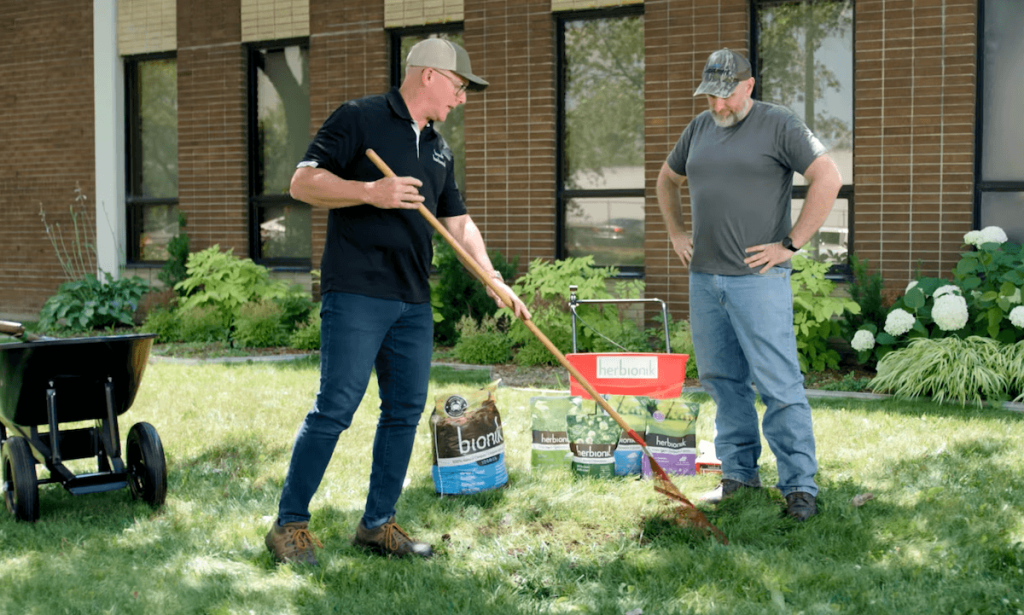
We don’t all have the same expectations for our lawns. For some, a beautiful lawn is a dense, uniform carpet of green grass, regularly maintained and free of any plants considered undesirable. For others, myself included, the goal is quite different: to mow as infrequently as possible and let the grasses coexist with clover and other plants that have taken root over the years. The result is a mosaic of different shades of green, dotted with a few flowers throughout the seasons.
Most gardeners fall somewhere between these two extremes. They simply want a reasonably green lawn, perhaps with a few flowers here and there, requiring occasional mowing and very little maintenance. They might want to fill in a few bare spots, thicken their lawn, or reduce the presence of weeds…
No matter what your vision of the ideal lawn is, if there’s one maintenance task to add to mowing, it’s overseeding followed by a light application of topdressing. This practice is probably the one that provides the most benefits, both for the health and the appearance of the lawn. By making it denser, more diverse, and more vigorous, it also reduces long-term maintenance needs and helps it better withstand droughts, diseases, insects, and weeds.
And as it happens, late summer is the ideal time to carry out this task.
Why the end of summer?
In Canada, the best time to overseed is generally from mid-August to mid-September. It’s no coincidence that sod producers also choose this time of year to seed their fields.
The soil is still quite warm, which promotes rapid seed germination. Days are cooler and nights are cooler, which reduces stress on young seedlings. The temperature difference between day and night also promotes dew formation, which helps keep the soil moist and reduces the need for watering.
Rainfall is also often more frequent and more consistent than in the height of summer, another benefit for the new grasses. By this time, most annual weeds have already completed their main germination period and therefore pose less competition to the young plants.
The new grasses then have several weeks to develop a strong root system and harden off before winter sets in. It is also during this period that cool-season grasses experience their strongest resurgence of growth following the summer heat. They therefore take full advantage of these favorable conditions to become established.
The farther north you live, the more important it is to act early, since the first frosts arrive sooner and shorten this ideal window.
Overseeding and topdressing
Overseeding involves sowing grass seeds into an existing lawn. This practice helps thicken the grass cover, leaving less space for weeds to establish themselves. By quickly covering the ground, the grass blocks out light. The seeds of many weeds need to be exposed to light to germinate, or they germinate much less effectively when shaded. Even those that do manage to sprout then struggle to establish themselves due to the intense competition from a dense lawn. A dense lawn therefore generally requires less weeding, fewer herbicides, and fewer repairs over the years.
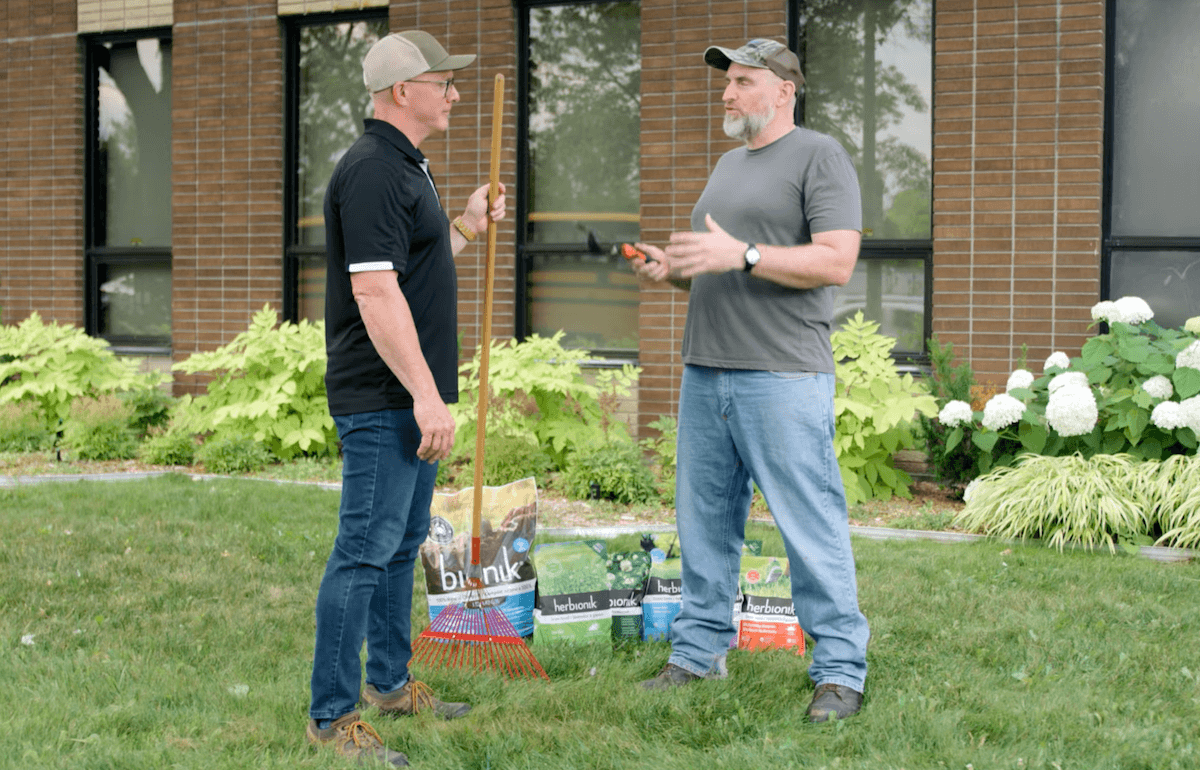
Overseeding also helps diversify the species present. A lawn composed of multiple species is generally more resistant to drought, insects, diseases, and trampling, since each species has its own strengths and weaknesses. It remains more attractive despite the ups and downs, which reduces the amount of maintenance needed to keep it in good condition.
Topdressing involves applying a very thin layer of mature compost or potting soil to the lawn. Personally, I prefer compost, since it provides not only organic matter and some nutrients, but also a host of beneficial microorganisms.
Topdressing offers several benefits. It provides an excellent germination bed for new seeds, gradually improves soil structure, increases the soil’s water-holding capacity, slowly nourishes the lawn, stimulates the activity of soil organisms that convert organic matter into plant-available nutrients, and helps slightly correct minor surface irregularities. Over time, a lawn growing in richer, better-structured soil generally requires less watering and less fertilization, and will usually never need to be scarified or aerated.
Why do I use peat-free compost?
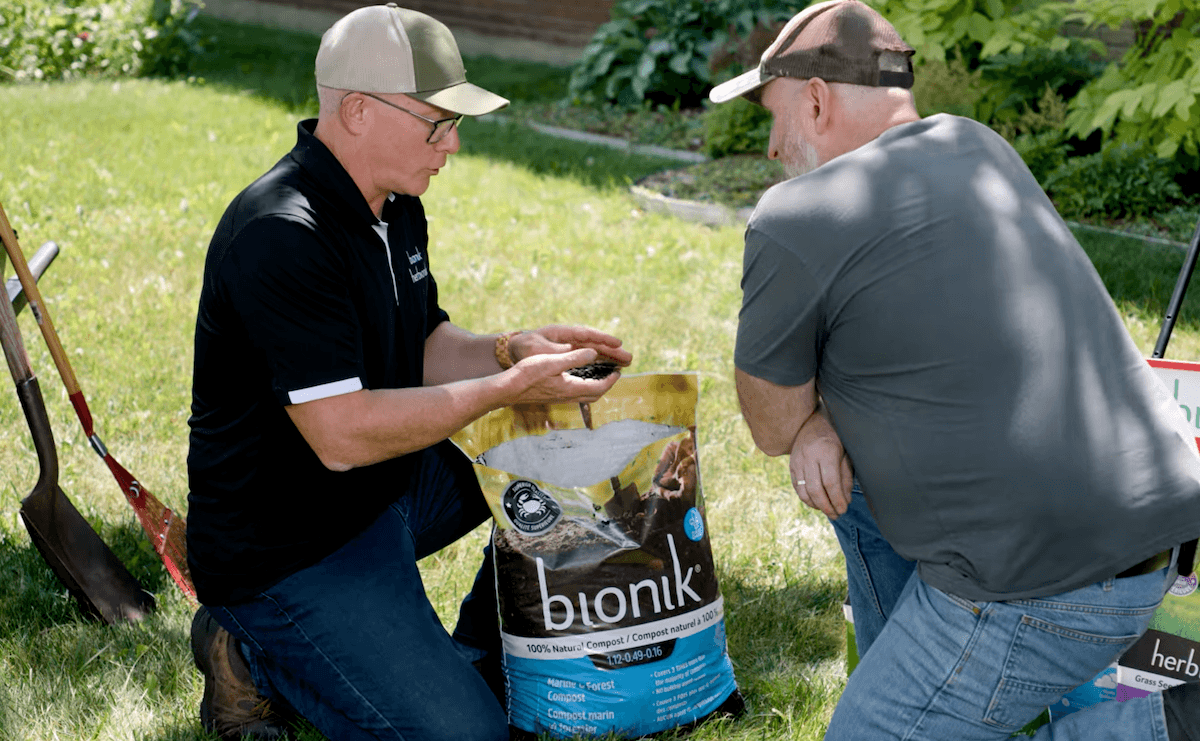
A beautiful lawn starts with healthy soil. That’s why I always topdress with peat-free compost. It enriches the soil with organic matter while supporting a diverse community of beneficial soil organisms. Over time, healthier, living soil retains moisture more effectively, encourages deeper root growth, and produces a denser, more resilient, and more self-sufficient lawn.
Choosing a peat-free compost also helps protect bogs and other wetlands, which are important ecosystems that store vast amounts of carbon and provide habitat for countless species. By using peat-free compost, you can improve your lawn while making a more environmentally responsible choice.
The right seeds for the right place
The best seed mix is the one that suits your yard and your goals. A lawn in full sun, in the shade, or subject to heavy foot traffic has different needs. By choosing a mix suited to your situation, you’ll get a more beautiful, hardier lawn that requires less maintenance.
If your goal is simply to repair a few bare spots, a fast-germinating seed mix is ideal. It typically contains a higher proportion of ryegrass, a grass that establishes itself in just a few days. It’s the perfect solution for quickly restoring a lawn’s green colour, even though this species is usually slightly less durable than other grasses.
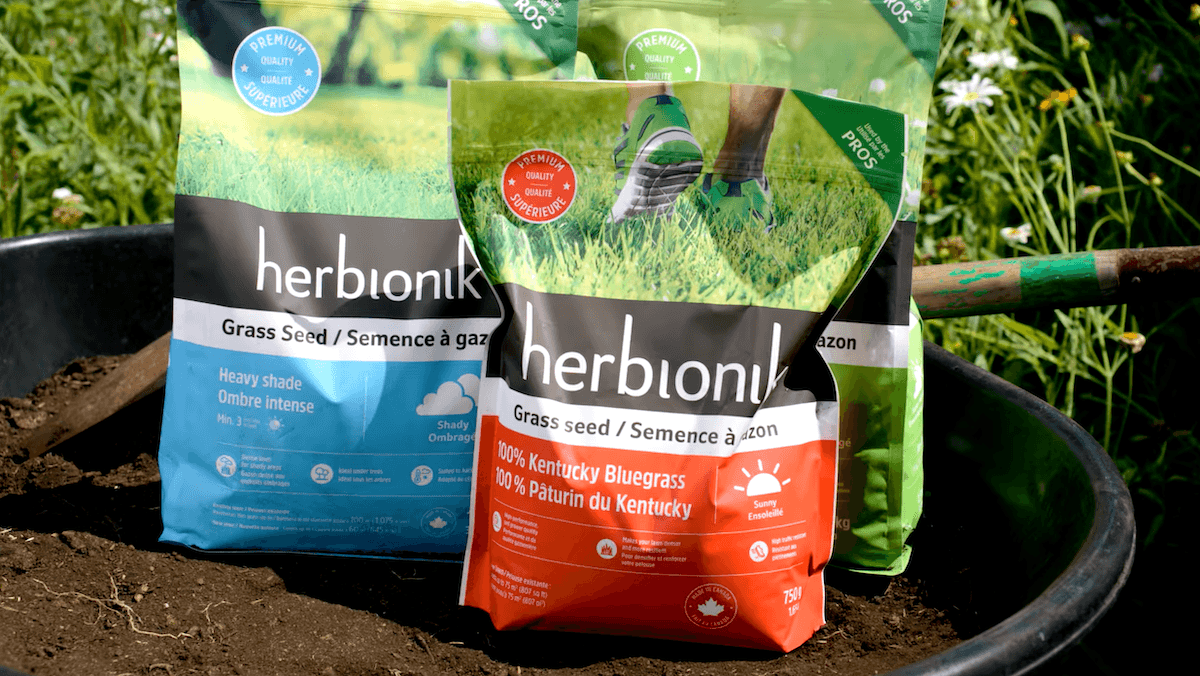
Conversely, if you want to reduce maintenance, look for mixtures high in fescues. These grasses generally grow more slowly are more drought-tolerant, and require less mowing, less watering, and less fertilization.
Shade
Shaded areas also benefit from mixtures rich in fescues, which tolerate low light much better than most other grasses. Areas subject to heavy foot traffic, on the other hand, benefit from a mixture containing a good proportion of Kentucky bluegrass. Thanks to its rhizomes, this grass recovers quickly after being walked on and helps maintain a dense, uniform lawn. On the other hand, it establishes itself much more slowly than ryegrass, and lawns where it dominates generally require more watering and fertilization than those composed mainly of fescues.
There are also mixtures designed to create lawns that require very little mowing, as well as more economical mixtures for seeding large areas at a lower cost.
As a general rule, opt for mixtures composed of several species or cultivars rather than a single species. This diversity makes the lawn more resilient to drought, diseases, insects, and variations in growing conditions. When one species is less well suited to a particular situation or is affected by a disease, another can take over. As a result, the lawn remains denser, more attractive, and more resilient throughout the seasons.
Add some clover?
I highly recommend it. Whether it’s already included in the seed mix or added later, white clover is an excellent addition to a lawn.
In fact, the first ornamental lawns laid out in Great Britain in the 18th and 19th centuries often contained clover. It wasn’t until the advent of selective herbicides in the mid-20th century that it began to be considered a “weed.” The manufacturers of these products promoted lawns composed solely of grasses, since their herbicides eliminated clover without damaging the grass.
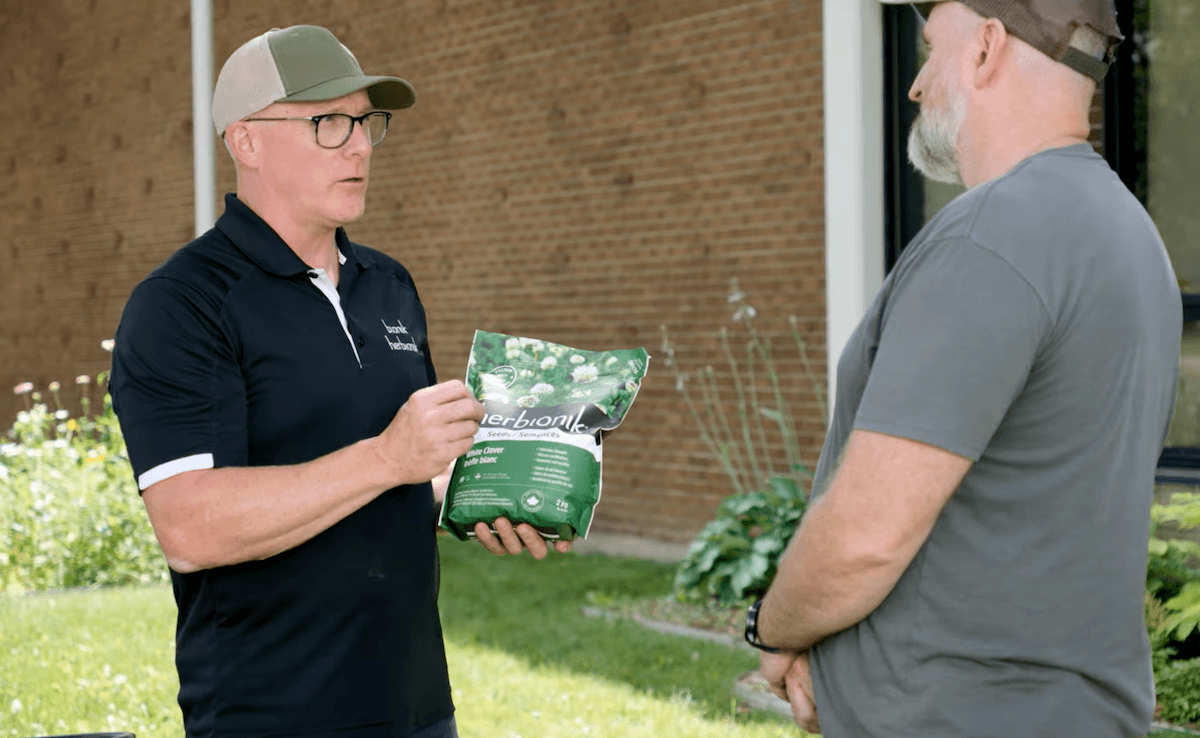
Clover, however, offers many benefits. Thanks to bacteria living in nodules on its roots, it is able to fix some of the nitrogen from the air and gradually enrich the soil with it. It also stays green longer than most grasses during dry spells, which helps the lawn maintain its attractive appearance. If you space out mowing sessions, its small white flowers provide food for a wide variety of pollinators. In short, it often reduces the need for fertilizer, improves the lawn’s resilience, and, in my opinion, a lawn dotted with small white flowers has a lot of charm.
If you’re sowing clover, it’s best to choose seeds inoculated with nitrogen-fixing bacteria. These will promote rapid root nodule formation and allow the clover to fulfill its role to the fullest.
Steps
Here’s how to do it, step by step.
1. Mow short
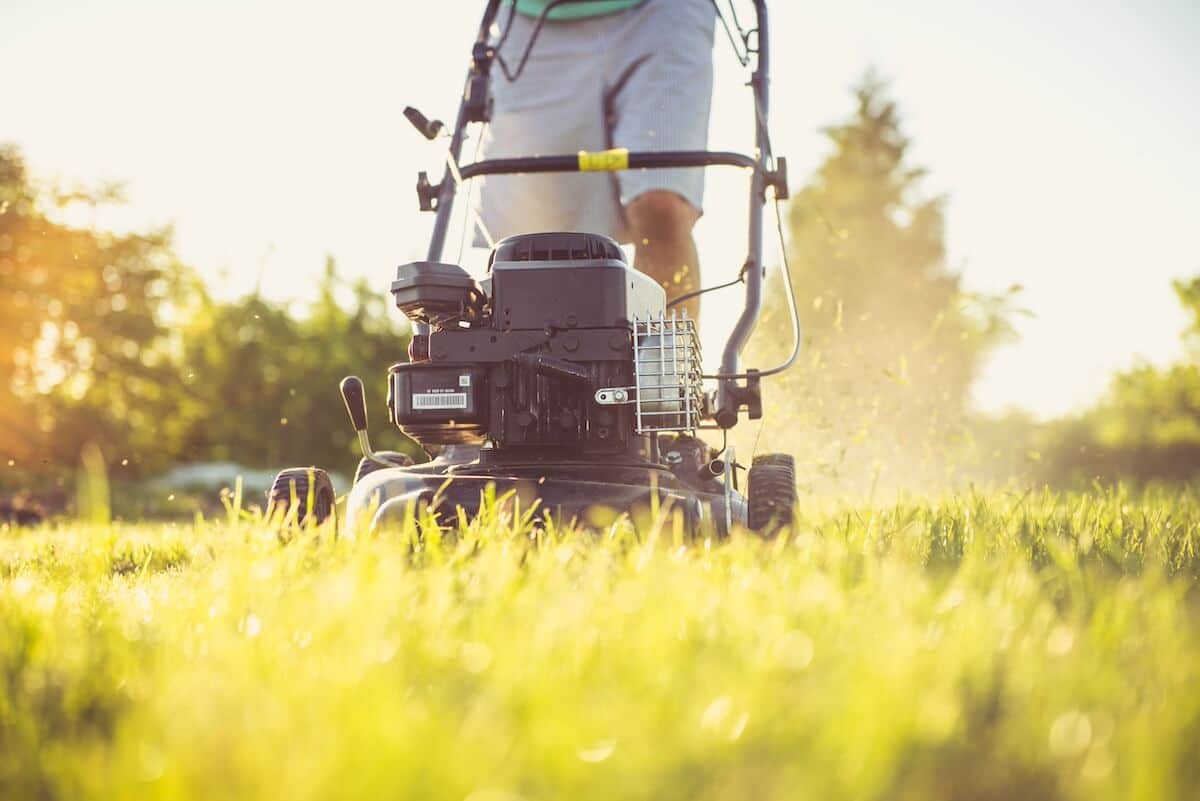
Start by mowing the lawn a little shorter than usual, to about 4–5 cm (1½–2 in). Cutting the grass shorter helps the new seed reach the soil. If mowing produces a heavy layer of clippings, rake them up so they don’t prevent the seed from making good contact with the soil.
2. Weed
Then take this opportunity to remove the largest weeds, especially invasive perennials or plants that take up a lot of space. You don’t need to have a perfect lawn. The goal is simply to reduce competition so that the new grasses have the best chance of taking root.
3. Overseed
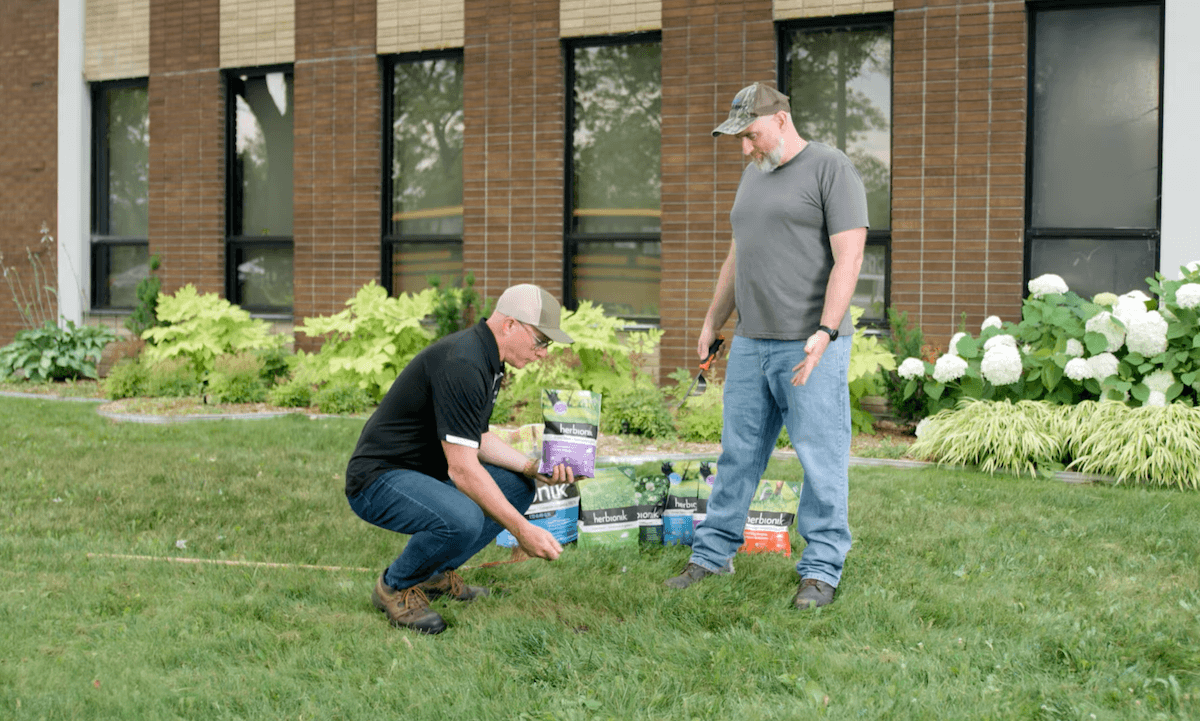
You can then proceed with overseeding. The seeds can be broadcast or spread using a spreader. Two passes in crisscross directions generally result in a more even distribution.
4. Topdress
Once the seeds have been sown, apply a very thin layer of well-rotted compost or high-quality potting soil. Personally, I prefer compost, which not only provides organic matter and some nutrients, but also a host of beneficial microorganisms. This thin layer protects the seeds from drying out, improves their contact with the soil, and promotes germination.
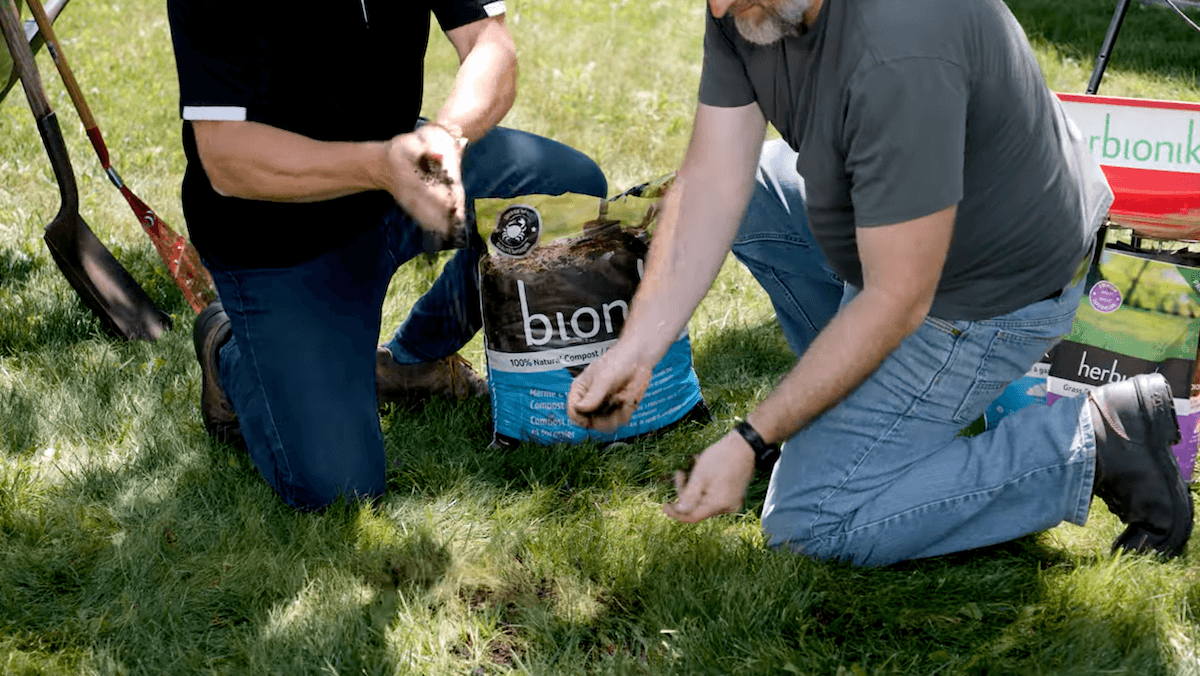
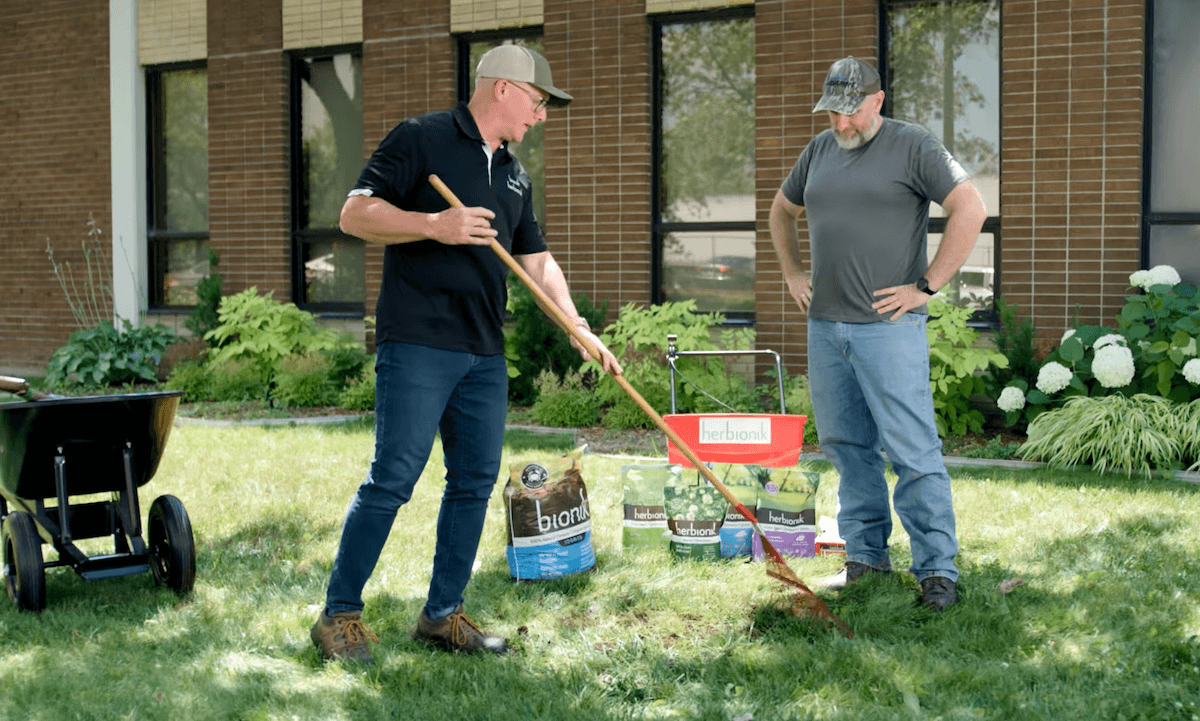
However, avoid cheap black soil. It often contains little organic matter, provides a poorer germination medium, and can sometimes be difficult to re-moisten once it dries out. Spread the soil evenly using the back of a rake, a leaf rake, or—for large areas—a lawn leveler.
5. Rake
Next, lightly rake the area to ensure good contact between the seeds, the compost, and the soil. The seeds should remain close to the surface; it is neither necessary nor desirable to bury them deeply.
6. Roll (optional)
If you have a lawn roller, rolling the lawn lightly will further improve contact between the seeds and the soil. However, this step is optional.
7. Watering
Finally, watering is undoubtedly the most important step in the entire process. Until the seeds have fully germinated, the top few millimeters of soil must remain constantly moist. It’s better to water frequently in small amounts than to water infrequently but heavily.
Once the seeds have sprouted, gradually reduce the frequency of watering while increasing the duration of each watering. This will encourage the young roots to grow deeper into the soil, making the lawn more drought-resistant.
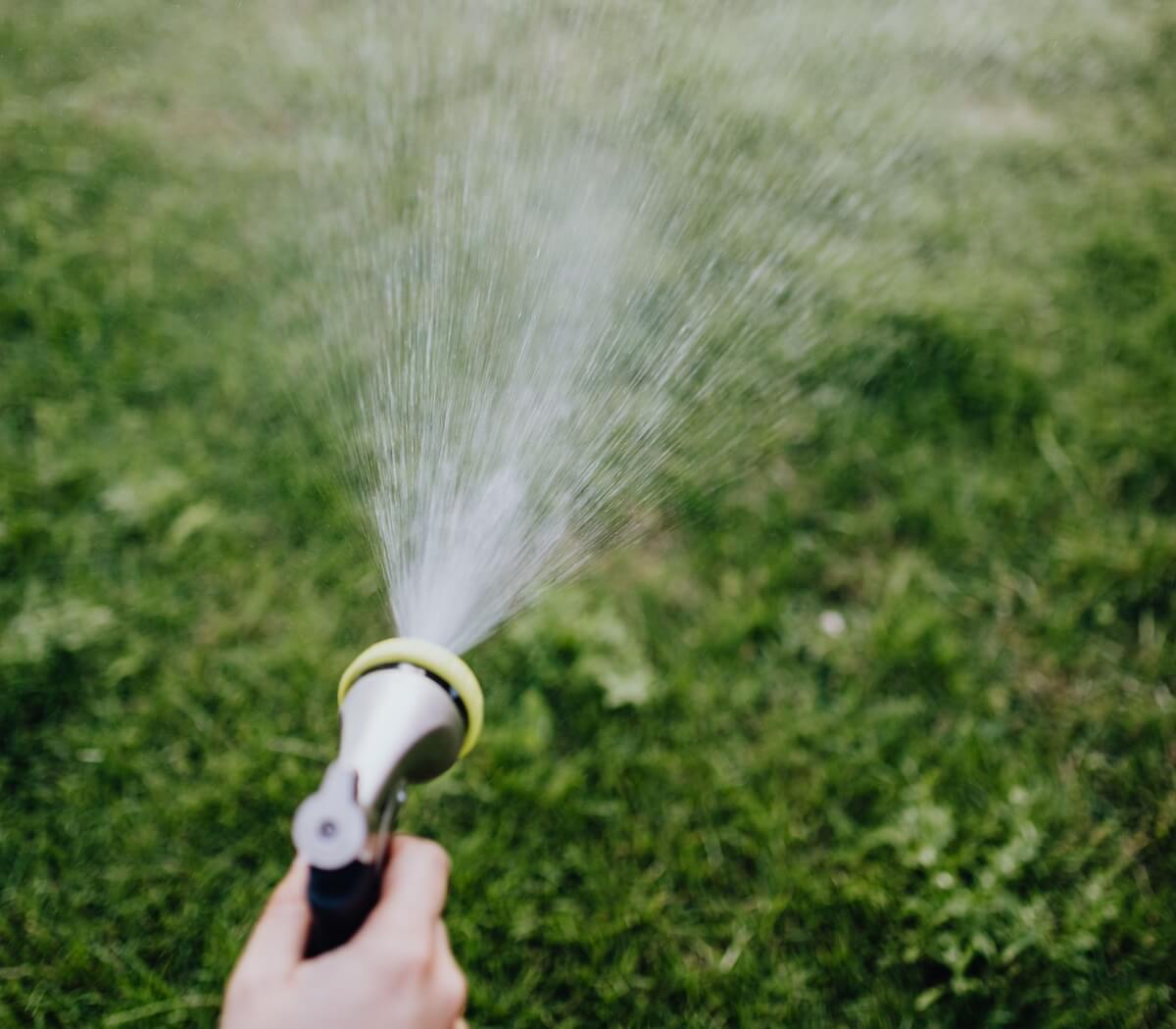
Depending on the temperature and the species planted, this watering period generally lasts two to three weeks. After that, more frequent rains, abundant dew, and the cooler temperatures of late summer and fall are often enough to take over.
Seed germination and initial care
Not all grasses germinate at the same rate. Ryegrass can sprout in as little as 5 to 10 days; fescues generally take 7 to 14 days; while Kentucky bluegrass often requires 14 to 28 days—sometimes even longer, depending on conditions.
So don’t be fooled if your lawn already looks quite green after a week or two. That initial green colour often comes from ryegrass, which germinates very quickly. Continue to keep the soil moist until the slower-growing species, such as Kentucky bluegrass, have also had time to emerge. This will result in a denser, more durable, and better-balanced lawn.
Caring for your newly seeded lawn
During this establishment period, avoid walking on the lawn as much as possible and keep pets off it whenever you can. Young seedlings are fragile, and their roots are not yet well established. It’s also perfectly normal to see a few annual weeds appear. They benefit from the same ideal germination conditions as the grass seed, but the first mowing will often eliminate many of them.
Once the grass reaches about 8–10 cm (3–4 in) tall, it’s time for the first mowing. Use a sharp mower blade and never remove more than one third of the grass height in a single cut.
After that, ideally let the lawn grow to 10–12 cm (4–5 in) before mowing it back to 7–8 cm (3–3¼ in). If appearance is less of a priority and you’d like to maximize drought tolerance and biodiversity benefits, you can even allow it to reach 12–15 cm (5–6 in) before cutting it back to 8–10 cm (3¼–4 in). A taller lawn develops a deeper root system, retains soil moisture more effectively, and is better able to withstand periods of heat and drought.
Should I fertilize?
In most cases, if you’ve used a good-quality compost, additional fertilizer isn’t necessary. Compost already provides the nutrients young grass seedlings need to become established. It also improves soil structure, increases the soil’s ability to retain moisture, and feeds the beneficial organisms that gradually make nutrients available to plants.
If you still wish to fertilize, choose a slow-release organic fertilizer and apply it according to the manufacturer’s directions. Avoid excessive nitrogen, which encourages rapid leaf growth at the expense of root development. As a result, young grass plants may be less well prepared to withstand the arrival of winter.
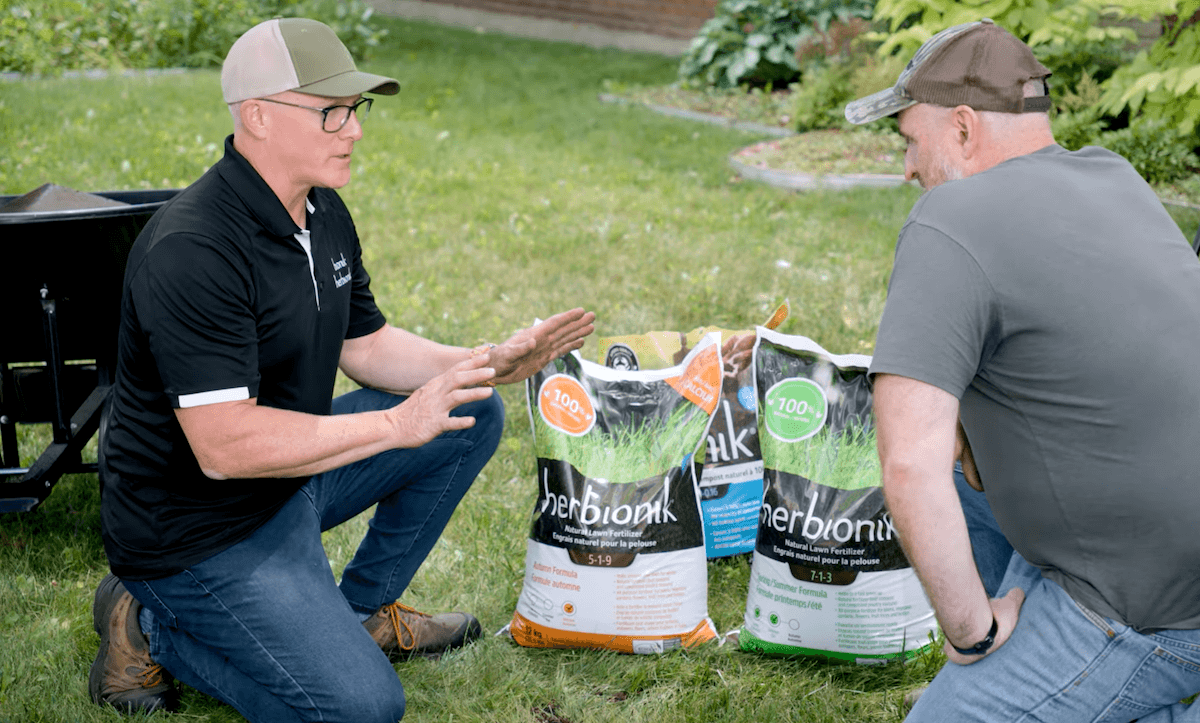
In reality, compost is generally more important than fertilizer. It improves the soil in the long term by adding organic matter and stimulating microbial activity, whereas fertilizer is used primarily to supplement the supply of nutrients. In other words, living soil enriched with compost benefits more from the addition of fertilizer than poor soil to which only fertilizers are added.
Fall fertilizers?
In fact, despite their name, fall fertilizers should generally be applied in late summer. This is when cool-season grasses experience their strongest growth spurt after the summer heat. They then use nutrients very efficiently to develop their roots, thicken their turf, and build up reserves before winter. If applied too late in the fall, fertilizer is much less effective, since growth slows significantly as temperatures drop.
Also, keep in mind that a well-fertilized lawn grows faster. It will therefore need to be mowed more often. If your goal is to reduce maintenance, it’s not always advisable to try to speed up its growth.
If you had to choose just one of the two, invest first in good compost. That’s what will yield the best results in the long run.
The laidback lawn
Overseeding isn’t something that needs to be done every year, unless you’re aiming for a very traditional lawn that’s exceptionally dense and uniform. It’s simply a tool. Use it when your lawn needs it—not because the calendar says it’s time.
The everyday practices that make the biggest difference are much simpler: mow at a height of 8–10 cm (3–4 in), or even higher if your mower allows; never remove more than one third of the grass height in a single mowing; practice grasscycling by leaving grass clippings on the lawn; and leafcycle in the fall by shredding fallen leaves and letting them decompose directly into the turf. These simple habits gradually improve soil health, reduce the need for fertilizer, and make your lawn more resilient to drought.
A diverse lawn: a host of benefits
But above all, accept that a beautiful lawn is alive, diverse, and perfectly imperfect. A little clover or a few other low-growing plants don’t make it a neglected lawn. On the contrary, this diversity often makes it more resistant to drought, disease, and insects. And, if you ask me, it’s also much more beautiful than a perfectly uniform carpet of grass.
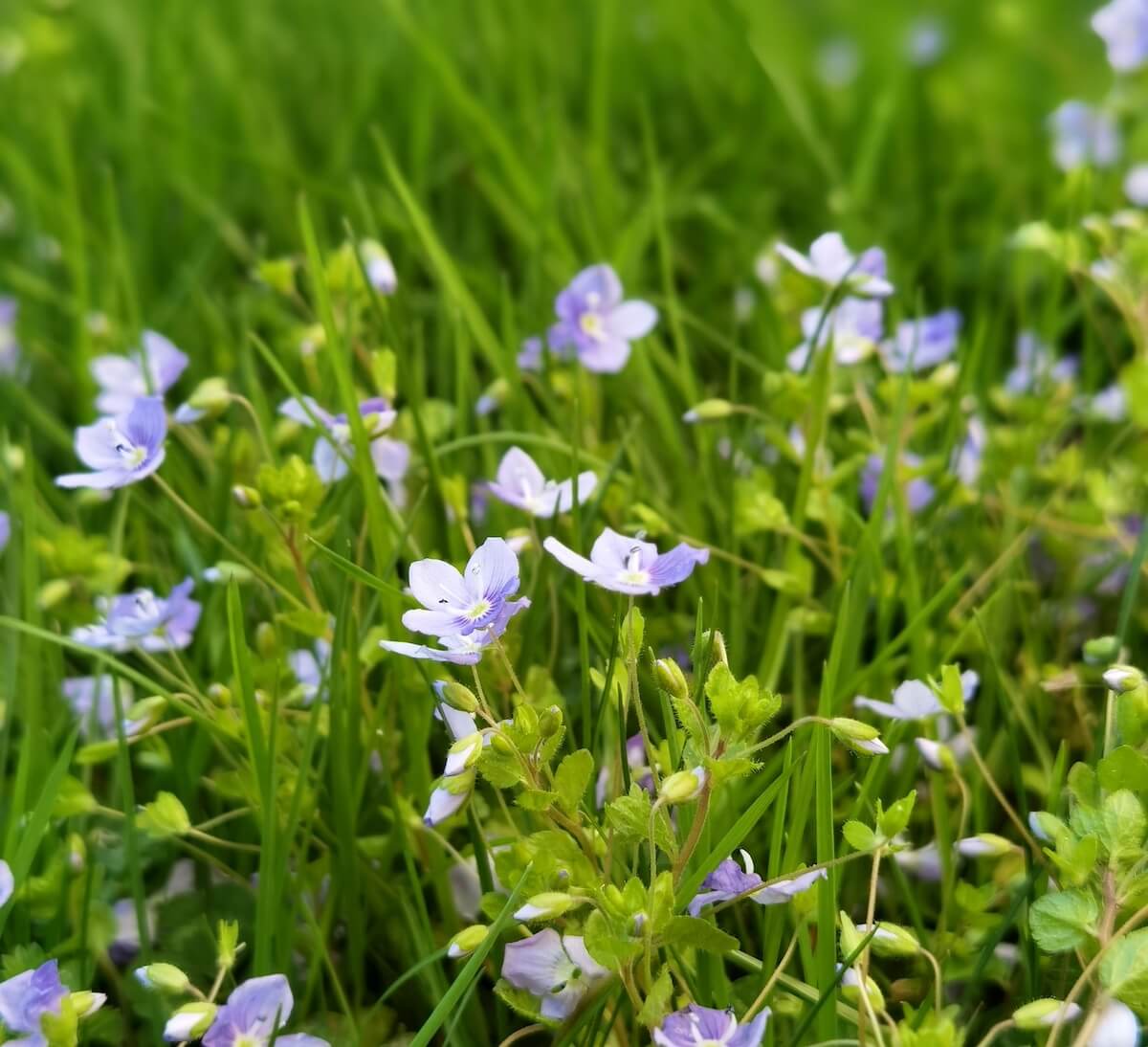
An eco-friendly lawn isn’t a golf course. It’s a living ecosystem that filters rainwater, cools the surrounding area, protects the soil from erosion, supports a host of organisms, and requires much less work.
Better yet, over time, you’re under no obligation to keep the entire area as a lawn. You can gradually replace the least used areas with flower beds featuring shrubs, perennials, ground covers, native plants, or even—when conditions allow—a wildflower meadow. This will further reduce maintenance while increasing the biodiversity of your property.
Ultimately, whether you prefer a more traditional lawn or a more diverse one, overseeding and topdressing are among the best ways to keep it dense, vigorous, and long-lasting. The best lawn isn’t the one that requires the most care. It’s the one that meets your needs… with as little work as possible.