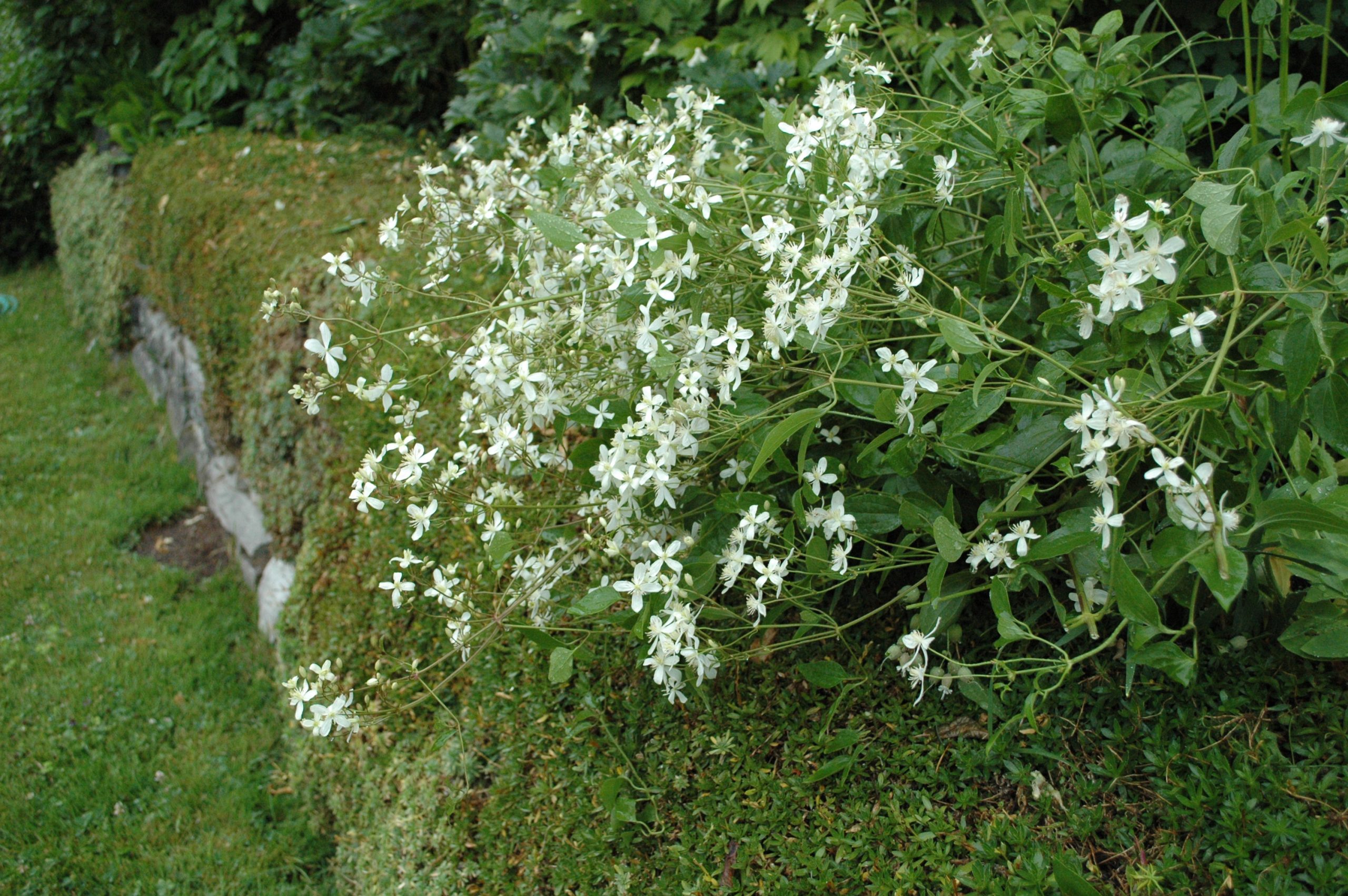
Clematis are well known for delighting gardeners who love to train them on trellises and screens. However, there are a few clematis varieties that lack the twining petioles that allow climbing clematis to cling to structures. Welcome to the world of shrub-like clematis!
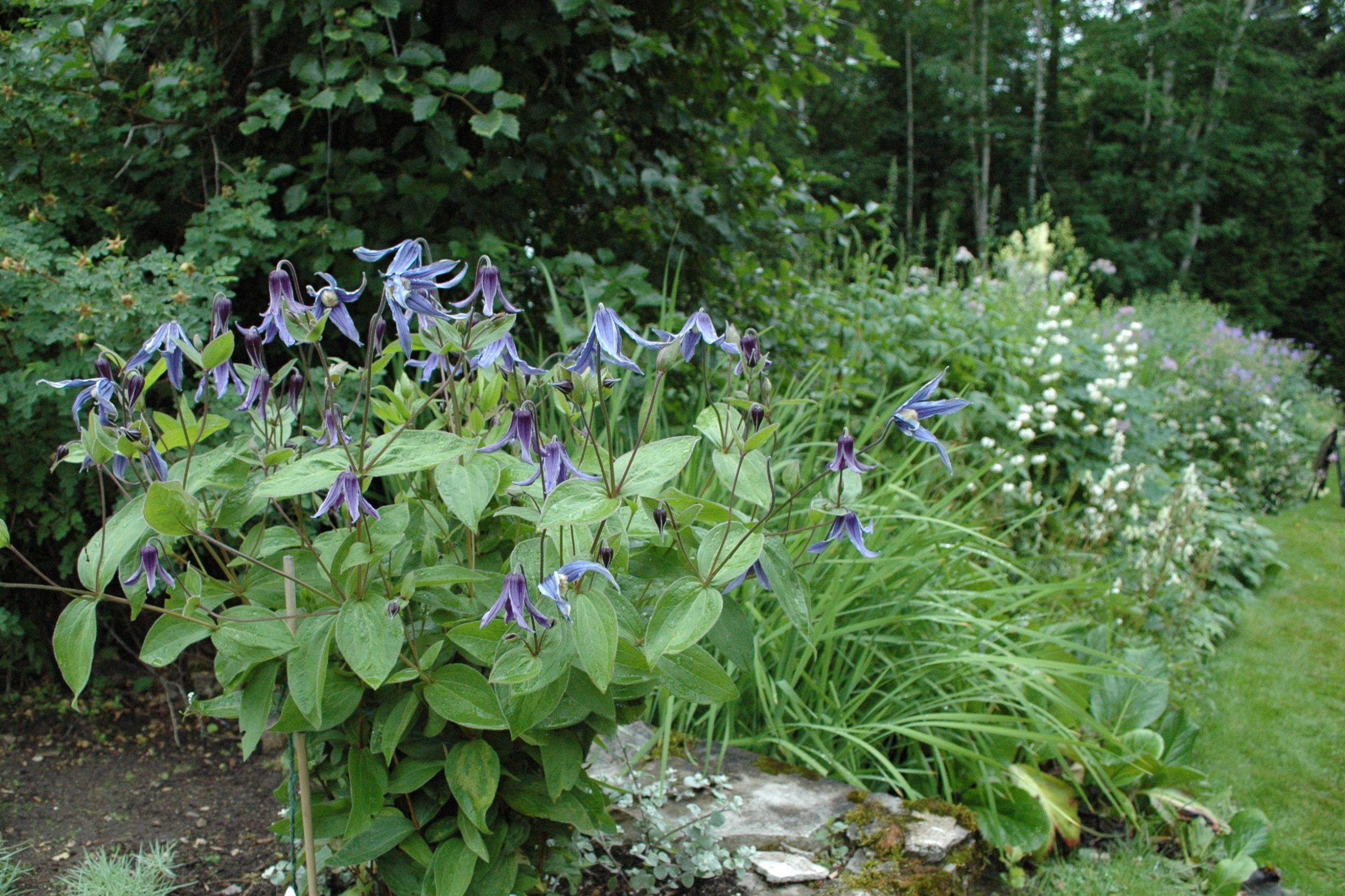
In reality, there are several species and varieties of clematis that don’t climb. However, their hardiness limits the options for northern gardens. Three species and their cultivars are most commonly cultivated.
The upright clematis
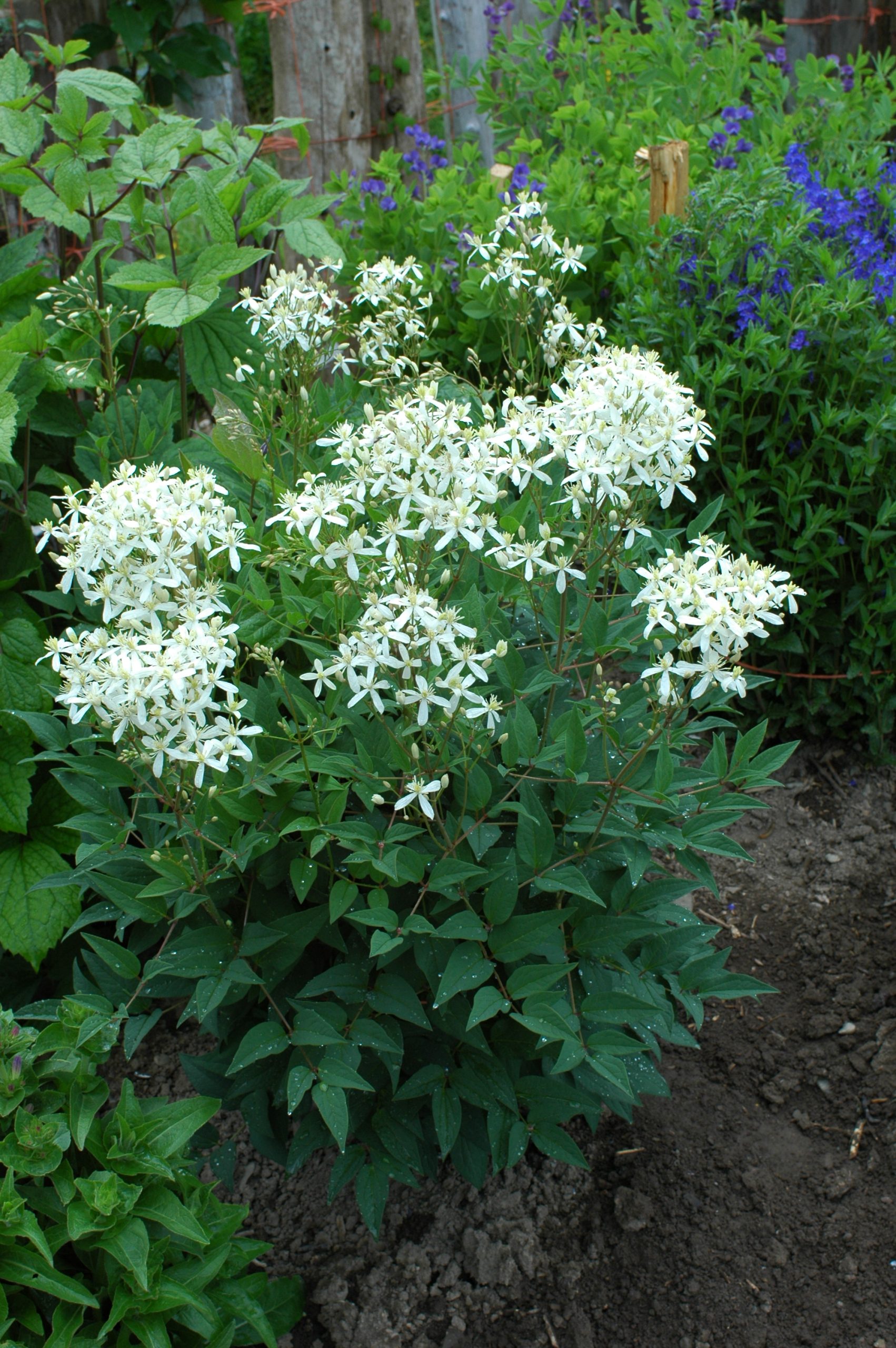
It is named for its upright, herbaceous stems. Upright clematis (Clematis recta) can reach a height of approximately 75 cm to 2 metres (30 inches to 6 feet), depending on growing conditions. This makes it a plant that can easily be incorporated into a perennial border. It produces a generous profusion of small white flowers, quite unlike the large blooms of climbing clematis. These flowers more closely resemble those of our native clematis, the virgin’s bower (Clematis virginiana). Flowering occurs in summer. There is a cultivar with purple foliage which is very decorative.
The solitary clematis
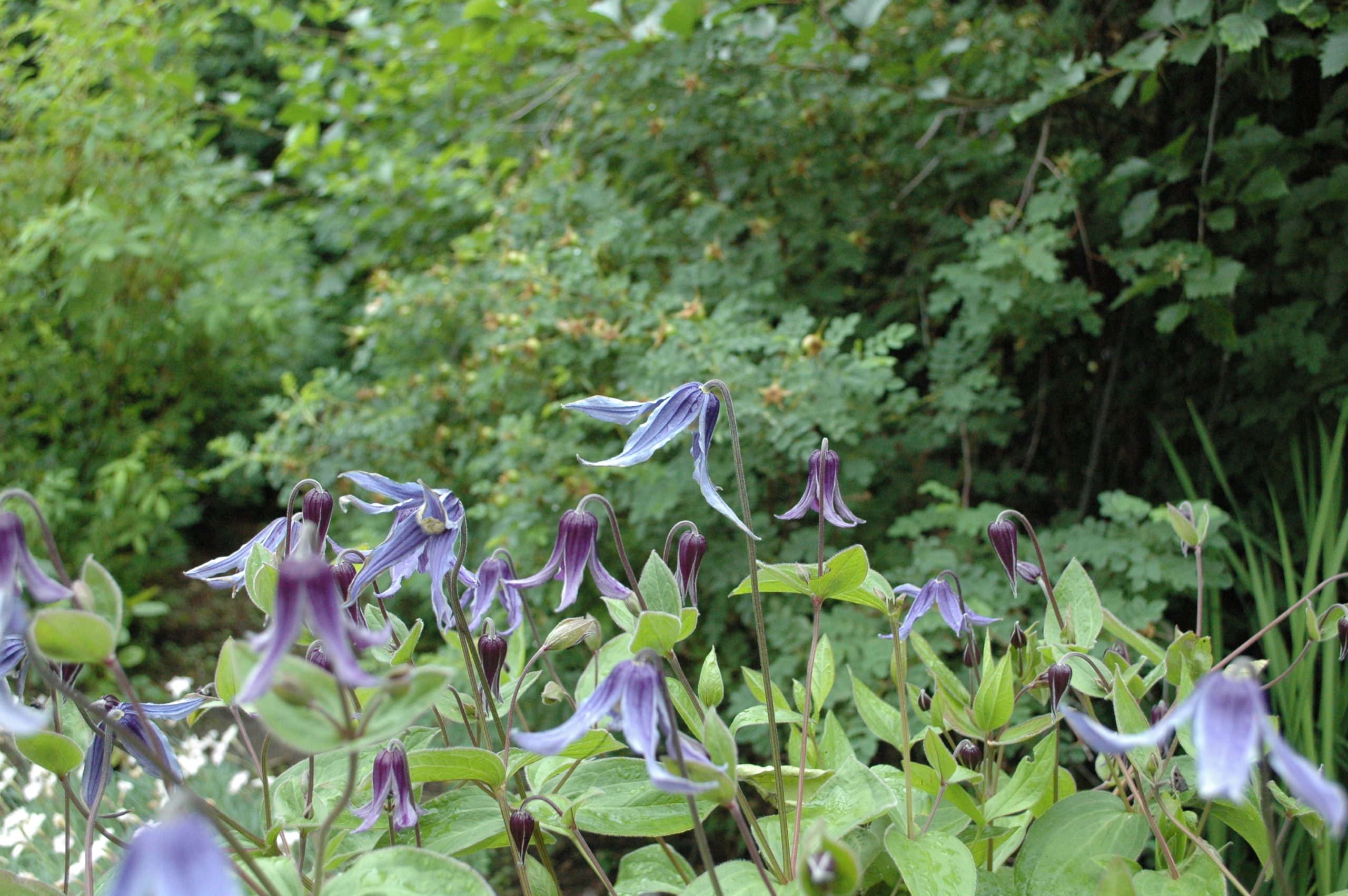
This species quickly became part of the modern clematis hybridization program and has given rise to several climbing and non-climbing clematis varieties. The solitary clematis (Clematis integrifolia) also forms a rounded bush, like the previous one. The leaves are broader, and the flowers are more reminiscent of spring-flowering clematis (such as Clematis macropetala). These beautiful flowers, often a bluish-mauve, stand well above the foliage in July and August. White or purplish-pink cultivars are also available.
It is said that the plant has a woody base, meaning that it doesn’t completely regrow from the ground each year. But so far, I have only observed herbaceous specimens.
It too, with its upright habit, can easily be incorporated into a mixed flowerbed. It generally reaches a height of one metre (3 feet).
The tube clematis
The Latin name would suggest that the leaves resemble those of hogweed. So, let’s start by reassuring our readers: the leaves are in no way dangerous and do not cause skin burns! It’s a species I’ve been growing in my garden for over 15 years, and I love it!
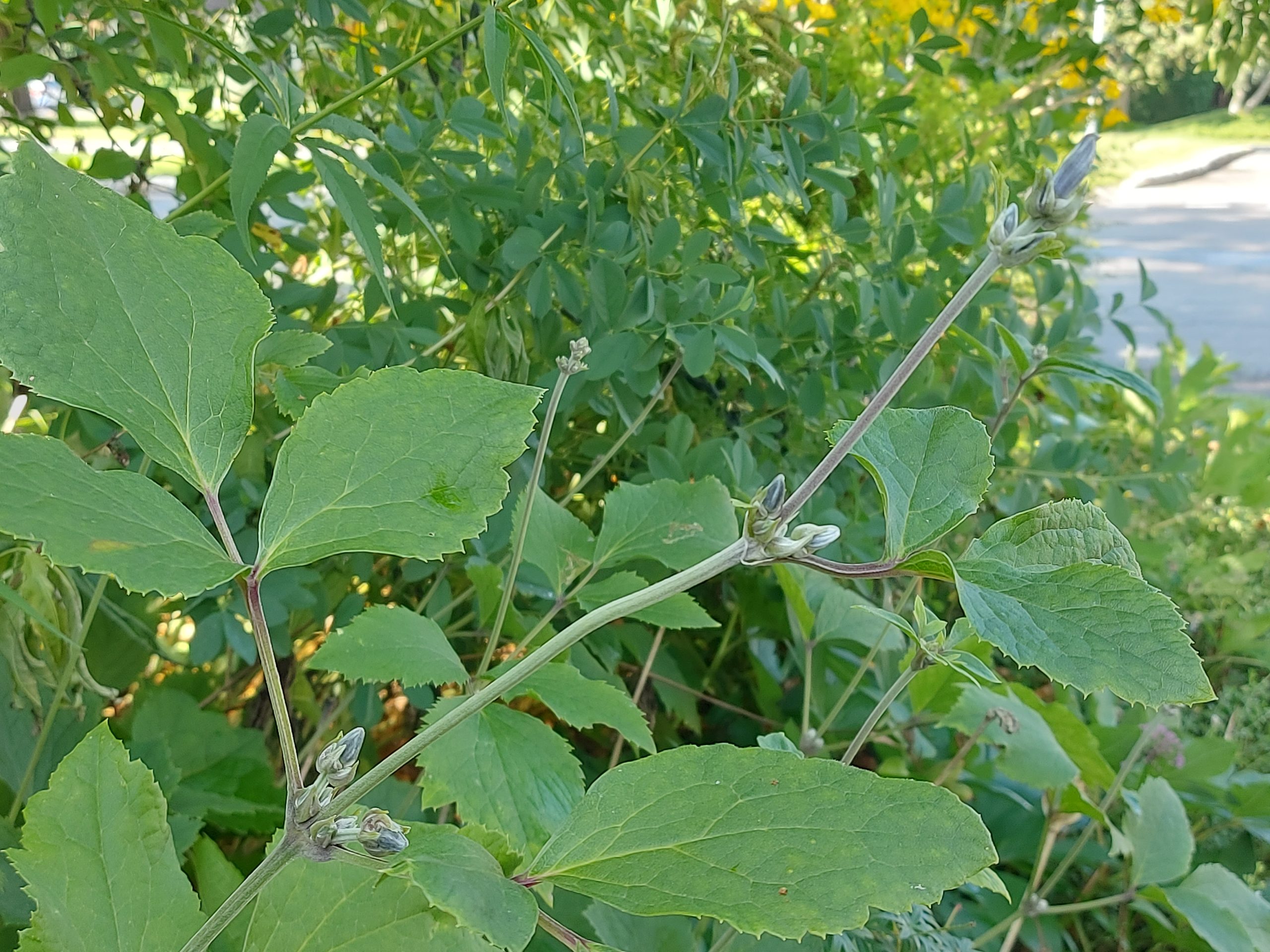
The tube clematis (Clematis heracleifolia) has large, thickly textured, puckered leaves that create a striking contrast with the other foliage of the perennial plants. It’s a somewhat difficult plant to describe in terms of its growth habit: in a way, it creeps through the garden as fast as a slug. However, its growth habit is more upright than creeping. It produces woody stems that survive the winter. Despite this, the plant rarely exceeds 75 cm (30 inches) in height. I would say it’s a plant that thrives wherever there’s a gap to fill!
The flowering is far from spectacular, consisting of small clusters of blue flowers that appear here and there. However, it is an autumnal bloom, beginning to open towards the end of August and continuing until the first frosts!
A simple culture
Non-climbing clematis are much less fussy than their climbing counterparts. They simply prefer well-drained, relatively rich soil, but they also thrive in less-than-ideal conditions. They can grow in less sunny spots and are perfectly happy in partial shade. Of course, the more sun they receive, the more flowers they will produce. They benefit from a light application of compost in spring or granular fertilizer in summer. Finally, they are very easy to control should they start growing outside their designated area.
Easy to find? Not always!
Because they are less sought after than traditional climbing clematis with large flowers, these plants often appear on collectors’ lists. As a result, one or two varieties can occasionally be found in a good garden centre. For others, you’ll need to visit nurseries specializing in rare plants or order them online!