


Alex: Hi, Mr. Sparrow, how are you?
Mr. Sparrow: I’m doing great, Alex. I’ve been busy lately. I’ve been taking lots of pictures of the birds pecking around in my fruit trees. It’s been several years now since I planted trees that give them fruit to eat…
Alex: Now you’re telling me something new. I thought the seeds in your feeders and your suet recipe were enough. I thought that was your secret to attracting so many birds. What kind of trees are you talking about? Are they at least native trees?
Mr. Moineau: As you can see in my backyard and also in my front yard, I have a few that are growing well and attracting many species of birds.
Crabapple
Alex: Are you talking about that beautiful crabapple out front?
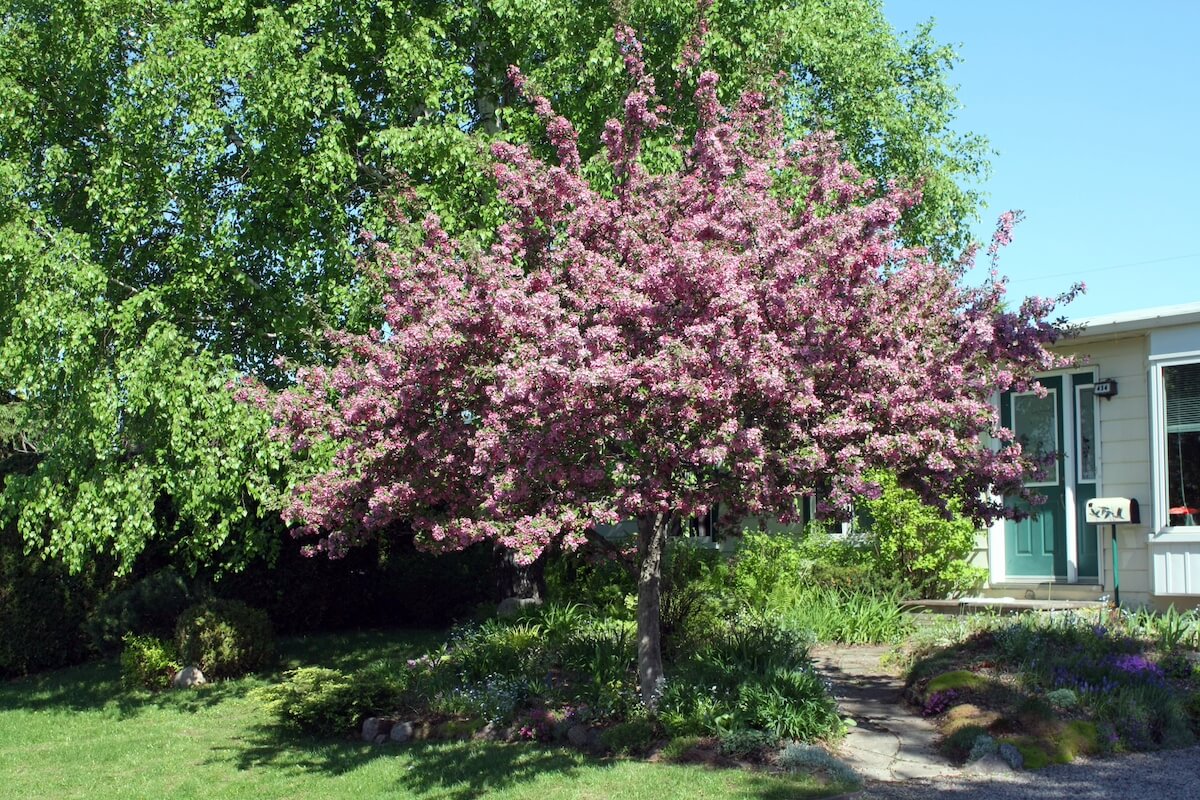
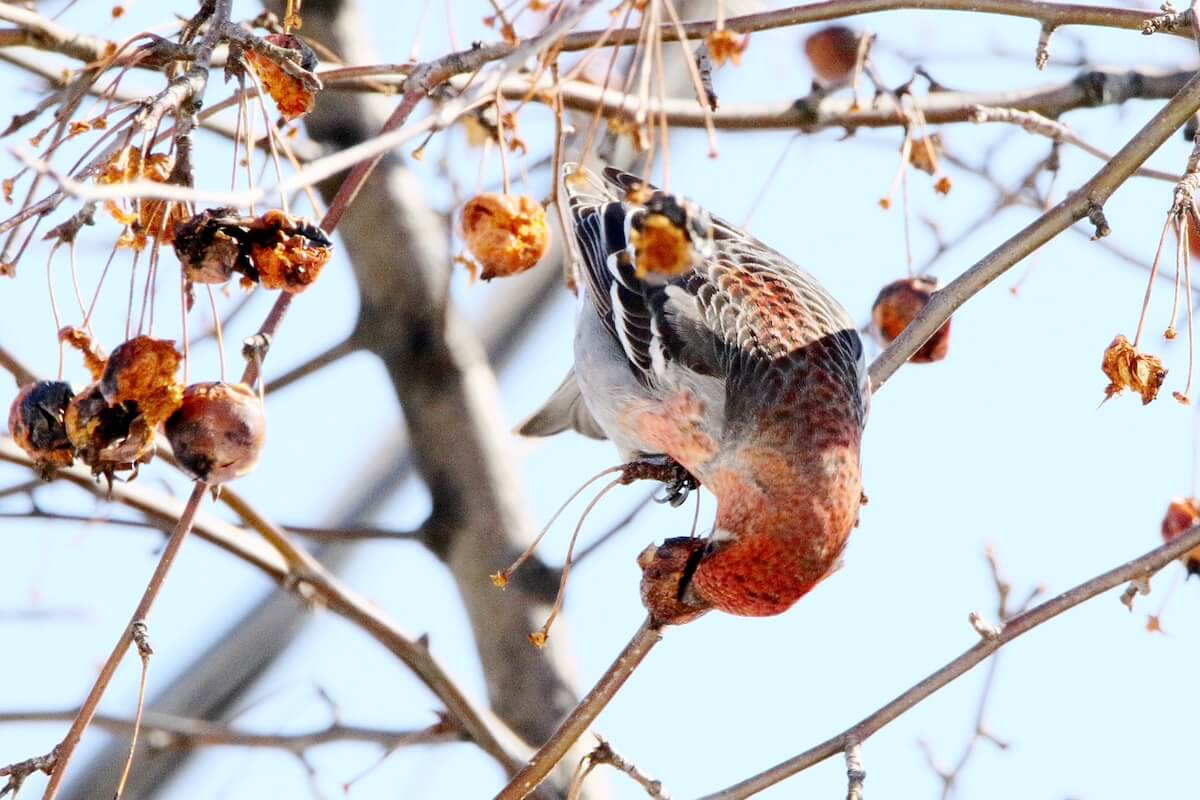
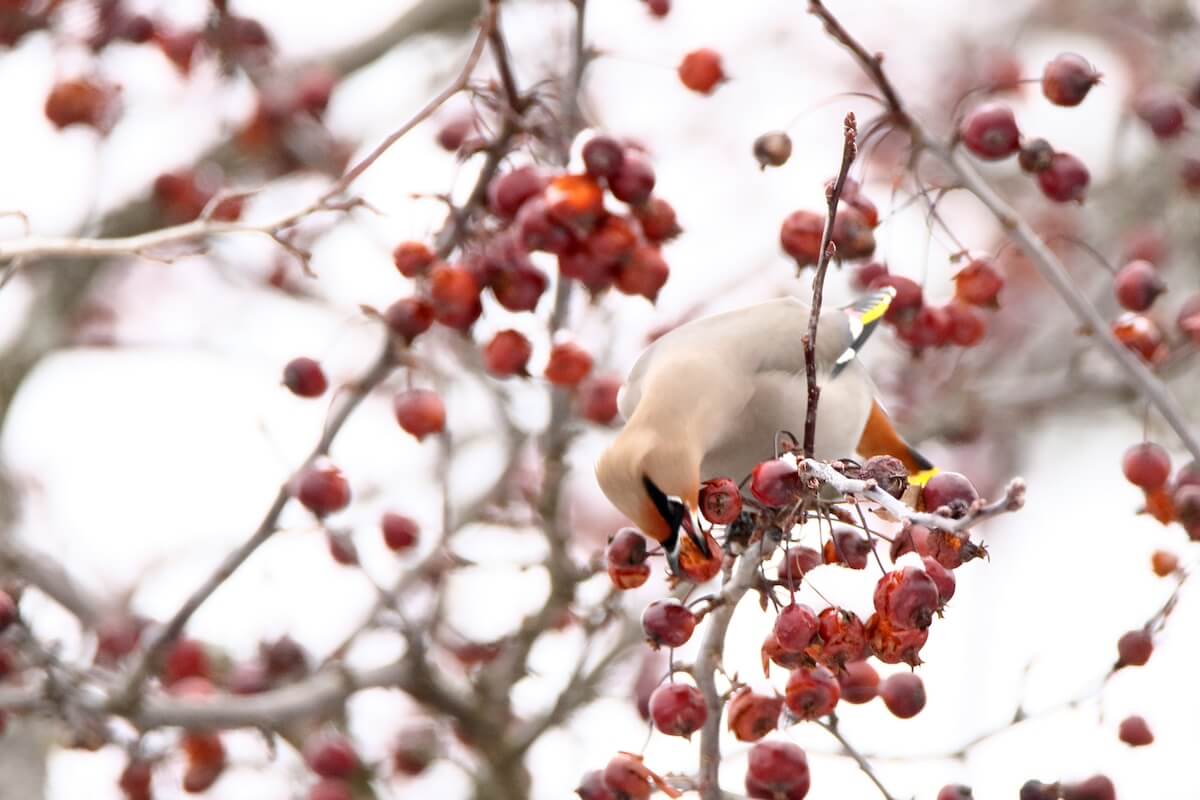
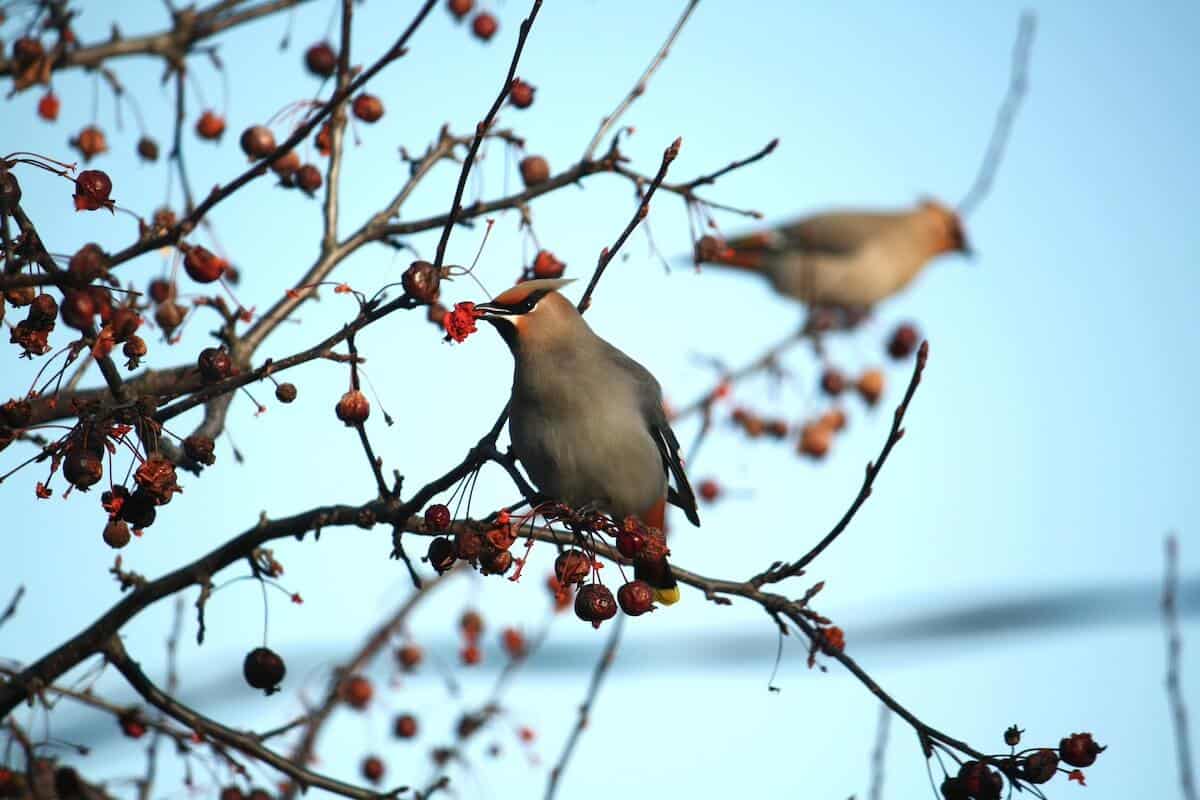
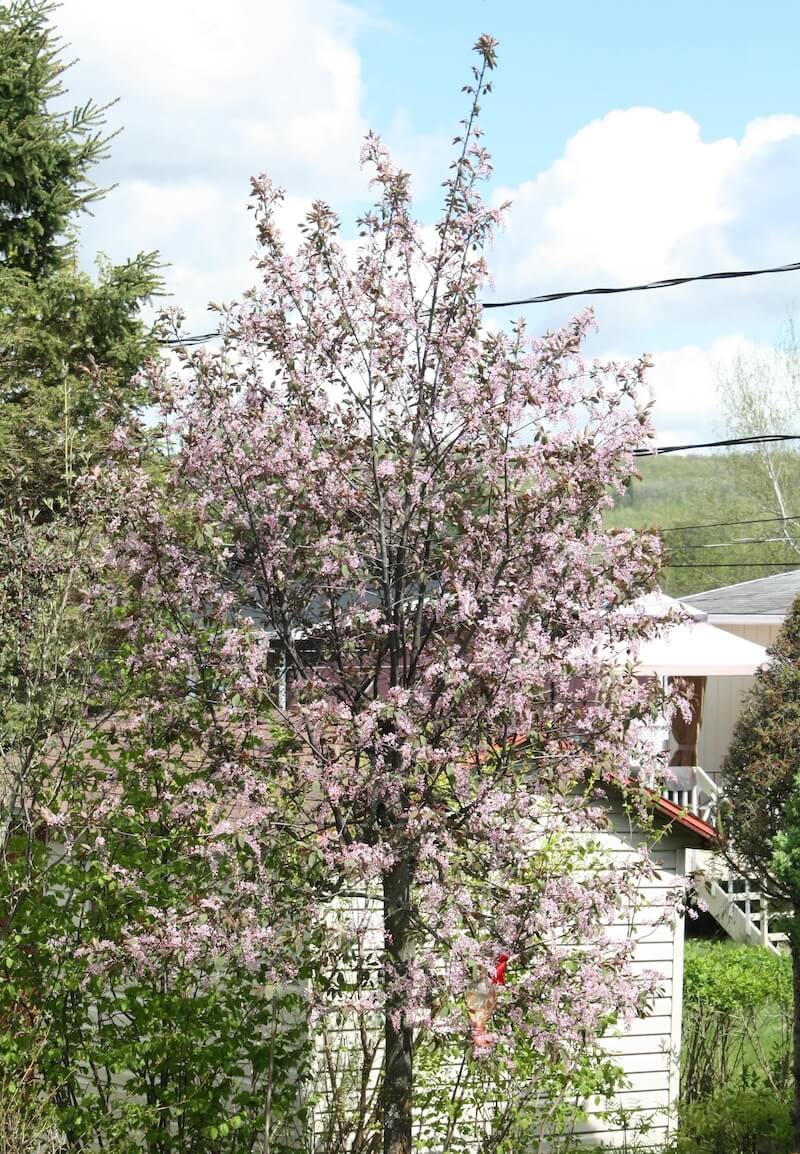
Mr. Sparrow: If only you could see it in bloom in the spring! At this time of year, it’s the first to attract various warblers that come looking for insects there. During the winter, it draws a multitude of birds such as boreal waxwings, northern cardinals, wandering crossbills, and even American robins that have stayed in our region precisely because they find fruit trees here. This ‘Indian Magic’ crabapple tree (Malus x ‘Indian Magic’) has been here for over thirty years. It thrives, basks in the sun, and produces a bountiful harvest of small crabapples that are a real treat for my guests!
Alex: My dear Mr. Sparrow, you amaze me! How were you able to identify this variety of crabapple tree even though you knew the birds would feast on it? Is there a secret?
Mr. Sparrow: I’ll let you in on a secret—though it’s not really a secret. At first, I didn’t know if the fruit on this tree was the right size… I’ve since discovered, while leafing through a specialized book on crabapples, that the fruit must be one-quarter of an inch or smaller—that is, 6.3 mm—for the birds to swallow them in one gulp. Others, however, can easily tackle larger fruits. When I worked at the Quebec Zoological Garden, there were very often pine grosbeaks in the crabapple trees of the building next door.
Three-lobed viburnum
Alex: I see a small tree in front of your house, in that slightly shaded corner. It’s a pimbina, right?
Mr. Moineau: Yes, I suppose so. Actually, that’s the common name our grandparents used. Its real name is the three-lobed viburnum (Viburnum trilobum). It produces beautiful little red berries that also attract the American robin, the northern thrush, and others. Sometimes, however, the foliage is attacked by the viburnum leaf beetle, which leaves only the skeleton of the leaf in its wake. That’s a shame. They say it’s not fatal to the tree, but if the infestation persists severely for several years, it seems the tree can die from it.
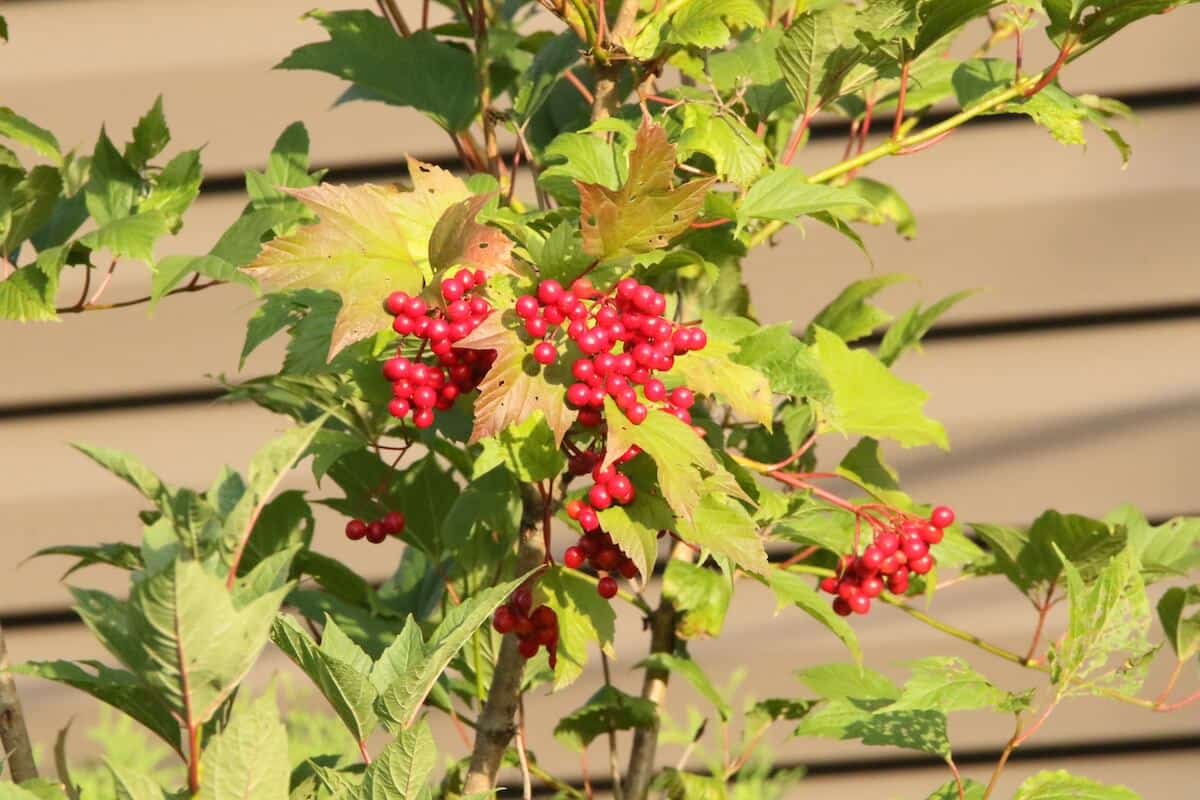
Alex: Oh! I’m glad you told me that. I’ll think twice before buying one. In the corner of your backyard, is that a three-lobed viburnum next to your hawthorn?
Hawthorn
Mr. Moineau: Yes, that’s exactly it. I’m so eager to see my fir tree warblers that I planted two. Speaking of my hawthorn (Crataegus spp.)… You see, I actually have two of them. They’re not the same shape or size. I picked them up at the same time in a vacant lot just a few steps from here. They’re wild hawthorns, and I got permission to harvest them because the tractor was going to run them over. I killed two birds with one stone.
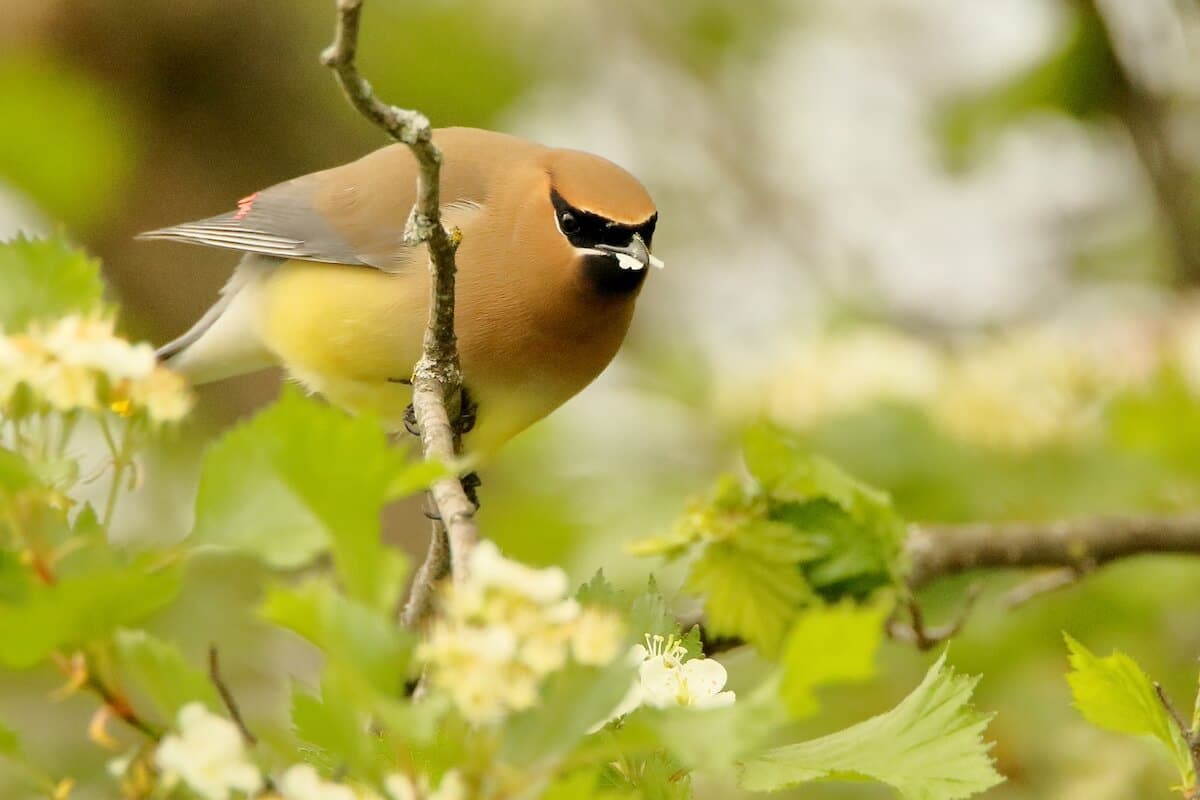
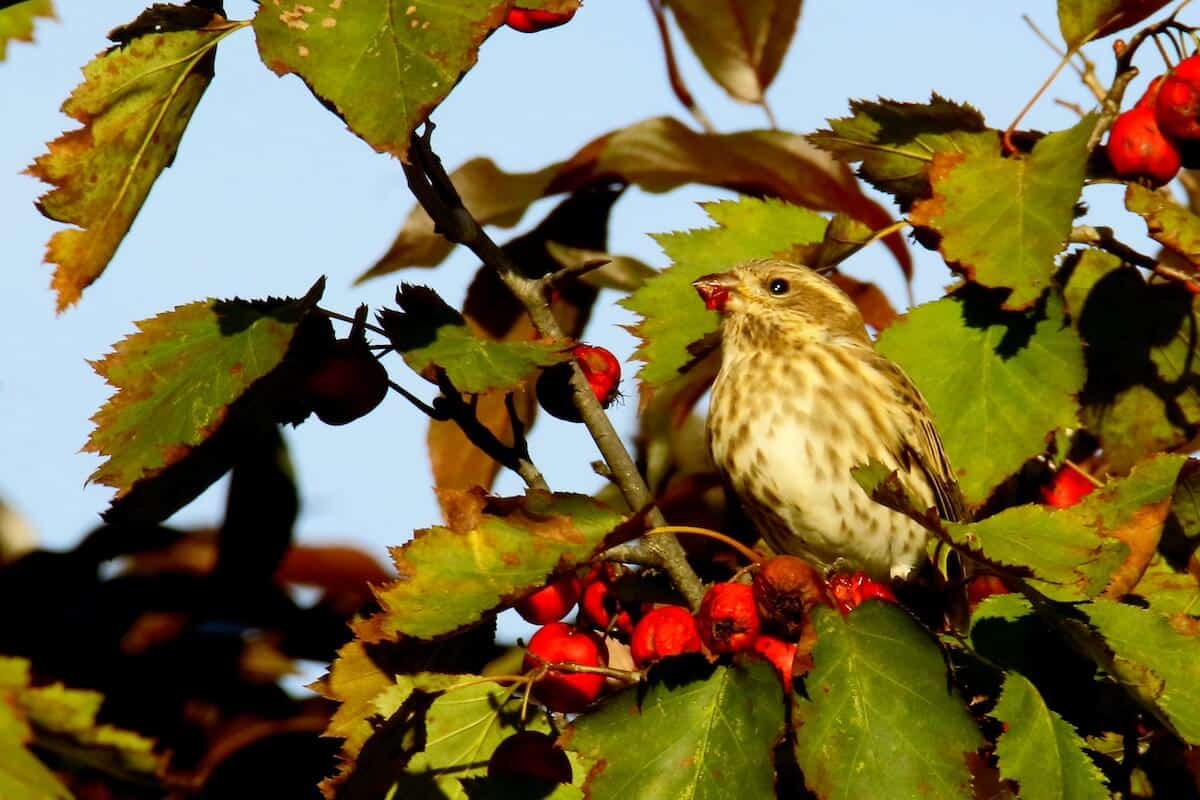
I did myself a favor and protected these two native plants. You know, there are about twenty species of hawthorn in my area, and several hundred in North America. Plus, they hybridize easily with one another! No wonder it’s often difficult to identify them with certainty. In the past, because their thorns provide excellent protection for birds, I’d bought a magnificent ‘Toba’ hawthorn (Crataegus × mordenensis ‘Toba’). What a disappointment when I later discovered that this cultivar was inerme, meaning “thornless.” Yet the tree was sold without that detail…
Protective spines
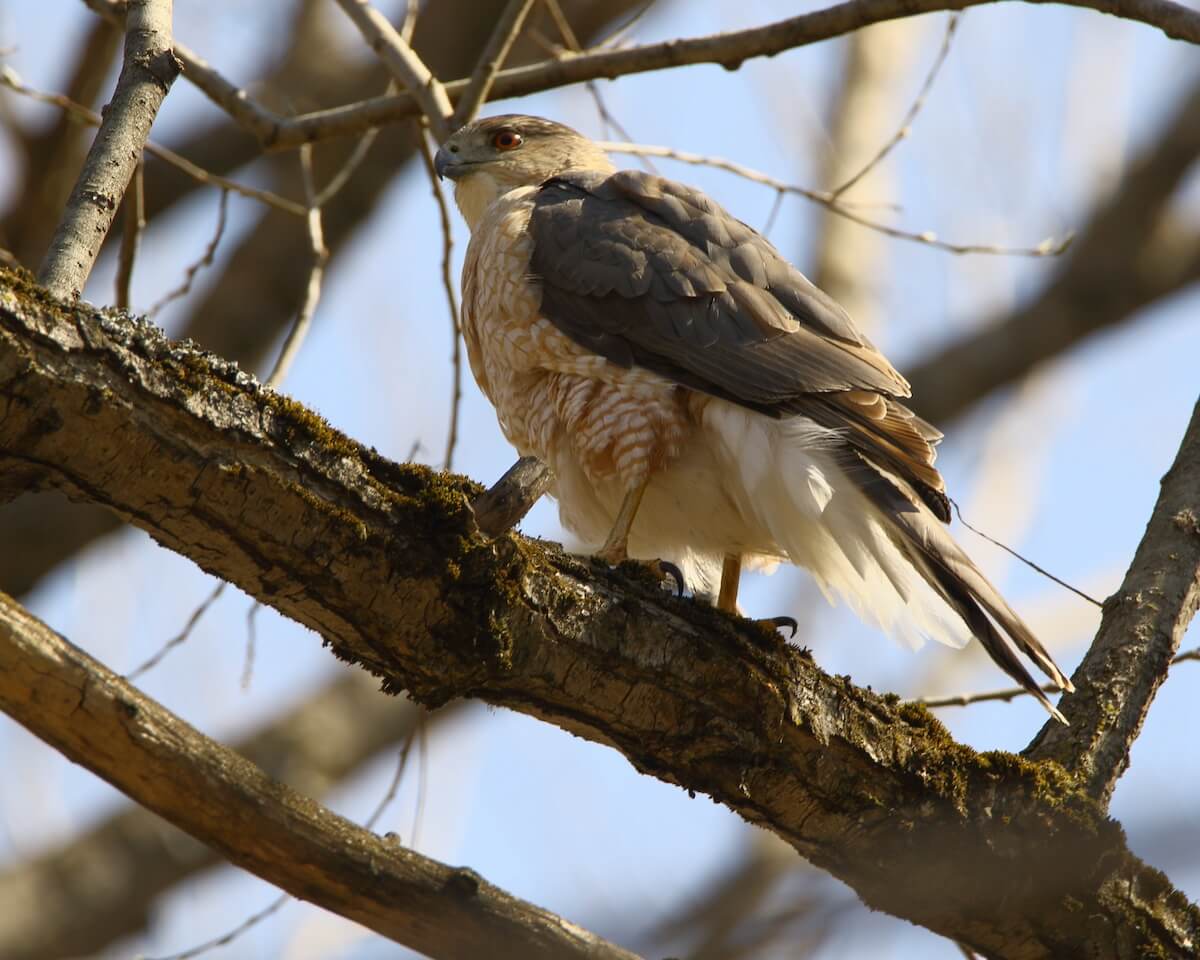
In fact, my two hawthorns, with their thorns, are a veritable fortress that keeps the birds safe. Try to imagine a bird of prey—like a Cooper’s hawk—trying to swoop down into that tree. Impossible! The same goes for cats.
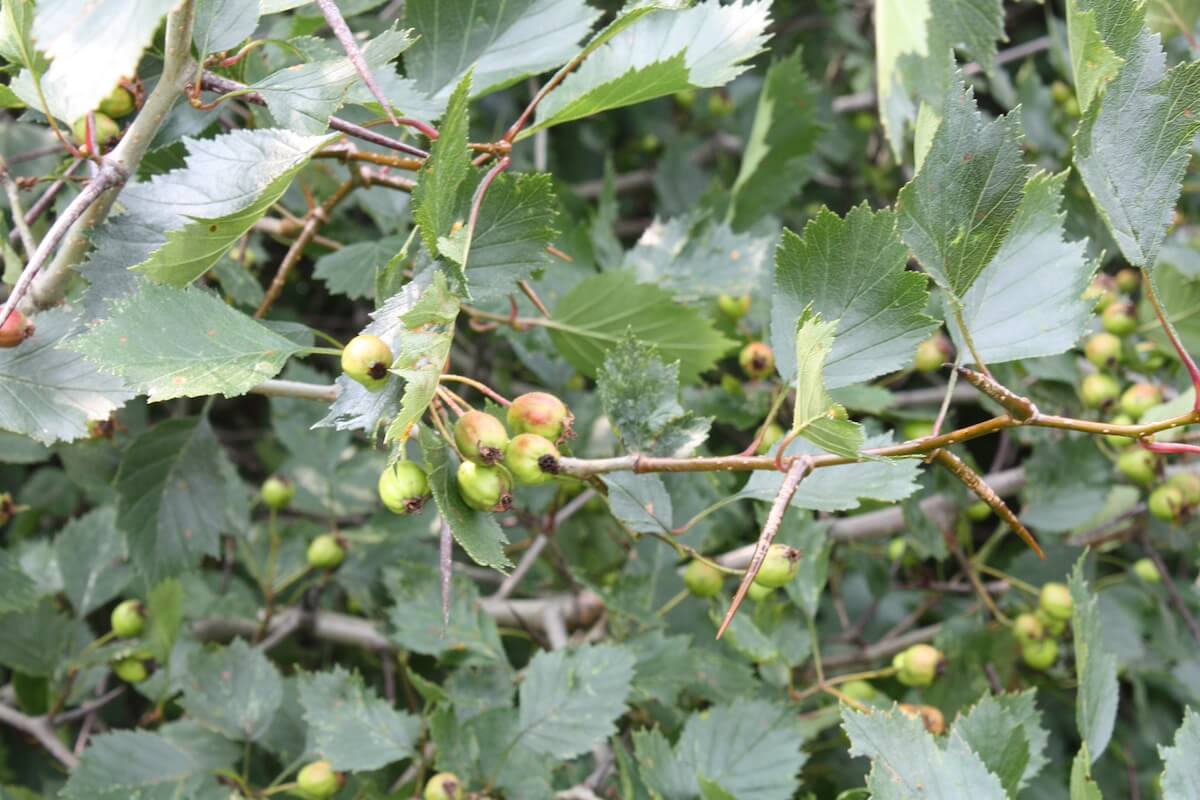
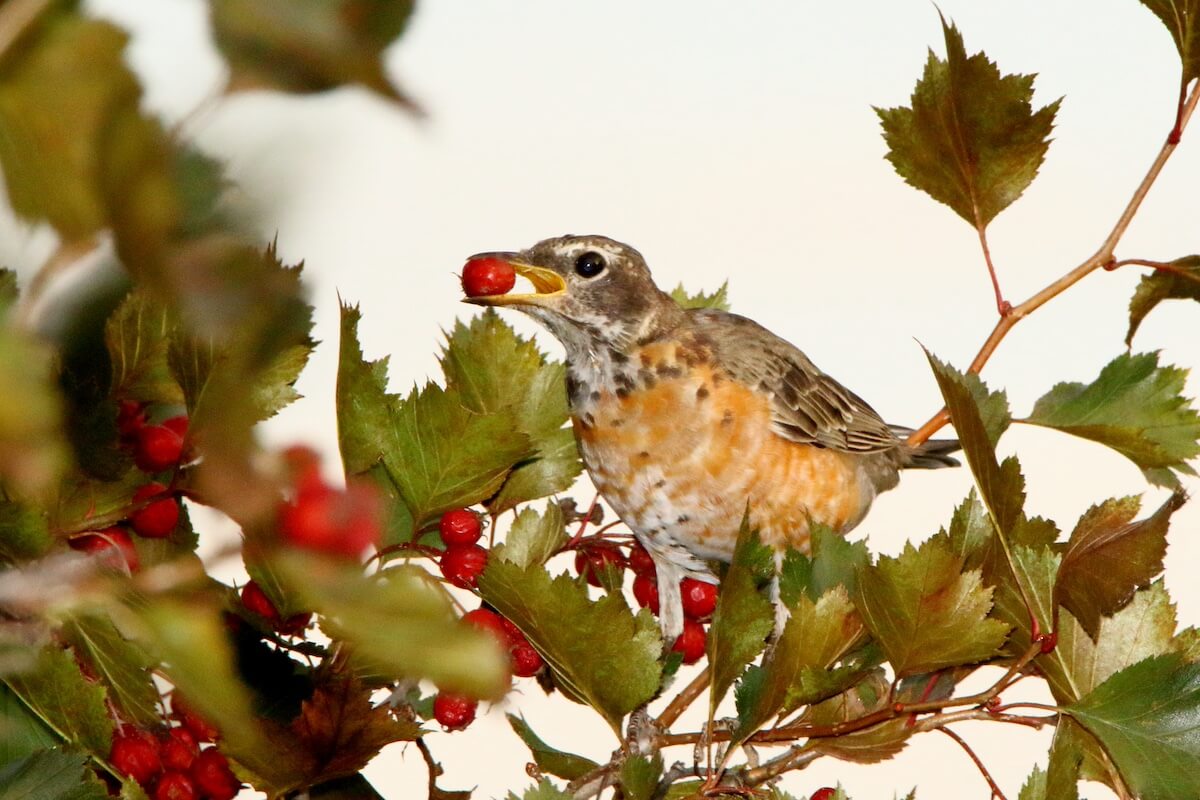
I watched American waxwings feeding on flower petals—just as they do with apple blossoms—and the American robin, the purple finch, and the wandering crossbill eating the fruit. To my great amazement, I even photographed a spotted woodpecker eating the fruit. That was quite a surprise! You know, this species is known for licking sap from trees after pecking holes in the bark with its beak.
Alex: What else do you have in your yard that you use as a pantry? I see some small shrubs with red berries over there. What are they?
Winterberry
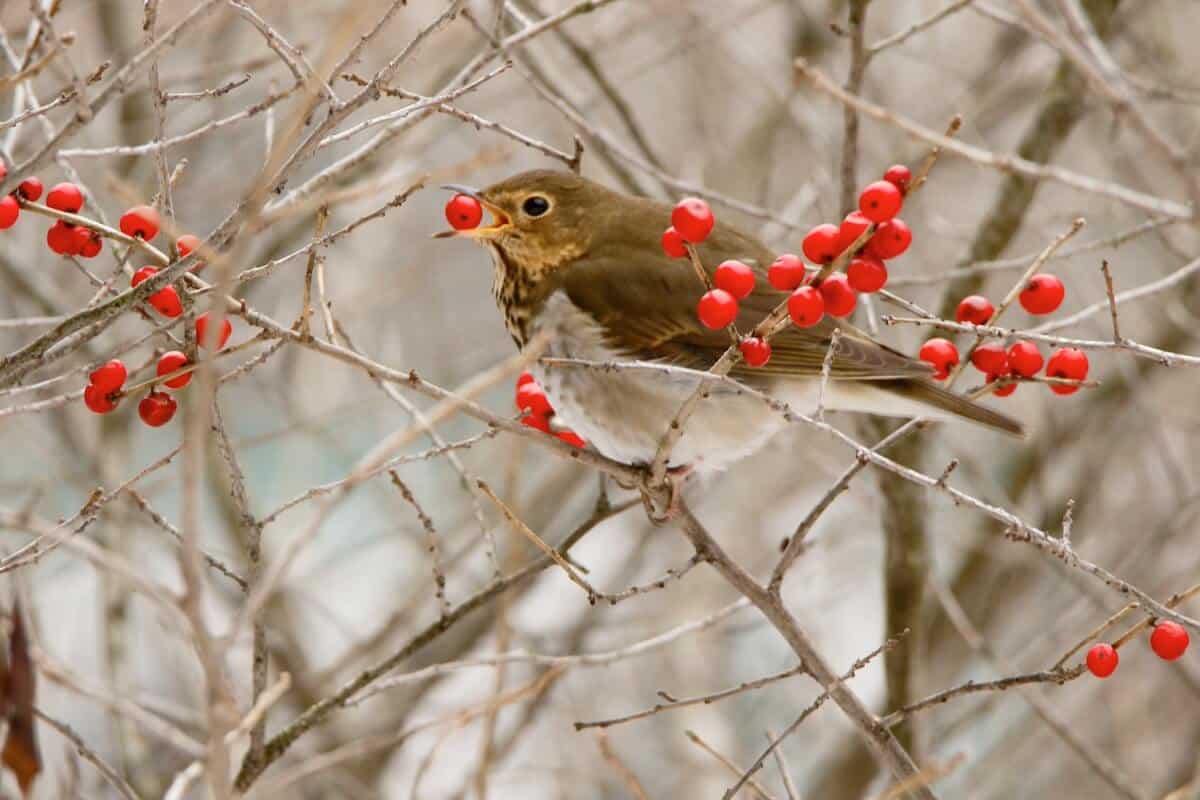
Mr. Sparrow: These are two winterberries (Ilex verticillata). The one on the left, with the berries, is the female. Only female plants produce fruit. A male shrub is needed for pollination. Winterberries are dioecious, meaning male and female flowers are borne on separate plants. They should be planted within five metres (16 feet) of each other. You can tell them apart by the shape of their flowers.
Black chokeberry
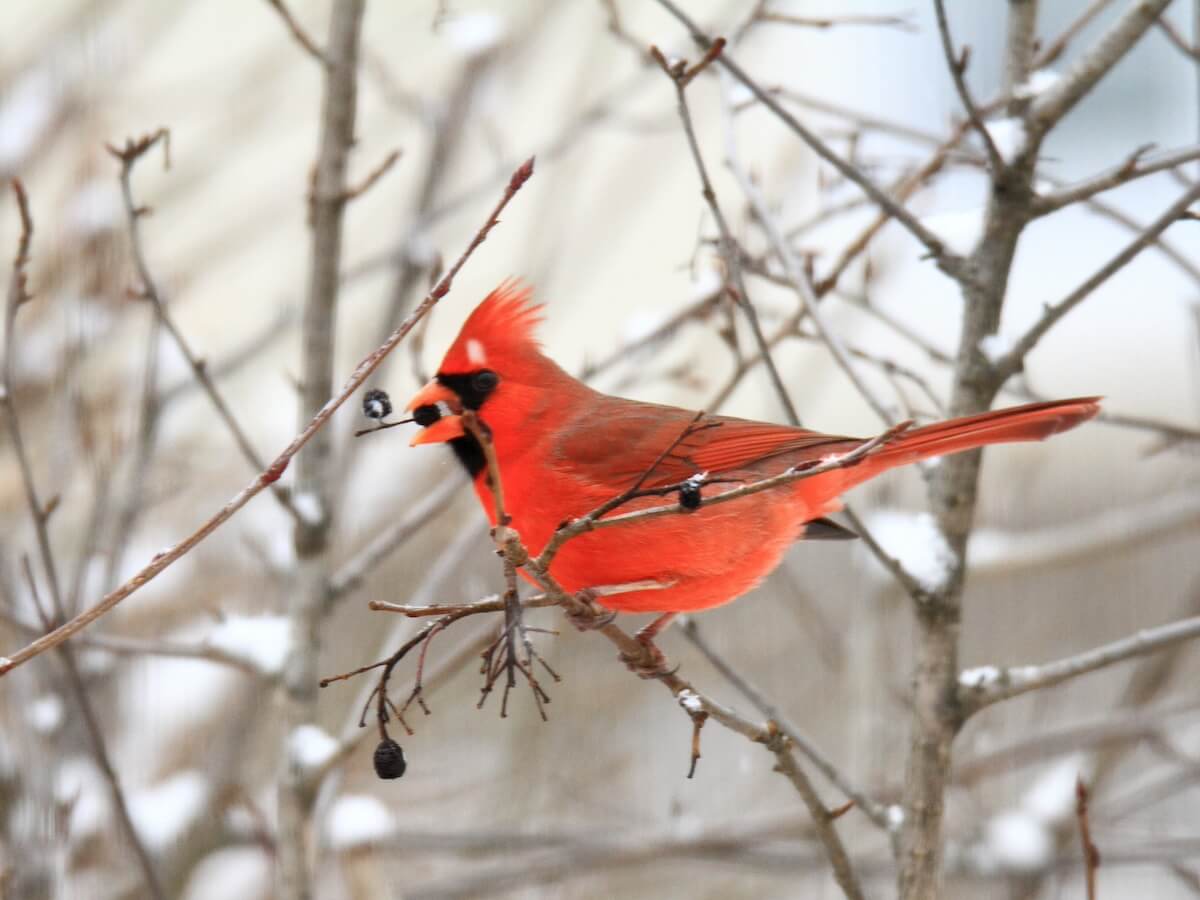
I once had a black chokeberry (Aronia melanocarpa). It attracted Northern Cardinals, Evening Grosbeaks, and House Finches. It’s also a good choice for attracting birds: neither too large nor too small, it takes up little space, and its glossy foliage is very attractive.
I had a Peking cotoneaster (Cotoneaster acutifolius) growing beside it. This is another attractive shrub with glossy foliage. Some people prune them into hedges, but doing so reduces fruit production.
Alex: What’s that other shrub next to your hawthorn? Is it another hawthorn? It’s covered in little thorns. It must be prickly!
Barberries
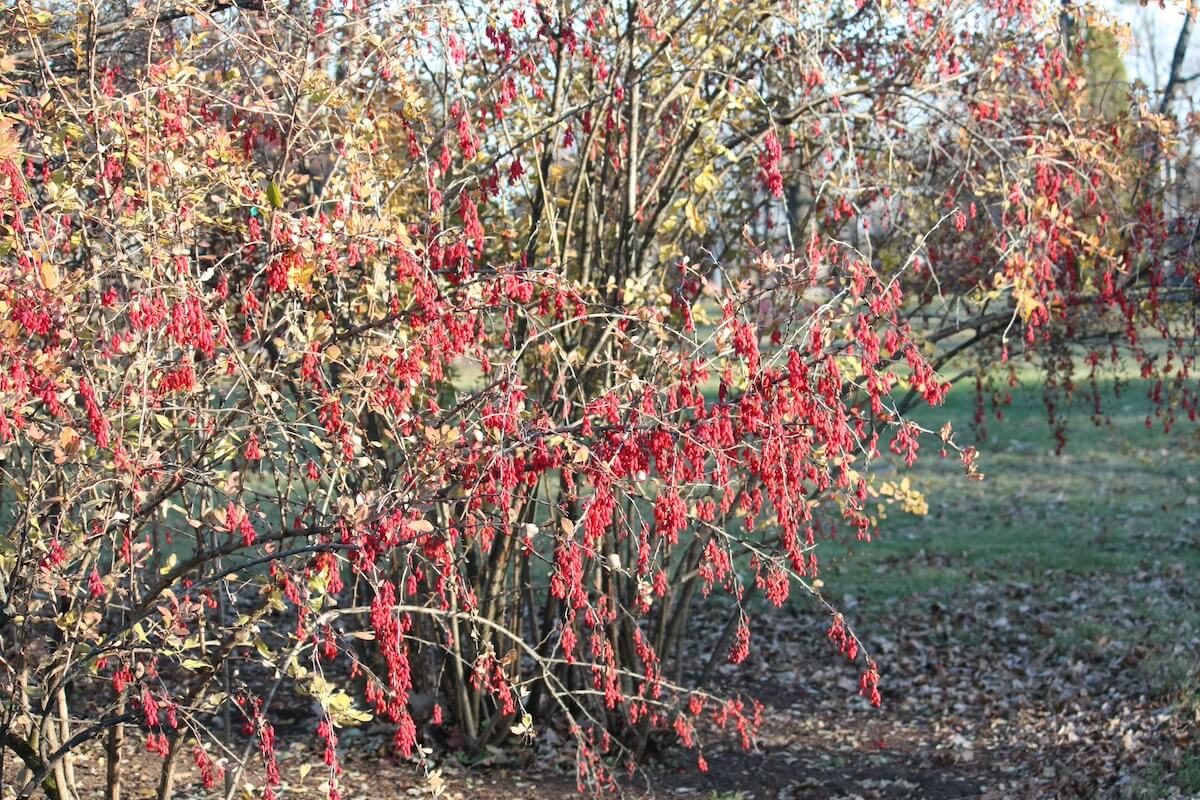
Mr. Sparrow: It’s a common barberry (Berberis vulgaris). It was already there when I moved in. It attracts several bird species, including the Bohemian Waxwing. However, pruning it is quite an ordeal! Its slender thorns easily pierce gloves. Its sale is now heavily restricted in many parts of North America because this species can serve as an alternate host for wheat stem rust, a serious disease of cereal crops. That’s a wise decision if we want to protect crops.
I also had another species, Japanese barberry (Berberis thunbergii), or at least I believe that’s what it was. It grew very wide and became cumbersome. It wasn’t very tall, but it was just as prickly. This species is considered invasive in many parts of North America, particularly in the northeastern United States and eastern Canada. Its sale or cultivation is prohibited or restricted in a number of states and provinces, although regulations vary considerably from one jurisdiction to another. Many cultivars are still available in areas where their sale is permitted. Birds eat the berries, which unfortunately contributes to the plant’s spread into natural areas.
Alex: Tell me, Mr. Sparrow, you seem to have covered just about everything in the garden, but you forgot to tell me about those two trees on the left at the back of your yard. What are they?
Ornamental crabapple
Mr. Sparrow: You’re right, my friend—it’s a long story! Several years ago, I found a young seedling growing between two rocks in Quebec City’s Old Port and noticed that it had red leaves. The plant was barely 10 centimetres (4 inches) tall. I thought it was a purpleleaf sand cherry (Prunus × cistena). As you can see, I was “slightly” mistaken. My little shrub is now more than 8 metres (26 feet) tall! It turned out to be an ornamental crabapple (Malus spp.).
Alex: You’re lucky. Another kind of crabapple to feed the birds.
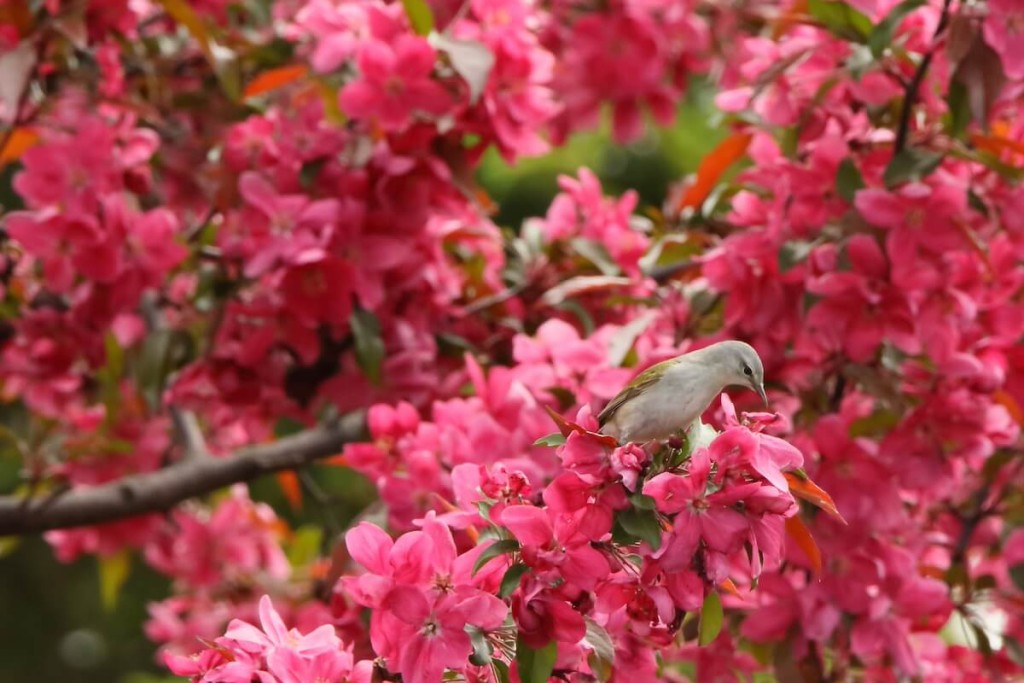
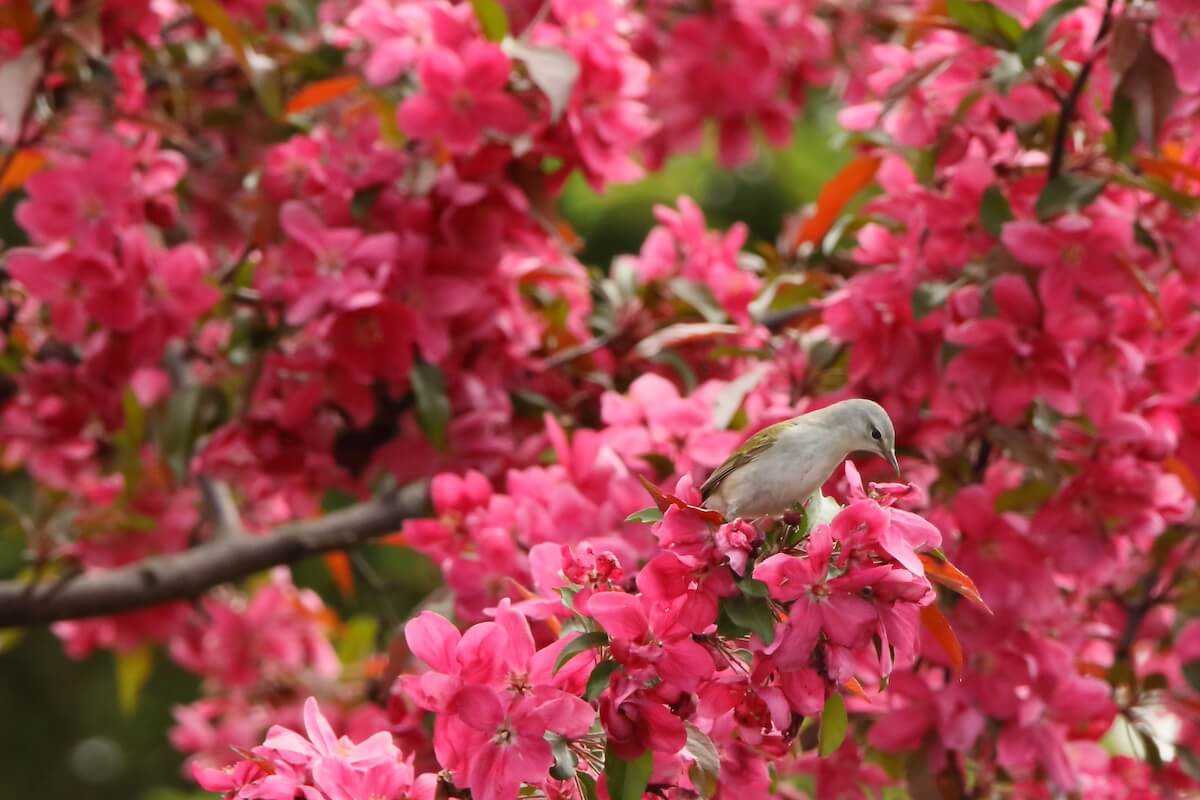
Mr. Sparrow: Not really, Alex. As I was saying, the fruit needs to be fairly small. Look at these crabapples—they’re large, and the birds barely touch them, as I’ve noticed with waxwings. Still, with its dense, spreading crown, the tree provides excellent shelter, and it attracts Tennessee Warblers that come to catch insects among the blossoms. I’m quite fond of it. What’s more, it grows in an informal, untrimmed hedge where no two trees or shrubs are of the same species. Take a good look—you see? It has a very natural appearance.
‘Schubert’ chokecherry (Prunus virginiana ‘Schubert’)
As for the other tree, that was a difficult decision. I had planted a ‘Schubert’ chokecherry (Prunus virginiana ‘Schubert’), but it became infected with black knot, a disease caused by the fungus Apiosporina morbosa. It’s not a pretty sight. Excuse the expression, but the black, swollen growths look like big pieces of dog poop!
To manage the disease, you can prune out the affected branches, disinfecting your pruning tools between cuts to avoid spreading the fungus, or remove the tree entirely. I chose the latter.
Serviceberry
I then decided to replace it with a serviceberry. I had considered Canada serviceberry (Amelanchier canadensis), but ultimately chose ‘Ballerina’ apple serviceberry (Amelanchier × grandiflora ‘Ballerina’). With its relatively modest size and its berries, it attracts Cedar Waxwings, American Robins, and Purple Finches. It’s a good choice.
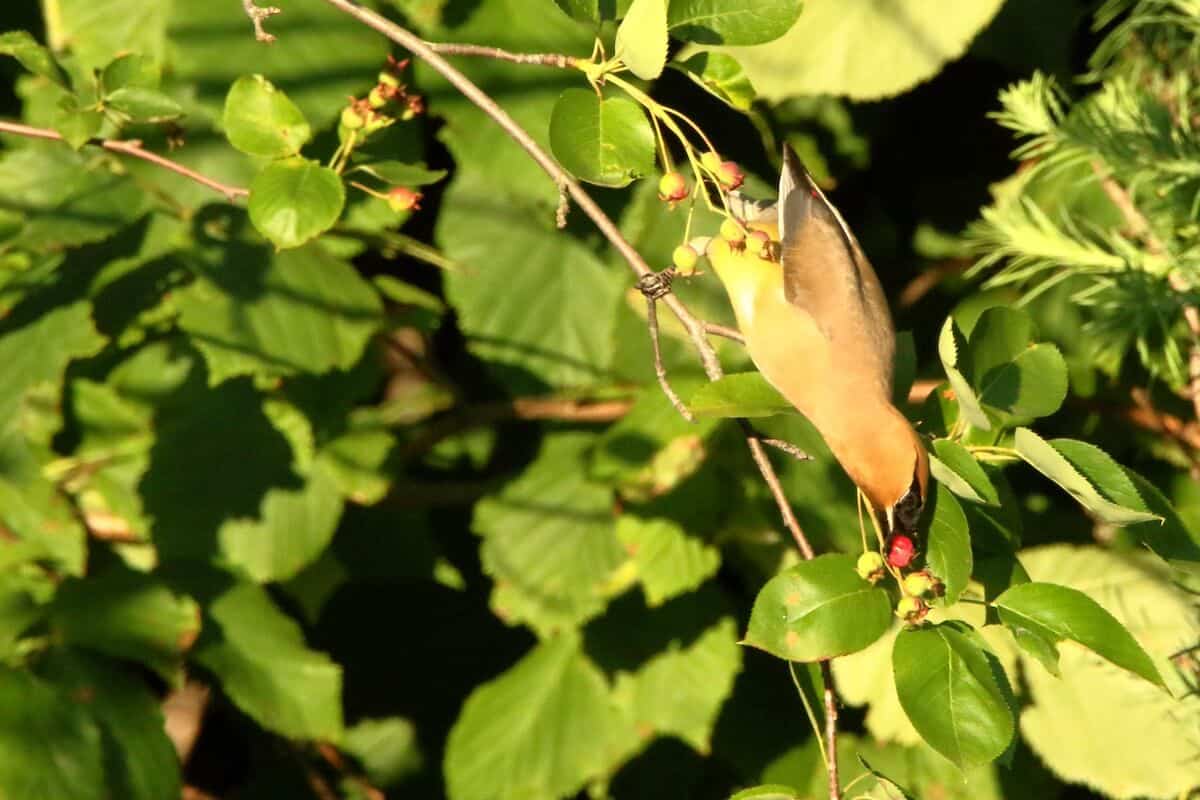
You know, fall is approaching, and nurseries and garden centres often start discounting plants as early as August. It’s worth taking advantage of those sales! This is also an excellent time for planting. Plants gradually begin to slow their above-ground growth, while conditions are favourable for root development. Along with spring, fall is one of the best times of year to plant.
Come to think of it, I should stop by my favourite garden centre and see what’s on sale. It’s also the season for planting spring-flowering bulbs that will brighten our gardens next spring.