


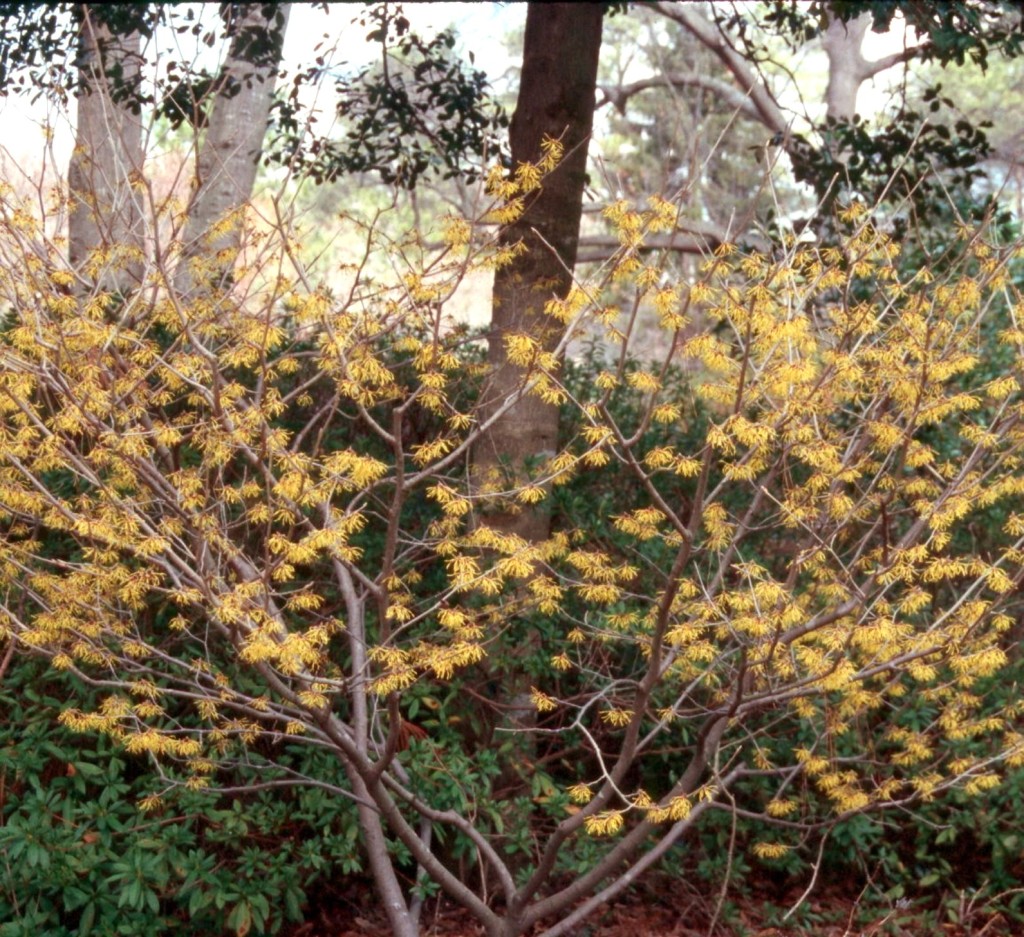
American witch-hazel is one of the few witch-hazels that blooms in the fall rather than the spring. Photo: kiefernursery.com
Question: My landscaper planted an American witch-hazel at the end of a major relandscaping project in my garden last July. Since I had to water the new lawn every other day, it received a lot of water and I think the shrub got a bit overwatered, because it didn’t survive. However, my landscaper agreed to replace it with a new one this spring.
Do you have any specific advice for making sure this new witch-hazel survives? Fertilizer, watering, planting advice, type of soil, etc.? I just love this shrub with its late flowers and bewitching scent and want to make sure I succeed this time!
Sophie Blanchet
Answer: I think you’re right about the overwatering, as American witch-hazel is not considered in any way difficult to grow. But it’s hard to meet the considerable water requirements of a freshly installed lawn without harming the surrounding plants at least a little, and freshly installed plants are just a bit more fragile than others. So, essentially, you were unlucky … but, with the lawn now well established, there’s no reason to be very concerned about this spring’s planting.

The American witch-hazel (Hamamelis virginiana) is not very particular about its needs. Just water it normally, that is, soak the root area when the soil feels dry to the touch, then wait until the soil is to dry out again before watering again. That way, it should settle in perfectly. By the second year, it should need practically no care whatsoever, except watering during periods of extreme drought.

Witch hazel adapts just about every soil type: rich to poor, moist to relatively dry, and acidic to neutral. However, it won’t tolerate saline soils nor very compacted ones. It’s even adapted to both sun and shade: how many other shrubs are that versatile? In the wild, it grows from southern Canada to northern Florida, so shows a considerable hardiness range: USDA zones 3 to 8; AgCan zones 4b to 8, although it is a temperate climate plant and won’t do well in areas with very mild winters.
There is nothing special to emphasize about planting a witch-hazel compared to any other shrub. Just prepare a hole the same depth as the root ball and three times as wide, center the plant inside and backfill the hole with the soil you removed. Amending the soil is not recommended. Gently tamp the soil down and water thoroughly. Cover the areas with 2 to 4 inches (5 to 10 cm) of the mulch of your choice in order to moderate soil temperatures and reduce evaporation. It will need little if any fertilizer: as the mulch breaks down, it will supply any minerals necessary. Just top the mulch up as necessary (some mulches decompose more quickly than others).

Finally, American witch-hazel being a very large shrub, even a small tree, from 11 to 20 feet (3.5 to 6 m high and wide), you might find it necessary to prune it from time to time to keep it under control. This is best done in late fall after flowering.
Best of luck this time around!