


By Glenn Anderson
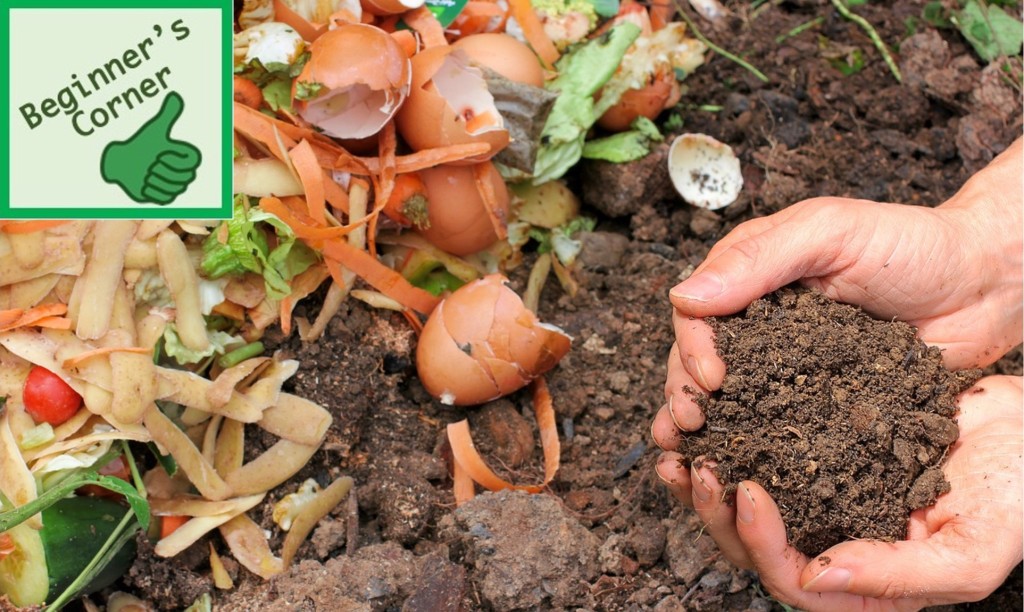
Finding compost substitutes at home may sound tricky if you’re new to gardening. However, it’s the opposite, because your kitchen and yard have a plentiful supply of food waste and ingredients that you can use for compost.
Compost is an organic and controlled decomposition process that conditions your soil for better growth. So, it’s essential to know the items usable as compost alternatives.
This article contains seven promising compost substitutes that you’ll be grateful to know about. We’ve covered the method of applying them in soil. You can then learn about some unsuitable ingredients for compost.
So, let’s dive right in.
These 7 Options Can Replace Your Typical Compost at Home
Those seemingly useless, rotten, and irrelevant items that you’ve overlooked all your life can help you make good compost for your garden. Some of these items may be entirely new for you, some bizarre, while some are stuff you’ve seldom used.
Let’s check out those seven items that can work as compost substitutes and their step-by-step methods.
1. Coffee Grounds

Don’t throw away used coffee grounds; you can exploit them as an easy compost substitute. Coffee grounds enhance water retention, aeration, and drainage in the soil.
How to do it:
- Step 1: Collect the recently brewed coffee grounds in a pot, or buy them from the local store.
- Step 2: Simply spread them around your plant or the garden bed. It’ll take effect over time.
Did you know that you can regrind your used coffee in a burr coffee grinder for more uniform and smoother grounds? Use this tip about coffee grounds for better implementation in the garden bed.
Even worms love coffee grounds, which work effectively for your garden bed and plants.
2. Bokashi Compost

Bokashi compost is an alternative to compost that works by fermenting fruit and veggie peels, leftover meat, eggshell, etc., in a tightly sealed bin. It applies anaerobic fermentation through inoculated bran, turning the collected waste into compost. It’s one of the most effective indoor composting methods.
How to do it:
- Step 1: Buy a bokashi bin or make one for yourself.
- Step 2: Add leftover fruits, vegetables, meat, nuts, eggshells, etc., to the bokashi container.
- Step 3: Pour and spread bokashi bran all over the leftover items.
- Step 4: Add coffee grounds if there is a lot of meat.
- Step 5: Cover with a snug lid to keep air out.
- Step 6: Let it decompose for two weeks.
- Step 7: Work the fermented compost into the soil of your garden so it can nurture your plants.
Ensure that you drain the bokashi tea, the highly concentrated juice of the decomposing items, every 2–3 days. Dilute the tea, one tablespoon (15 ml) of tea to one gallon (4 liters) of water, and apply it to the plant’s soil and roots as a fertilizer, avoiding the leaves and branches.
3. Vermicompost

Utilizing wiggly and slimy worms to compost soil might sound nasty, but you’ll be amazed at the results. Vermicomposting involves feeding the worms scrap foods that they will excrete as compost—and you have the vermicompost ready. It’s filled with nutrients and soil-friendly.
How to do it:
- Step 1: Start with a large plastic or concrete container.
- Step 2: Add a layer of soil or sand to the bottom.
- Step 3: Add mushy scrap foods like fruits, eggs, etc., to the container, keeping it in an even layer.
- Step 4: You can sprinkle a cow dung slurry over the food layer for quicker decomposing.
- Step 5: Collect red wiggler worms (or buy them) and release them evenly on the partly decomposed food scraps.
- Step 6: Cover the mixture to protect it from the sun.
- Step 7: If composting outdoors, cover the container with straw or leaves to keep out flies, birds, ants, mice, snakes, etc.
- Step 8: Drizzle water over it occasionally to keep it from overheating.
- Step 9: Check it after 20–24 days. Thousands of worms will be bred by now, and your materials will be fully composed.
Avoid meat, milk, onion, etc., in the mixture as it takes longer to decompose.
4. Chicken Manure
If you have chickens, their manure can substitute for compost. Chicken manure supplies micronutrients and macronutrients to your soil. It works as an excellent fertilizer for the garden bed and helps plants grow well.
How to do it:
- Step 1: Put the chicken manure on a flat surface.
- Step 2: Mix it with grass clippings.
- Step 3: Add some water to the mixture.
- Step 4: Add some dry hay.
- Step 5: Add some more chicken manure and some water.
- Step 6: Add cottonseed meal if so desired.
- Step 7: Repeat adding manure, grass clippings, and water.
- Step 8: Keep watering the pile to reduce dryness and make it absorbent.
- Step 9: Turn the pile over every 2–3 days. You can also do it every other week if you’re not in a hurry.
- Step 10: When your mixture has turned dark brown, it’s ready to use in your garden.
You can also use a probing thermometer to check the compost’s temperature. If it’s between 140 to 160 degrees Fahrenheit (60 to 70 degrees Celsius), it’s ready.
5. Cow Dung
Cow dung is suitable for delicate plants as it’s low in nitrogen. It’s the slowest of all compost substitutes. Typically, it takes five to six months before it is ready for compost. Fresh manure contains bacteria, which is why dried manure is the best choice.
How to do it:
- Step 1: Prepare a square 3-inch (7.5 cm) layer of dry organic materials (dry leaves, dry grass clippings, etc.), preferably 3–4 square feet (0,3 to 0,4 square meters).
- Step 2: Add a two-inch (5 cm) layer of dried cow dung on top.
- Step 3: Repeat the process until the pile reaches four feet (1.2 m) in height.
- Step 4: Drizzle water on the layer to keep it moist.
- Step 5: Turn the layer over every 3–4 days. Try to maintain its moisture, but don’t let it become soggy.
- Step 6: Keep checking its temperature until it has reached 120 to 160 degrees Fahrenheit (50 to 70 degrees Celsius).
- Step 7: Your compost is ready if it looks like crumbs and the center is no longer hot.
6. Kitchen Waste

Utilizing kitchen waste is a smart way to help keep the environment clean. Bananas and eggshells are among the more useful kitchen wastes for compost. The potassium in banana peels and the calcium in the eggshells make them highly beneficial for soil. However, pretty much any scraps of fruits or vegetables will do.
How to do it:
- Step 1: Cut banana peels into tiny pieces.
- Step 2: Crush eggshells into powder.
- Step 3: Break other scraps into small pieces.
- Step 4: Mix the trimmed peels, powder and scraps well.
- Step 5: Mix it with the soil in your garden or around the plants.
7. Mulching
You can either make or buy organic mulch for your garden. Mulching is a comparatively easy and practical means of retaining moisture, reducing weeds, and increasing nutrients in the soil. This process allows you to utilize chopped leaves, yard waste, newspaper, buckwheat or rice hulls, etc., as compost.
Homemade partially decomposed mulch is a long-term product. It takes around twelve months to reach the final stage.
How to do it:
- Step 1: Chop and trim all the available yard waste, dried leaves, rice hulls, newspaper, etc.
- Step 2: Take a suitable compost bin and add the materials.
- Step 3: Turn the materials every 2–3 months.
- Step 4: In 11–12 months, your mulch compost will be ready.
How to Control Bad Smells while Composting

Composting is a time-consuming yet necessary task if you want to nourish your garden. However, many people avoid doing it because of the nasty smell it can produce.
You can hack the odor of composting with a few smart moves. We’re going to share two of the simplest smell controlling techniques as follows:
1. Freezing Scrap Foods
Freezing suppresses the odor by killing bacteria in the scrap food items. Follow the steps below:
- Step 1: Put your scrap food items in an airtight container.
- Step 2: Keep the container in your freezer.
- Step 3: Keep filling the container with scrap foods until complete.
- Step 4: Take out the whole container and compost the items.
Freezing can keep the fruit flies away from the food pile and slow the rotting.
2. Dry Covering
The foul smell is a no-escape condition if you’re composting with cow, goat, or chicken manure. A simple way to avoid the smell is:
- Step 1: Block the aeration of your manure pile with rough sheets, dry leaves, or straw.
- Step 2: Keep an eye on the covering regularly, ensuring it doesn’t get moved. Add to the cover necessary materials if required.
The smell of manure can annoy your neighbors. So, try to suppress it as much as possible.
Things You Shouldn’t Use to Make Compost
It’s good to know about what you shouldn’t use as compost substitutes. Using bad alternatives can harm plants, create an intolerable smell, attract fruit flies and rodents or cause other problems.
Here’s a helpful list:
- Pet waste and litter
- Animal fats, oil, or grease
- Charcoal ash
- Fish or meat bones
- Unhealthy plants
You can keep this list as a guide to avoid using such items as compost substitutes.
Bottom Line
By this last segment of our article, you must’ve realized that the compost substitutes at home are doable. Nonetheless, their processes can be time-consuming, requiring patience and diligence.
Making compost with alternative items is cost-effective and requires no to intermediate level skills. The best part is that you can do it in your backyard, on the kitchen counter, or in a spacious room.
Now that you’ve piled up your precious compost, following one of our methods, explore more on compost substitutes to make your own compost manual.
About the Author
Glen Anderson is an incredible content writer. He is a gardener, a fitness freak, and has a firm belief in organic food. Glen has spent half his life digging up ideas for growing food and a variety of flowers in his garden. He loves writing about gardening as much as he loves taking care of his own backyard garden.