


Larry Hodgson has published thousands of articles and 65 books over the course of his career, in both French and English. His son, Mathieu, has made it his mission to make his father’s writings available to the public. This article was originally published in À fleur de pot magazine in November 1985.

Question
My Dracaena reflexa var. angustifolia (often known as Dracaena marginata) is 3 ft (1 meter) tall, but has no branches. I know I could stimulate branching by topping it, but I’m afraid such a practice would leave a stump or scar. I’ve seen one that was very branched but with no apparent wound. How do I do this?
Elaine Stutt, Moose Jaw, Saskatchewan
Answer
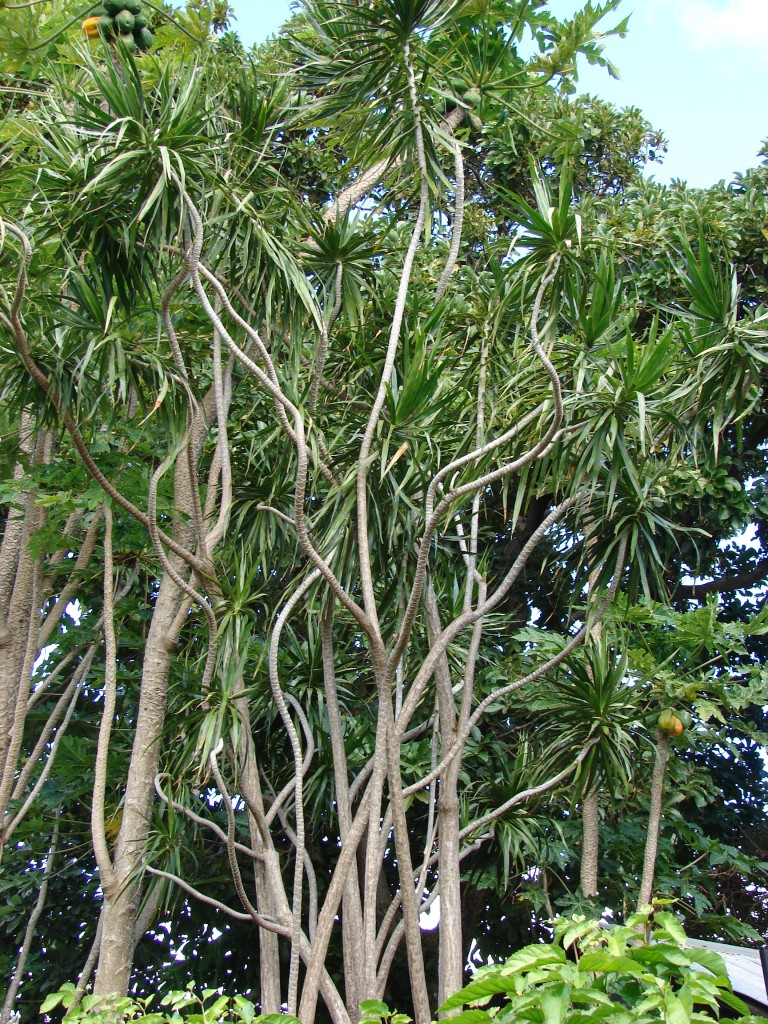
In nature, Dracaena reflexa var. angustifolia branches naturally, but only when the plant reaches adult stage. However, indoors, Dracaenas usually remain in their juvenile form throughout their life, as they don’t receive enough light to grow normally. You can cut off its head to stimulate branching, but the tree will bear an unattractive scar for a long time. And, since its growth tip is hidden in its foliage, it is difficult to pinch it off as you can with other plants. Unless you buy one that already has several branches (such plants are available in specialized stores), there is only one other way: turn it upside down!

Apical Dominance
You see, the reason your dracena doesn’t make branches is because there are hormones that prevent it from doing so. This is called apical dominance. The growth of the top of the plant is stimulated at the expense of the dormant buds on the stem. When the growth tip is pinched, hormones are released and the lateral buds are stimulated. This results in branches. If the head of the plant is lower than the stem, the same diffusion of hormones takes place and new branches will result.

Dracena head down
There are two ways to turn your dracena “upside down”. In young specimens, lay the plant on its side, placing the pot so that the head is lower than the stem. In the case of large specimens, a weight can be attached to the main stem. The dracena bends quite easily without breaking. After a few months, new branches will appear. It should be noted that this type of treatment also causes the main stem to become crooked. The head of the plant will try to straighten up during its “upside down” period, but the result is no less decorative. The multi-stemmed “crooked” dracena is actually the most appreciated by decorators.
Here’s some more information about the Dracaena family.