


I’m starting a brand new series of columns: In Mother Nature’s Garden.
I am very excited about this one, since it will be about the most laidback of gardening: wild gathering!
In these columns, you will discover (rediscover?) common plants, easy to find, and that are edible and/or medicinal (proven by science). Sometimes through articles, sometimes through videos, I will have the pleasure to introduce you to plants of all types that can be consumed. European friends, don’t be disappointed: many of the plants I will present will also be widespread in Europe, or have an equivalent.
Are you ready? Here we go!
The Trout Lily, Recognize the First Plant of Spring
It may not be THE first, but in my heart it is the first true sign of spring. Its leaves emerge from the ground in small rolled stems so sharp that they pierce the forest litter. Once these leaves are exposed to the sun, they unfurl and beautifully carpet the forest floor.

Every year, inevitably, the question comes up, “is this wild garlic?”
No!
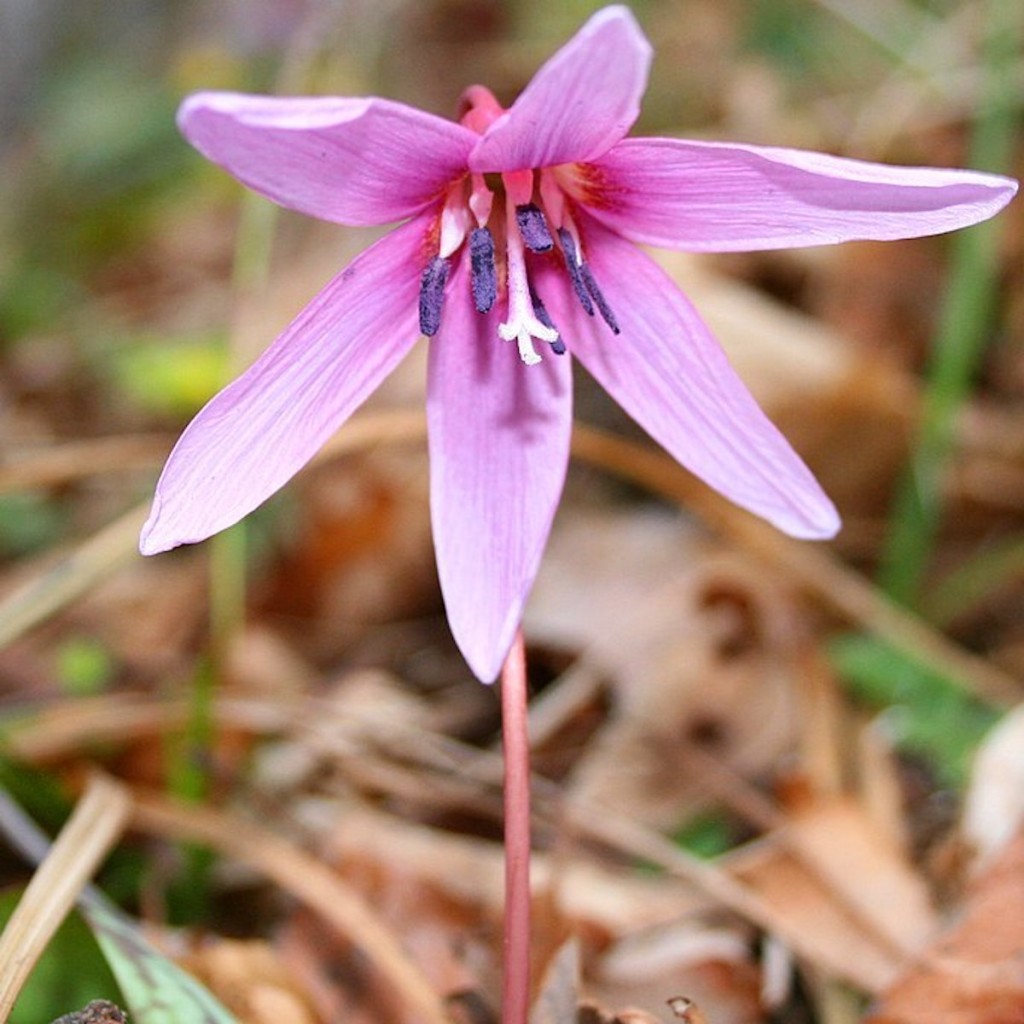
I know, we’d all like to find a gigantic talus of wild garlic this early in the year. But no, it’s not wild garlic. In fact, the American wild garlic (Erythronium americanum), as well as its European cousin the dog’s tooth garlic (Erythronium dens-canis) are very easy to recognize because of the purple spots on their leaves. Depending on the exposure to the sun or the growing period, they can be of a darker or lighter color, but they are indeed characteristic. In comparison, wild garlic is a beautiful uniform soft green and the leaves are larger.

Another way to identify the erythrone is its flower. This one is sadly turned towards the ground, but it is beautiful! The dandelion yellow color in America, and dark lilac in Europe, is a call to summer. So soon after winter, I don’t know about you, but in Canada, we NEED it. Lean in to see the flowers from the front. It’s worth it!
Above all, don’t pick the flowers: they are a vital springtime source of food for many insects!


What Can Be Eaten
Two things are edible on this plant: the leaves and the bulbs.
Two things are disappointing about this plant: the leaves and the bulbs!
(I think I’m funny! Hihi)
In fact, the leaves, in my opinion, taste awful. They taste like sweet soap… I know, not very tasty. They can be eaten raw or cooked like spinach, but frankly, I have tried everything and I am unable to appreciate the taste of erythrone leaves.
But that doesn’t stop me from trying it again every year… After all, it’s my first sign of spring! Happy, in my forest, I taste a leaf, then I come back home, unhappy, with empty hands and a bad taste in my mouth…
Why am I telling you about it then? Because I am curious to hear your opinion!
Try it: raw, sautéed in butter, boiled… I want to hear you and see your faces of disappointment!
As for the bulbs, they are quite small and very rich in starch. It’s a bit like a potato. They were used for a long time in Asia to thicken sauces, but they have since been replaced by potato starch, which is less expensive and more accessible.

I confess I’m not a fan of wild root picking for several reasons. It’s difficult (at least, at my place, no way to stick a shovel somewhere with all the rocks in the ground), it destroys the forest soil and damages the roots of the plants around, and on top of that, the harvest is often meager. Honestly, between a garden carrot, or a wild carrot, I won’t even try the wild one. The goal is not to give ourselves more trouble, right? We’re lazy!
So all that to say, I’ve never tried trout lily bulbs. I might try one or two out of curiosity, but far be it from me to make a gratin dauphinois with erythrone. If you want to try it anyway, you should know that it can be cooked like a potato.
Responsible Harvesting
I know that you are a very nature-friendly community, so I will take the liberty of adding to my columns a point on how to harvest the plant in a nature-friendly way. This is even more important if you want to harvest every year: you have to take care of your tillers!
Trout lily has only two leaves. The plant does not have time to make more leaves since it disappears as soon as surrounding trees block the light supply. For this reason, it is very important to pick only one leaf per plant, otherwise the plant could die.
Leave the flowers to the insects, I have said it before, I will say it again!
The European species has a protected status. Be even more vigilant and make sure you are allowed to pick this plant in your area.
That concludes the first ever In Mother Nature’s Garden column. I know, I know, it’s a little disappointing that this one isn’t THE best plant in the garden, but think of it as an opportunity to discover, familiarize yourself with, and exercise your eye for poking around in this huge wild garden.
The next ones will be, I promise you, real delicious plants and/or with health benefits! See you soon!