


This is my fifth summer in this house and I haven’t done my landscaping yet. I spend much more time on my vegetable garden than on any flowerbed.
It’s not for lack of trying, though! Two years ago, I bought two beautiful plum trees. I figured they’d be pretty, low-maintenance, and since they’re edible, I’d be happy with them.

But therein lies the problem…
You can eat them.
Plums? No, plum trees…
Infestations in My Plum Trees…
Infestation after infestation, they haven’t really grown in two years. In fact, one of them (almost) died.
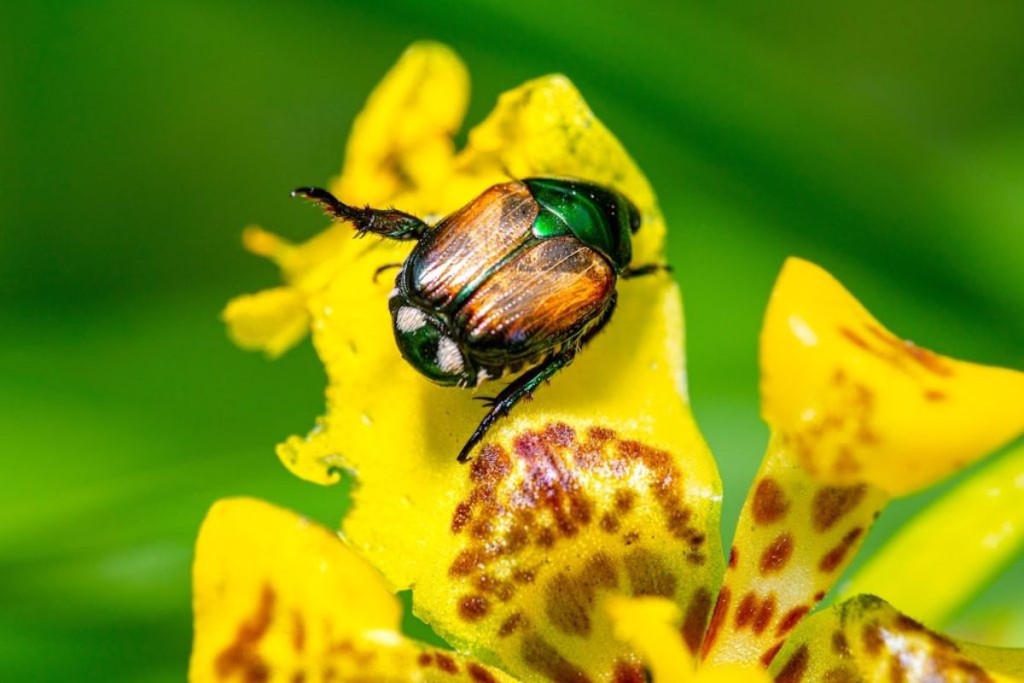
The first year, gypsy moths did them in, then Japanese beetles got involved. When I bought a hormone trap, it solved the problem, but it was too late, one of my plum trees was completely defoliated and dry.
There’s a lot of debate about hormone traps, because they attract Japanese beetles. People then feel they have more than before.
That’s normal, because that’s the whole point of the hormone trap: to attract the beetles away from your plants.
The trouble is, if you set it up in your little city yard, well yes, you’re likely to get a lot of them, and it won’t solve your problem because the trap will be too close to your plants.
It’s like inviting the beetles on a romantic date, but offering them a McDonald’s on the way. They’ll definitely stop for a burger!
My trap was hung on a tree 10 meters from all other plants (and at least 20 meters from my plum trees) and it worked great. No more beetles on my trees, and it didn’t attract them to my terrace either, since the trap was a good thirty metres from the house.

Back to my tree: even though it looked completely dead, I told myself I’d wait until the following year before cutting it down. And the other one, well, it didn’t look too good, but it lived!
This year, no leaves grew on my plum tree, but worse still, I found that my other beautiful tree, in full bloom, had fallen prey to caterpillars! Are you familiar with the Eastern tent caterpillar (Malacosoma americanum)? Well, I encountered them this year…
These caterpillars gather in a silken structure to form a big gang of plum-destroying devourers! (As you can see, I’ve managed to remain polite.) They emerge from the tent during the day, methodically devour every leaf that crosses their path and return to spend the night in their silky hiding place. Until the next day, when they go a little further afield to continue defoliating the branch.

Cute shelter, isn’t it? It’s full of caterpillar poop and it’s wiggling all over the place. A thing of beauty!
I was so angry that I sprayed my plum tree with insecticide and watched them die with unhealthy pleasure.
This caterpillar is not really harmful to mature trees. But as my plum tree was tiny and probably still weak from the summer before, I had to do something!
And Hope!
I resigned myself to cutting down my second, practically stillborn tree, when I caught a glimpse of… hope! Tiny branches had sprouted at the base of the trunk. They’re so small and low that I couldn’t see them protruding from my lawn (don’t judge, we let it grow in May!). My second plum tree, though much reduced, is still alive!

Well, it was full of those pesky caterpillars that also got a dose of poison, but it’s ALIVE!
Conclusion: “pros” have their ups and downs too. Persevere with your projects! I don’t know if I’ll ever have plums, but this summer, I’m starting my own landscaping project, and frankly, I hope it’ll be easier than keeping my plum trees alive, because little flowers are nice, but you can’t eat them, so I don’t have time to waste on that!
Thank you for reading my rant! Do you have a story to tell about plant therapy? Judging from your comments, you often laugh when you read my articles, so now it’s my turn to read your funny stories!