


Several municipalities are turning off the tap for gardeners by banning their residents from watering their gardens. So what can we do to keep our gardens looking good?
Lawn: Watering Not Permitted
The biggest culprit when it comes to overwatering is, of course, the lawn. Many homeowners are in the habit of spoiling their lawns with regular watering throughout the summer, which is usually prohibited during dry spells. An exception is often made for newly seeded or laid lawns, which can be watered for the first two weeks. That said, two weeks of watering is not enough to establish a new lawn in the middle of a heatwave. If you have the choice, it is better to delay laying sod or sowing until the fall, when cooler temperatures and more abundant rainfall promote better growth.

As for well-established lawns that are not watered, they will turn yellow, but they are not dead. Grass has the ability to go into summer dormancy and usually greens up quickly when the rains return, with no major consequences.
Note: Lawns enriched with white clover often remain green even during periods of drought. This is one of the reasons why experts recommend including clover in your seed mixtures.
Flower Beds, Vegetable Gardens, and Containers
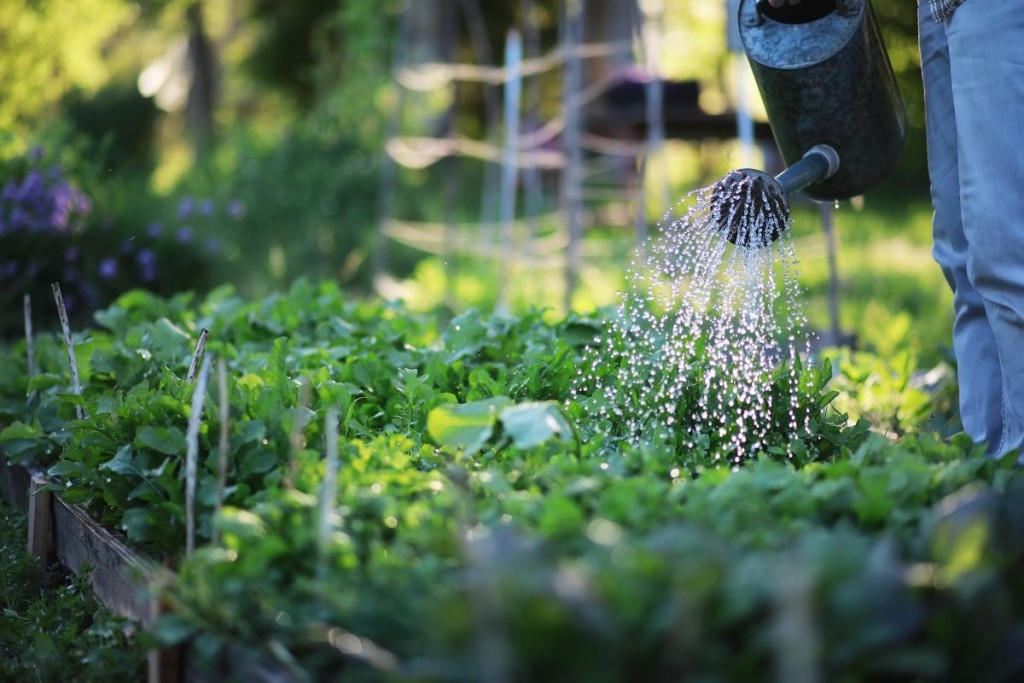
It is generally still permitted to water flower beds (flowers, shrubs, etc.), vegetable gardens, and potted plants, provided that watering is done manually. This can be done using a watering can filled with water or a garden hose equipped with an automatic shut-off nozzle, held by hand for the entire duration of watering. However, it is prohibited to use an automatic watering system (i.e., an irrigation system), except during specifically authorized hours.

There are generally no restrictions on the time of day for manual watering, but it makes more sense to water early in the morning or late in the day when the sun is less intense. This allows the water to benefit the plants instead of evaporating. Regulations are not always clear regarding the use of soaker hoses, but many municipalities recommend using them in the evening. That said, morning is often preferable, as it allows leaves to dry quickly, reducing the risk of fungal diseases.
In the Ground or in Containers
For plants in the ground, it is better to reduce the flow of water but water for longer (with a soaker hose, for example). The water needs to penetrate to a depth of around 20 cm (8″) to be really useful to the roots. Watering too quickly, which only wets the surface, is not very effective.
For potted plants, water slowly until water flows out of the drainage holes—this is a sign that moisture has reached the entire substrate.

Mulching remains an excellent strategy for reducing watering needs. Covering the soil in flower beds and vegetable gardens with mulch limits evaporation and keeps roots cool, helping plants tolerate dry spells better.
Finally, remember that most well-established trees, shrubs, and perennials tolerate occasional drought fairly well. Even if they don’t look their best this year, they will grow back vigorously next year. It is therefore best to focus your watering efforts on newly planted plants, vegetables, and container plants, which are more vulnerable.
Water Tanks

To prepare for future droughts, have you considered installing a rainwater harvesting tank under your gutter downspout? After all, watering restrictions only apply to potable water; you can use the water you collect however you like!
Larry Hodgson a publié des milliers d’articles et 65 livres au cours de sa carrière, en français et en anglais. Son fils, Mathieu, s’est donné pour mission de rendre les écrits de son père accessibles au public. Ce texte a été publié à l’origine dans Le Soleil le 10 juillet 2010.