
Orchid enthusiasts are generally well-informed and fairly rational. However, when it comes to fertilization, they suddenly fall into a state of irrational beliefs, often accompanied by a chronic disregard for the associated risks. Admittedly, this is not an easy subject. At the risk of losing a few orchid-loving friends, I am going to attempt to address these irrational beliefs that dominate our orchid-loving community.
First, let’s look at how the orchid captures nutrients in its natural environment.
How Do Orchids Capture Nutrients?
Botanists who have studied this topic have found that epiphytic orchids receive very little fertilization. They are actually hydrated by rainwater, which is very pure. The few nutrients that may be added are provided by water running off neighboring branches before reaching the epiphyte’s roots. Orchids have thus become less « greedy », surviving with a minimal supply of nutrients, obtained by leaching nearby anchoring structures. Epiphytic orchids have adapted to grow in much poorer substrates than the traditional potting soils, which are a lot of decomposing organic matter.
Although orchids generally have moderate nutrient requirements, there are times in their lifecycle when they will need to absorb more nutrients. This is particularly true early in the early stages of their life, when the seedling must quickly build up a level of resilience essential to survive in its environment. The same is true during periods of strong growth, typically in summer.
Mycorrhizal Fungi
To increase their nutrient supply, orchids use mycorrhizal fungi, which act as root extensions. This symbiotic relationship between the orchid and its fungus is established spontaneously in their natural environment and constantly evolves to meet the changing needs of both parties. In domestic cultivation, it is very difficult to recreate these conditions. In practice, we would need to co-cultivate the orchid and its mycorrhizal fungus. While this is occasionally possible for some seasoned professionals, it is unrealistic for amateurs with limited technical resources. The orchid-fungus symbiosis will be the subject of a future column on this blog.
In the meantime, we will therefore use chemical fertilization to meet the nutrient needs of our orchids, bearing in mind that these needs are relatively low, though they can increase during periods of strong growth.
Traditional Fertilization Methods for Domestic Orchid Cultivation
There are a myriad of fertilizer products on the market with highly variable compositions. To simplify matters, these products will be presented in three generic groups: bio-organic fertilizers obtained by fermentation of natural organic matter, synthetic fertilizers that dissolve in water, and granular fertilizers. These are the three types of amendment that are mainly used by orchid enthusiasts nowadays.
1. Organic Fertilizers
The recommended organic fertilizers for orchids are those obtained by the controlled fermentation of organic matter. Indeed, orchid roots cannot assimilate fresh organic matter. Therefore, it is preferable to avoid any raw organic matter (such as urea, bone meal, or dried blood, for example). These organic amendments are excellent in the garden, where they are broken down by the bacteria and fungi present in the soil. However, in a pot of orchids grown at home, this decomposition process cannot take place, as microbial and fungal life is very limited. Therefore, it will be necessary to ensure that the inputs have indeed been “pre-composted” (or fermented) in order to make them assimilable by the orchid roots.

Since these fertilizers are generally dosed for traditional plants (and not for orchids), the dose should be reduced to a quarter of that recommended for terrestrial plants. Orchids have velamen roots (a highly absorbent spongy structure) which make them much more efficient than traditional roots in capturing nutrients. Reducing the dose to 25% will provide more than enough nutrients for the orchid during periods of active growth. During periods of dormancy or slow growth, the need for fertilization is almost zero, so it is not necessary to fertilize.
Environmentally friendly and compatible
While organic fertilizers are not the most economical option, but they are more ecological and more compatible with the biology of orchids.
In summary, moderate and well-dosed use of organic fertilizers seems to be the best approach in domestic cultivation. It is recommended to choose a balanced formulation in which the three chemical elements (NPK for Nitrogen-Phosphorus-Potassium) are present in comparable proportions (without excess), as orchids prefer ‘balanced meals’ that are not too copious!
2. Synthetic Fertilizers
Synthetic fertilizers are often preferred by commercial orchid growers. They are economical, ultra-easy to mix with irrigation water, and, overall, very effective. However their drawbacks become apparent as the plant matures, when the accumulation of fertilizer salts ends up poisoning the orchid roots.
Over the past few decades, balanced nitrogen-phosphorus-potassium (NPK) formulas have been found to be clearly preferable – especially when using a highly concentrated soluble fertilizer. Therefore, flowering stimulants (“Bloom booster” – rich in phosphorus) and growth stimulants (rich in nitrogen) should be avoided. Some older books recommend chemical formulations such as 10-42-5 or 30-10-10, but we now know that orchids struggle to absorb these disproportionate doses of a specific element, whether nitrogen, phosphorus, or potassium.
A Balanced Product
Therefore, a balanced product (for example, 20-20-20, 10-6-12 or 6-8-7) should be used at a quarter of the dose prescribed for terrestrial plants, and only during periods of active growth. Accumulated fertilizer salts should also be flushed out at regular intervals (typically once a month) by thoroughly watering with clean water.
If your water comes from an artesian well, it will already contains a high concentration of minerals, which can accelerate the root poisoning process and ultimately impair the absorption of useful minerals. In this case, it is recommended to use only one-eight of the prescribed dose to avoid mineral saturation of the roots. In some more extreme cases, it will be necessary to use a water treatment system to demineralize the water before adding fertilizer. If in doubt, consult a knowledgeable advisor at a garden center or an experienced orchid grower at your local orchid association.

3. Granular Fertilizers
Granular fertilizers are occasionally used by owners of large collections. Recommended products are coated fertilizers with a very slow release (i.e., 6 to 9 months), which are specifically designed for plants with velamen roots, such as orchids and bromeliads. Traditional agricultural fertilizers are not recommended (at all), as they decompose quickly in the heat, which can lead to orchid substrates becoming saturated very quickly.
Very slow-release granular fertilizers are expensive.These granular orchid fertilizers are not only much more expensive, but many manufacturers also seem unable to specify the correct dosage for different orchid species. When purchasing, make sure the product you choose comes with clear, quantified instructions.
When to use?
Despite their high price, they can be suitable for owners of large collections who wish to simplify their fertilizing process by reducing it to a small “annual” application. They will apply this type of fertilizer product at the moment when the new roots begin to emerge, i.e. at the start of the annual growth cycle. A very slow-release fertilizer will feed the plant for the next 6 to 9 months, thus covering the orchid’s entire annual growth period. Once again, balanced nitrogen-phosphorus-potassium formulas seem to be best suited to orchids’ needs.
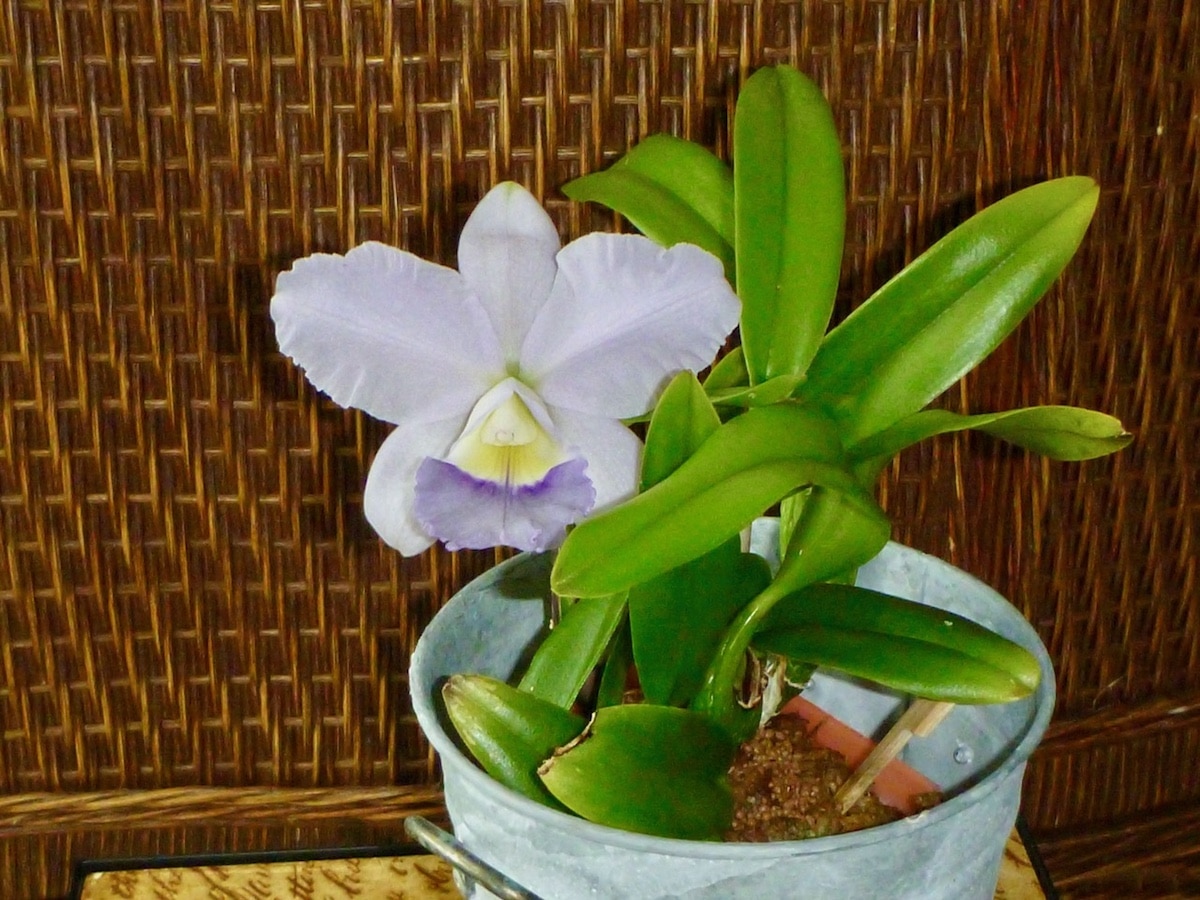
In Practice, You Must Measure Carefully, Apply Moderately and Observe Carefully.
1. In orchid cultivation, fertilization should be the last thing to do.
It is only useful when the growing conditions are optimal. There is no point in fertilizing a plant that lacks light or has a disrupted metabolic function. Plants are mini chemical transformation factories that run on solar energy. If the factory is partially (or completely) broken down, providing it with more raw materials to transform will only clutter it up and, eventually poison it. Before investing in fertilizers, ensure that your facilities adequately meet the orchid’s four basic needs.
2. Water quality matters!
Water is the number one element of photosynthesis. It must be clean and low in minerals (like rainwater ;-), preferably with a mineral concentration below 200 ppm (parts per million) – before adding a synthetic fertilizer. Hard water (500 ppm or more) will cause a rapid accumulation of minerals in the substrate and in the velamen. It will then be necessary to reduce the fertilizer dose significantly or to demineralize the water before use. Often, plant poisoning manifests itself at the tips of the leaves. The sap circulates from the base to the tips of the leaves, releasing “water and good nutrients” along the way. By the time it reaches the tip of the leaf, only a high concentration of toxic minerals (unassimilable minerals) remain, which leads to the death of the tip tissues.
3. Over-fertilizing orchids can cause the same kind of problems with fertilizer salt build-up.
Beware of older books that often recommend significantly higher and often toxic fertilizer doses. Technical knowledge on this subject has evolved considerably over the past few decades. Unscrupulous suppliers (of which there are many) will often encourage you to fertilize heavily, but remember that orchids are more sensitive and their actual needs are rather modest.
4. Bio-organic fertilizers seem to be the best option, as they are closer to the natural nutritional requirements of orchids and they cause little accumulation of fertilizer salts.
While these products are not the most economical but they have the advantages of being more ecological and more compatible with the biology of orchids. As a general rule, a quarter of the dose recommended on the label is sufficient for orchids in the active growth phase. This is particularly important for epiphytic orchids, which have adapted to rainwater that is very low in nutrients. It is also recommended to water with clear water first before applying the fertilizer solution. This avoids saturating a dry (and highly absorbent) root with a cocktail of concentrated nutrients.
5. Apply fertilizer in the right amount and monitor closely afterwards.
Over the last decade, there has been a proliferation of fertilizer products in almost all areas of plant production, including orchid cultivation. However, the widespread use of these products at home poses risks that are poorly understood and poorly managed by orchid growers. In particular, it is important to emphasize the need for correct dosing of synthetic fertilizers, which are much more powerful than we realize, and the need for careful observation of our collection after treatment. Unlike in agriculture, rigorous studies on orchids are rare, so amateurs often have to experiment on their own. Vigilance is therefore required to avoid over-fertilization and generating unnecessary expenses.
Publisher’s Note
Mr. Charpentier’s orchid articles are published on the Laidback Gardener website under a legal “Copyleft” format. As a result, republication of his columns is permitted provided that the following credit is added: This article was originally published in french on the jardinierparesseux.com website and in the English on laidbackgardener.blog.
I buy markdown phalaenopsis orchids that have been abused by store staff. They are often priced under $5.00 each. Once home, I sequester them in new pots and a loose bark soil for several weeks to give time to recover. Other than a dash of water and a bit of sunlight, I pretty much ignore them. I’m always amazed when I find buds peaking out! A cheap and easy way to enjoy their blooms!
Have never bought expensive fertilizers to feed my orchids.
Please go with what nature intended. When outdoors in the tropics they simply suspend from coconut fibres in trees, therefore receiving tannin from the bark when it rains. The full plant receives this from leaves to their roots.
I have told so many gardeners this method in a household by saving your black tea bags in a teapot from several servings of tea. Add cooled boiled water when have 1 to 2 bags saved, then put orchids in sink and then pour the tea over the full orchid which mimics tannin.
Never have I thrown out an orchid yet!
H
Ha! I do not fertilize the orchids here at all. I might if I grew some fancier types.