


I have to admit: when it comes to landscaping, I’m not really a big fan of flowers. At my house, I tend to grow vegetables, fruits, and anything else that’s edible. If you see me admiring a flower in my garden, it’s probably a squash blossom with a beautiful ovary or Spanish bean flowers full of hummingbirds. Ornamental flowers… they’re pretty, but let’s face it, they don’t fill the fridge!
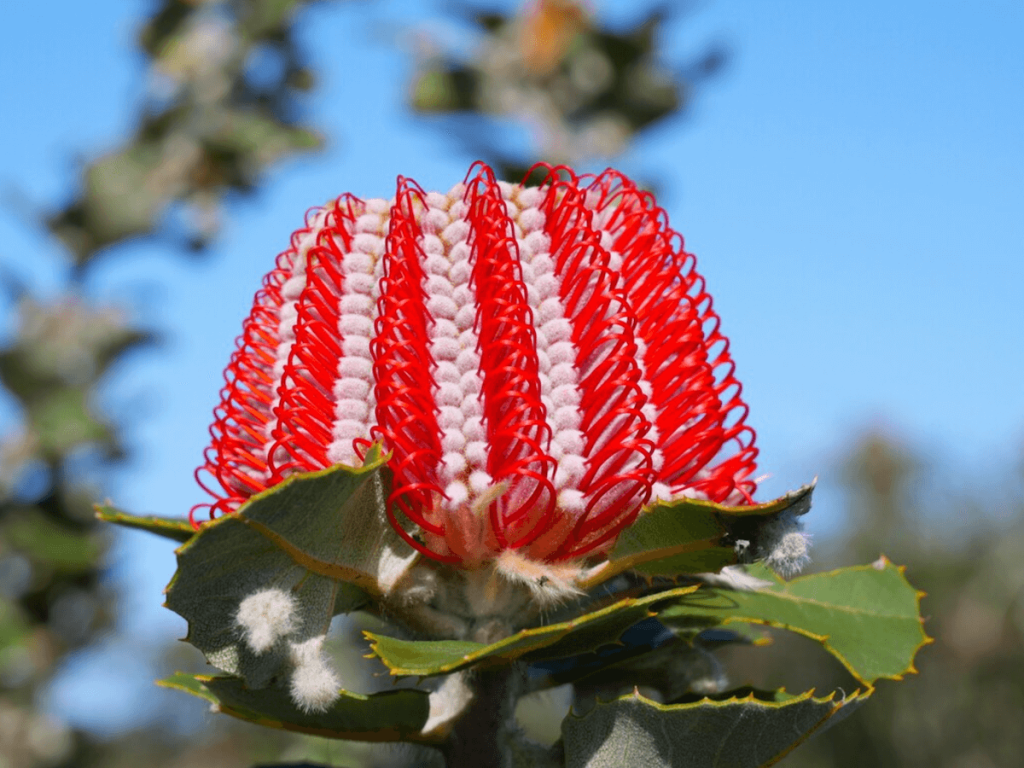
Except that recently, I came across a photo of a flower that completely blew me away. It was on Facebook, one of those posts that gets shared at lightning speed. The flower was so strange, so original, that at first I thought it was an AI image! It looked like a very talented grandmother had crocheted it and someone had planted her work in a garden.

This marvel is called Banksia coccinea and it comes from Australia.
A Social Media Star?
Since I saw that first photo, it seems like this plant has become the darling of social media. And I’m not the only one who thought artificial intelligence was responsible. “It can’t be real!” say the comments.
It’s exactly the same phenomenon that happened last year with Hydnora africana, the plant that smells awful, which I covered in my Halloween series. Overnight, it seemed like everyone was sharing photos of this most unusual flower. Plants also have their fifteen minutes of fame on social media… or maybe it’s just an algorithm sending me more Banksia because I looked at a picture for more than a few seconds…
In any case, it must be said that Banksia coccinea has everything it takes to go viral: it’s photogenic, completely bizarre, and it challenges what we think we know about the appearance of flowers.

Floral Architecture That Defies Comprehension
Banksia coccinea produces inflorescences (basically, clusters of flowers) that contain around 280 individual small flowers. Unlike other flowers, where everything is packed together in a relatively compact “clump,” this one arranges its flowers in distinct columns, with large empty spaces between each column. And the wildest thing is that each small flower has a style (the name given to the red or orange part that sticks out of the flower) that curves so much that it ends up forming loops. And no, not all flowers have such a stylish style!
The result? It really looks like hand-crocheted or hand-knitted fabric.
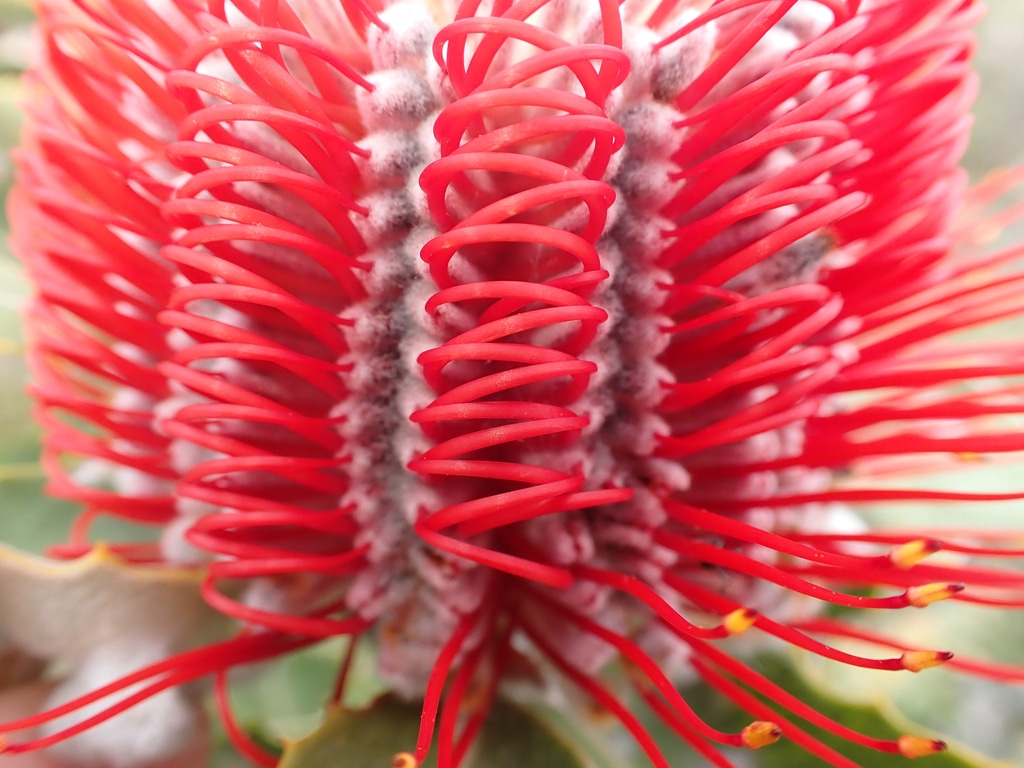
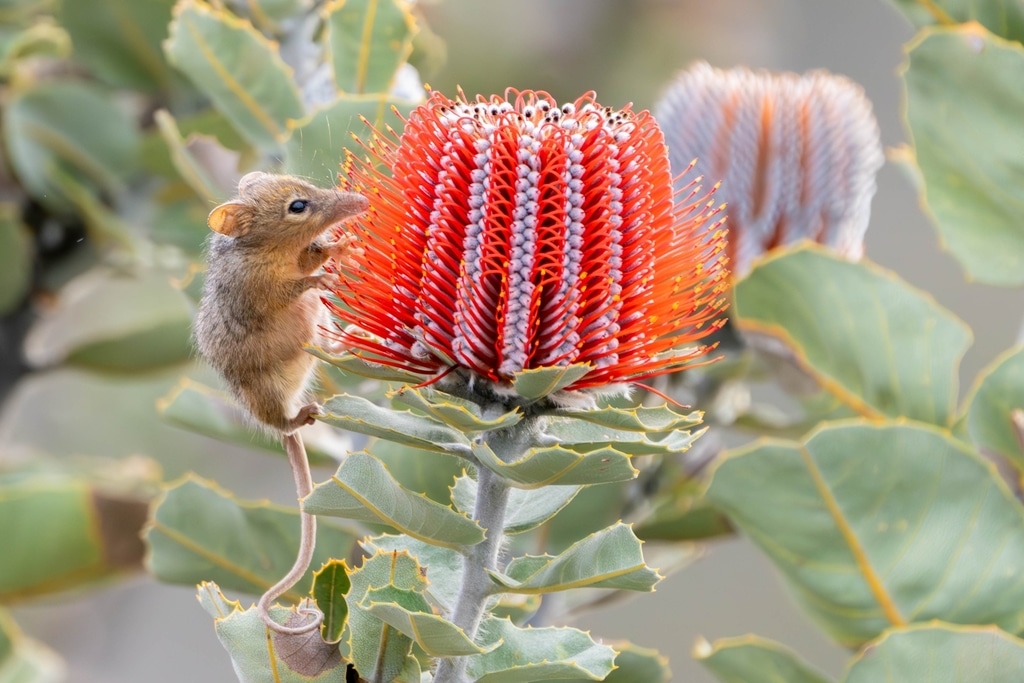
This unique shape isn’t just for looks (although it is pretty!). In fact, this flower has evolved specifically for its main pollinator: a small Australian marsupial called the honey possum (Tarsipes rostratus in Latin, or noolbenger in the indigenous language). This little animal has a tongue that is almost 2 cm (3) long and moves super fast—three times per second!—and this bizarre floral architecture makes its job easier.
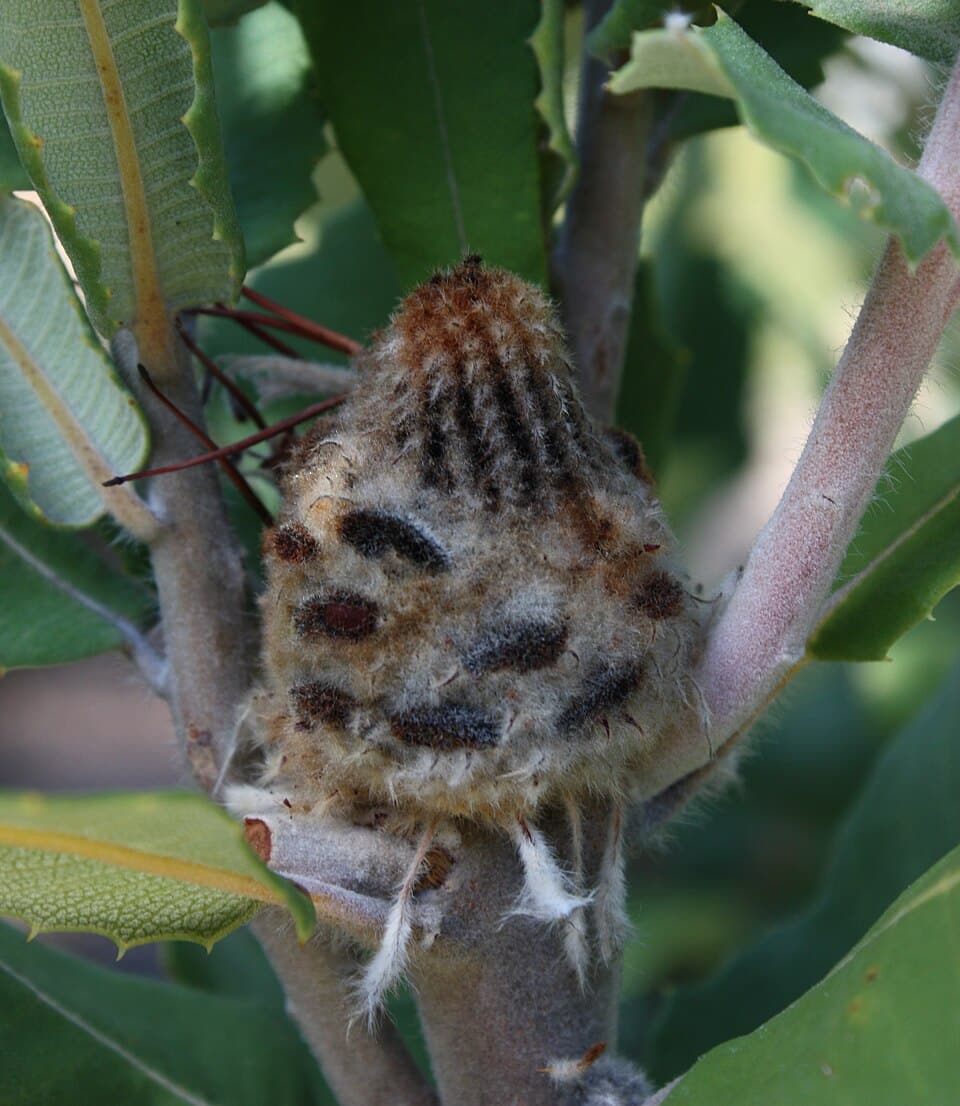
The seeds of this plant also have a fascinating survival strategy: they remain trapped in woody follicles (dry, hard shells) for years, waiting for a forest fire to release them. At 140°C (284°F), the follicles open and the seeds can germinate in the ash-enriched soil. This shows that forest fires, although they can be disastrous, have always been part of life and evolution.
The Impossible Dream for Our Gardens
Well, obviously, after seeing that, my first thought was, “Can I plant one in my yard?” (Yes, even though I’m not mad about flowers, I was tempted!)
But no. Obviously not. This Australian beauty needs temperatures that never drop below -6°C (21°F). Here in Quebec, with our winters that easily reach -25°C (-13°F) or worse… It’s not for a laidback gardener.
And even in a pot indoors, it’s mission impossible. This plant comes from southwestern Australia, where the climate is similar to that of the Mediterranean. It has co-evolved with its environment over millions of years, and you can’t replicate that in a living room. It needs its natural cycle of seasons, with periods of relative coolness and changes in day length.
So unless you have a highly specialized greenhouse with temperature, humidity, and photoperiod control… forget it! Maybe a challenge for a botanical garden? I’m just saying!
Wonder at Your Fingertips
But you know what? It made me realize something. We spend our time marveling at botanical curiosities from the other side of the planet, when we have extraordinary floral treasures right here!
In fact, on Sunday, I gave a lecture at Libella Floral Farm, a place I’ve told you about before and that I love. Every time I go there, I leave with a smile on my face, my eyes full of color, and my ears buzzing with the flight of pollinators.
After my lecture, I spent the night at the Chesham bed and breakfast in Notre-Dame-des-Bois (near Mégantic), where I discovered another absolutely magnificent garden, filled with carefully cultivated and arranged flowers. The pergola covered in Virginia creeper is a great spot for a drink after work!
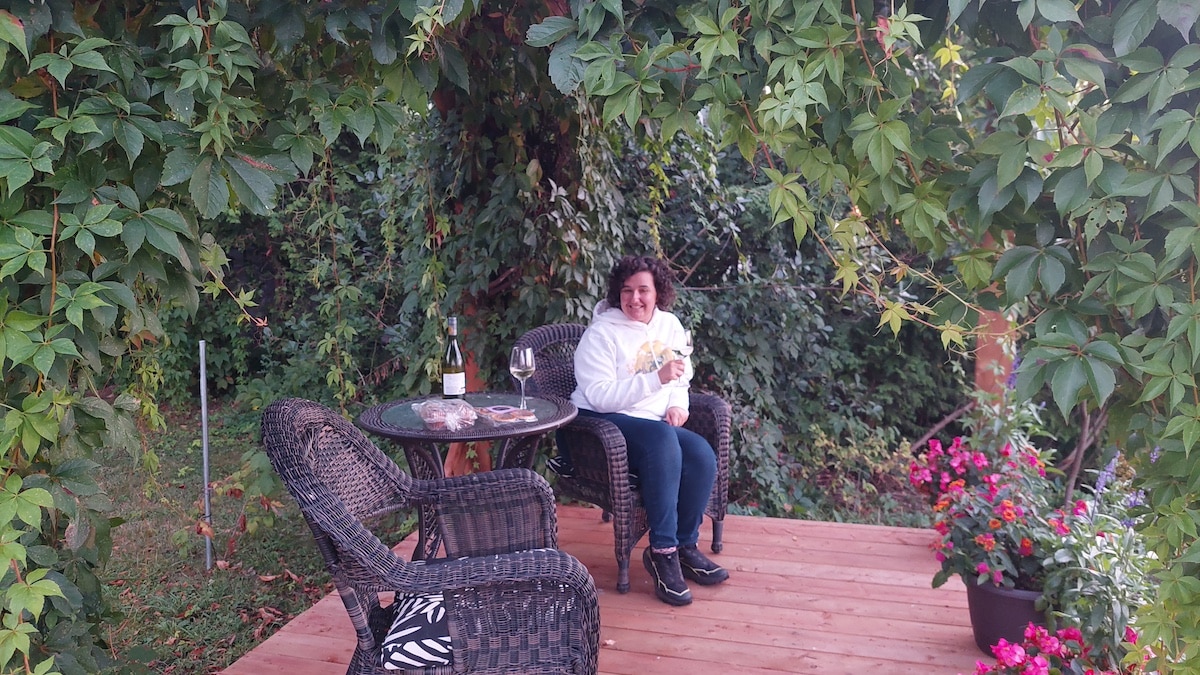
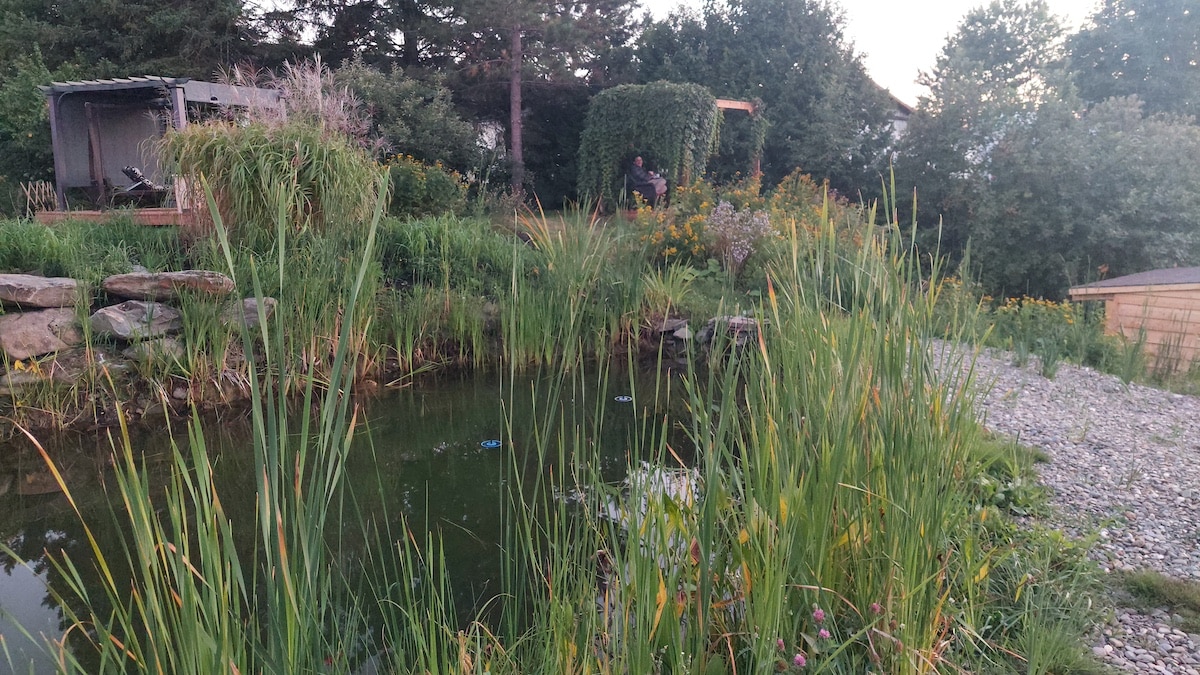

Knowing that I was working on this article, I took the time to observe the flowers closely, to see their different parts, their imperfections, their textures… And even though I prefer to focus my energy on edible plants, I must say that my view of flower gardens changed over the weekend. Because, you see, I am actually VERY happy that others have beautiful flower gardens… especially when they are open to the public!

You don’t need to go looking for an Australian banksia (even though it’s really cool!) to have beautiful flowers. The flowers we grow here have their own extraordinary shapes, their own ingenious adaptations, and above all… they grow here without needing too much pampering (as a general rule!).
Take our wild orchids, for example. Yes, we have orchids in Canada! The lady’s slipper (Cypripedium acaule) is just as bizarre and fascinating as any exotic flower. And our sundews—carnivorous plants!—which catch insects with their sticky little tentacles. That’s just as impressive as an Australian flower that looks like crochet, right?
And what about the wild carrot flower? A pretty umbel of female flowers, with just one male flower in the middle, often darker in color.
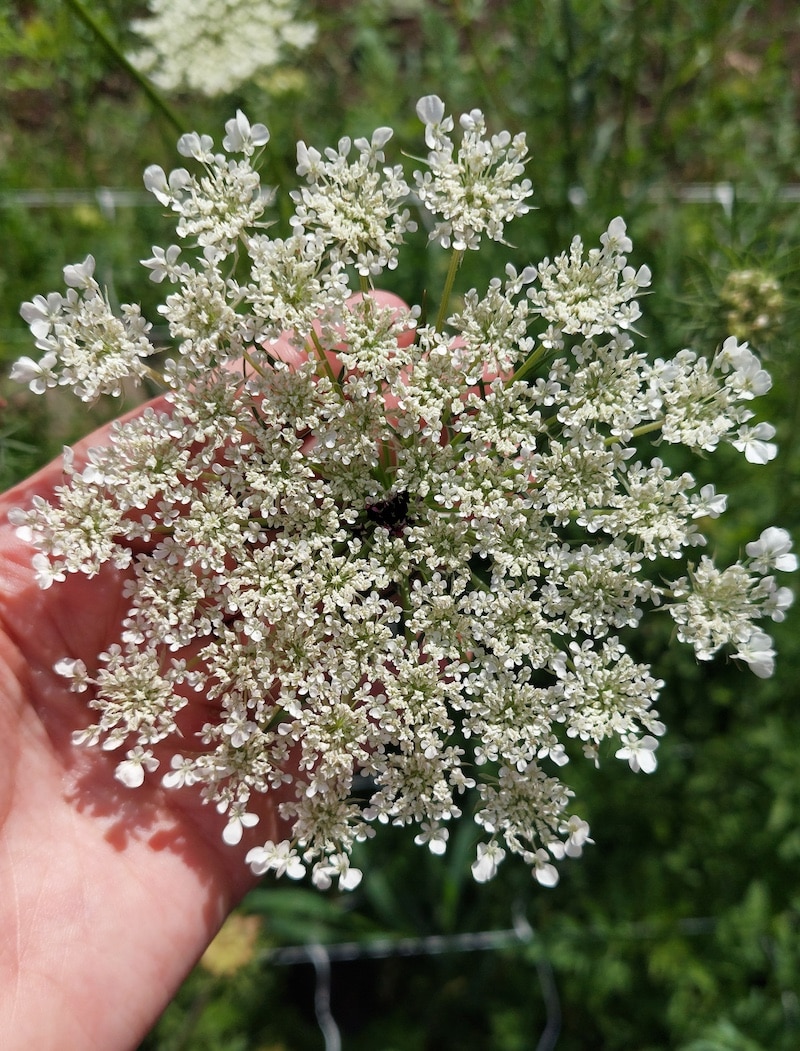
The diversity of flower shapes in nature is absolutely mind-boggling. You could spend hours marveling at the strategies each species has developed to attract pollinators. Some mimic insects, others set traps, and still others change color… It’s a fascinating world!
So yes, Banksia coccinea is extraordinary with its knitted appearance, but the next time you walk through a garden—whether at Libella Farm, Chesham Lodge, or simply in your own backyard—take the time to really look at the flowers around you.
Sometimes all it takes is a Facebook photo to open our eyes and realize that nature, wherever it is, never ceases to amaze us! In fact, surprise me: what is your favorite flower?
Me? I have a soft spot for the simplicity of daisies, and I love the cordate asters that carpet my yard in September.