
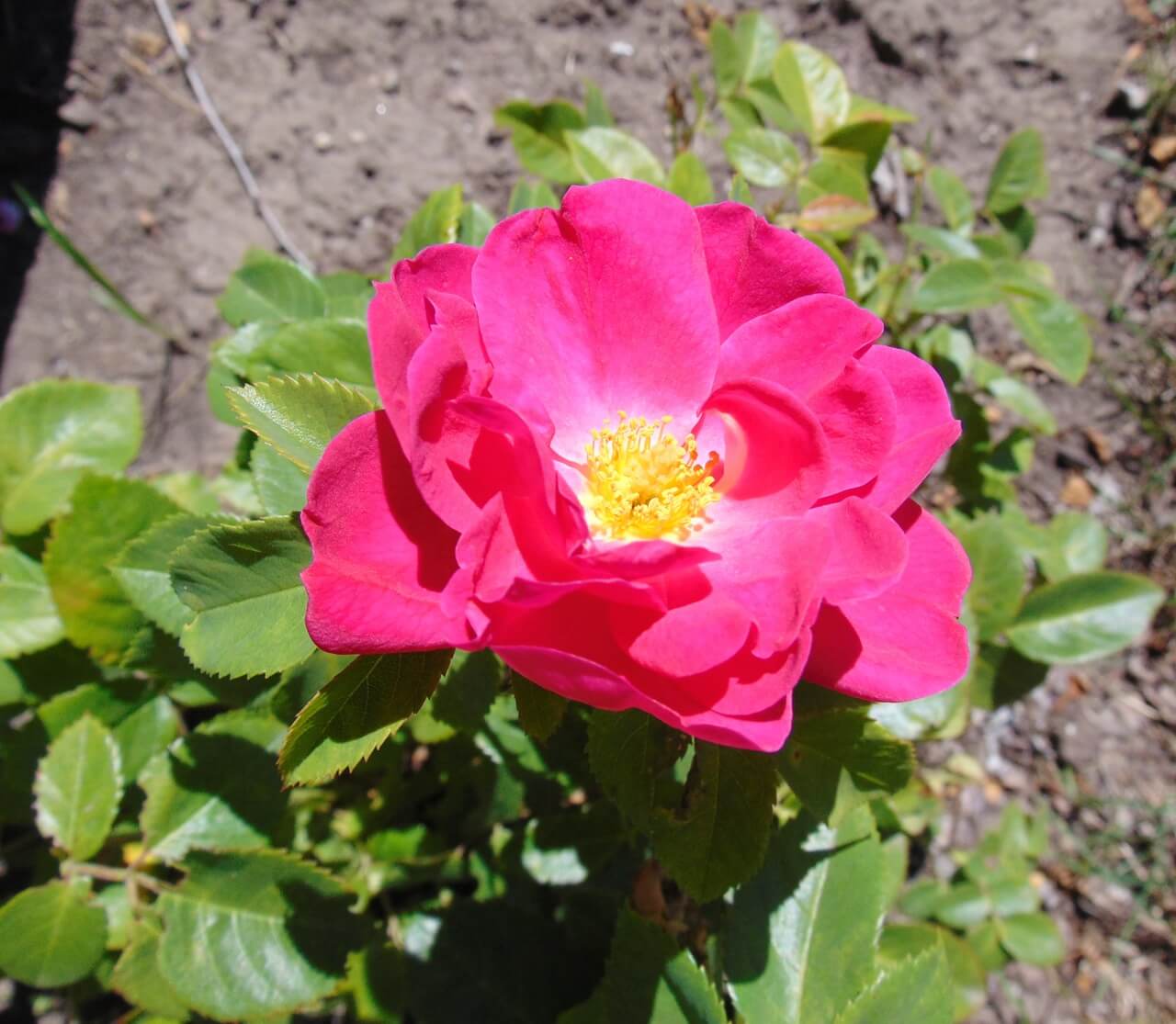
Rose Bush to Be Moved
About five years ago, we planted a John Cabot rose bush in the small backyard of our house. We underestimated how big it would grow. We want to move it to another location where it will have plenty of room to grow. We plan to move it this fall. Is this the right time? Some branches are intertwined in a trellis, while others, this year’s shoots, are nearly eight feet long. Can we prune them to make the move easier? We don’t want to lose it; it’s beautiful.
Answer
Rosa ‘John Cabot’ is a superb hardy climbing rose that can easily reach 3 m (10 ft) in height and 2 m (6-7 ft) in width, so it is a very voluminous plant to say the least. I understand that you ran out of space. Fortunately, it is also one of the hardiest roses, so you shouldn’t have too much trouble transplanting it successfully.
The two best times to transplant a hardy rose are in spring and fall, so yes, now is a good time to do it. Not only can you prune it before moving it, but you will need to prune it: you would have a very hard time transplanting such a large plant intact, especially since it has sharp thorns! You can prune this plant very severely if you want, say 20 or 25 cm (8-10 inches) from the ground. It will grow back relatively quickly, taking perhaps 2 or 3 summers to reach its full size, but should already be flowering next summer at a slightly smaller height and diameter.
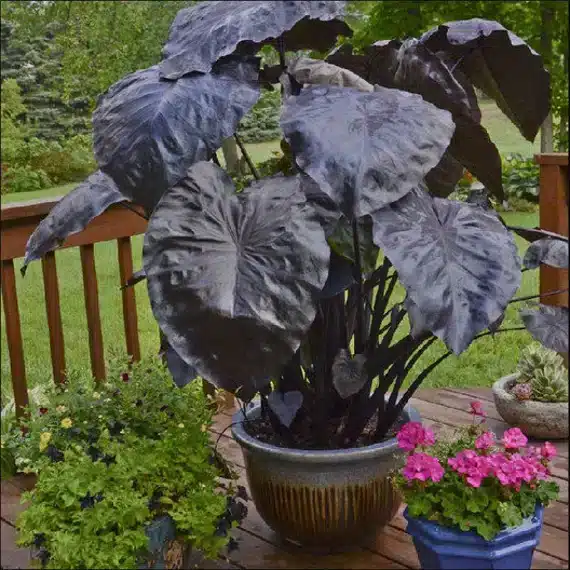
Colocasia Without Rhizomes
Last summer, I bought two colocasia plants, Colocasia Royal Hawaiian® ‘Black Coral’ and C. Royal Hawaiian® ‘Pineapple Princess’. When I took them out of their pots to dry the bulbs, I realized that there didn’t seem to be any. So, to overwinter them, should I leave them in pots and keep them as houseplants? I would have preferred to treat them like my other large colocasia and dry the bulb to replant it in March.
Answer
Colocasia are tropical plants cultivated in many countries for their edible swollen rhizomes (after cooking to remove the toxic calcium oxalate they contain), but in Canada, they are grown strictly as ornamental plants. They are often called “elephant ears” because of their large arrowhead-shaped leaves.
Typically, colocasia produce rhizomes of various sizes, depending on the cultivar. In the Royal Hawaiian® series, such as ‘Black Coral’ and ‘Pineapple Princess’, the plant may only develop small rhizomes, which are insufficient to be extracted, dried, and replanted the following spring.
In this case, the best way to preserve them is to pot them, place them in a bright room, and continue watering them during the winter. However, you can put them in a cooler room during this season, which will reduce the need for watering, but you must water enough so that the plant retains at least one or two leaves, which are necessary for photosynthesis.
In March, increase the heat and watering and start fertilizing (colocasia plants are very greedy), and soon your plants will be as beautiful as ever.
Scabby Potatoes
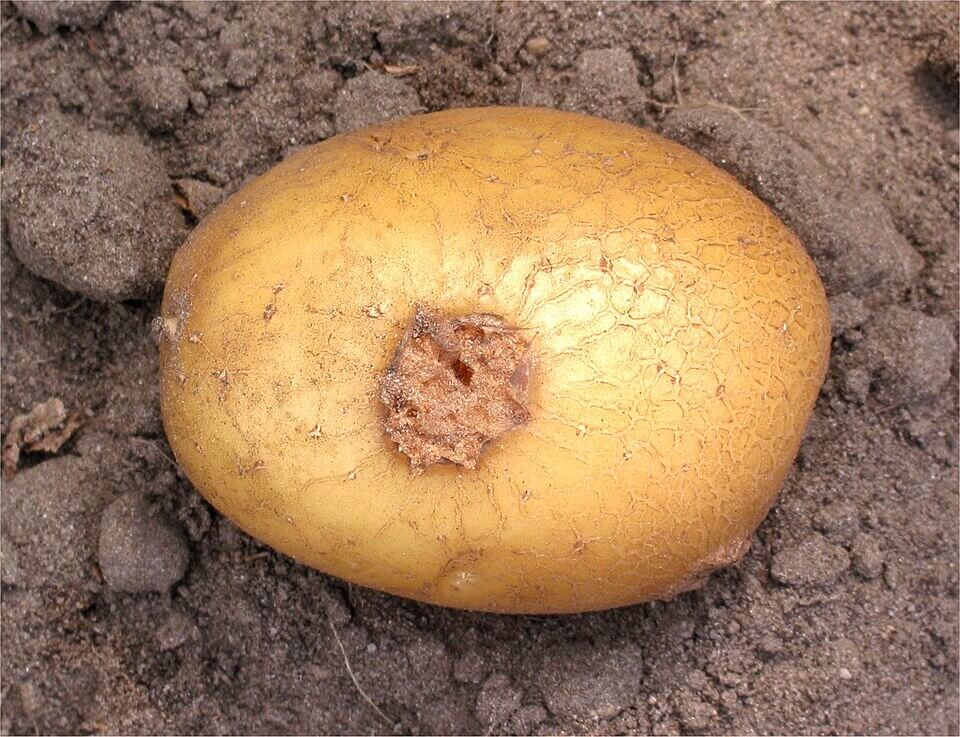
My red potatoes, which were usually very nice, have what I think is scab this year, a circular lesion that sinks into the tuber. I rotate crops a little, but my garden isn’t very big. I add my compost every year, but this year I added composted cattle manure: what should I do?
Answer
Potato scab is caused by various bacteria, but mainly Streptomyces scabies. The disease is often carried in cow manure, which may be the source of your problem, but it is also possible that you purchased seed potatoes that were already infested. It is also possible that the disease has been present in the soil for several years, as some strains of potato can appear asymptomatic until a harsher summer (hot and dry) weakens them and the symptoms of scab appear.
Treating the disease with crop rotation is rarely very effective in a small vegetable garden, as the bacteria travel easily through the soil and will soon reach all corners. However, scab is less virulent in acidic soils (pH 5.6 to 6.0), so applying sulfur or another acidifying product may be helpful. Or try potato cultivars known to be resistant to the disease, such as ‘Russet Burbank’ or ‘Chieftain’.
Note that tubers affected by scab are still edible, but require more effort to prepare for cooking, as the scabs must be cut out one by one with a knife.
Larry Hodgson has published thousands of articles and 65 books during his career, in both French and English. His son, Mathieu, has made it his mission to make his father’s writings accessible to the public. This text was originally published in Le Soleil on October 20, 2012.
That is interesting about the Colocasias. I also would have been confused to not find a significant corm at the base.