


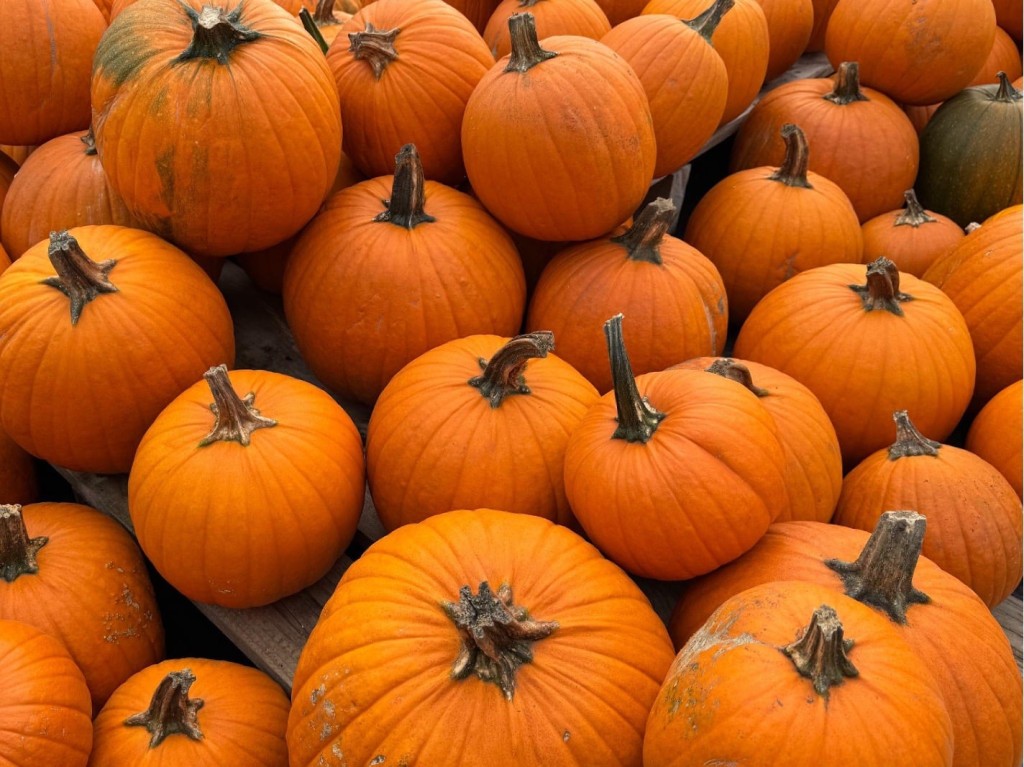
Cucurbits ignore conventions and disregard the boundaries imposed on them by vegetable patches and gardens. Invading every space around them without hesitation, they travel across lawns and flower beds. They climb over fences and railings, clinging to arbors and trellises with their powerful tendrils. Cucurbits create stunning vertical displays. When autumn is in full swing, they beautifully color the fields with their large fruits and contribute to the success of our Halloween portraits. More specifically, the Cucurbitaceae family consists of annual and perennial herbaceous plants, and more rarely shrubs. It is a family of dicotyledonous plants comprising 800 species divided into 180 genera, mainly native to tropical or subtropical regions.

Morphological Characteristics
Stems, Leaves, and Tendrils
The stems are usually creeping or climbing. They often have axillary tendrils (branched or simple). Tendrils are modified leaves. Here, evolution has caused some leaves to gradually transform into small lassos that allow the plant to cling on and climb. These tendrils are incredibly strong and can support plants bearing very heavy fruit.

As there are always exceptions, zucchini squash (Cucurbita pepo var. cylindrica) are neither climbing nor creeping and do not have tendrils. However, they meet other important criteria relating to flowers and fruit, allowing them to be classified as part of this family.

The leaves are alternate, often broad, palmate, and lobed. There are Cucurbits with compound leaves, but keep in mind that most have simple leaves like those shown below.

The stems and leaves have hairs (trichomes), which can be simple or glandular. These hairs are usually stiff, making the plants rough to the touch and not always pleasant to harvest.

Flowers
Plants in this family are monoecious, meaning that male and female flowers are found on the same individual. Female flowers are distinguished by their ovary located beneath the flower. Symmetry is often actinomorphic (radial). The corolla generally has five fused petals, and the calyx often has five sepals.

Fruits
The fruit is a pepo, a specialized type of berry with a tough skin (epicarp) and fleshy pulp (mesocarp). This is the case with squash, pumpkins, melons, etc. Inside, the seeds are often arranged in three compartments, sometimes surrounded by pulp, as in cucumbers.

Here Are Some Well-Known Examples and Others Less So of Cucurbits.


The Biggest Pumpkin in the World!

In many ways, cucurbits are a fascinating family: with their vigorous growth and oversized, colorful fruits, they don’t just take up space, they transform it. Their tropical and subtropical origins do not prevent them from inspiring garden designers in temperate climates. They will not disappoint you, as long as you provide them with compost-enriched soil, warmth, and regular watering.
Success guaranteed!
In Summary, to Identify a Cucurbitaceae:
- Climbing or creeping plant with often rough stems
- Alternate, palmate leaves
- Presence of hairs
- Flowers with 5 petals and unisexual (male and female flowers)
- Pepo-type fruit
In our next installment… the Euphorbiaceae!