


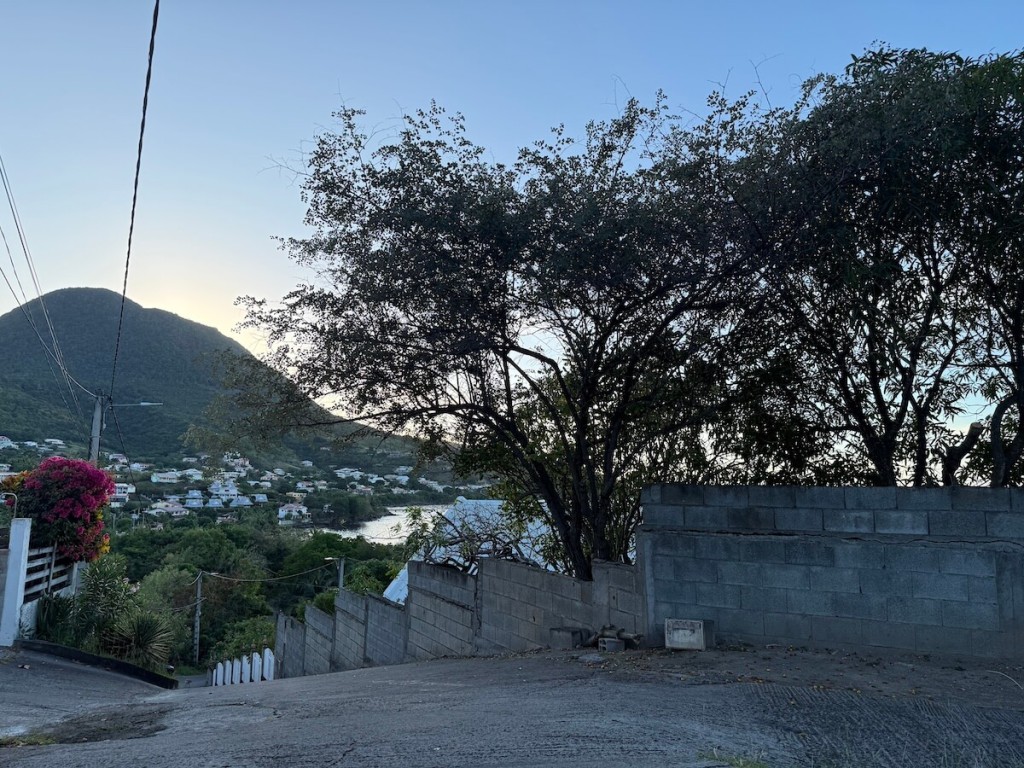
We were leaving our rental house, perched on a steep slope in Anses-d’Arlet, to walk down to the small beach of this Martinican town. As I left the yard, I noticed a woman with a fruit picker, a basket attached to the end of a telescopic pole, used to harvest fruit high up. Intrigued, I stopped to find out more.
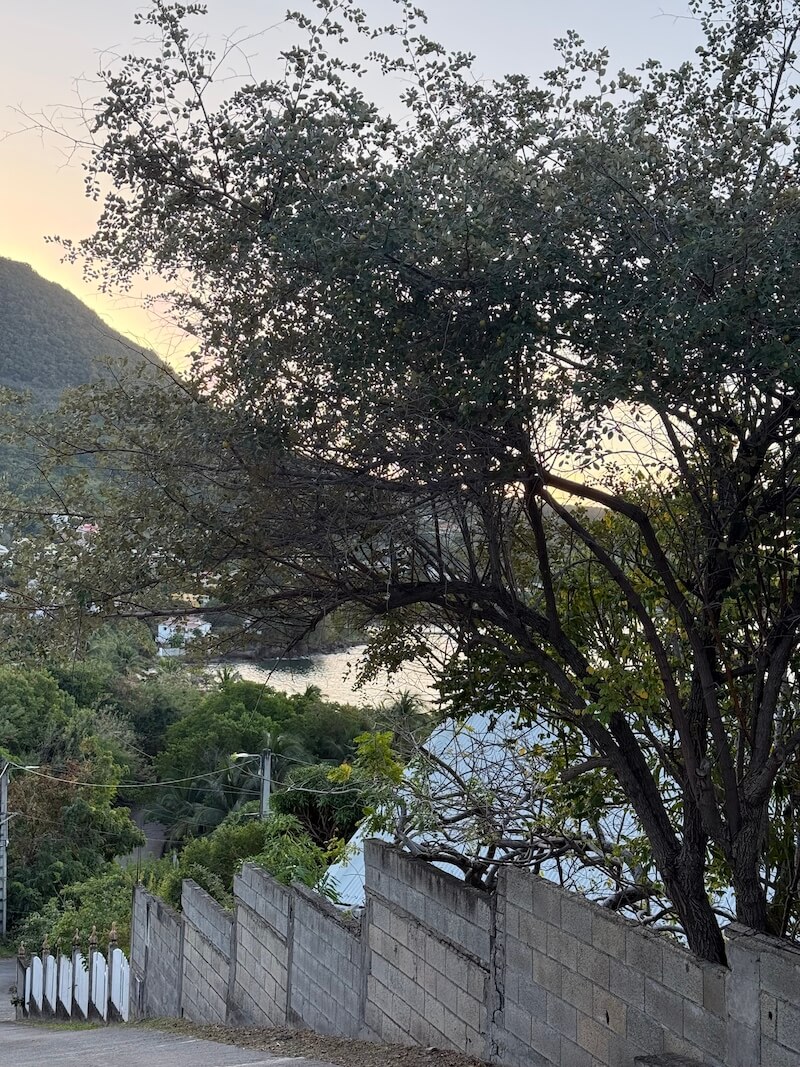
I had to wait a while before getting any answers, because Jacqueline (not her real name) had a lot to say about her life and her family. She worked in a school. She had a son and a daughter, and also goats, which I had seen the day before on one of the mornes, small rounded mountains, surrounding the neighborhood where we were staying. Sometimes one would be stolen, but she said she had resigned herself to it: those who stole them were probably hungry.
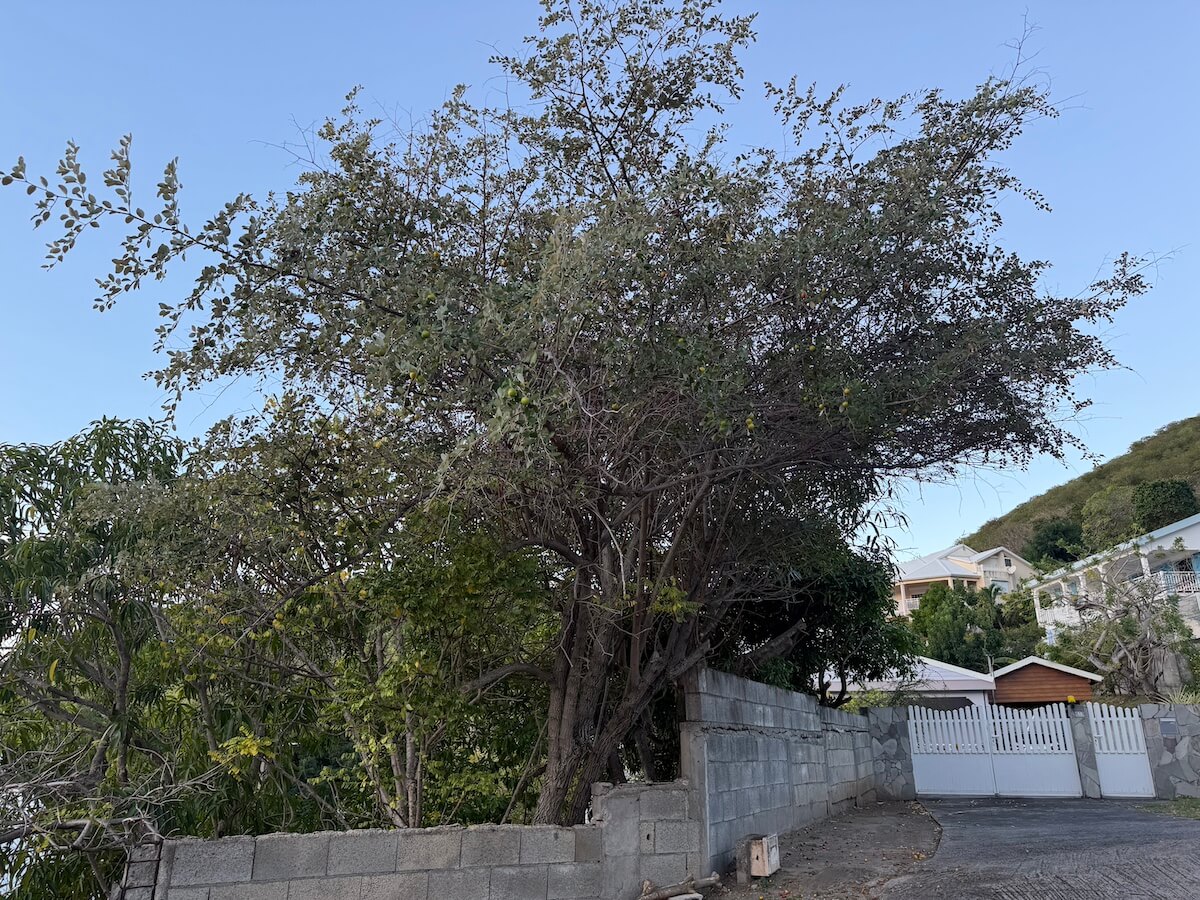
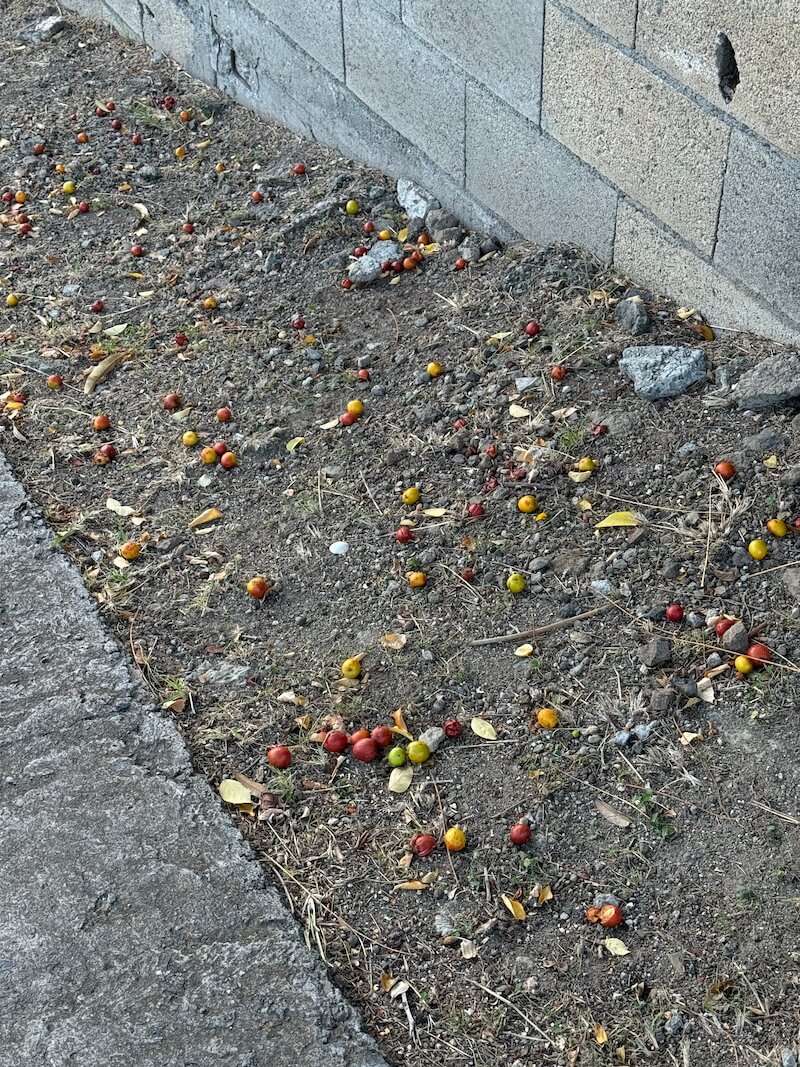
Finally, I was able to ask her what kind of fruit she was picking: small apples barely bigger than a cherry, yellow then reddish-brown when ripe. Jujubes, she told me. What a surprise to discover that fruits bearing the name of a popular candy grew on a real tree, in an urban courtyard, with very little care, apart from occasional pruning to prevent the branches from encroaching on the alley and hindering traffic!
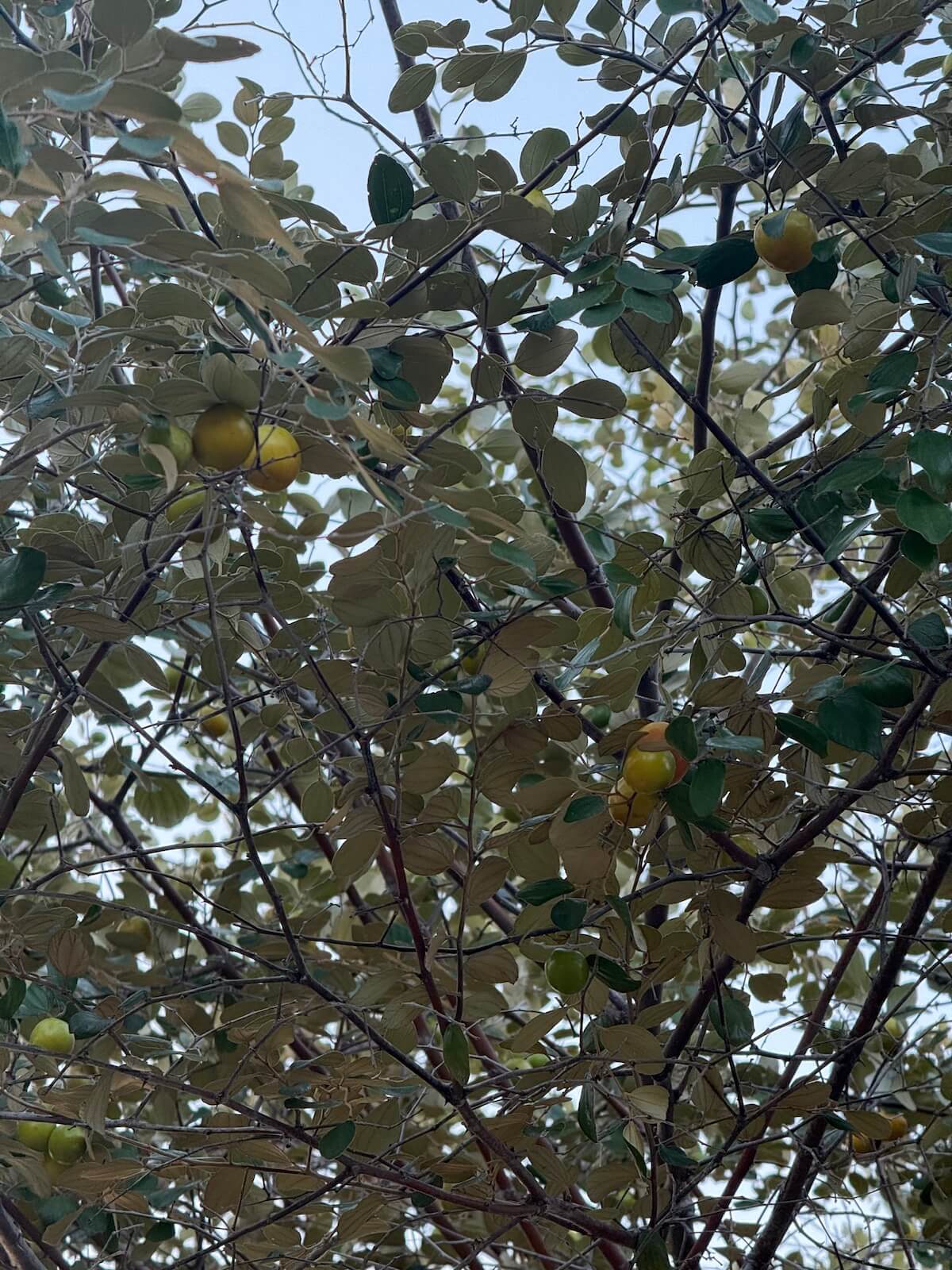
Jacqueline didn’t hesitate to offer them to us. She had so many that she didn’t know what to do with them. The fruit sometimes littered the street, pecked at by the neighbors’ chickens or by wild birds, which are ubiquitous on the island. Jujubes, also known as sour apples, unlike sweets, are only slightly sweet, with a flavor that, in my opinion, resembles a mixture of apple and pear, and a crunchy texture.
A resilient and discreet tree
Native to Asia, the jujube tree is an ancient fruit tree that is remarkably resilient and has learned to thrive far from its native territory. In Martinique, the tree commonly known as jujube is most often Ziziphus mauritiana, a tropical species well adapted to heat and drought. It easily tolerates poor soil and very sunny locations, requires little maintenance once established, and can remain productive for decades. This adaptability explains its discreet but enduring presence in some family gardens.
Growing conditions and hardiness
To grow well, the jujube tree requires full sun and well-drained soil. It tolerates poor or stony soils, but does not cope well with stagnant moisture. It needs long, hot summers for the fruit to ripen. Once established, it requires very little watering, little fertilization, and only occasional pruning. It is a frugal tree, but highly dependent on the winter climate.
The hardiness of the jujube tree extends to zone 6, sometimes zone 5 depending on the variety. This is why it does not usually survive Quebec winters. However, certain selections of Ziziphus jujuba, such as ‘Winter Delight’™, introduced from northern China via Oregon, slightly push these limits. This variety, advertised as hardy in zones 5 to 6, explains the exceptional presence of a few jujube trees on the south shore of Montreal. Perhaps there will be even hardier varieties in the future?

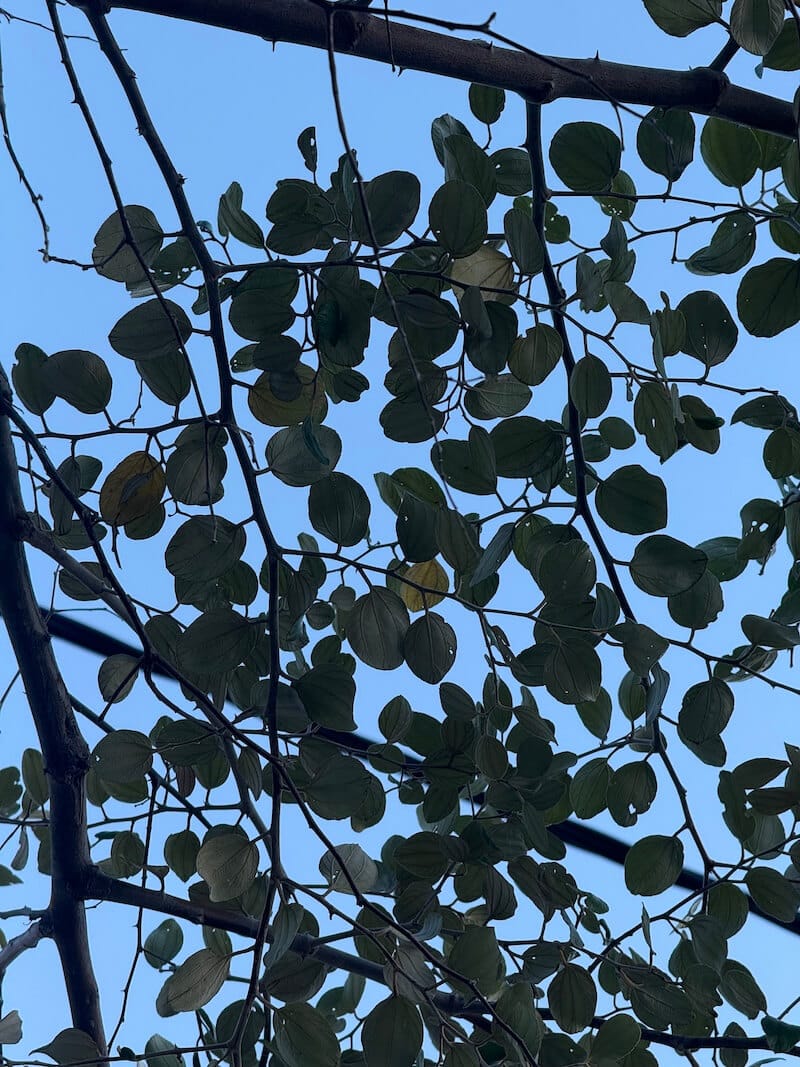
The jujube tree’s blossoms are discreet, consisting of small greenish-yellow flowers rich in nectar, which are popular with pollinators. Most jujube trees are self-fertile, although the presence of another cultivar can improve the harvest. Once mature, the tree is very productive, with no marked alternation. It is also distinguished by its excellent resistance to diseases and insects, which allows it to be grown without treatment in most contexts where it is well adapted.
Why was the jujube tree forgotten, and why is it making a comeback?
Jujube cultivation was once widespread for its edible fruits and medicinal uses, long before the advent of modern candy. Jujubes were eaten fresh, when they were still crunchy and slightly sweet, or dried, at which point their flesh became more concentrated in sugars, with a texture reminiscent of dates. When dried, they could be stored for a long time and were a valuable source of energy.
On transformait aussi les fruits en sirops, en pâtes sucrées et en décoctions, particulièrement utilisées pour adoucir la gorge, calmer la toux et favoriser le sommeil. Dans plusieurs traditions, le jujube faisait partie de la pharmacopée populaire, autant en Asie qu’en Méditerranée, où l’arbre s’était propagé très tôt par les routes commerciales. Ces préparations portaient déjà le nom de jujubes.
With the industrialization of food, these recipes were simplified and then detached from their original ingredients. The fruit was gradually replaced by sugar, gelling agents, and flavorings, while the name remained. Jujube thus became a widely available treat, while the actual fruit and the tree that produced it gradually disappeared from everyday life and orchards.
Unspectacular in terms of ornamental value and less profitable in intensive agricultural systems, the jujube tree was supplanted by trees that were easier to standardize. However, its ancient uses—both food and medicinal—resonate strongly with current concerns. Its longevity, low maintenance requirements, productivity, and climate resilience make it a tree that is particularly consistent with the principles of permaculture, food forests, and sustainable edible landscaping.
Jacqueline and her jujube tree
A few days later, I ran into Jacqueline again on my way back from a hike in the mountains where her goats grazed. I remembered that it was her birthday, so I wished her a happy birthday, and she told me about the phone call she had received early that morning from her son and daughter, who both live in France.
As I listened to her, I initially wondered why her children would leave such a paradise. Then I realized that by choosing to live in one of Canada’s largest cities rather than in the countryside, I had made a similar choice: one of career, convenience, but also love. It was a heartbreaking choice, one I am reminded of every time I leave the dazzling natural landscapes of my country to return to my cozy four-and-a-half room apartment.
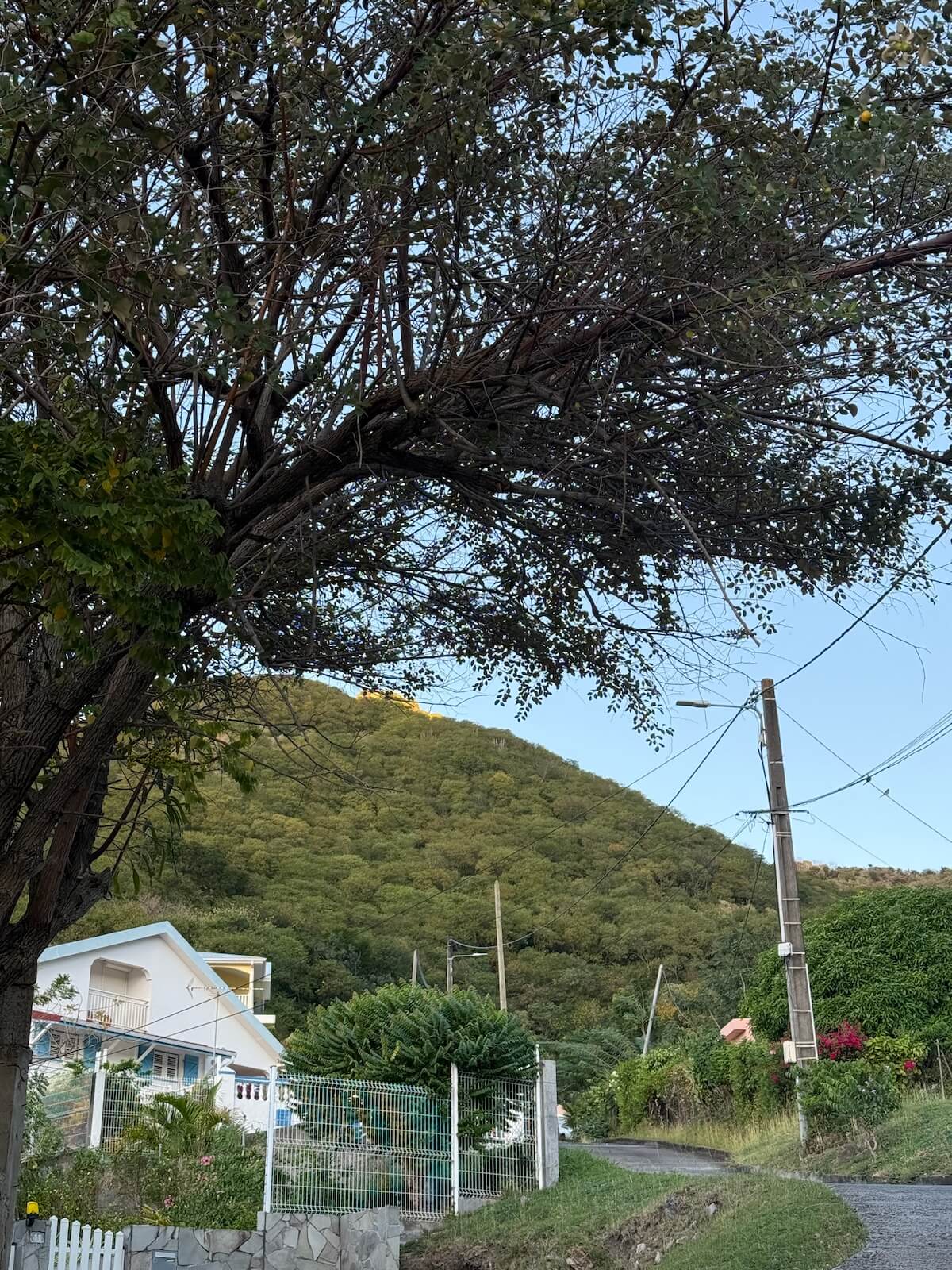
When I left the house, I often ran into Jacqueline and the jujube tree. Little by little, I began to think about their trajectories. The jujube tree, native to Asia, was probably introduced to Martinique during the colonial era via European trade routes. And you can’t visit a place like this without remembering that the population of Martinique is largely descended from enslaved people brought here to grow sugar cane.
Of course, no tree or person can bear the weight of human history alone. Yet this tree from elsewhere and this woman whose family is now scattered seemed to me to tell, each in their own way, the same story: that of displacement, imperfect roots, and bonds that persist despite distance.
Stories that endure
Knowing that the jujube tree can sometimes survive even in colder climates, far from its native territory, gave me the impression that these stories are never completely extinguished. Neither that of the tree nor that of Jacqueline and her family. Trajectories continue, transform, sometimes in unexpected places.

Martinique, a French department, is gradually emptying out, just like the countryside in Canada. The landscapes remain, but the trajectories are shifting. The jujube tree and Jacqueline bear witness, each in their own way, to a world where plants and humans travel together, reinventing and transforming themselves, constantly redrawing territories, for better or for worse.