
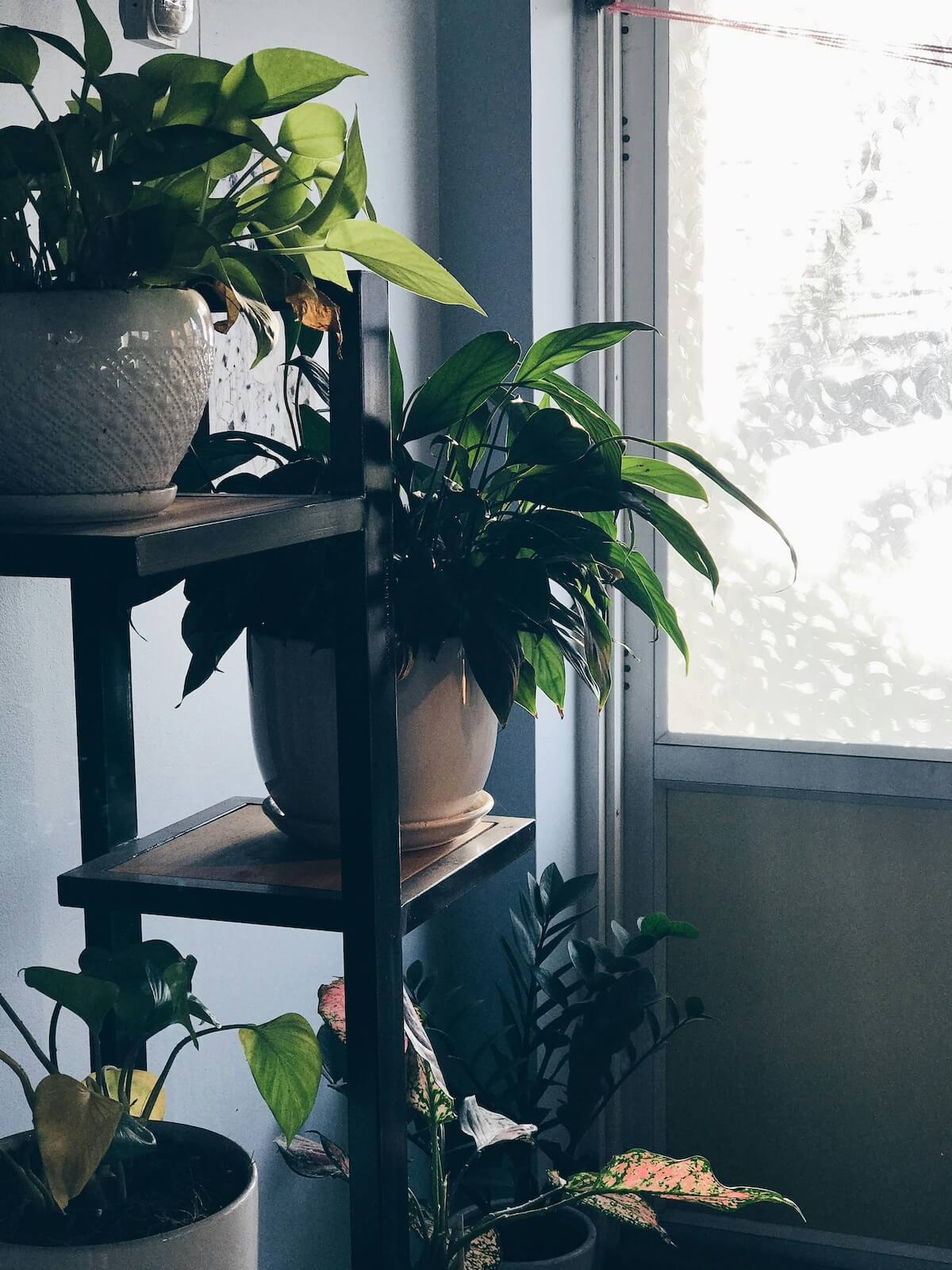
I have a huge south-east facing bay window in my home, filled with all kinds of plants. In summer, the sun is very high and rises early, but as I live in a neighborhood surrounded by large deciduous trees, very little light enters the house: it is almost always shaded. In winter, it’s the opposite: the sun is lower and the trees have no leaves, which increases the brightness inside tenfold. Surprisingly, my plants grow much more in winter than in summer. Does this mean that my “winter” is actually summer for my plants because of the brightness? Should I give them more fertilizer during the winter?
Answer
It’s the same at our home! The building is surrounded by large deciduous trees, so little light gets inside in summer: the house stays cooler, but also much darker. Personally, I take my indoor plants outside during the summer months for this reason.
The foliage of the trees explains the situation well, but the angle of the sun also plays an important role. In summer, the sun is very high in the sky, while in winter it stays lower and its angle allows it to penetrate your rooms horizontally to directly illuminate your plants. The reflection of light on snow can also help, acting as a giant mirror that reflects light back toward your bay window.
Should you fertilize in winter?
The rule is simple: fertilize plants when they are actively growing. However, I wouldn’t necessarily call this “summer” for your plants. Yes, from a metabolic standpoint, their main source of nutrition is light: photosynthesis accelerates, and so does growth. But plants also respond to photoperiod (the length of the day), even though for most tropical houseplants, light intensity plays an even more decisive role. In other words, even though the days are shorter in winter, the strong light that enters your home directly may be enough to stimulate growth. However, the temperature may be lower near a window at night, creating a thermal contrast. We therefore see a real winter growth spurt, but sometimes a little more fragile due to indoor conditions.

Another important factor is humidity, which is generally very low in our heated homes during winter. Plants lose more water through evapotranspiration and become more vulnerable to pests such as spider mites. A humidifier will often help your plants more than extra fertilizer.
Perception of light
Finally, we must not overlook the human perception of light. Our eyes are highly adaptable, but they are a poor measuring instrument for gardeners. In summer, the contrast between the brightness outside and the shade cast by trees is so great that your brain “adjusts” the brightness inside, giving you the impression that it is much darker than it actually is. Conversely, in winter, the glare caused by snow and the low sun gives an impression of infinite brightness, even though this light energy is concentrated over fewer hours in the day. This subjectivity reminds us of the importance of relying on concrete signs of growth—new shoots, buds, vigorous leaves—to decide whether it is appropriate to fertilize.
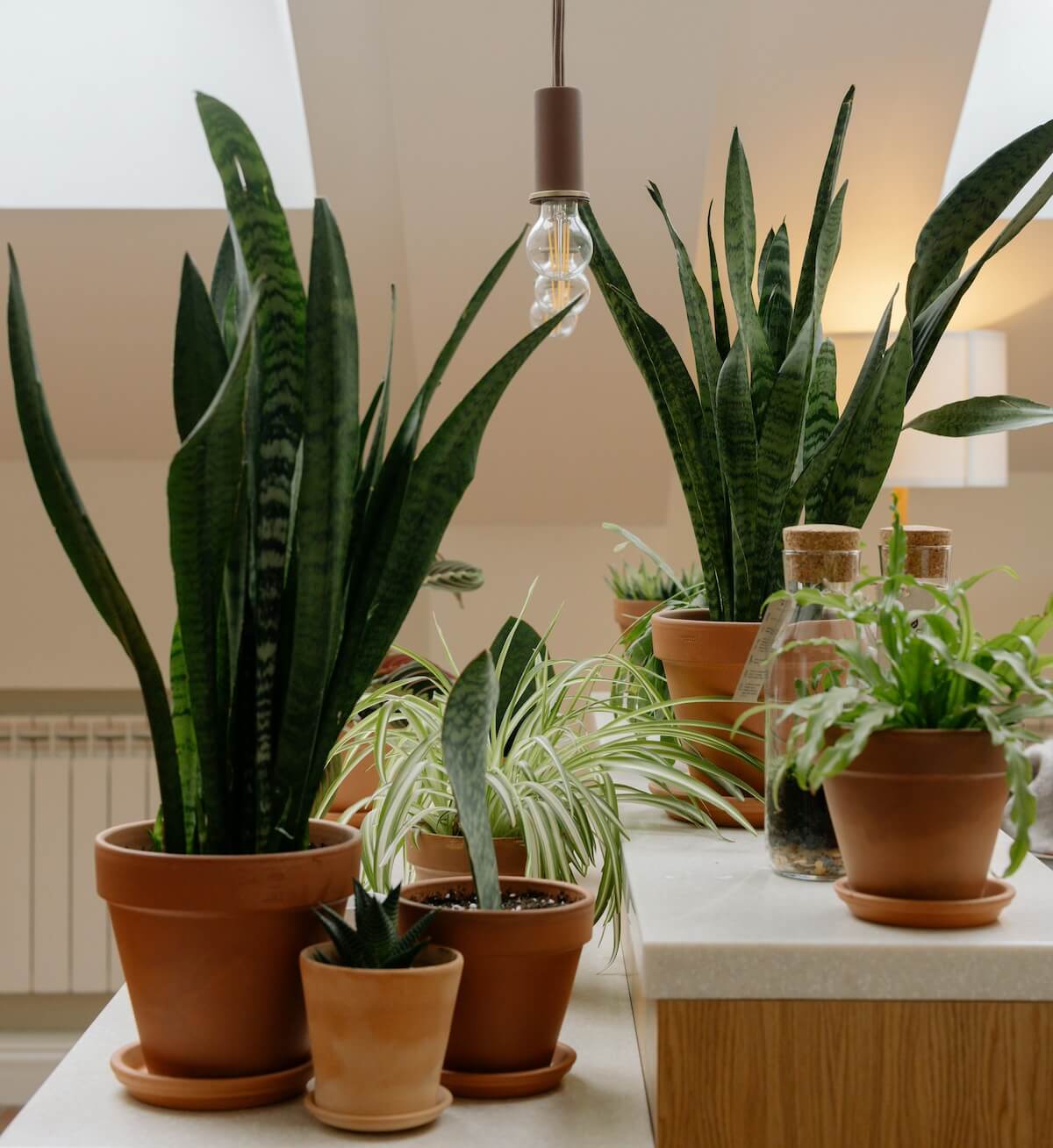
If growth is healthy (not stunted, i.e., with abnormally long and weak stems), fertilize; if growth stops, stop fertilizing, regardless of the season. It is generally recommended to use a quarter or half of the dose indicated on the package to prevent mineral salts from accumulating in the potting soil.
My question is about the numbers in fertilizer. What on now healthy spouting geraniums? And especially What on leaves of amaryllis and hyacinths that have bloomed? Your morning gardening email is such a joyful relief from the news!