
On this International Women’s Day, we think it’s important to take a moment to reflect on the very important, but often overlooked, role of women in the world of botany. We would like to share with you the stories of two Canadian women who have made significant contributions to the advancement of botanical knowledge, each in their own way. There are, of course, many others, but we find these two particularly significant and inspiring. Please feel free to share your thoughts in the comments section of this blog.

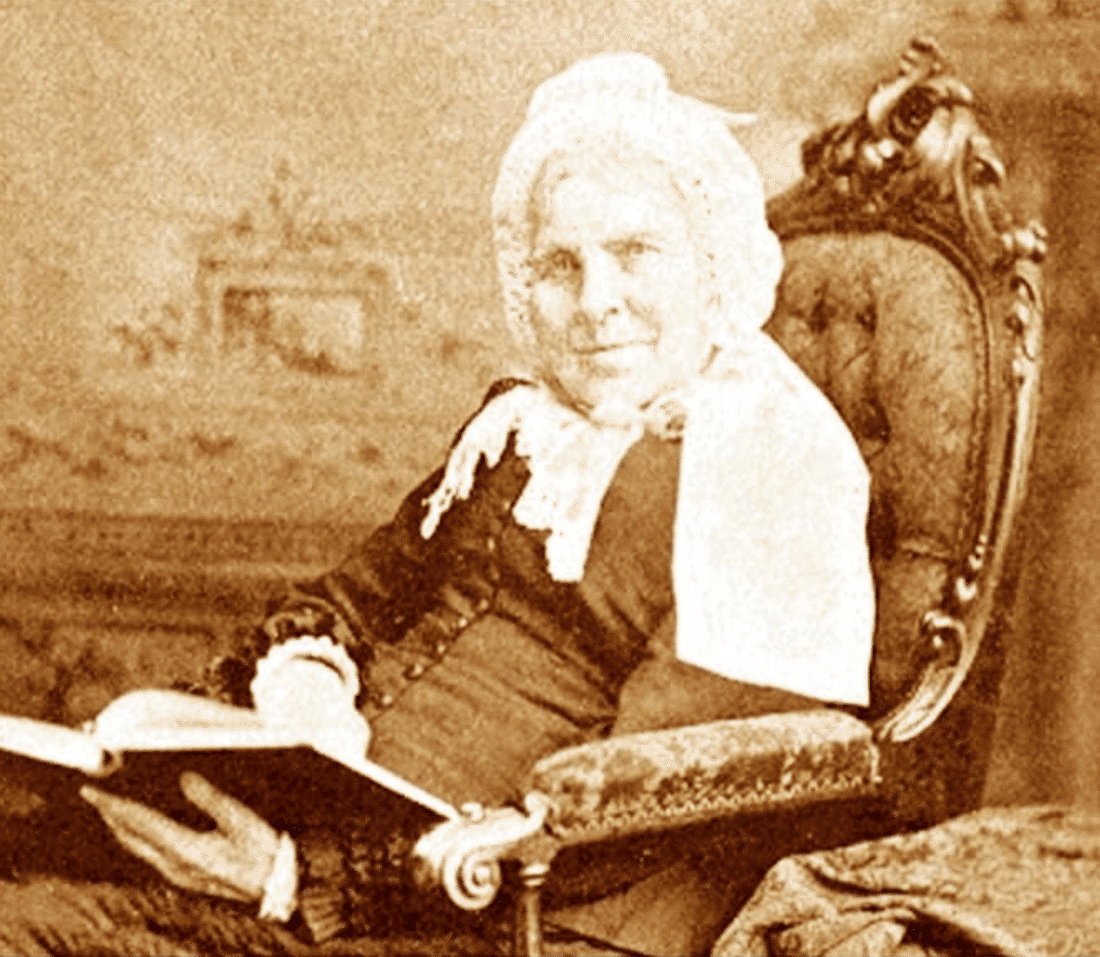
Catherine Parr Strickland (1802-1899)
Catherine was born on January 9, 1802, in the suburbs of London, England. From an early age, she developed a fascination with nature, which she discovered with her family, but especially with her father, who encouraged her to write down her observations.
At the age of 30, she moved to Canada (Ontario) with her husband, Lieutenant Thomas Traill. The couple quickly adapted to their new life, making many cultural and botanical discoveries in what was then a rather rural area. Just four years after her arrival in Canada, in 1836, she published her first book, which included a chapter on the native flowers of her adopted region: The Backwoods of Canada: Being Letters from the Wife of an Emigrant Officer, Illustrative of the Domestic Economy of British America.
Woman, mother, and pioneer
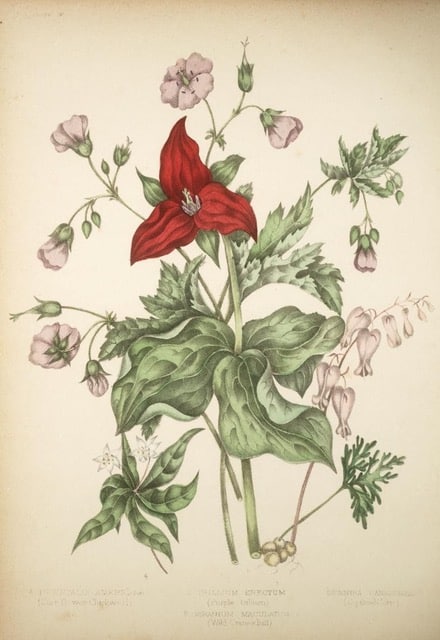
While giving birth to nine children and caring for her sick husband, she wrote several short pieces on nature that were published in London periodicals. She collected and studied ferns and native flowers in Upper Canada, taking care to meticulously record her observations. By teaming up with her niece, Agnes Dunbar Fitzgibbon, a talented illustrator, she finally managed to find a publisher willing to publish her botanical notebooks: Canadian Wildflowers (1868), Studies of Plant Life in Canada; or, Gleanings from Forest, Lake and Plain (1885) and Pearls and Peebles; or, Notes of an Old Naturalist (1894).
She died at the venerable age of 97, having devoted her entire life to her valuable botanical analysis work. Her publications are still admired today for the quality and rigor of their descriptions. Some of her works can be downloaded free of charge from Project Gutenberg.
Marcelle Gauvreau (1907-1968)
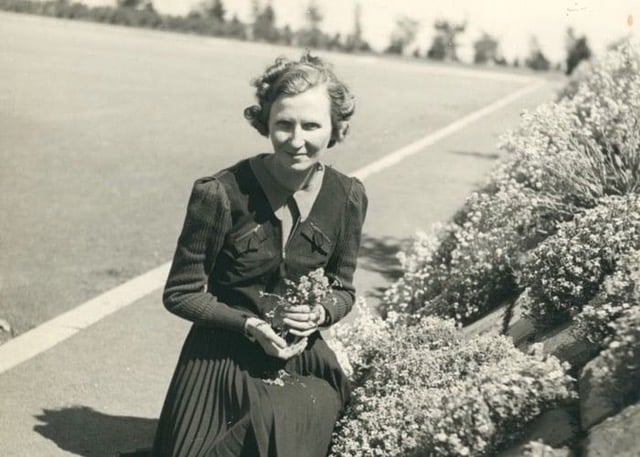
Born on February 28, 1907, in Rimouski, Marcelle Gauvreau spent most of her childhood in Montreal, where she studied at renowned religious institutions. At the age of 17, she contracted tuberculosis, a disease she struggled to overcome and which left her with serious after-effects throughout her life.
In 1931, after several years of convalescence and academic uncertainty, she was admitted to the Botanical Institute of the University of Montreal, where she obtained two certificates in botany in less than two years. In the following years, she obtained several additional degrees in zoology, natural sciences, paleobotany, and library science.
Talented, intelligent, and hard-working, Marcelle quickly caught the attention of her professors, who encouraged her to pursue graduate studies. In 1939, she submitted her master’s thesis on marine algae in the Gulf of St. Lawrence, becoming the first French-speaking Canadian woman to obtain a master’s degree in natural sciences.
During her studies, she held several unusual positions, including first librarian at the Montreal Botanical Institute, assistant in the educational department of the Botanical Garden, teacher at the Collège de Sillery, and designer of new natural science training programs for adults and children.
An impressive career
Over the years, she published numerous columns in Le Devoir, La Presse, and a host of other well-known periodicals of the time. She was a regular guest on CBC Radio programs such as Fémina, La Cité des plantes, and Les Merveilles de la nature, becoming the leading female voice of a generation of women interested in the natural sciences and botany.
Her most famous work is Plantes curieuses de mon pays (1943), which many consider a masterpiece of popular science, combining rigorous style with accessible vocabulary.
Her literary output is considerable: approximately 512 documents, more than half of which are academic works and scientific articles published in prestigious journals and newspapers.
Marcelle Gauvreau is probably one of the most underrated scientific figures of the 20th century in Quebec. Reading her biography, one cannot help but be impressed by her unusual career path, her tremendous productivity despite fragile health, her exceptional teaching skills, and her unwavering passion for scientific knowledge.
Do you know any others?
While preparing this article, I was struck by the lack of visibility suffered by the influential figures in our society, who very rarely receive the media attention they deserve. The modern media world thrives on spectacular personalities and carefully crafted public images that inflate their importance. Fortunately, our society also has people of great quality, workers behind the scenes who enrich us with their discreet but oh-so-important work!
If you would like to introduce us to a significant and little-known figure in your circle, please share your observations in the comments section. Whether it’s a dedicated teacher, a skilled scientist, a talented illustrator, or a dedicated volunteer at your horticultural association, all these wonderful women deserve our recognition on this day dedicated to them. Thank you for sharing them with us.
Isabella Preston, Canada’s first professional female plant breeder. https://agriculture.canada.ca/en/agri-info/good-news-grows/true-flower-child-remembering-isabella-preston-canadas-home-grown-horticulturalist
You are the second person mentioning Isabella Preston.
Somebody proposed her name on the french version of this article.
I will read about her. Thanks
Thank you for these two biographies of very strong women.