


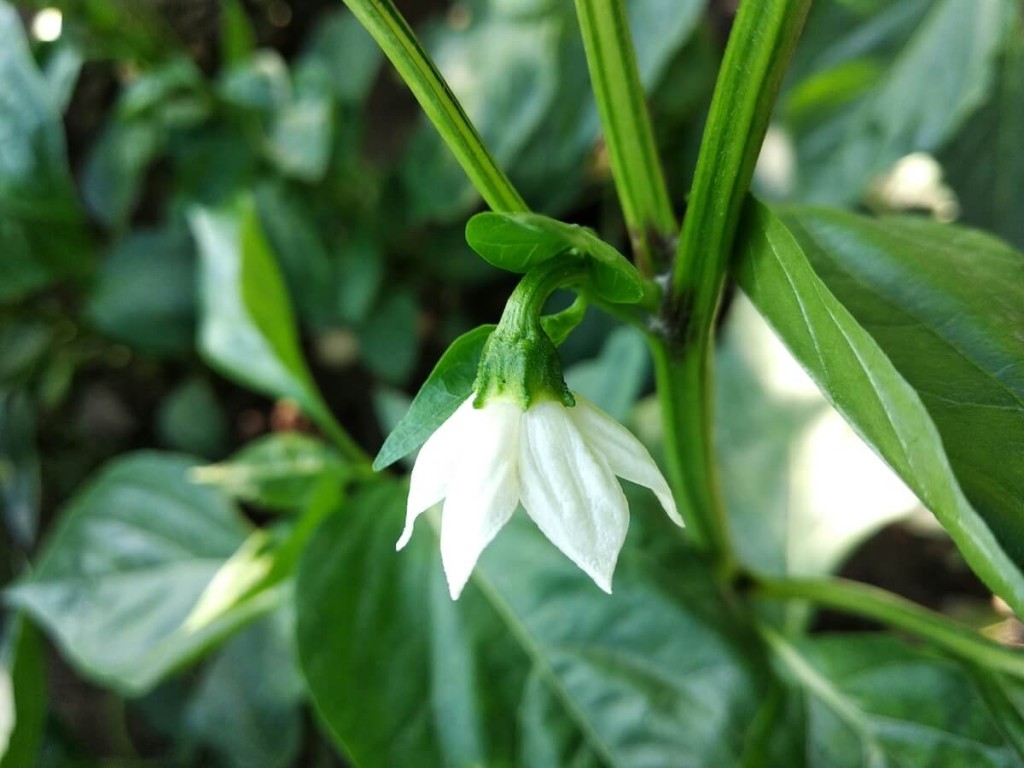
Let’s be honest. I spent years seeing the words “open pollinated” and “hybrid” on seed packets, nodding my head knowingly, and… moving on. The expression seemed so obvious that I never bothered to really understand it.

My recent efforts to organize my catalog and understand seed packets have allowed me to shed light on these famous terms. I initially wanted to include it in these articles, but then I decided to make it into a detailed article because… well, that’s why you follow me: to get a GOOD explanation of the world of science, clearly and simply. I wouldn’t want to let you down by condensing it, especially when it comes to something that I myself didn’t really understand. That would be a bit counterproductive, wouldn’t it?
F1: hybrids
F1 hybrid seeds are the result of controlled crossbreeding between two parent lines. The first generation is often spectacular—vigorous, uniform, productive. But if you save seeds from your harvest and sow them the following year, the resulting plants will be genetically unstable. You have to buy new seeds every year to get the same results. (And no, F1 seeds are not GMOs! GMOs involve laboratory modification. F1 seeds are a cross between two cultivars.)
In concrete terms, imagine a cross between a dwarf bean and a giant bean (these are our two parent lines, called F0). Each contributes half of its genetic makeup. The F1 could thus produce a compact plant that produces very large beans—the best of both worlds! Except that if you keep the seeds and sow them the following year (this is the F2), you no longer have any guarantee. The genes mix again, in any combination: you could end up with a dwarf bean that produces almost nothing, or a giant with tiny, tasteless beans. And this is true even if you pollinated with the same plant.
My favorite analogy
To make it even clearer, here’s my favorite analogy: let’s take a purebred poodle and a purebred Labrador (our F0). Crossing them produces Labradoodles (F1): all relatively similar, with 50% poodle and 50% Labrador. Now, cross two Labradoodles together… and that’s when genetics decides to have a party all on its own! One puppy may inherit 70% poodle, another 85% Labrador. More curly, less curly, bigger, smaller: the F2 is a wonderful surprise. Not always the kind of surprise you want in your garden, though!
The reality is that half the genes come from the mother and half from the father. It doesn’t matter if half of the mother’s genetic makeup is 50% dwarf bean and 50% giant bean, the cell doesn’t care. It will take half of everything, regardless of what it consists of.
So will the half that makes up the F2 be the one we want? It’s a mystery!
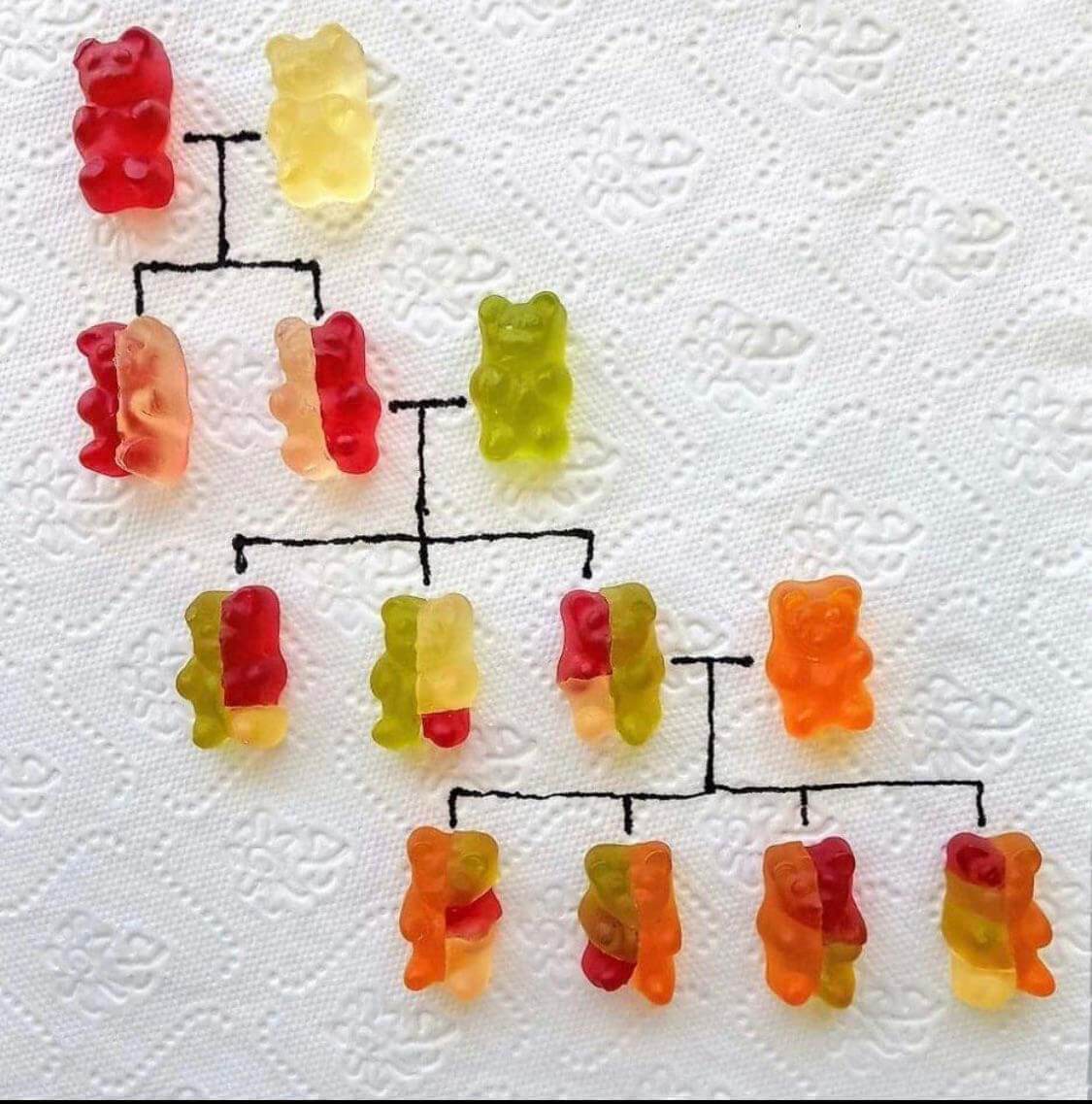
I often see this image (unfortunately, I don’t know who created it), and I think it’s a very nice explanation of genetics. It doesn’t really represent an F1 crossed with an F1 because a green bear cub has been added, but it’s still very visual!
Open pollination: The “purebreds”
Open-pollinated (OP) seeds are genetically stable because they are not a cross between two different lines. They are cultivars that have reproduced with themselves. If you have a dwarf bean, the genetics of the seeds are 100% dwarf bean. If you grow two plants of the same variety side by side, no surprises—you’ll get the same dwarf beans year after year, because the genes are mixed between copies of the same genetic makeup.
To go back to our dogs: two poodles will NEVER produce a Labrador. It’s as simple as that. It’s as if we only had red Gummy Bears in the picture. With open-pollinated seeds, you can save your seeds from one year to the next and get exactly the same vegetables.
So why would F1 seeds be interesting? Well, there are several reasons: for example, you can mix a delicious cultivar with a less tasty but disease-resistant cultivar. You can have a cultivar that is more resistant to certain temperatures or has a higher yield. Some seeds are also very difficult to obtain, so if you have to buy them again the following year, you might as well choose a variety with incredible properties… It’s also a marketing ploy by wholesalers who sell you the perfect vegetable, but force you to buy seeds again and again!
The real question: self-pollinated or cross-pollinated?
Now that we understand the difference, “open pollination” does not mean “pollinate however you want and everything will be fine.” It means that pollination has taken place freely with insects, but respecting certain distances between cultivars to avoid cross-pollination!
I see lots of stories on the internet about isolating flowers to prevent cross-pollination. This isn’t 100% wrong, but it’s not always necessary either! It depends on a fundamental distinction: is your vegetable self-pollinating or cross-pollinating?
Tomate
Tomatoes are heaven for gardeners who grow their own seeds. Their flowers are designed with a tube of stamens that completely encloses the pistil, meaning that insects and the wind have virtually no chance of depositing foreign pollen. The plant essentially fertilizes itself—it is self-pollinating. (Incidentally, the word comes from the Greek autos, meaning “self,” and gamos, meaning “marriage.”) As a result, you can grow several varieties side by side and the seeds will remain pure in the vast majority of cases.
Peas and beans
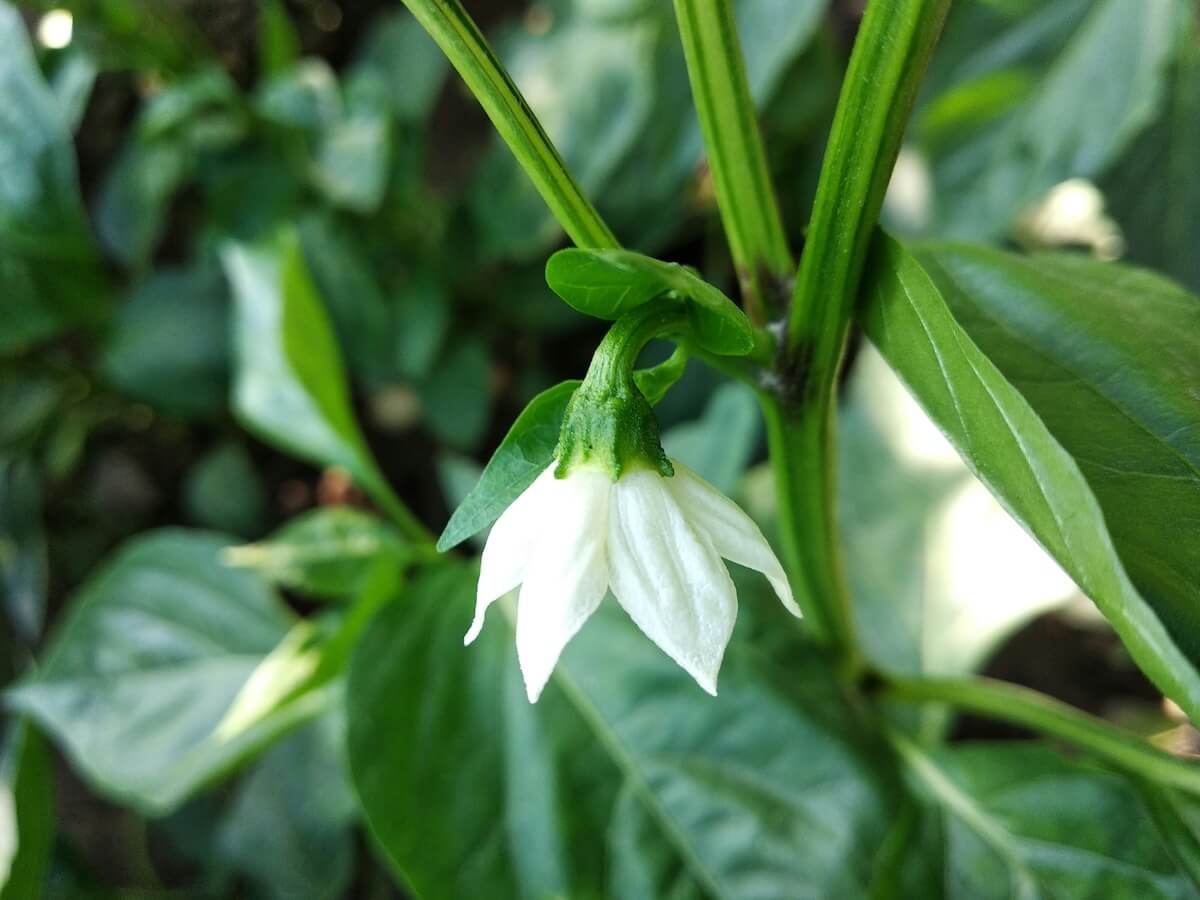
Peas and beans work in a similar way. The anatomy of the plants is different, but they are mostly self-pollinating. As a precaution, some experts still recommend a safety distance of a few meters (approximately 10 to 20 m / 30 to 65 ft) between two different cultivars, but in practice, the risk of accidental cross-pollination is quite low. Peppers, although the recommendations for professional seed producers are to keep two cultivars 200 meters (about 650 ft) apart, are also self-pollinating and the risk of cross-pollination is very low. Reasonably, a gardener can leave 10 meters (about 30 ft)between their chili and bell pepper cultivars and have very little risk of cross-pollination occurring.
Carrot
Carrots, on the other hand, are the complete opposite: they are allogamous and share their pollen. (Again from the Greek allos: other, and gamos: marriage.) Their umbellate flowers are wide open and very attractive to insects. But the problem of cross-pollination goes beyond your own varieties, or even those of your neighbor: cultivated carrots can cross-pollinate with wild carrots (Daucus carota) that grow along roadsides and in wastelands. Your beautiful Nantes carrots could well produce hybrids with their wild cousins—white, woody, and frankly disappointing in soup. To preserve pure carrot seeds, a minimum distance of 800 meters to 1 kilometer is required. For most vegetable gardens, it is simply unrealistic to think of eradicating other varieties, including the wild variety, within this radius. What’s more, it takes two years to produce seeds!
Squash, pumpkin, zucchini
Squash, pumpkins, and zucchini are all the same. Bees love their large flowers and happily carry their pollen. The recommended distance between two varieties of the same species is easily a kilometer. The good news, however, is that squash only cross-pollinate within the same species. Your zucchini (Cucurbita pepo) will not cross-pollinate with your butternut squash (C. moschata) or your red kuri squash (C. maxima). The three can coexist without any problems—it’s their respective varieties that need to be kept apart. If you live far away from your neighbors, this is possible, as we don’t have any wild squash that could cause trouble.
More realistically, lettuce needs less than 10 meters of space between one variety and another. I used to pull up my plants as soon as they started to go to seed, but now that I know this, I’ll let a few of them go!
In short, the simple rule to remember is: for self-pollinating plants (tomatoes, peas, beans), don’t worry! For cross-pollinators (squash, carrots, cabbage, etc.), if you really want to keep your seeds pure, you either need a lot of space or choose to grow only one variety per species… Or try to isolate your flowers! Personally… I have nothing against buying a packet of seeds, haha!

Where to begin?
Saving tomato or bean seeds from one year to the next is rewarding and entirely within the reach of an amateur gardener. With a minimum of spacing, you can even try saving lettuce and chili pepper seeds! But I’ll be honest with you: beyond a few simple cases, becoming truly self-sufficient in seeds is a bit utopian. Seed production is a real profession—and a complex one at that!
Between isolation distances that are measured in kilometers for some species, biennial vegetables that require two years of patience before producing seeds, not to mention dioecious plants, i.e., those that have separate male AND female plants (kiwi, hops, spinach, to name a few)… Phew! It quickly becomes a “bag” of trouble to save $30 worth of seeds!
So yes, have fun saving your favorite open-pollinated seeds—it’s simple, satisfying, and creates a beautiful connection from one season to the next. But if you’re really passionate about the world of seeds, I invite you to go beyond a blog post (even mine!). There are courses available that will give you a solid foundation for practicing this wonderful craft with rigor.
Tell me, have you had success with your own seeds from vegetables other than the ones I’ve mentioned?