
Orchid show season is just around the corner! Before you visit, it might be helpful to know what an orchid really is. That way, you might even pass for an orchid lover yourself!
A large family
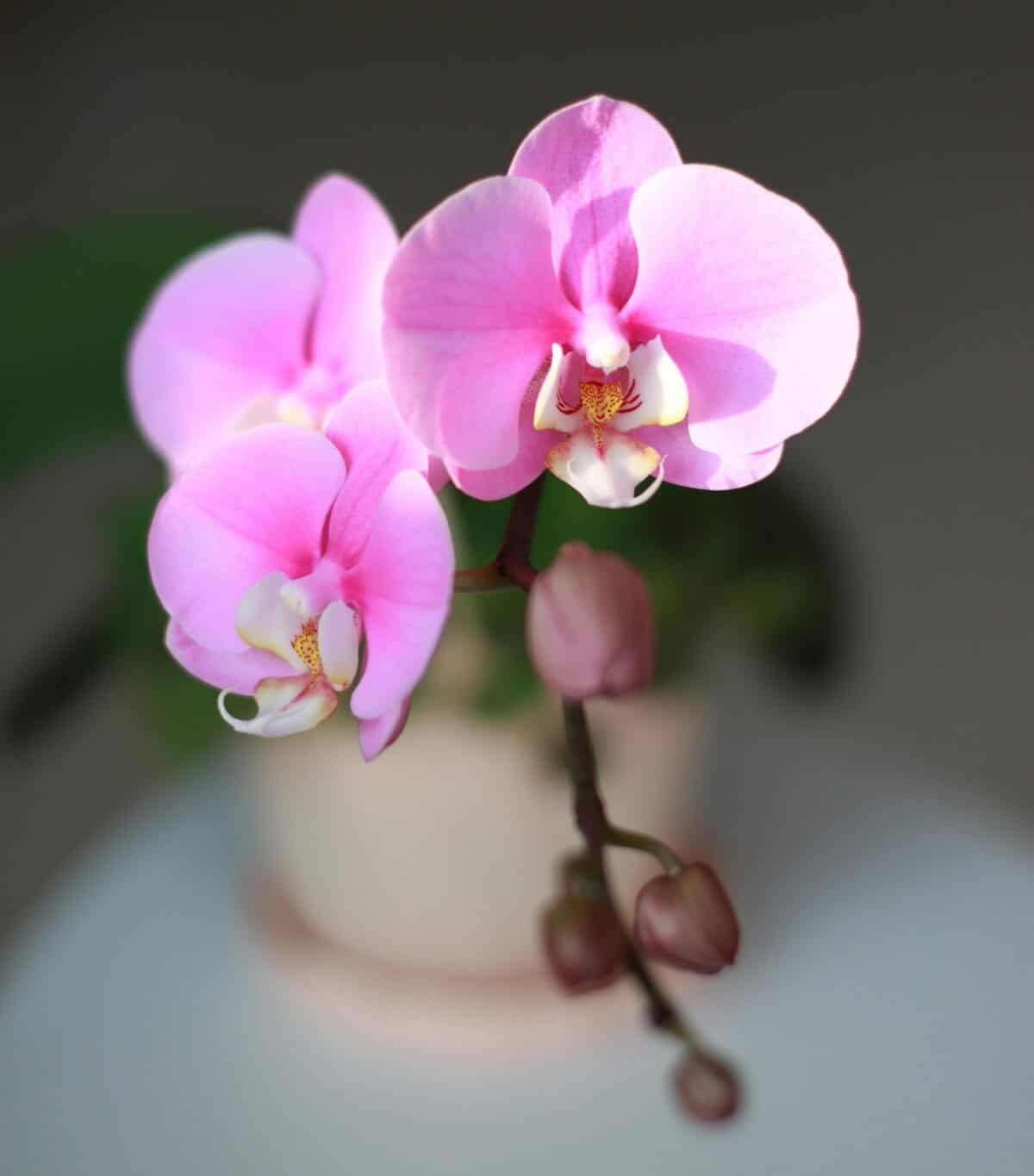
Orchids are plants belonging to a single family, the Orchidaceae, and therefore all descend from a distant common ancestor. These flowering plants are monocots, meaning they produce a single cotyledon upon germination, and are thus more closely related to grasses, irises, lilies, and palms than to dicots (which have two cotyledons), such as tomatoes, daisies, begonias, and, in fact, the majority of the plants we grow.
How can you tell them apart?
What primarily distinguishes orchids from other monocots is their flower. Most monocots have flowers with six segments: three petals (inner) and three sepals (outer). Generally, the six segments are similar. Thus, the flower appears to have six nearly identical “petals.” This is the case with a tulip or a lily, for example.
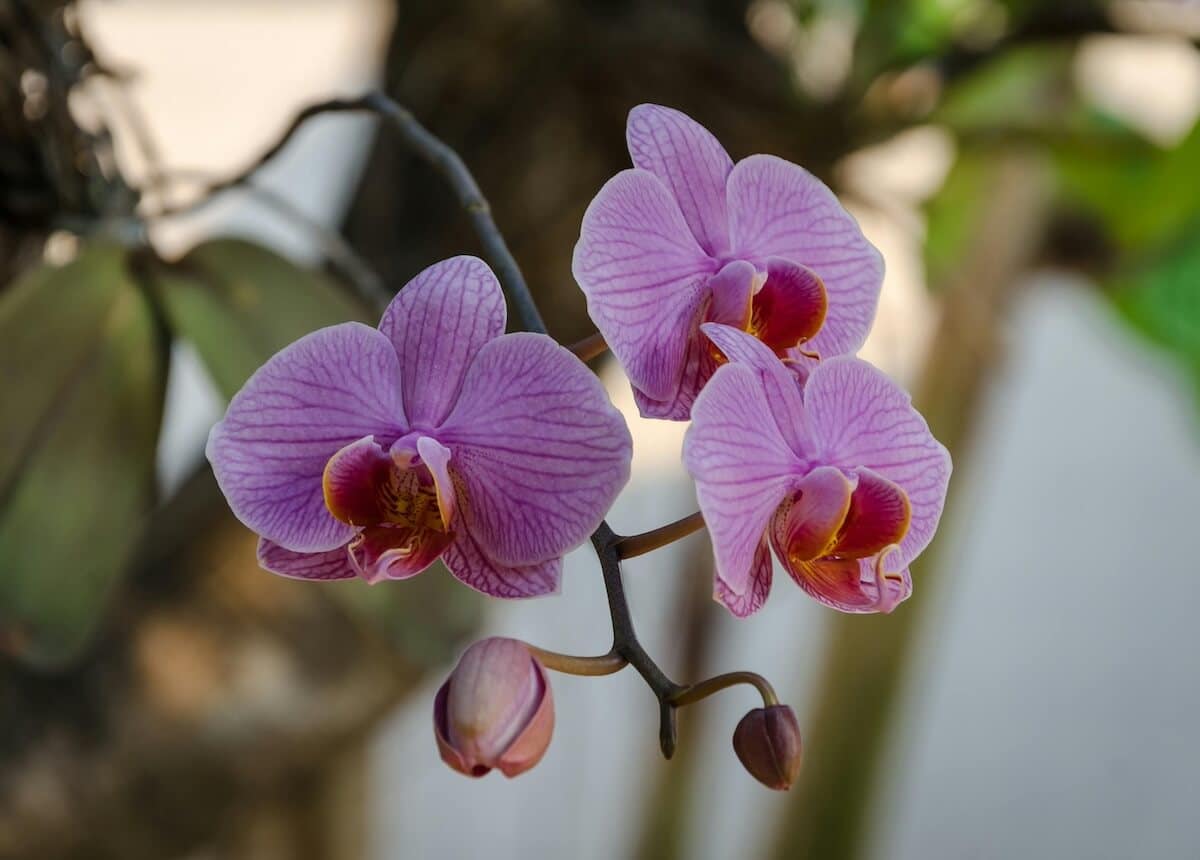
In orchids, although there are always six petals, one of them is different from the other five. It has evolved into a labellum—from the Latin word for “tongue”—because it often protrudes from the flower like a tongue. The labellum is almost always a different color from the rest of the flower and may be notched, crinkled, or cup-shaped. It is so distinctive that most people can easily recognize an orchid after seeing just two or three examples.
Male or female
Other, less obvious characteristics also help identify them. For example, the male and female reproductive organs are grouped together in a single structure called a column, and the pollen is not loose, as in other flowers, but gathered into a “ball” called a pollinia.
Also, the seeds of orchids are, for the vast majority, incredibly small, because they lack the heavy food reserves found in other seeds. They are so light that they are carried away by the slightest breeze, and this is how orchids spread throughout nature. However, the lack of food reserves means they cannot germinate on their own: wherever the wind carries them, they need to encounter a beneficial fungus (mycorrhiza) that will nourish them, in exchange for some carbohydrates that the young orchid will produce later.
Tropical orchids
Orchids are found almost everywhere on the planet, except in Antarctica and in aquatic environments. Even Canada is home to several wild orchids. However, there are relatively few orchids native to temperate climates: the vast majority are native to tropical and subtropical countries… and it is these that you will see in exhibitions, as they are easier to grow in our heated homes.
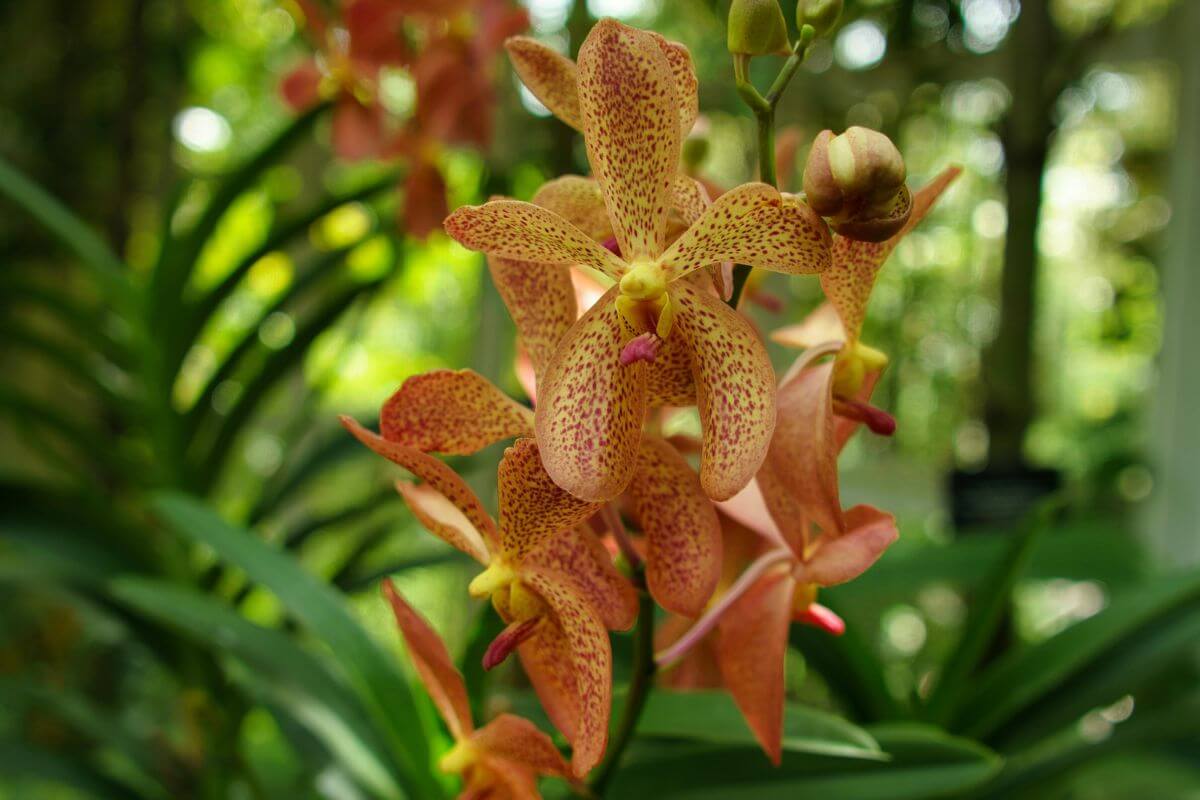
Most tropical orchids are epiphytes: they do not grow in contact with the ground like our native orchids do, but on the branches and trunks of trees. To attach themselves to their host, they have thick roots that are exposed to the air; these are logically called aerial roots. That is why you shouldn’t worry if an orchid’s roots are spilling out of its pot. They are often grown in a very airy medium, usually bark-based, which resembles their original host tree. Very few orchids are grown in ordinary potting soil.
Monopodial and sympodial plants
Two types of growth are common in orchids and are particularly evident in tropical orchids.

Monopodial orchids produce a single stem that grows longer each year and can bloom many times. The leaves are typically alternate, arranged on either side of the stem like rungs on a primitive ladder. The stem can be long and very prominent, as in Vanda or Vanilla (yes, vanilla is an orchid!), or short and barely visible, as in the very popular Phalaenopsis.
Sympodial orchids produce multiple stems connected by a rhizome. Typically, each stem blooms only once… but the plant produces new stems annually that bloom in turn. Often, the stem is short and rounded, bulb-shaped, and is then called a pseudobulb. If the stem is longer, it is often referred to as a cane.
So many choices!
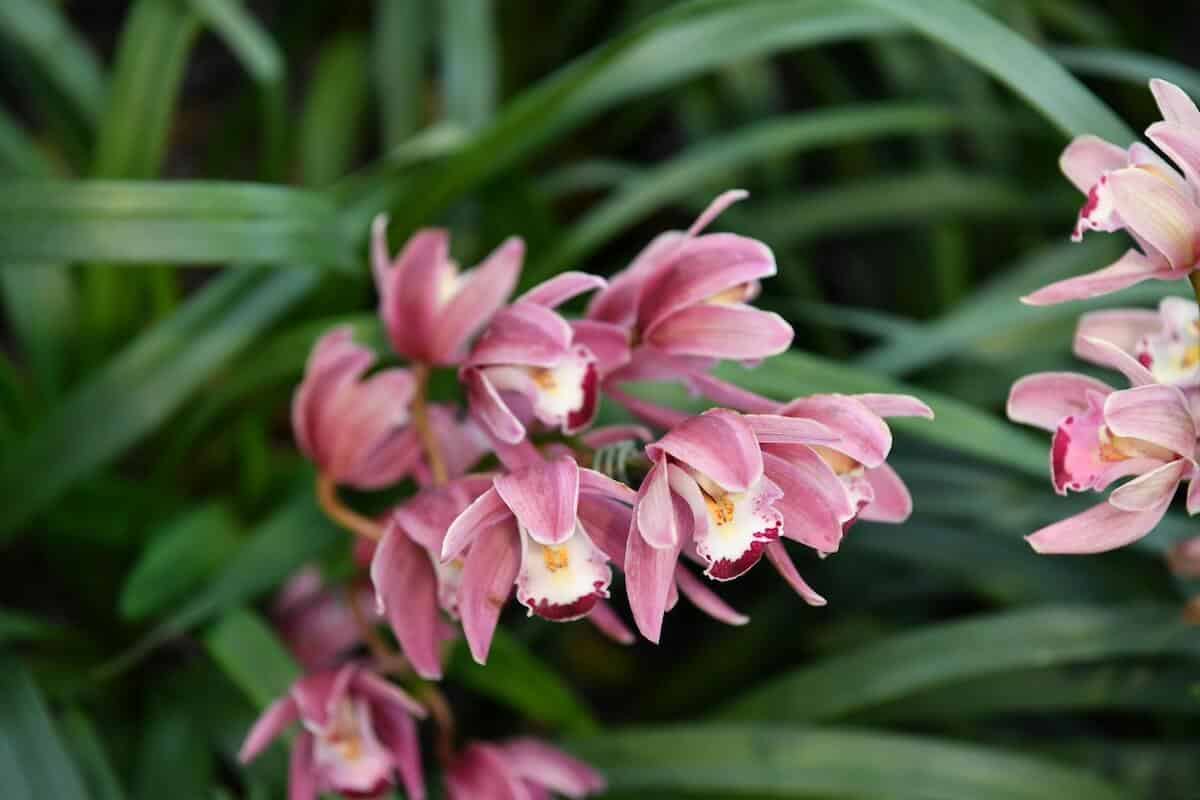
The Orchidaceae family is considered one of the largest in the world, with more than 800 genera and approximately 25,000 wild species… and tens of thousands of cultivated hybrids. The flowers can be larger than a grapefruit or smaller than your little fingernail, brightly colored or dull, monochromatic or multicolored, solitary or clustered.
In fact, the exhibitions usually feature a selection of orchids for sale!
The excerpt is truly impressive, opening up a fascinating biological perspective on orchids: although abundant and diverse, they all belong to the same Orchids family and have a distinctive flower structure that is completely different from other monocotyledonous species. This diversity immediately reminds me of the cars of all shapes and colors in the eggy car game — although each car looks different, they all share the same “big” mission: to keep the egg from breaking. Both are excellent examples of the infinite variations on a single core foundation!
Keeping your liver healthy can be a lot more manageable when you go with the properLiver Tablets In India plus you also stick to some good eating habits. In many cases, quality liver supplements made from herbal ingredients may help support normal liver function, help digestion run more smoothly, and sort of boost your overall wellness. then pair all that with steady exercise and a balanced way of living, so you can see better long term results.
Keeping your liver healthy can be a lot more manageable when you go with the proper Liver Tablets In India plus you also stick to some good eating habits. In many cases, quality liver supplements made from herbal ingredients may help support normal liver function, help digestion run more smoothly, and sort of boost your overall wellness. then pair all that with steady exercise and a balanced way of living, so you can see better long term results.
That was a really insightful read – I finally feel like I can spot an orchid without just taking a wild guess!run 3
The detail about the labellum being so distinctive really clarifies how much specialized evolution goes into these flowers! It makes me wonder if some other complex floral structures might be easier to visualize using something like an image to sketch process when trying to learn them. Do you find that distinguishing the different growth patterns—monopodial versus sympodial—is the trickiest part for beginners?
This post provides great insight into Ayurvedic Medicine for Breathing Problem . The explanations are easy to understand and give a clear idea of how Ayurveda can help improve lung health naturally. It’s very useful for anyone exploring traditional remedies
That was a really insightful read – I finally feel like I can spot an orchid without just taking a wild guess! run 3 online
Really interesting read – now I feel like I can actually recognize an orchid instead of just guessing! Smash Karts Game