
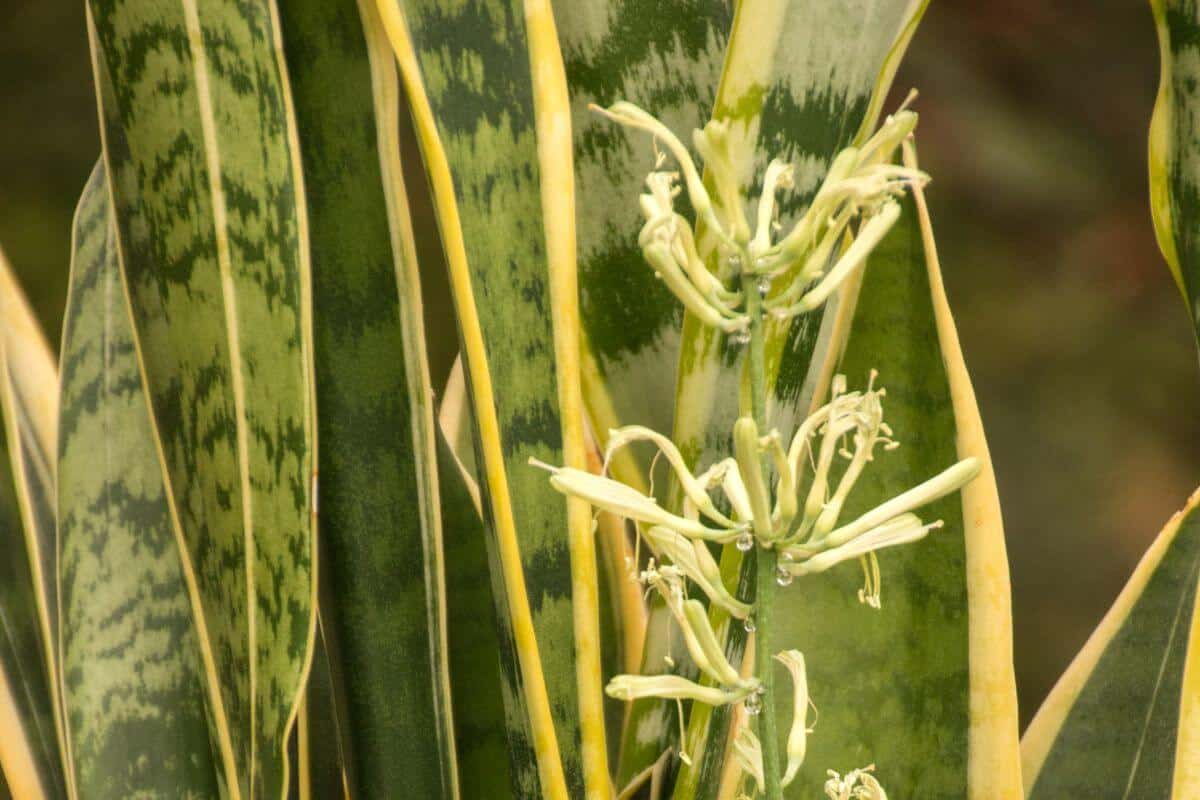
A blooming mother-in-law’s tongue
Here’s a snake plant that’s been sitting in the corner for at least five or six years and decided this year, for the first time, to bloom. Is that common? And why did it bloom this year?
Answer
It’s not uncommon for snake plants (Dracaena trifasciata) to bloom, and their flowers actually give off a sweet scent in the evening. However, this plant grows extremely slowly and may take many years before blooming again. One thing is certain, however: if your plant blooms, it means it likes its growing conditions. Don’t change a thing, and you should see flowers again… someday!
This article was originally published in the newspaper Le Soleil on April 9, 2006.
Dried leave tips
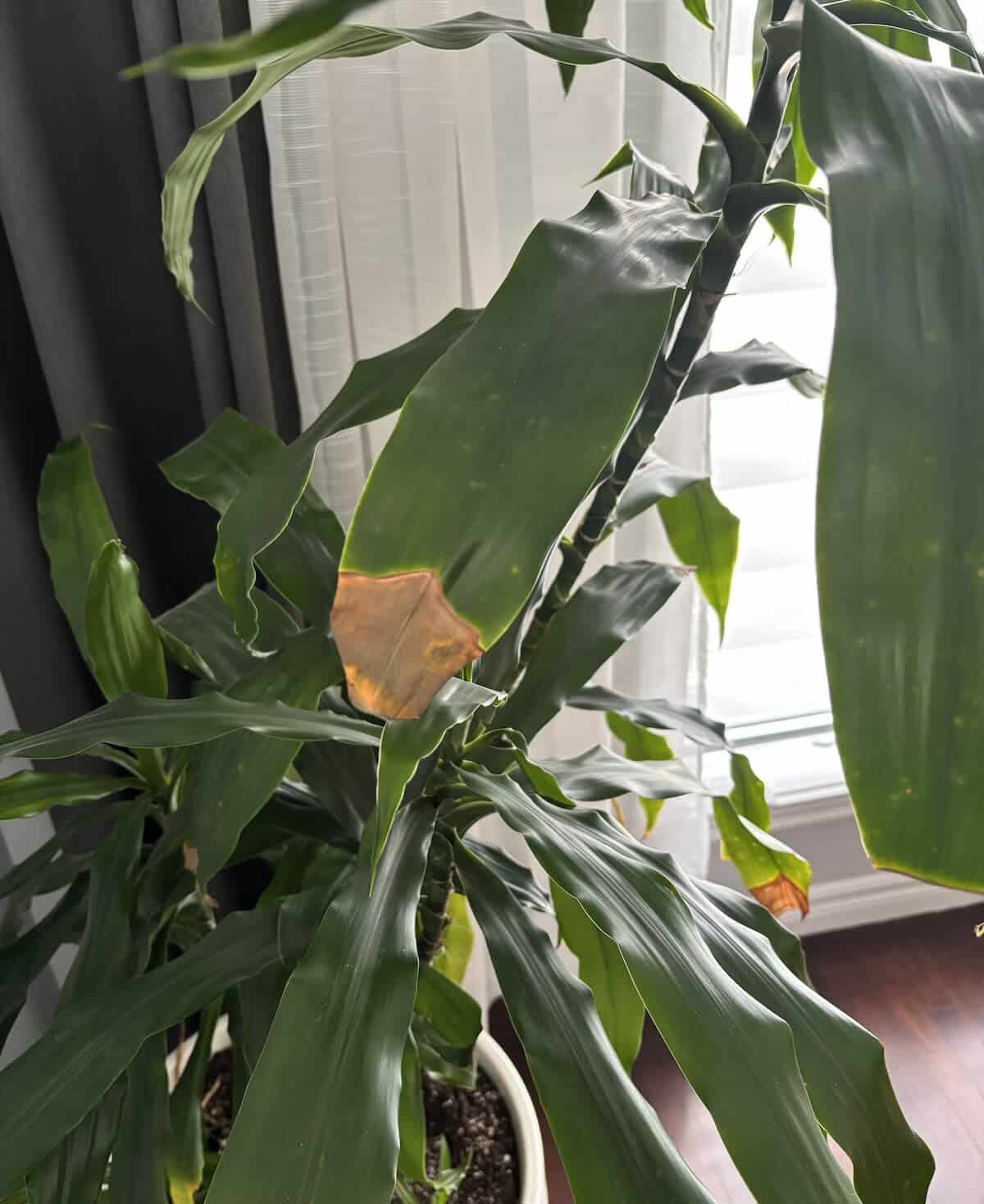
I have several houseplants that I water regularly (about every two weeks). They’re in a fairly well-lit area, and every now and then I give them a small dose of 20-20-20 fertilizer, but the tips of their leaves are drying out. What could be causing this?
Answer
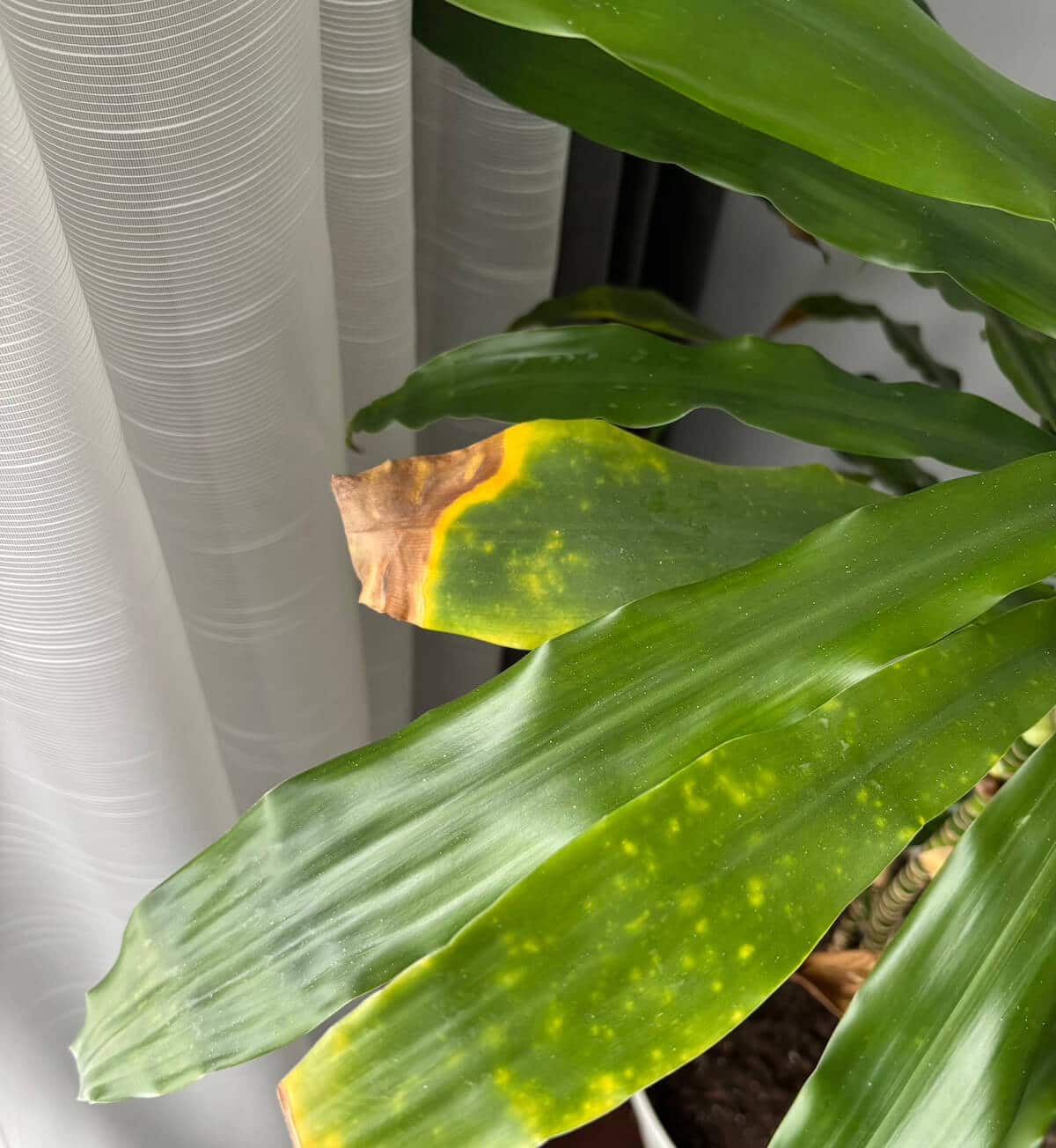
“Browning” at the tips of the leaves, or brown leaves, indicates that not enough water is reaching the leaf to fully hydrate it. Since the tip is the outermost part of the leaf, it is the part that suffers the most. But why doesn’t the water reach the tips of the leaves? There could be several reasons:
The air is too dry
In this case, the leaf loses so much water through transpiration that the tip doesn’t get its fair share. Increasing the humidity in the room with a humidifier will prevent future damage.
The plant needs more water
Either you’re not watering them often enough, or—more likely, given that you say your plants are otherwise very healthy—you’re not giving them enough water each time you water them. You should always thoroughly soak the entire root ball when watering.
The potting mix contains too many minerals
In this case, even when you water properly, the water doesn’t reach the roots effectively. In fact, if you recall your chemistry, osmosis causes water to always move toward where the salt concentration is highest. When the potting soil becomes saltier than the plant’s sap, water leaves the plant tissues rather than hydrating them. However, over time, watering with tap water and applying soluble fertilizers like 20-20-20 causes indoor potting soil to become contaminated with mineral salts.
When this happens, you must either repot the plant in fresh potting soil or leach the soil to dissolve the excess salts. You can also top-dress the soil: scrape and remove the top layer of soil (where salts accumulate) and replace it with fresh potting mix. You can also replace the 20-20-20 with a milder fertilizer, such as an algae-based fertilizer, which limits salt buildup in the soil.
Finally, note that it is impossible to revive a burnt tip, as that part of the leaf is dead. However, by correcting the underlying problem, whatever it may be, you will prevent future leaf damage.
This text was originally published in the newspaper Le Soleil on January 31, 2006.
Mini fragrant cyclamen
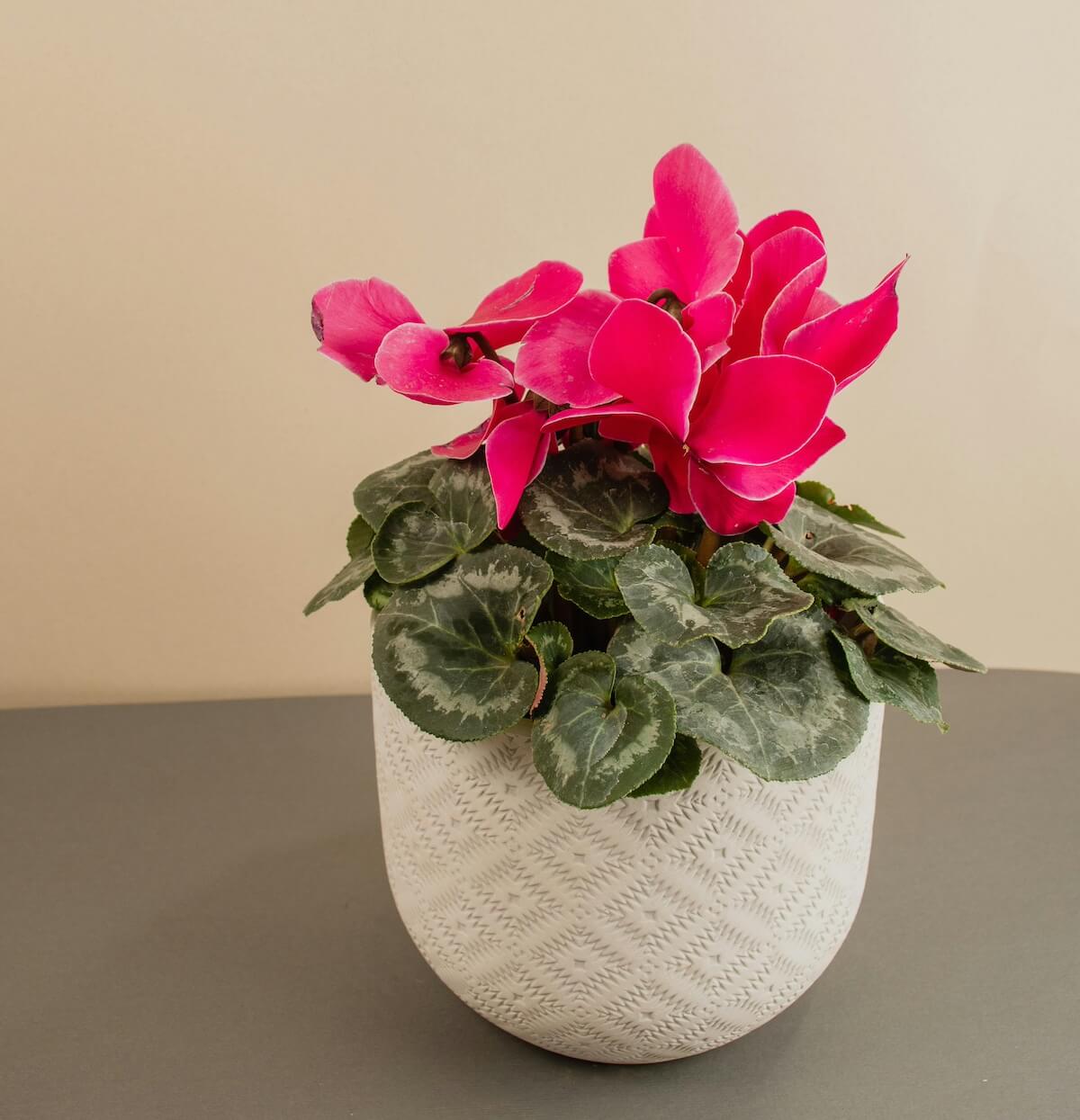
Last year, I bought a small pale purple cyclamen. After a few days, I noticed a pleasant scent wafting through several rooms in my apartment—and it was coming from the cyclamen! The fragrance was rich, pleasant, and long-lasting, lingering throughout the entire blooming period, which lasted several months. Since then, I’ve been rushing headlong to every cyclamen, big or small, to smell them, hoping to find another one that’s just as fragrant—but without success. Where can I find other fragrant cyclamens?
Answer
The wild cyclamen (Cyclamen persicum) was very fragrant, but for the past 200 years, breeders of potted cyclamen have focused primarily on the beauty and duration of the blooms, the size of the plants (large cyclamen were in vogue), and the production of plants that mature all at the same time (a vital factor for marketing). As a result, the fragrance has largely been lost. However, fragrant wild cyclamens have recently been reintroduced into breeding programs to create smaller-sized cyclamens. Thus, the mini cyclamen was born, and it sometimes inherits the fragrance of its ancestor. There are even cyclamen cultivars developed specifically for their fragrance. So keep looking: one of these days, you’re sure to come across some fragrant cyclamens!
This text was originally published in the newspaper Le Soleil on January 31, 2006.
Types of gambling include lotteries, poker, roulette, sports betting, bingo, and slot machines brite casino each offering different levels of risk, strategy, and chance while reflecting diverse britecasino.nl cultural traditions and modern digital platforms shaping entertainment experiences across many regions worldwide.
Interesting perspective. I’ve been exploring this space as well with a small side project: DialedGG.