
I recently consulted a leading international Feng Shui expert to check whether the Pa-Kua (the Feng Shui compass) for my property was correct. That he was a “leading international expert” was very clear from his resume, since he had read two books on the subject—one in French and the other in English (to make him seem more “international”)—which meant he knew more about the subject than anyone else in Quebec.
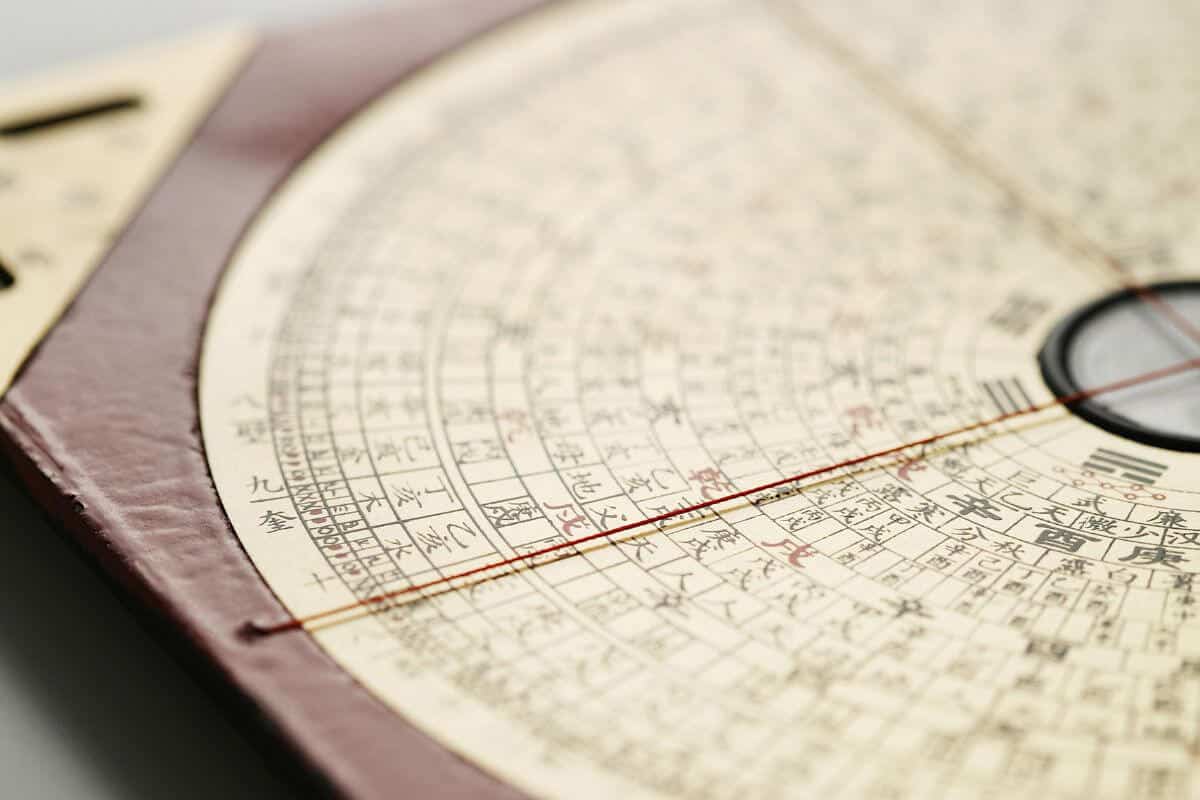
The findings were rather disheartening: my house is poorly situated. I would either have to tear it down and rebuild it, or lift it and move it 15 degrees. I refused to do any major work on the house, for budgetary reasons. The expert wasn’t very happy, since he knows some good builders and receives a nice commission for every client he refers to them.
In any case, he added, if the house were properly oriented, I would make so much more money that the renovations would pay for themselves in no time.
However, seeing that I wasn’t very convinced, he instead made suggestions for rearranging the interior of the house to improve its “chi” (energy flow).
Surprising solutions…
First, the situations that are disastrous for the chi: the master bedroom and the living room. The best solution, according to the expert, would be to sleep in the living room and entertain guests in our bedroom. Then, the catastrophic situations: it would be better to cook in the bathroom and—you know what—in the kitchen, he told me. When I explained to him that the kitchen didn’t even have doors and that privacy was therefore a bit lacking for… hygiene purposes, he retorted that doors, in any case, block the chi. It’s true, I suppose, that if there’s one place in the house where you don’t want things to be blocked, it’s the place where you go to…
In fact, the Pa-Kua of our home was so dreadful that the expert seemed completely surprised to see that my wife and I were still alive and that we weren’t suffering from any fatal illness in the near future. When I explained to him that, no, my career wasn’t going badly at all and that, in fact, I’d never been as successful as I had been since living in this house, he was completely baffled. Until he asked me my year of birth and discovered that I was born under the Chinese “water” sign. “That explains everything!” he exclaimed.
When I asked for an explanation—because I really didn’t understand a thing—he waved me off with a dismissive gesture. “Anyway,” he replied, “the whole point of Feng Shui is that no one understands it. If it were clear and understandable, it wouldn’t be Feng Shui!” At least I was relieved: if I didn’t understand a word he was saying, that was normal. How sweet of him, I thought to myself.
A very “Feng Shui” landscape design
My landscaping, on the other hand, is very “Feng Shui.” For starters, apparently my “tai chi” is in the right spot (isn’t that supposed to be a form of exercise?). Plus, the paths are all curved, so the chi doesn’t just flow gently—it’s a veritable torrent.
There are, however, some things that could be improved. The spruce trees in the corner should be removed, because conifers located in the “earth” sector of the Pa-Kua are harmful to the chi.

When I pointed out to him that those trees were, in fact, on my neighbor’s property, he told me he’d take care of it, and sure enough, he went to see my neighbor, who had just inherited a substantial sum and could therefore afford to pay for the services of the expert—who, I should note, is an internationally renowned expert and therefore very, very expensive. Two weeks later, no more spruce trees… and the chi in my garden has surely taken a leap forward.
Also, I would need even more water (great! I was just trying to convince my wife that we needed water features not only at the back of the garden, but at the front as well) to perfect the Feng Shui of my garden.
Feng Shui living
After the expert’s visit, my wife and I made the wise decision to leave that cursed house and move into our “Feng Shui” backyard for good. We eat, cook, and sleep on the patio, which is as “Tai Chi” as it gets, and I’ve set up a Feng Shui statue, covered in Chinese inscriptions I don’t understand, in the appropriate sector (between “earth” and “water,” if you’re curious). Okay, it’s a little cold in January, but frozen fingers and a brain-freezing cold that just won’t go away are, apparently, the price you pay to reach Feng Shui nirvana…
Pulling your leg!
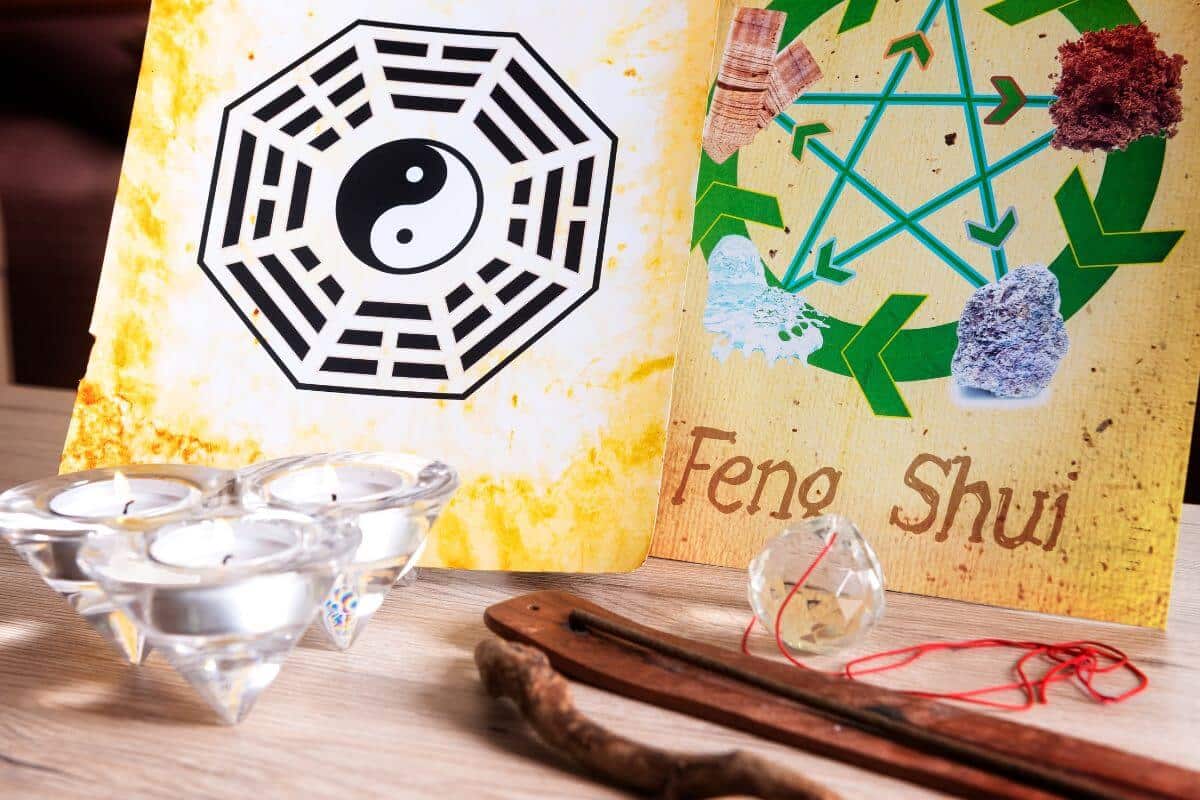
I hope you’ve realized that I’ve been pulling your leg! Feng Shui is an art that brings together a series of ancient Chinese traditions, and the subject is very complex.
In China, it takes at least five years of intensive study before one can call oneself a “consultant,” and even then, the consultant must present all their projects to a master who has at least 15 years of practice. In other words, several self-proclaimed “experts” in Feng Shui could be nothing more than impostors—if not outright charlatans—if they haven’t studied in China, but only in books.
By the way, don’t go thinking that Feng Shui is universally accepted in China! Quite the opposite, actually—educated Chinese people tend to regard it with about as much respect as we have for ghost stories.
By the way, I hope you knew that Feng Shui is officially out of style? Nope, according to trend experts, Feng Shui is outdated, and now it’s Inyodo—a Japanese philosophy—that’s “hot.” But before you get yourself into this mess, I suggest you make sure your “Inyodo expert” has actually spent at least five years studying the subject… and in Japan, no less!
Larry Hodgson has published thousands of articles and 65 books throughout his career, in both French and English. His son, Mathieu, has made it his mission to make his father’s writings accessible to the public. This article was originally published in Fleurs, plantes, jardins in April 2002.
I thought this was an April fools joke. I enjoyed this very much.
It was a lot of fun reading this article! Thanks for sharing it!
Good morning. I enjoyed reading the post, it gave me my morning chuckle!