
Who mercilessly attacks garlic and onions? Who pierces and chews them, jeopardizing our harvests of these delicious allium vegetables? What is this insect with such a refined palate? It’s the leek moth!
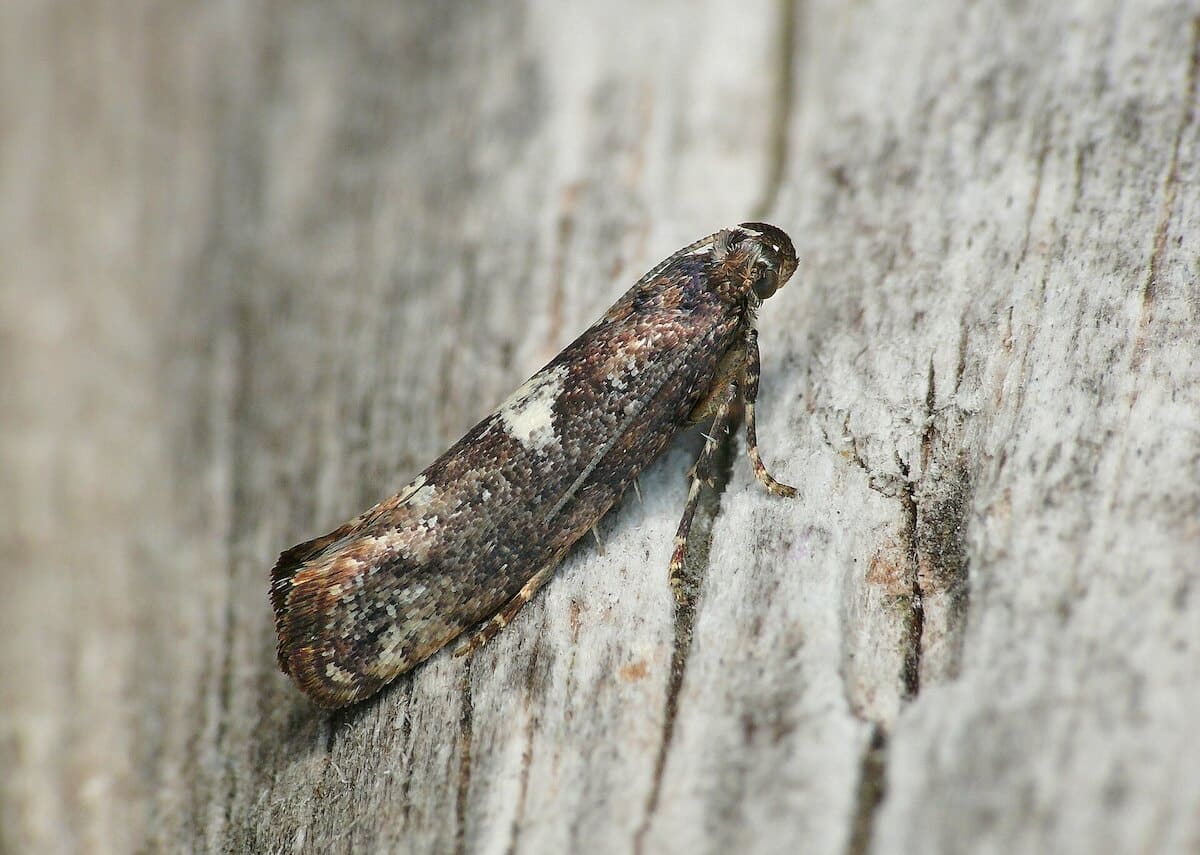
Let’s go back to before the 1990s and note that this pest was not present in our region. Our onions and garlic grew peacefully, without fear of the ravages of a moth that was about to gradually invade Canada.
The leek moth is native to Europe. It was first spotted in Ontario in 1993. Since then, its range has continued to expand.
After the moth has passed through, the host plant is pierced and gnawed from the inside, which can cause the stem to rot and wither. The bulb can rot as well, and harvests are compromised. It can also force farmers to cut the garlic flower before it is fully mature, reducing yields.
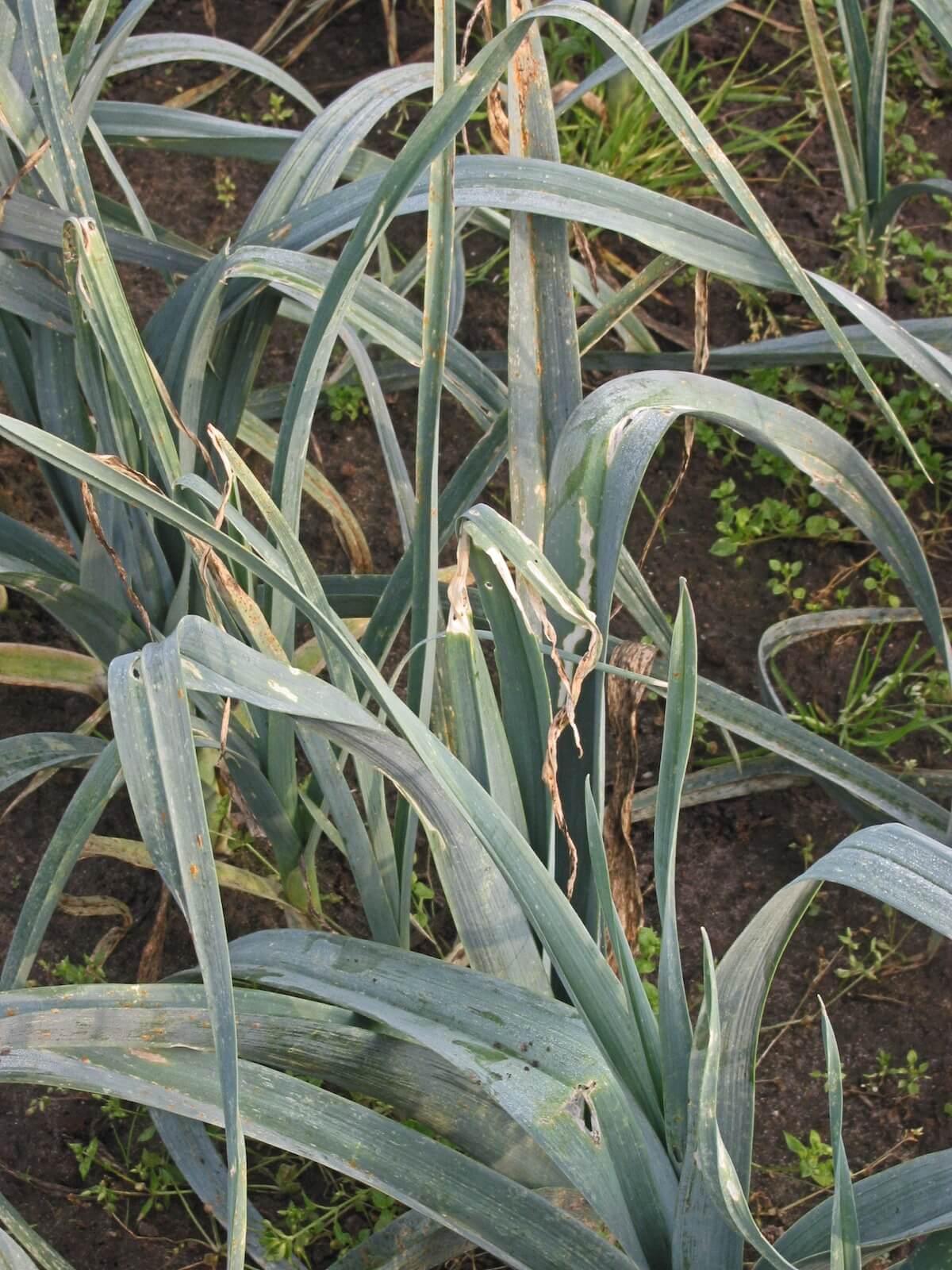
To manage it effectively, let’s first find out how it lives…
What happens in the life of a leek moth
Winter is coming to an end. The moth has spent the last few months comfortably as an adult or a pupa (a small cocoon), sleeping sheltered from the frost. It has hidden in the surrounding debris, under fallen leaves.
It waits for Mother Nature’s signal: at 9 °C (48 °F), the moth emerges and stretches its wings.
The moth immediately sets out in search of its favorite food: Alliaceae. It has a keen sense of direction and easily finds the autumn garlic pushing through the snow, thanks to its distinctive scent.
Reproduction
After spending a day or two basking in the sun, the butterflies are ready to reproduce. The males and females mate, but the females don’t lay their eggs right away: it’s not warm enough.
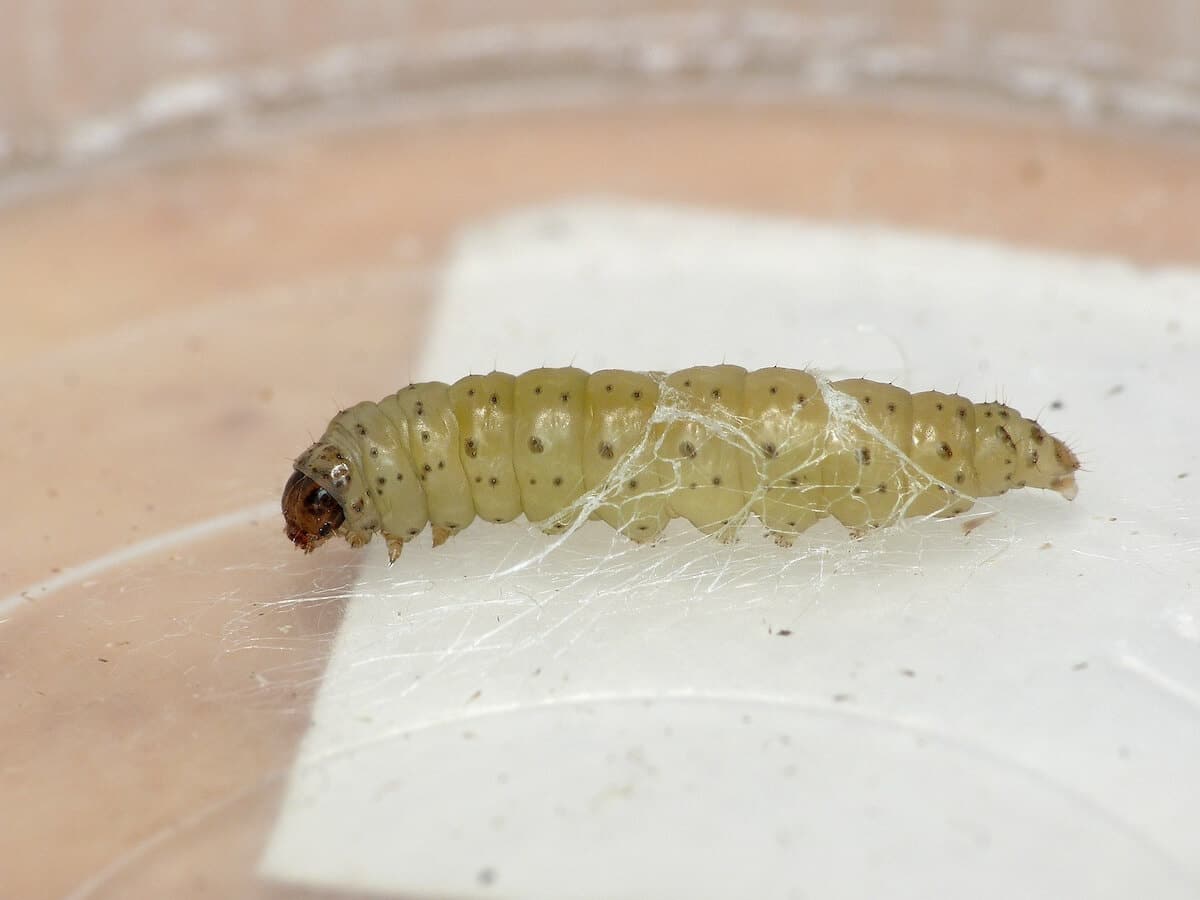
When nighttime temperatures reach 12 °C (54 °F), they are ready to lay their eggs on plants in the onion family, which they have already identified.
The eggs are laid individually on the undersides of leaves or at the base of the plant. In about a week, they are ready to hatch.
Birth
When the tiny larvae hatch, they quickly look for a place to hide. They bore a hole in the stem and begin to feed.
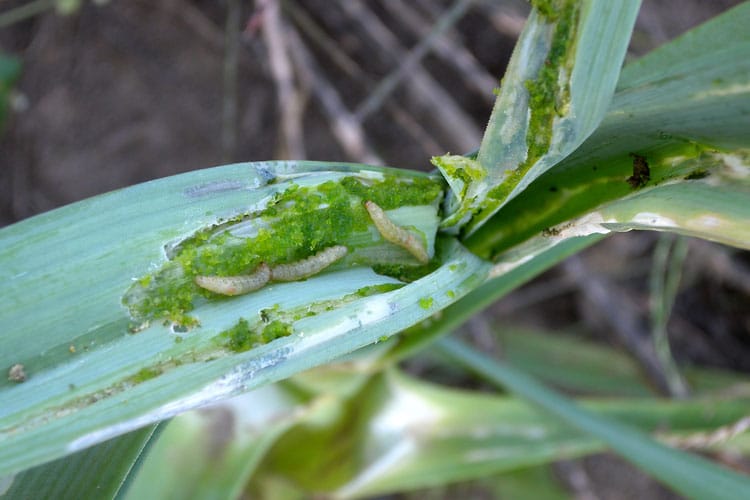
Usually solitary, they feed on young leaves and bore into stems. When they gather in groups, it is because several colonies have converged. The larval stage lasts about 2 to 3 weeks, and the insects go through five stages of metamorphosis. It is the larvae that cause the damage.
Pupation
Once they have eaten their fill, they emerge from the stem and settle on the outside. They pupate on the host plant, but may also end up on the ground or in nearby debris. Inside their small, loosely woven cocoons, they transform from caterpillars into moths.
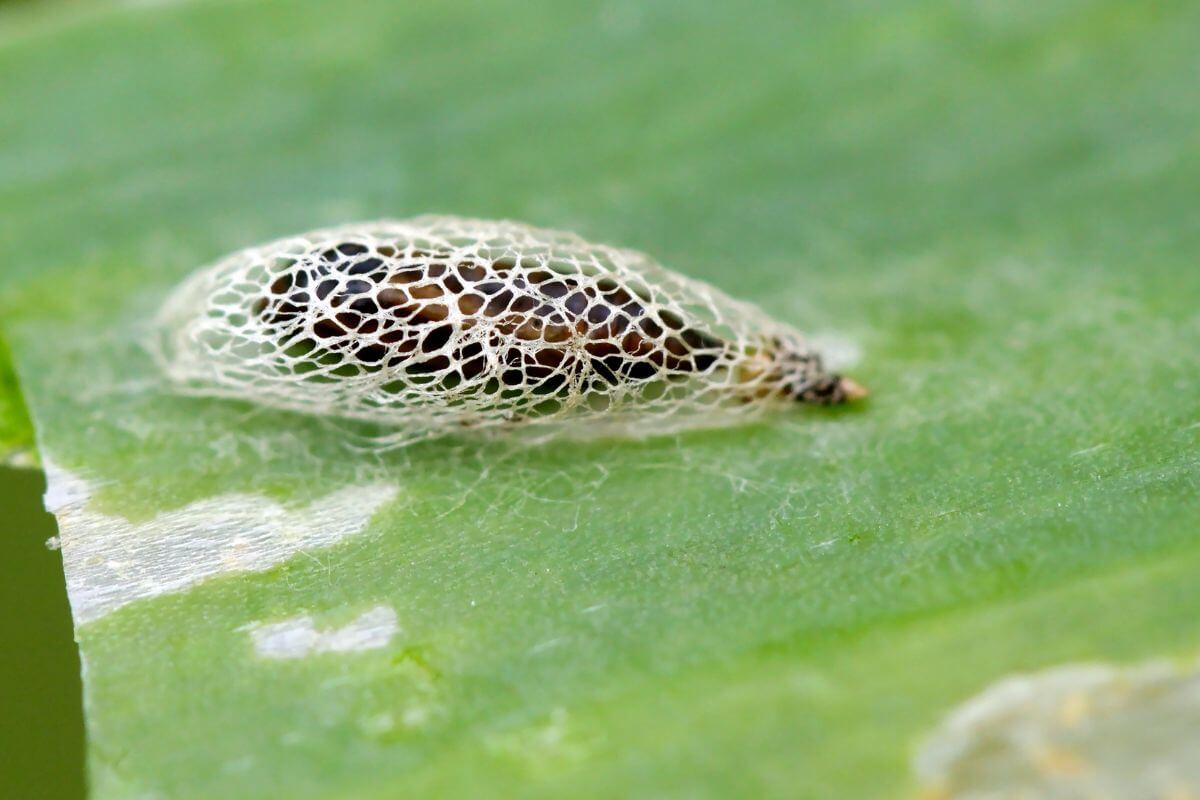
The adult emerges after about three weeks, ready to start feeding on garlic again.
The first generation causes little damage, as there are few individuals. Over the course of the season in Canada, the moth can produce up to three generations per year. Reproduction is very rapid and exponential.
New cycle
They stop in the fall, when the cold weather drives them into their shelters. Whether as adults or pupae, they spend the winter there, ready to start the cycle all over again the following spring.
If you’ve had to deal with them one year, they’re sure to return the next.
Natural solutions
For prevention
As we’ve just seen, the leaf miner spends its life around the plants it targets.
To prevent an infestation, you need to act at the right time. The approach varies depending on the stage of development.
If you’ve had problems with leaf miners in the past, start by rotating your crops. When the leaf miner emerges, it will look for a host plant: it’s best if there aren’t any nearby.
Companion plants are also an excellent addition to the garden. The moth is guided by scent: if we can interfere with its senses, we can outsmart it. Thyme, carrots, and marigolds are good choices to interplant with susceptible crops to throw it off the scent.

If it doesn’t find what it’s looking for, it will look elsewhere.
Another effective preventive measure is to lightly till the soil in the spring and fall. Since it overwinters in debris, this disturbs it, exposes it to the cold and predators, and may prevent its life cycle from completing.
We know it emerges at 9 °C (48 °F), so it is advisable to install insect netting over clean, bare soil around fall garlic plantings before that point. It is crucial to put the netting in place before reproduction begins, so as not to trap the pests inside.
In attack mode
When prevention fails (or is impossible), it’s time to switch to biological control. You have two options: target the caterpillar or the egg.
You can use BTK, a bacterium specific to butterfly caterpillars, to eliminate the larvae. It is essential that the product comes into contact with the larva, which often hides inside the plant’s stem, making it difficult to reach.
To control the moth before it becomes established, particularly during the first generation, you can use Trichogramma wasps. These are small parasitoid wasps that directly target the moth’s eggs.
In the garden, they are introduced in the form of cardboard boxes containing pupae. A few days after being placed, the wasps emerge and set out to find moth eggs to parasitize. While the moth is programmed to find garlic, trichogramma wasps are designed to find its eggs. Once they locate them, they lay their eggs directly inside. Instead of a pest, an ally emerges.
In practice, one box of trichogramma wasps covers about 50 m² and can be stored in the refrigerator for up to a month. Add one box per week throughout the season, until harvest. They can be used under insect netting.
Controlling the first generation is particularly important, as it directly influences the number of moths present during the summer. Prioritize control measures early in the season to limit damage.
Conclusion
The leek moth is a small moth capable of causing significant damage and discouraging the cultivation of garlic and onions.
Using preventive methods tailored to its life cycle helps control it more effectively. It is also possible to use BTK or trichogramma wasps to limit its reproduction.
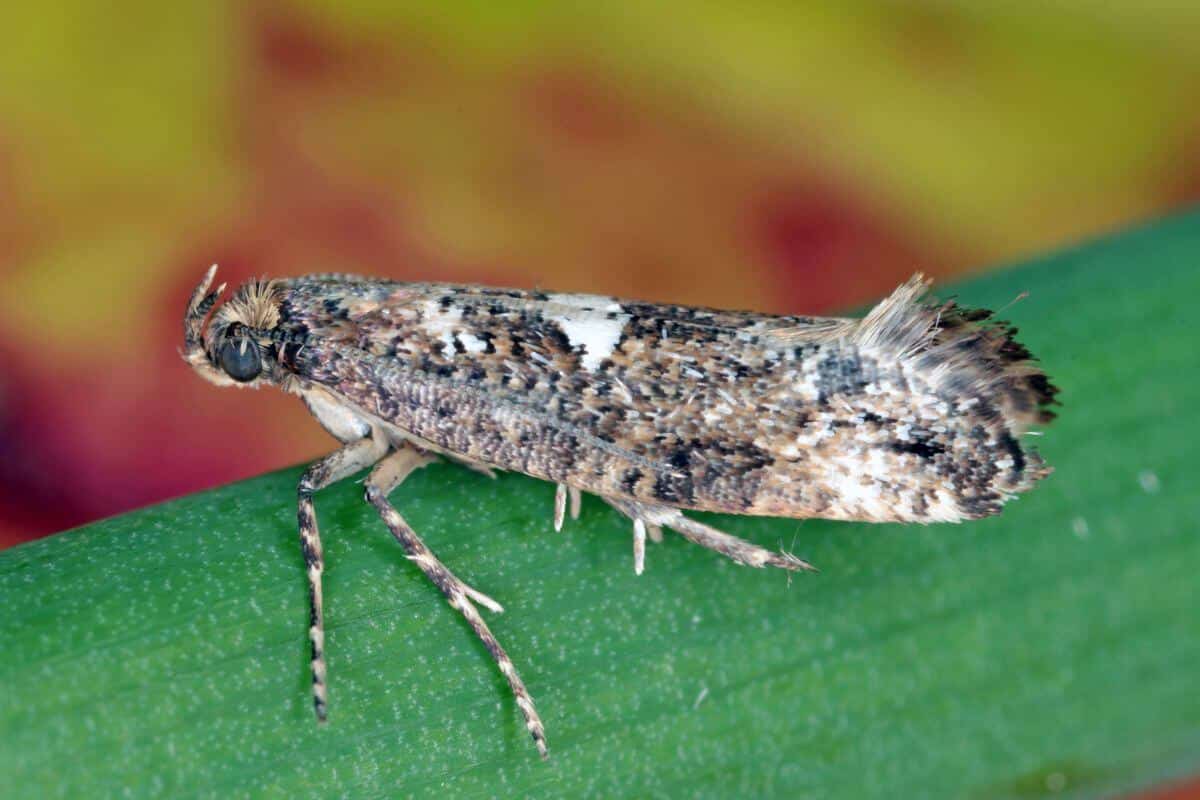
It is currently spreading across North America, with some regions being more affected than others.
Have you ever experienced an infestation? Let us know in the comments, and include your region so we can track its progress year after year!
Stay tuned for the next special insect article, on the Colorado potato beetle (the infamous potato bug).
See you soon!
Subway Surfers also features a system of daily missions, rewards, and leaderboards, motivating players to strive for high scores and compete with friends.
We live on the very edge of the east end of Ottawa and over the past couple of years these pests have established themselves in my garlic beds. I will try what you suggest to combat them. Between them and the Japanese beetles, the latter being an absolute plague, I am beginning to wonder if it’s worth my while to grow food. It seems I don’t like having to kill things every day, and it seems that over the last five years pest control has taken up more and more of my time in the garden.