
When the snow melts and the ground thaws, the woodlands of our region are soon covered with beautiful flowering plants. They emerge from buried roots, bulbs, rhizomes, or tubers, easily pushing through the forest litter (the layer of fallen leaves on the ground) and blooming in the sun, quickly unfurling their leaves and flowers. They act as if they were in a great hurry… and they are.
They have only a few weeks to capture enough sunlight to survive another year, because soon the leaves will return to the trees, blocking out all the light. They need to hurry, producing flowers and seeds in rapid succession, because they will go dormant very quickly. In fact, these fast-growing plants have only about 5 to 6 weeks a year to grow; the rest of the time, they spend underground, dormant. They are called “spring ephemerals.”
A wealth of resources in North America
Without claiming to have a monopoly on spring ephemerals, we must admit that the forests of northeastern North America are particularly rich in these plants. A good portion of our spring flowers fall into this category. Look around during the summer, and you won’t see many flowers in our woodlands. It’s in the spring that everything happens.
The presence of these short-lived plants clearly proves the maxim that nature abhors a vacuum. For a brief period each year, the forest—usually so dark—is filled with light, and plants have evolved to take advantage of it. And they haven’t evolved just once, but many times over. In fact, plants from numerous botanical families have independently become ephemeral plants, all programmed to take advantage of the 5- to 6-week windfall of light each year.
Knowing how to use them
Annuals haven’t been widely used in our gardens until recently. We’ve focused on more permanent plants—trees, shrubs, conifers, perennials, and summer-flowering annuals, etc.—which fill our flower beds from June through October. But we’re starting to realize that we’ve been missing out on an entire season! In the spring, our flower beds are bare… and we’re gradually realizing that ephemerals perfectly fill that void.
Where should I plant them?
The ideal spot for planting spring-flowering perennials is at the base of large deciduous trees. Even root-heavy areas, such as those under maple trees, don’t deter them. They take advantage of the abundant moisture in the soil after the snow melts to grow. It doesn’t matter to them that tree roots make the soil desperately dry during the summer, since they are dormant at that time. Of course, digging a planting hole in soil full of roots is no easy task. Generally, people are content to plant just a few specimens, letting their natural propagation fill in the gaps.
Spring ephemerals, however, do not make good plants for traditional flower beds. If you spend your time turning the soil and moving plants around, you’ll kill them. Each ephemeral produces only a single stem and a few leaves: if you accidentally break it, it cannot replace them and will die. They are, however, excellent choices for naturalized woodland gardens where you plant and then let Mother Nature take care of the maintenance.
Ephemerals make excellent companions for late-blooming perennials, such as ferns, astilbes, and hostas.
Beware!
Never try to dig up ephemerals in the wild! Most are fragile and easy to break: the struggle to pull them out of tree roots is usually fatal for them. It’s better to buy plants from a nursery: that way, it’s easy to remove them from the pot intact and plant them without breaking them.
A few spring ephemerals to discover
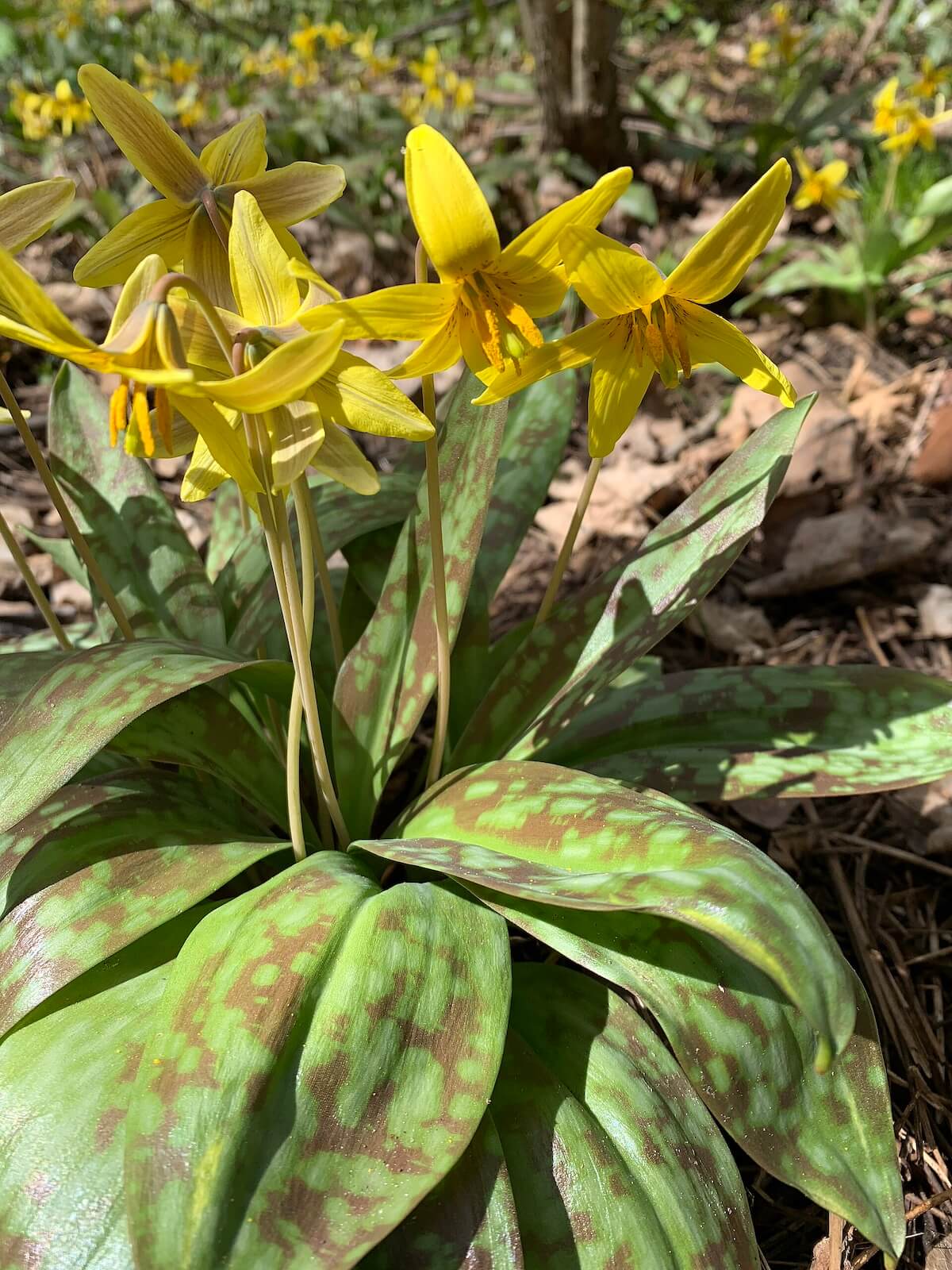
Yellow trout lily (Erythronium americanum)
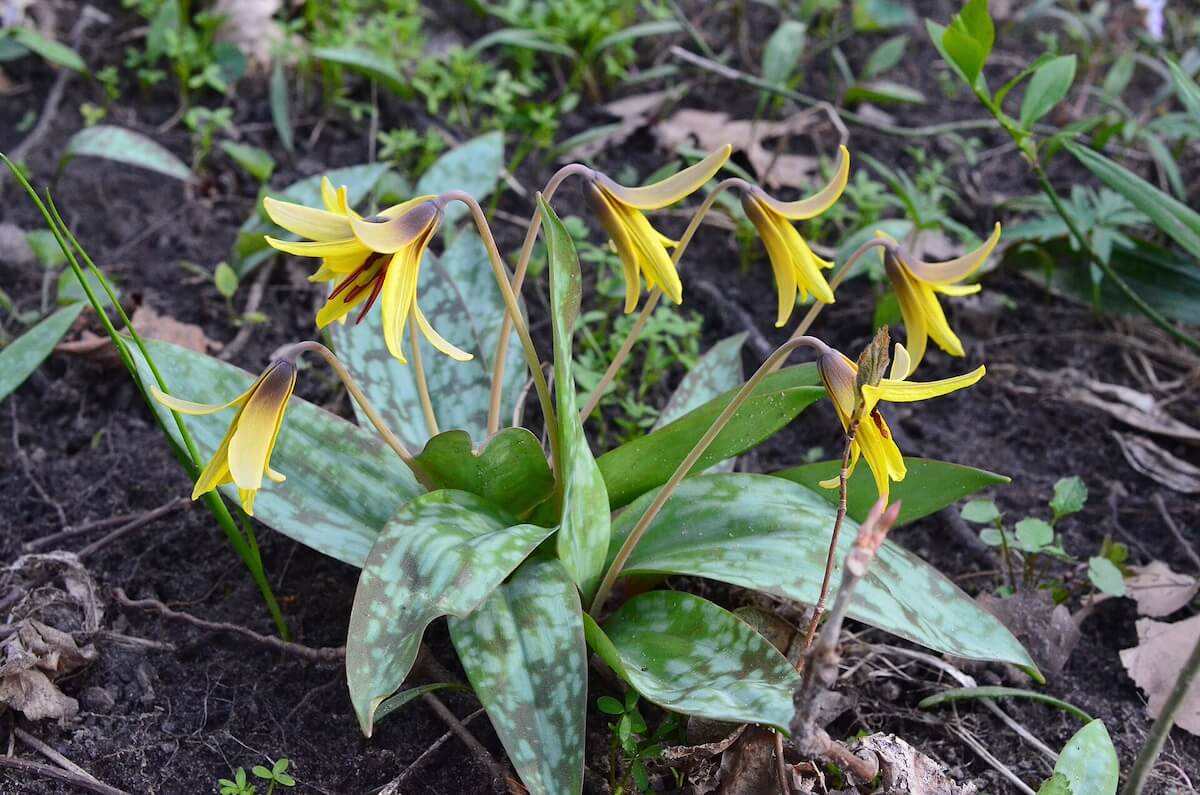
This dwarf relative of the lily produces two lance-shaped basal leaves mottled with purple and a single, slightly drooping yellow flower. It forms a carpet fairly quickly… but it’s only temporary, as it’s one of the first ephemeral plants to disappear by late spring. This is the kind of plant that would benefit from some horticultural selection: the wild form produces more leaves than flowers. It would be interesting to develop a variety that would bloom reliably every year. There are, however, hybrid erythroniums, such as ‘Kondo’, ‘Pagoda’, and ‘Citronellea’, with white or yellow flowers, which not only bloom annually but also produce multiple flowers per bulb. 10 cm x 10 cm (4 in x 4 in) for the species; 30 cm x 20 cm (12 in x 8 in) for the hybrids. Hardiness zone: 3–4 (USDA 4–5).
Virginia bluebells (Mertensia virginica)
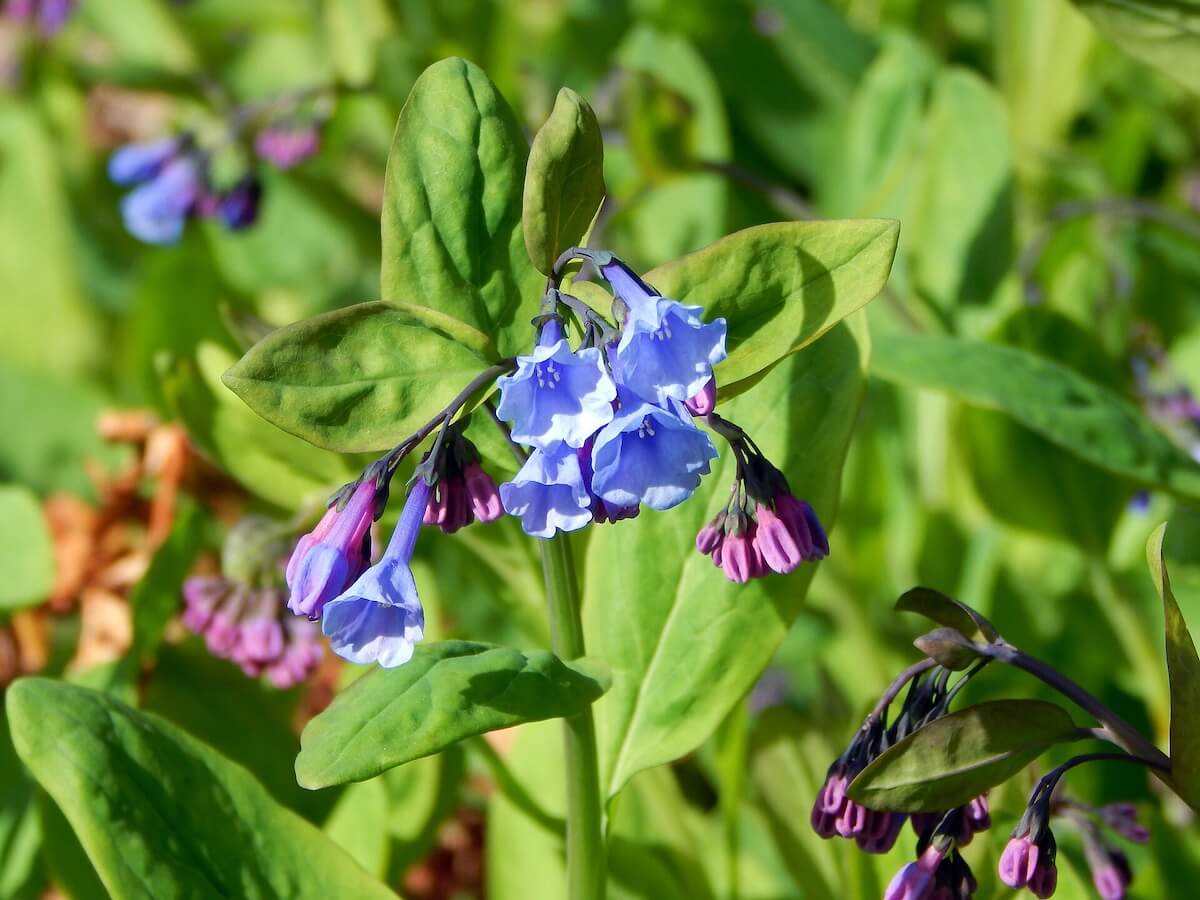
It’s hard to believe that such a robust plant could fade so quickly, but in fact, its lush green leaves are hardly any more long-lasting than its stunning sky-blue bells. This rhizome-forming plant spreads slowly but surely, eventually forming a beautiful carpet. A stunning plant that is little known among gardeners. 30–60 cm x 30 cm (12–24 in x 12 in). Zone 2 (USDA 3).
Jack-in-the-pulpit (Arisaema triphyllum)
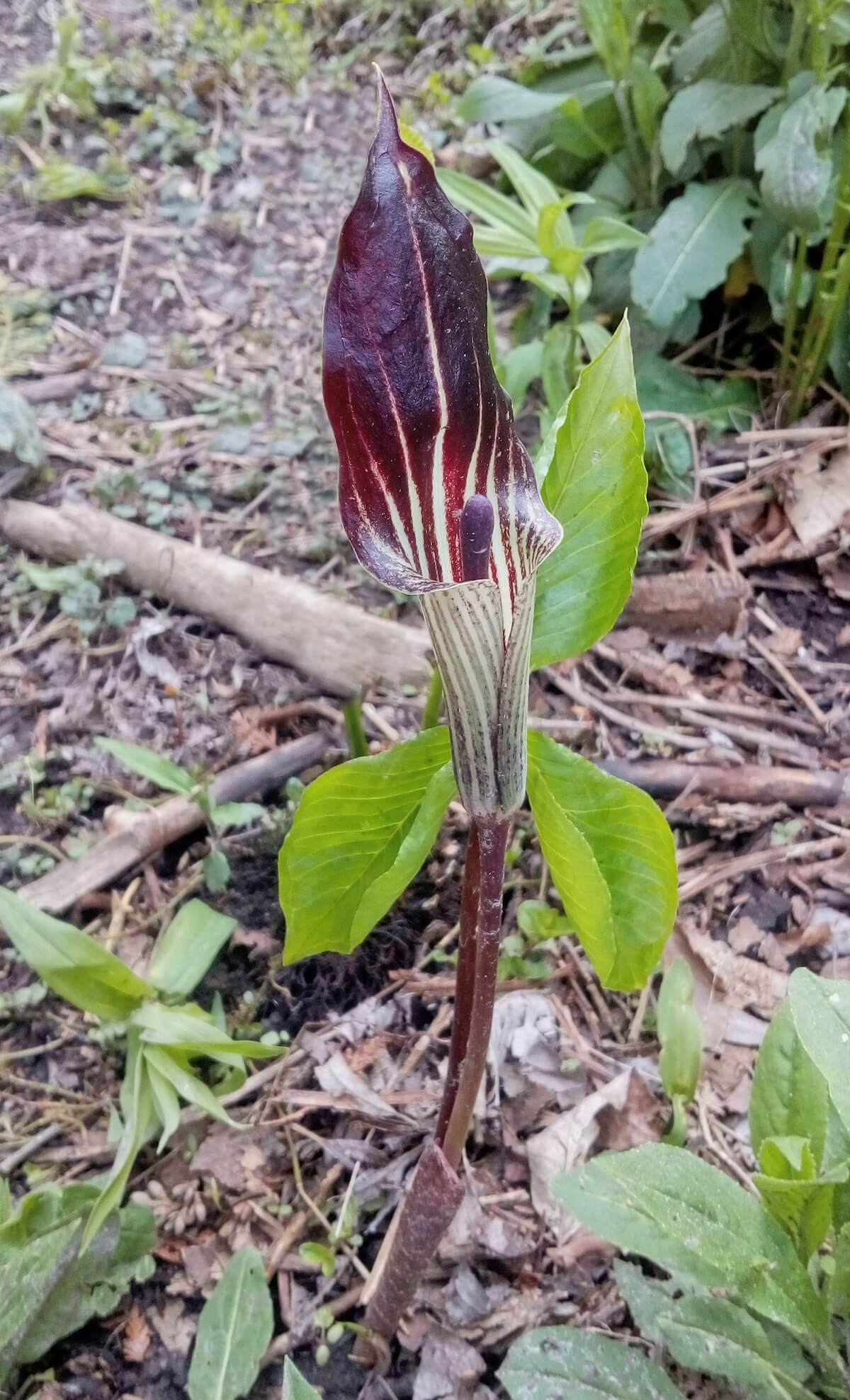
A true curiosity with its bizarre flower, which, according to its common name, is said to resemble a priest standing in a pulpit topped by a sound-absorbing screen. The flower is green with purple streaks on the outside and pale green on the inside. Each plant produces only one or two trifoliate leaves, which are taller than the flowers. Fruit is rarely produced, but when it is (after about 10 years), it resembles bright red corn on the cob and persists for much of the summer. 30–90 cm x 20–30 cm (12–36 in x 8–12 in). Zone 3 (USDA 4).
Bloodroot (Sanguinaria canadensis)
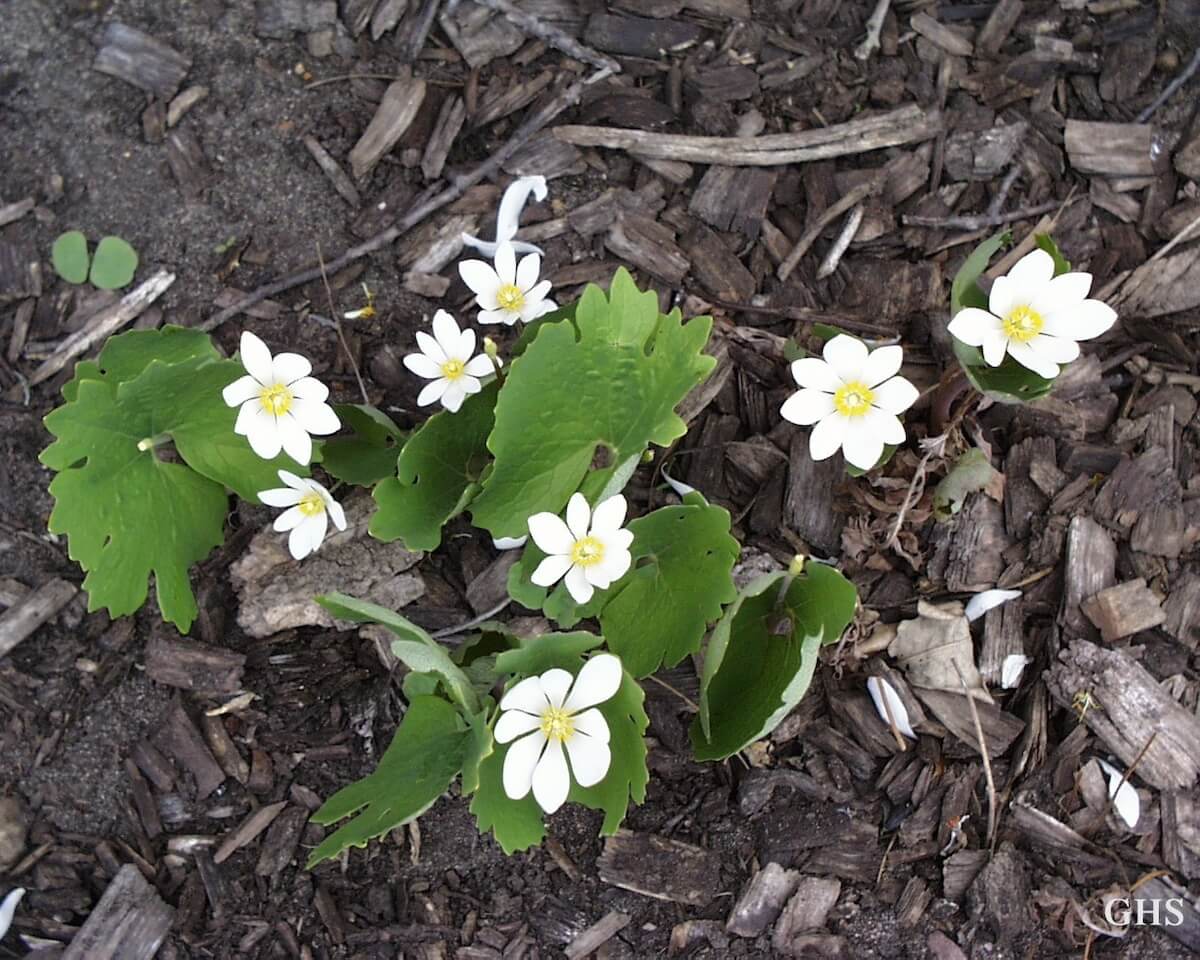
The white star-shaped flowers with yellow stamens never seem to collect dust, so they always remain pristine white. The plant produces just a single beautiful, curiously lobed leaf that is chalk-blue on the underside. Its name comes from its blood-red sap. It quickly forms a beautiful carpet… though a fleeting one. I really like the double-flowered variety: S. canadensis ‘Multiplex’. It looks like a spring lotus! 15–30 cm x 15 cm (6–12 in x 6 in). Zone 2 (USDA 3).
The species is considered vulnerable to harvesting in Quebec.
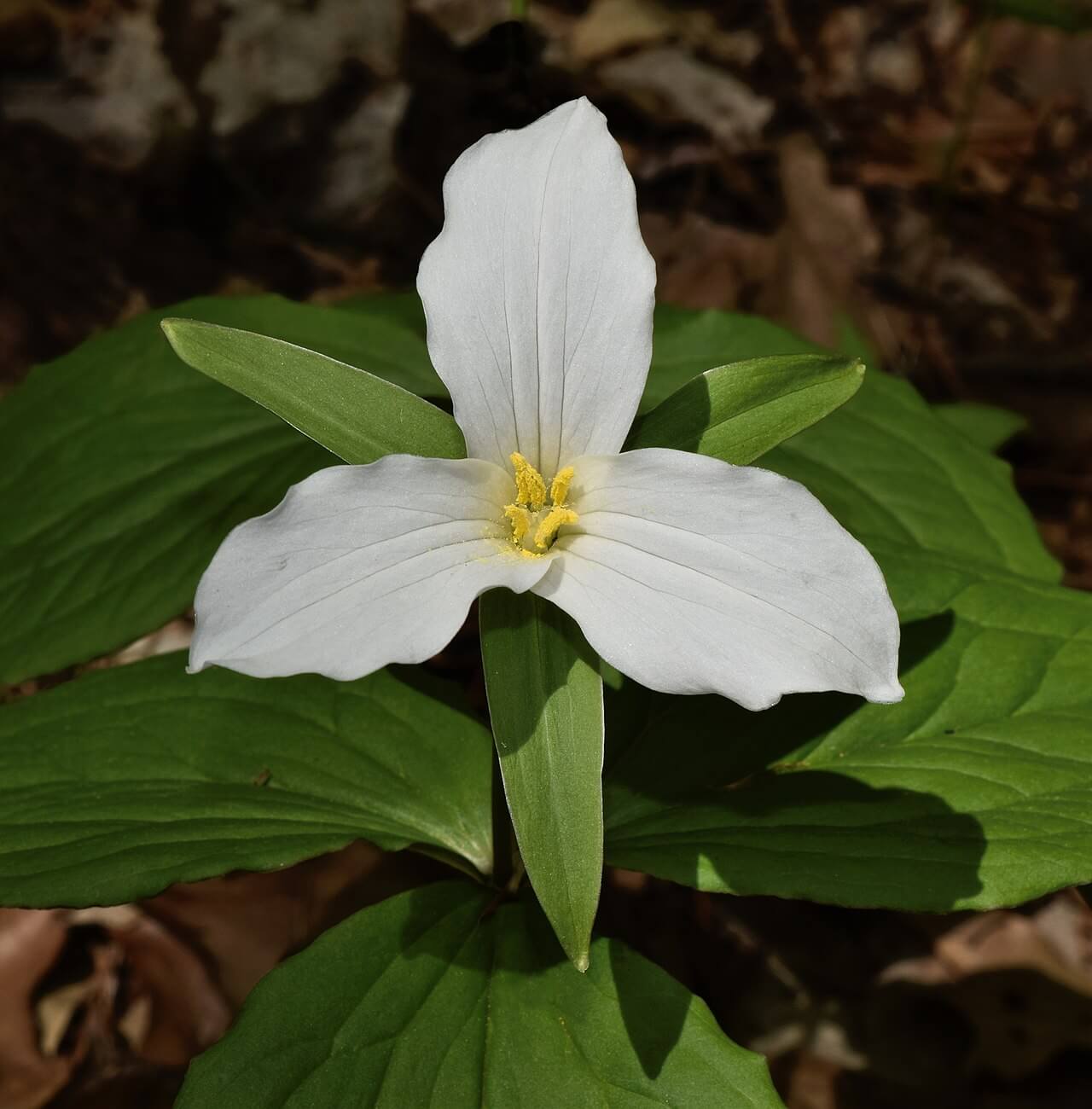
Great white trillium (Trillium grandiflorum)
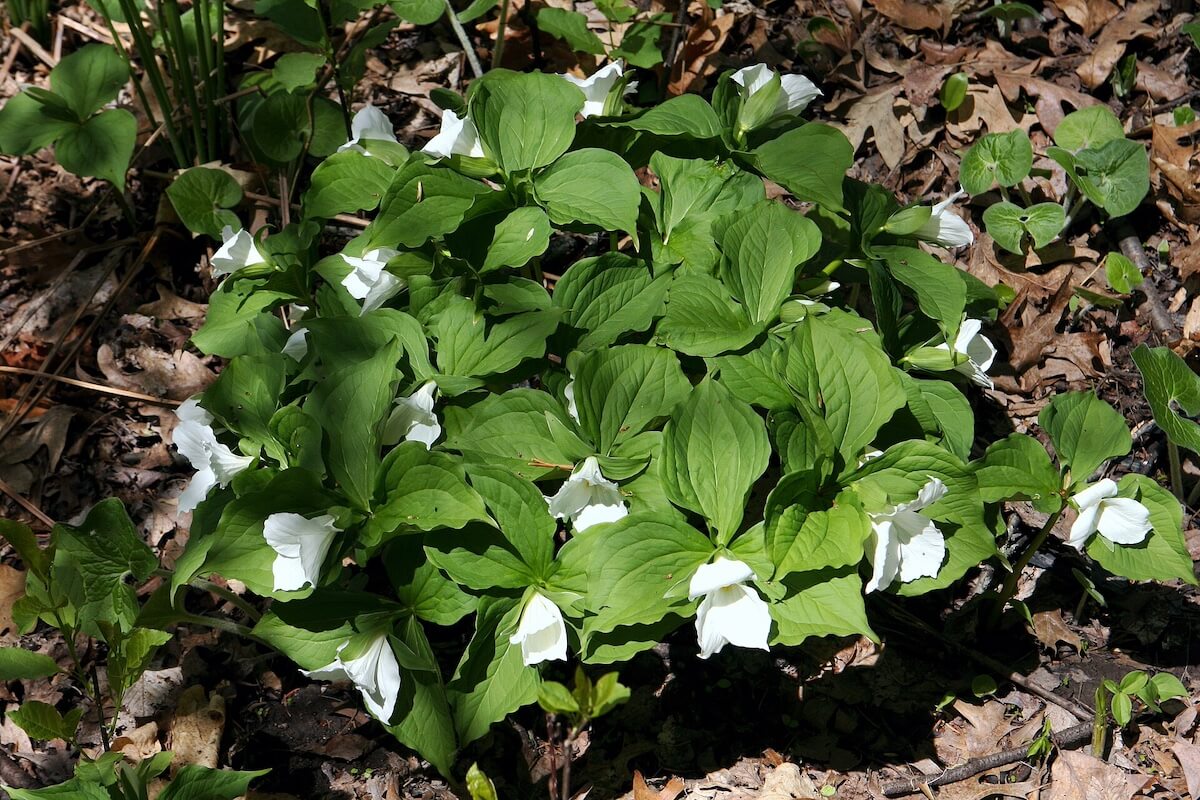
A very simple plant with a single stem, three leaves, and three petals. Large white flowers that turn pink as they age. Forms beautiful clumps over time. There are many other types of trillium with red, pink, white, yellow, or bicolored flowers, but the large-flowered trillium is the most showy and popular. 20–45 cm x 15–20 cm (8–18 in x 6–8 in). Zone 3 (USDA 4).
The trillium is considered a species vulnerable to harvesting in Quebec.
So why not add a few spring ephemerals to your garden design? You’ll be delighted with the results!
Larry Hodgson has published thousands of articles and 65 books throughout his career, in both French and English. His son, Mathieu, has made it his mission to make his father’s writings accessible to the public. This article was originally published in the newspaper Le Soleil on April 7, 2012.
0 comments on “The Beauties of the Spring Woods”