
With the extreme temperature fluctuations we’ve been experiencing for several years now, the appeal of lawns with biodiversity is increasing. Indeed, certain plants that grow naturally in the lawn are more resilient to harsh conditions than turfgrass.
It’s worth noting that sod primarily consists of bluegrass: a species that withstands trampling very well but is demanding and requires proper soil preparation and constant care. Fortunately, in recent years, eco-friendly sod containing clover and even greater biodiversity has become available. There are also companies which offer grass seed mixes with clover. Mixes with other wildflowers that grow low enough to be mowed are still limited to large areas, but they’re coming!
In the meantime, if you’re tempted to add some flowers—other than dandelions—to your lawn, here are a few species you might want to try planting in your lawn. Some will only bloom if you let the grass grow longer than 10 cm (4 inches), but all you need to do is equip your mower with larger wheels and mow less often. Another benefit for the environment and more leisure time!
All the small plants listed below attract pollinators far more than a standard grass lawn, of course. Their descriptions come from various online sources, as well as my own observations of the flowered lawn I had in the countryside, so they are not scientifically proven.
Small herbaceous plants that tolerate mowing
Alpine rock-cress (Arabis alpina)
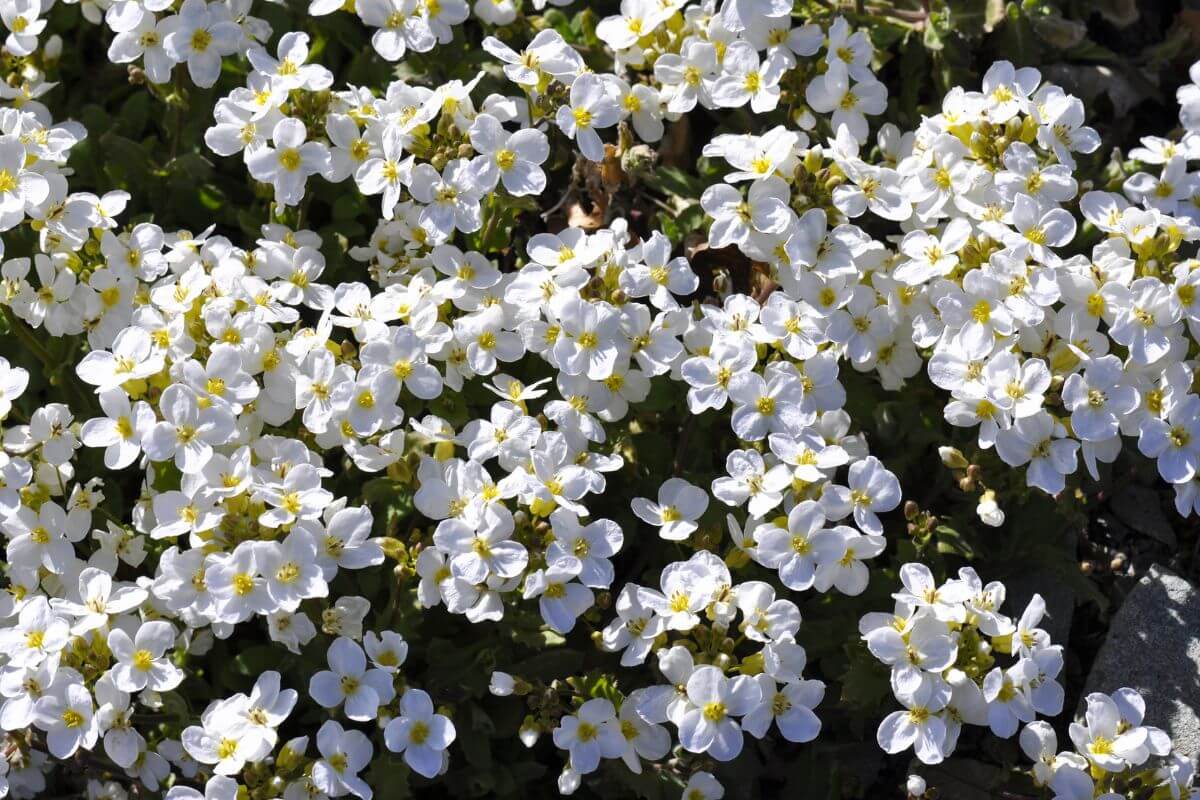
- Introduced perennial
- Prefers dry, sunny slopes
- Small white flowers from April to June
- Height: 20–25 cm (8–10 in)
- Very low tolerance for trampling
- Personal notes: Used as a rock garden plant in horticulture
Azure bluet (Houstonia caerulea)
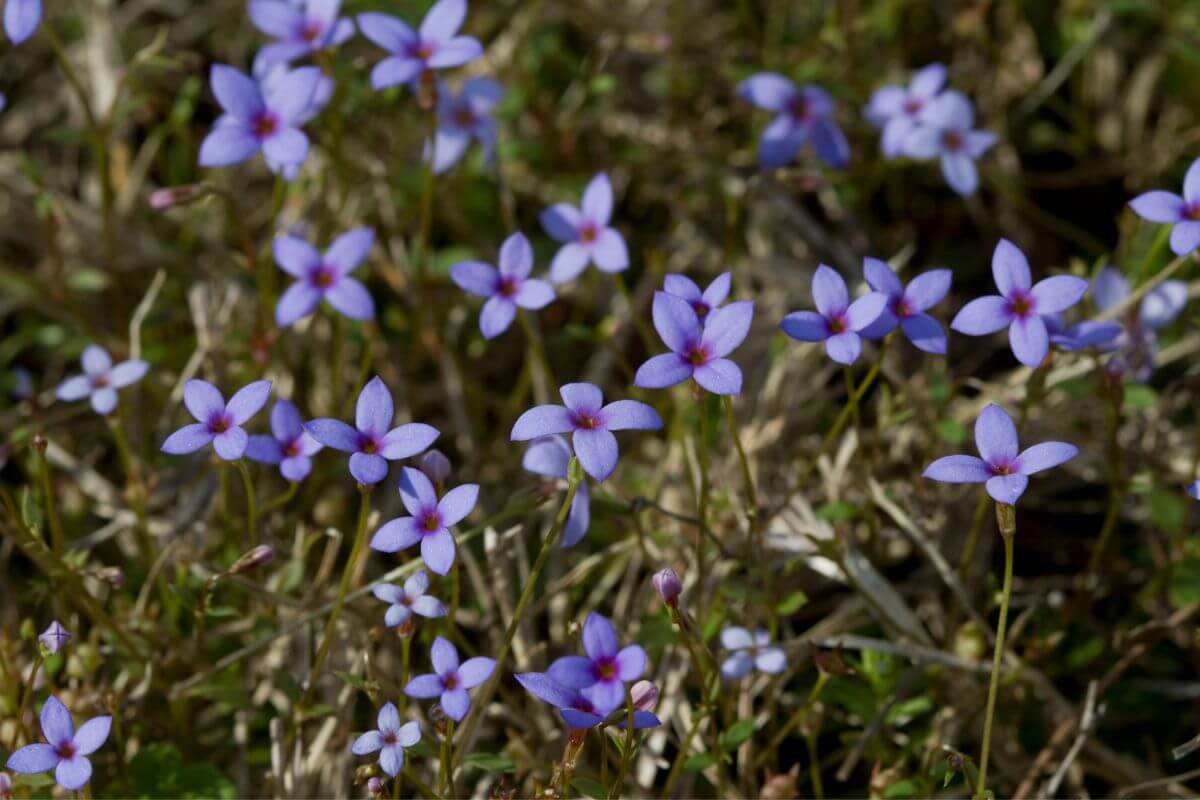
- Native perennial
- Pretty pale blue flowers in May–June
- Height: 5–10 cm (1–4 in)
- Grows in full sun or partial shade
- Prefers moist but well-drained soil
- Personal observations:
- Observed in front lawns, i.e., areas with little foot traffic
Bird’s-foot trefoil (Lotus corniculatus)
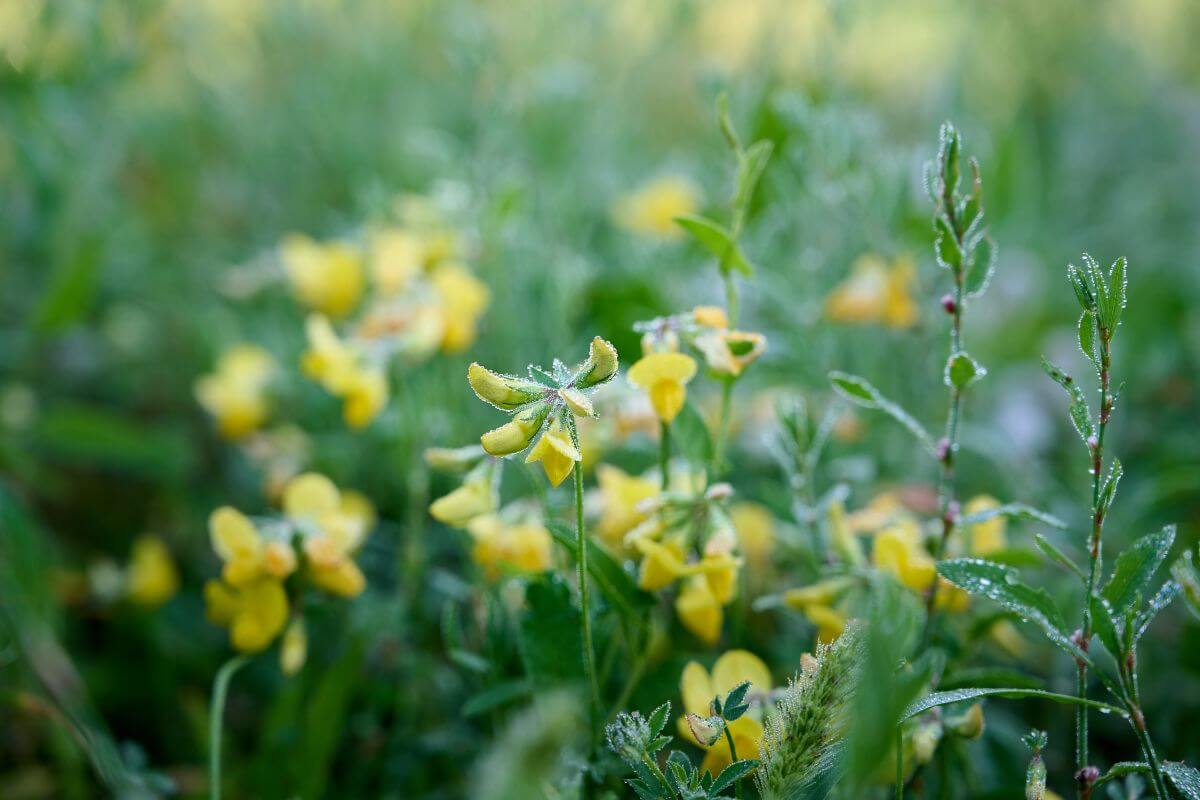
- Introduced perennial
- Pretty little bright yellow flowers from June to August
- Height: 10–50 cm (4–20 in)
- Small leaves that pair well with grasses
- Highly tolerant of trampling
- Prefers full sun
- Highly drought-tolerant
- Personal observations: Often found on uncultivated land, roadsides, and natural lawns.
Black Medic (Medicago lupulina)
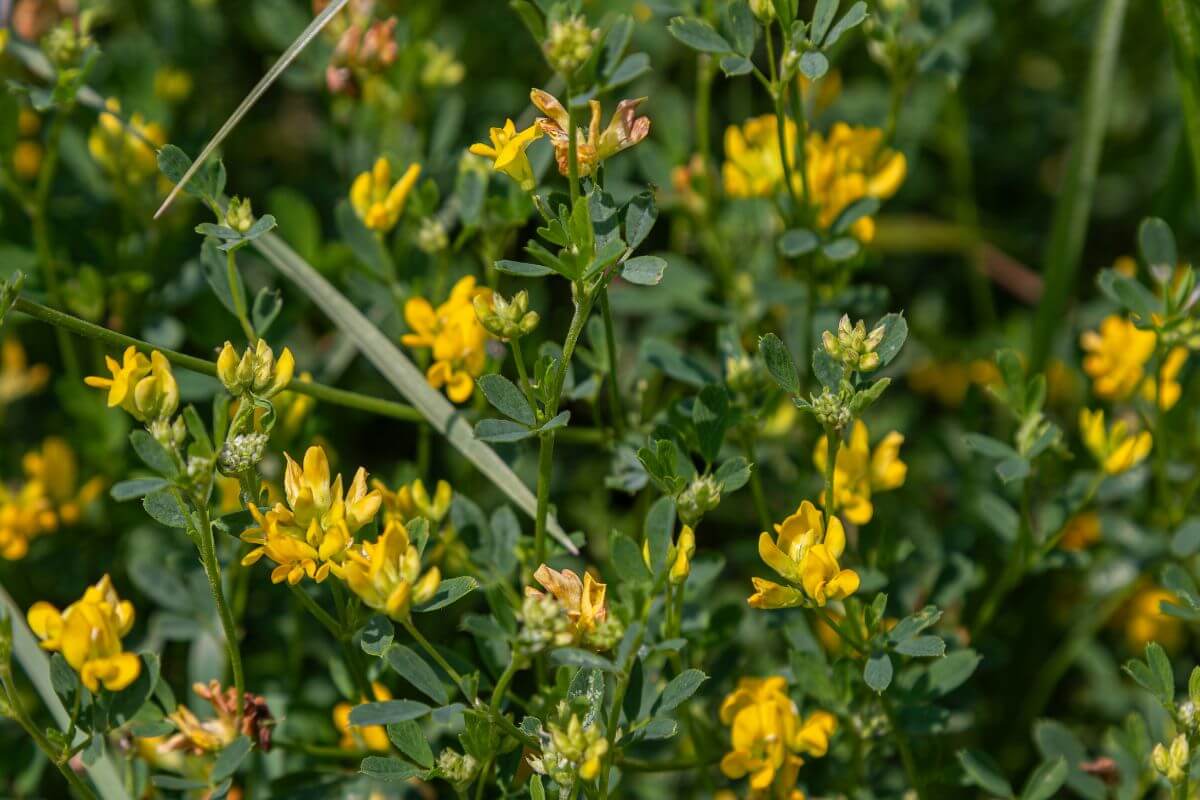
- Introduced annual plant
- Small yellow flowers from May to September
- Height: blooms at ground level, but spreads 20 to 40 cm (8–16 in.)
- Grows in full sun, very drought-tolerant
- Very tolerant of trampling
- Salt-tolerant, perfect for roadside planting
- Personal observations: Often seen on uncultivated land, roadsides, and natural lawns.
Canadian pussytoes (Antennaria howellii ssp. canadensis)
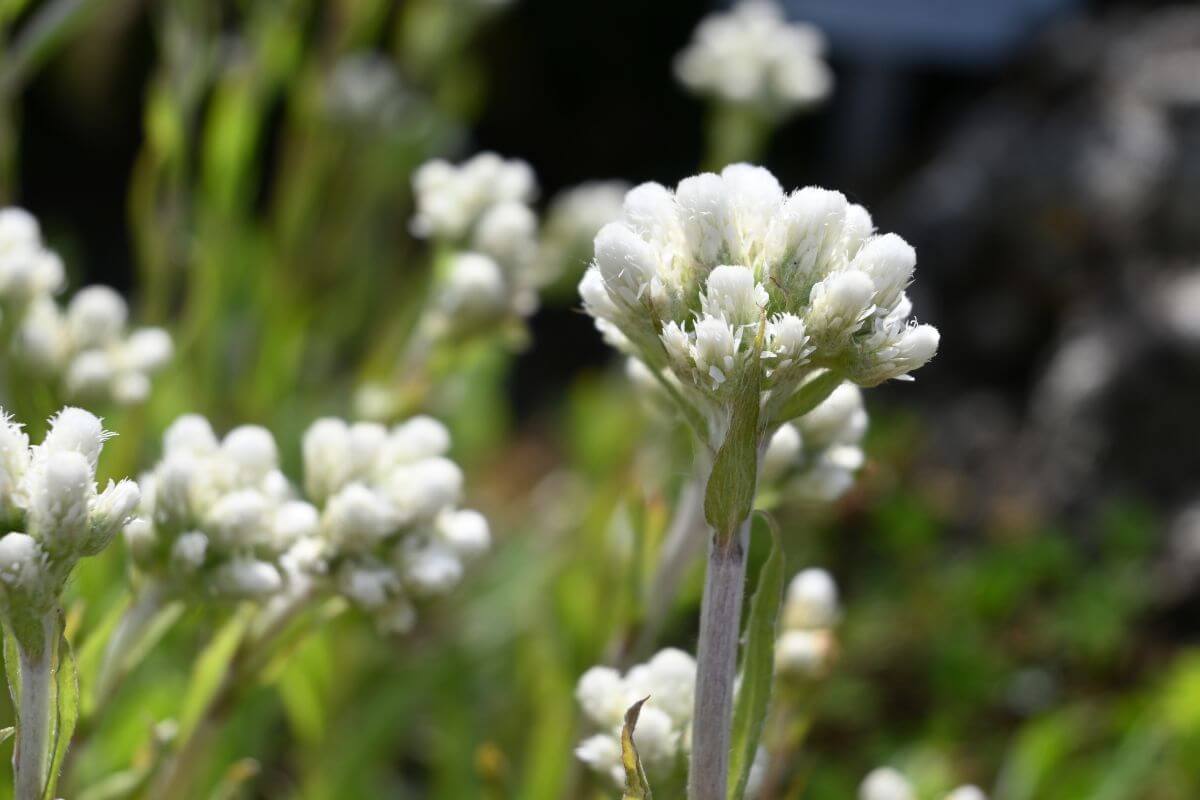
- Native perennial, very hardy
- Small white flowers in May–June
- Height: 10–15 cm (4–5 in)
- Silvery-gray foliage
- Very drought-tolerant
- Tolerates trampling
- Personal notes: Prefers dry, sunny slopes. Usually blooms before the first mowing.
Common self-heal (Prunella vulgaris)
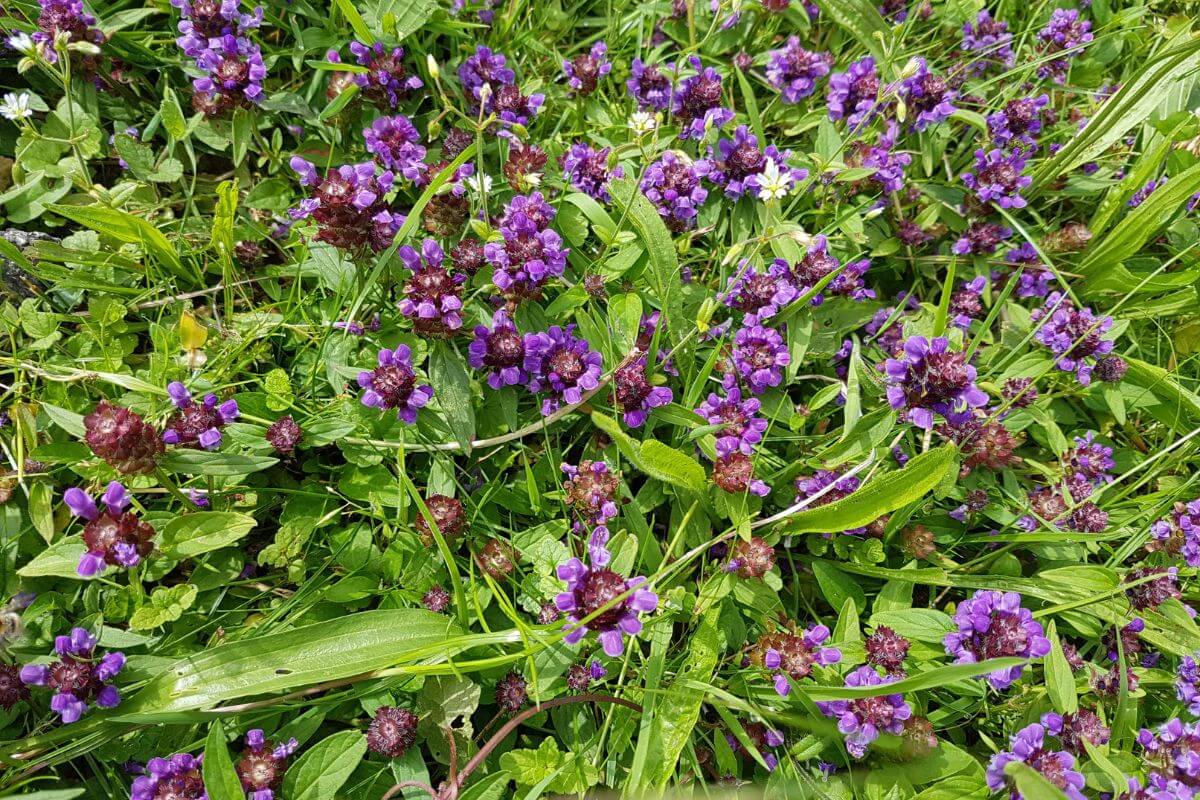
- Introduced perennial, medicinal
- Irregular blue flowers clustered in spikes in July–August
- Length of creeping stems: 15–30 cm
- Flowers appear 10 cm (4 in) above ground in a mowed lawn
- Opposite leaves and square stems
- Tolerant of trampling
- Grows in sun or partial shade in uncultivated areas
- Personal observations: Grows spontaneously in herbicide-free lawns. Very similar to ground ivy but not as invasive.
Ground-ivy (Glechoma hederacea)
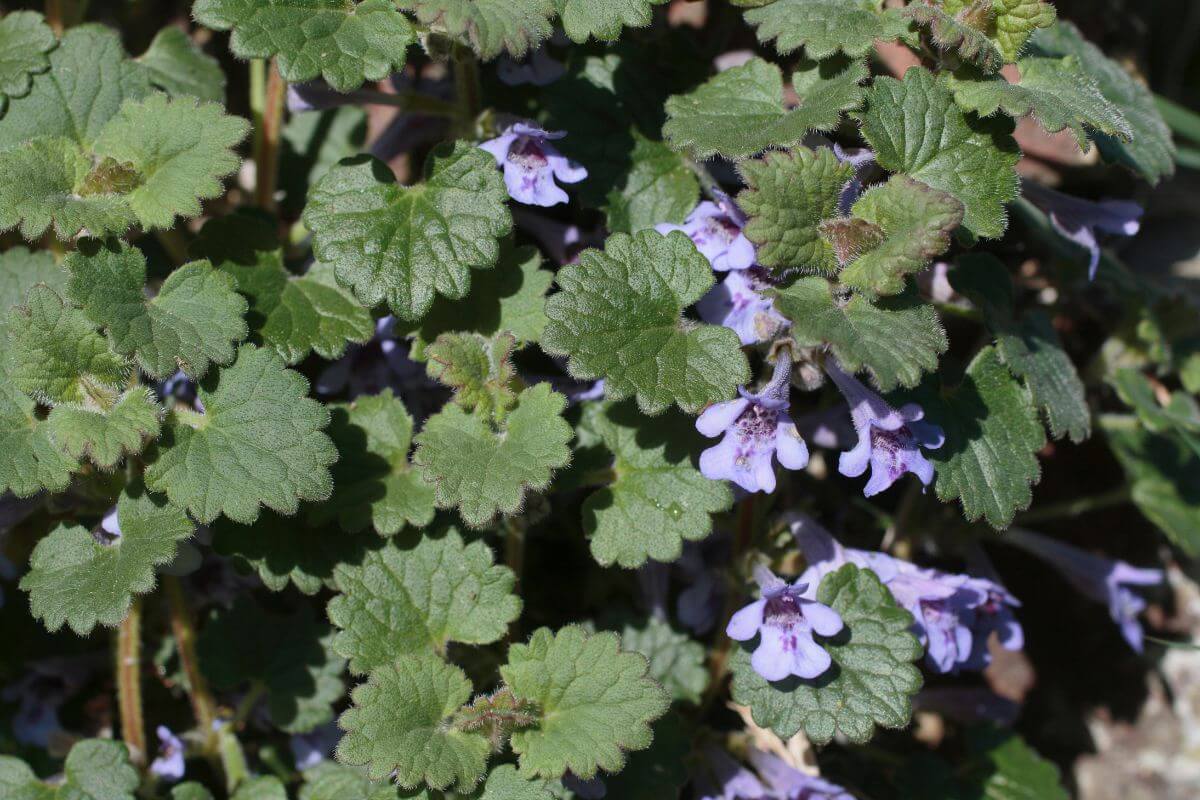
- Introduced perennial, medicinal
- Highly tolerant of trampling
- Blue flowers from April to June
- Height: blooms under 10 cm, but creeping: 15–30 cm (6–12 in)
- Grows in sun or partial shade
- Personal observations: Acceptable in the lawn, but this plant also loves to invade flower beds!
- Warning! Very invasive plant: the square stems root as soon as they touch the ground
Hawkweed (Pilosella sp)
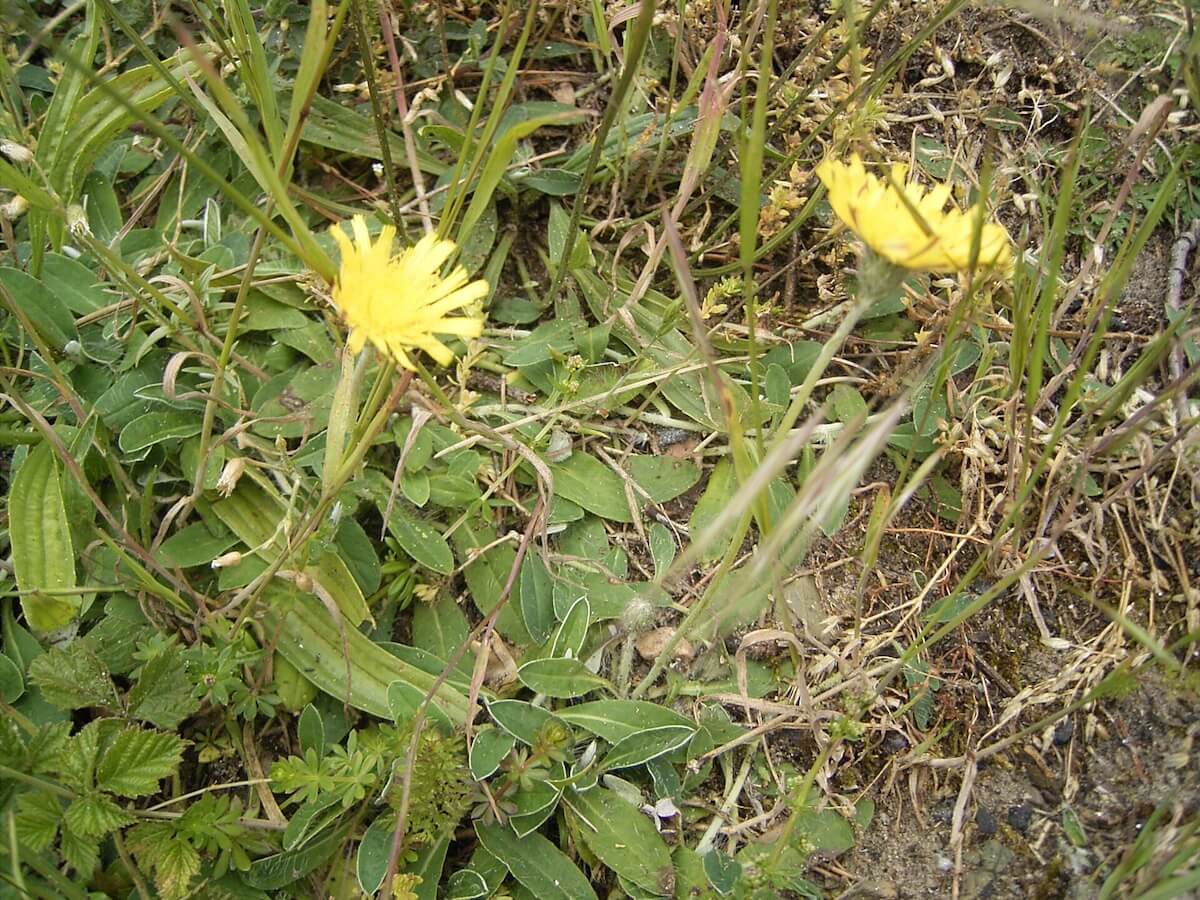
- Introduced perennial
- Several species, including orange hawkweed and meadow hawkweed (yellow)
- Tolerant of trampling
- Orange or yellow flowers from June to September if not mowed
- Height when in bloom: 30–60 cm (11–24 in)
- Small, lance-shaped leaves in rosettes at ground level
- Thrives in poor, acidic soils
- Grows in full sun or partial shade
- Personal observations: I’ve seen large areas covered with hawkweeds. Could it be invasive?
Purple rock cress (Aubrieta deltoidea)
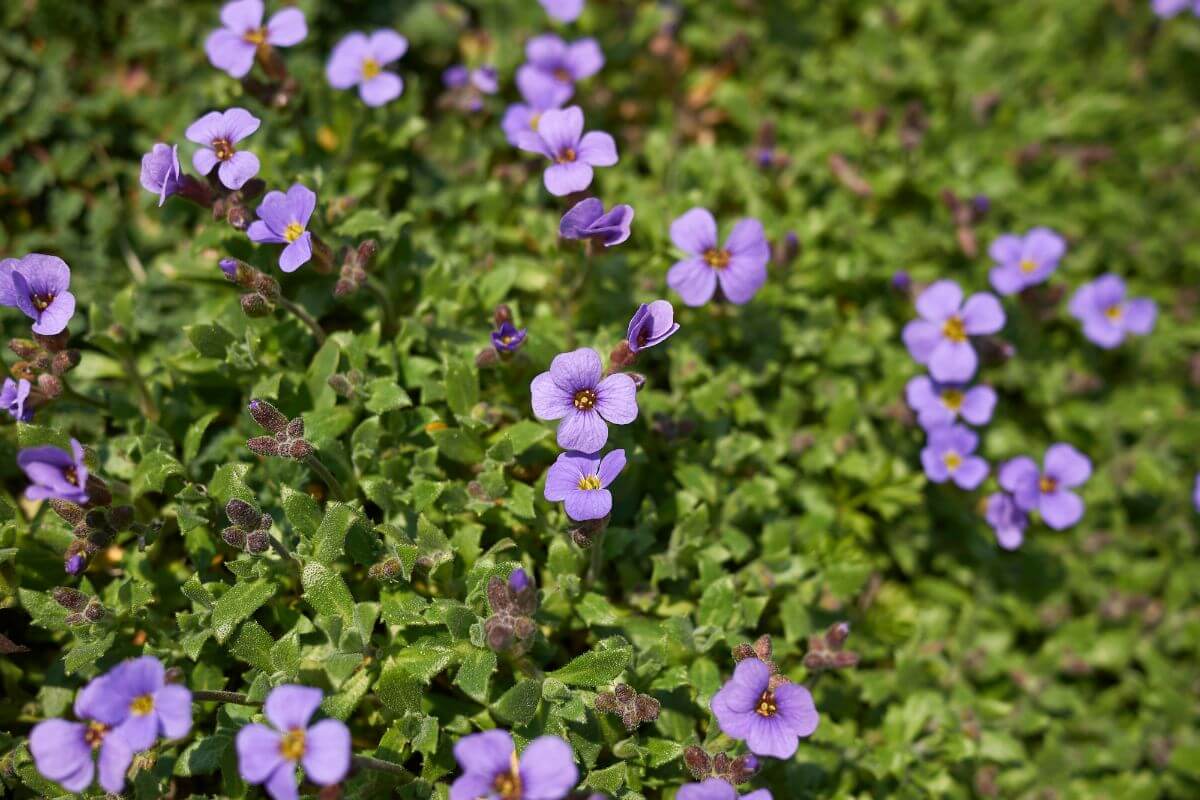
- Introduced perennial
- Grows in full sun or partial shade
- Pink, mauve, or blue flowers from March to June
- Height: 10 cm (4 in)
- Very low tolerance for trampling
- Prefers dry, sunny slopes
- Personal notes: Used as a low groundcover in horticulture. Blooms before the first mowing.
Wild strawberry (Fragaria virginiana)
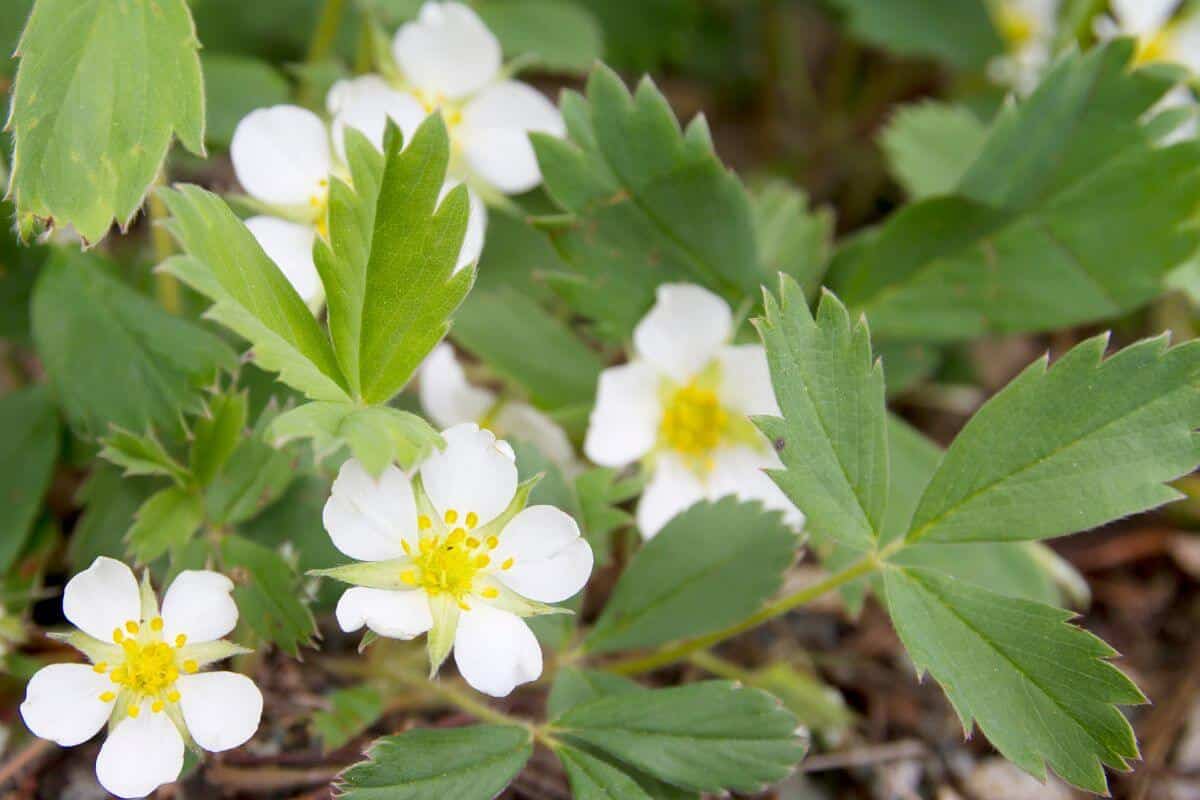
- Native edible perennial
- Small, low-growing white flowers in April–June
- Height: 5–15 cm (2–6 in)
- Tolerates trampling and drought
- Grows in full sun or partial shade
- Personal notes: Not currently available at garden centers, but easy to find in natural meadows. This is not a protected species
Yarrow (Achillea millefolium)
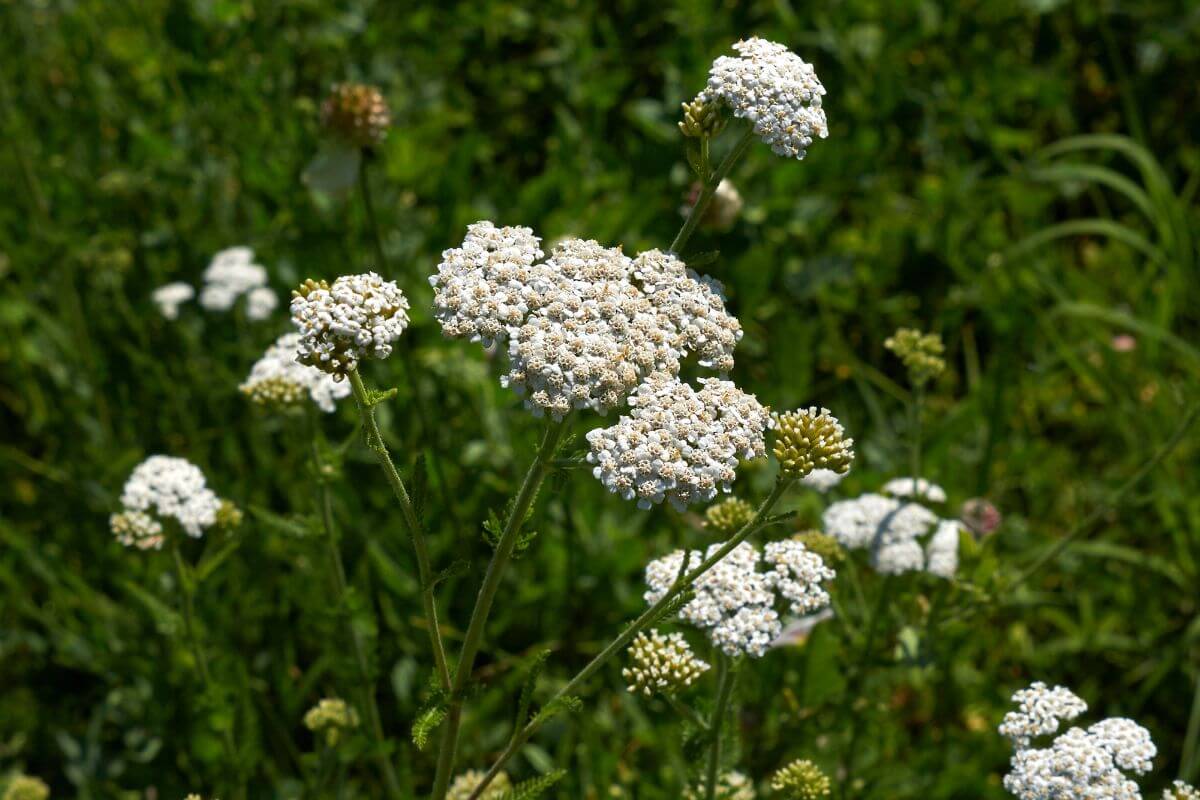
- A medicinal perennial plant; both native and European-introduced varieties are found in North America.
- White flowers from June to September–October
- Height: 30–70 cm (11–28 in) if not mowed, of course
- Highly tolerant of trampling and drought
- Grows in sun or partial shade
- Personal observations: It has spread naturally across my mowed lawn, and its foliage forms beautiful, very soft carpets among the grasses
More to come in a few weeks. We’ll be covering creeping thyme, clover, and violets, among other things. We welcome your suggestions!
How AI Improves User Productivity
AI improves productivity the most when it goes beyond giving suggestions and actually handles tasks end to end. I’ve been exploring Skygen AI software and what really stands out is how it can take a simple request and turn it into a completed workflow, from gathering data to interacting with different platforms, which saves a huge amount of time. Instead of constantly switching between tools, you just define the goal. It feels like moving from manual effort to managed execution, where AI takes care of routine steps.
Bellis perennis, which is known here as English daisy, is a bothersome weed in green lawns, but is actually quite pretty in more casual lawns.