
Russian olive
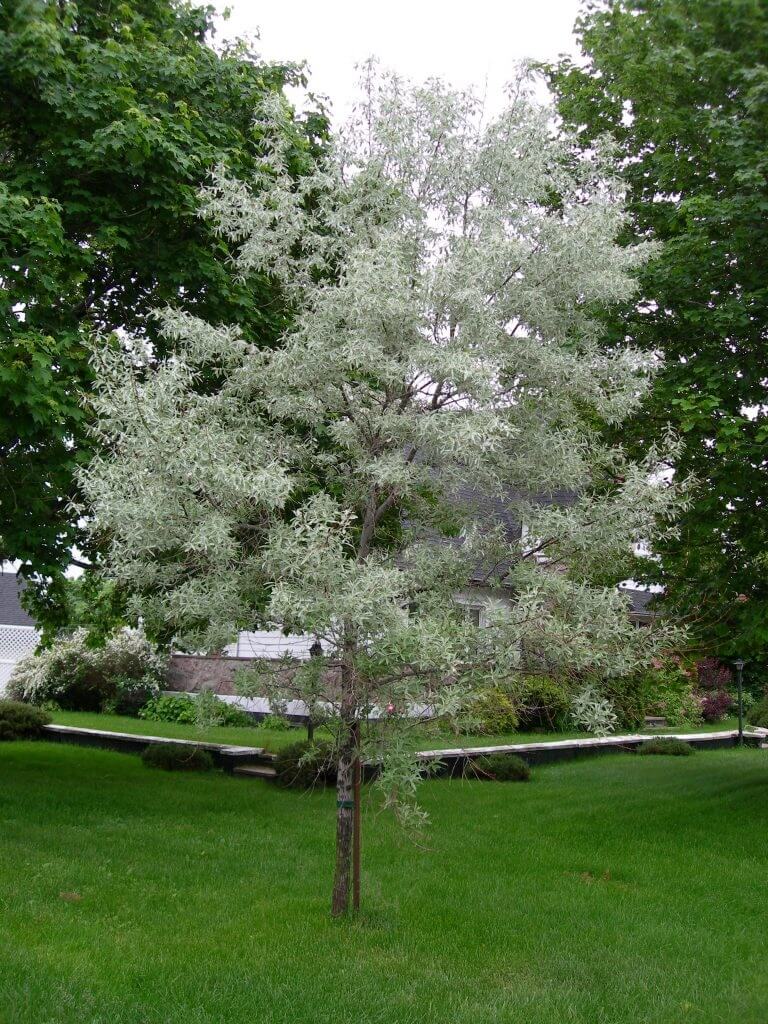
Is it possible to prune a Russian olive tree that’s about 14 years old, since it’s growing quite tall? One arborist I consulted told me it was possible, but another has told me that it causes stress to the tree and that topping a mature tree is not recommended. Thank you for helping me make a decision.
Answer
This will certainly cause stress to the tree (would you like it if someone cut off your arms?), but that doesn’t mean you shouldn’t do it. No tree wants to be topped, but it’s your property, and if you feel its height is a nuisance, go ahead. The tree will respond by producing new, very vigorous branches that will need to be pruned again in a year or two, so it becomes very costly in the long run.
Ultimately, the ideal solution in such a situation is to remove the problematic tree and replace it with one of a size appropriate for your situation.
Finally, a word of advice to other readers: always carefully calculate the space a tree will occupy before planting it. And don’t forget to consider both its eventual width and height. If you choose the right species for the available space, no pruning will be necessary, and your tree will grow peacefully and beautifully for many decades.
In fact, the Bohemian olive is increasingly considered an invasive exotic species. Now might be the right time to replace it with something of the right size and better suited to your area.
This article was originally published in the newspaper Le Soleil on April 24, 2010.
Sick Norway maple
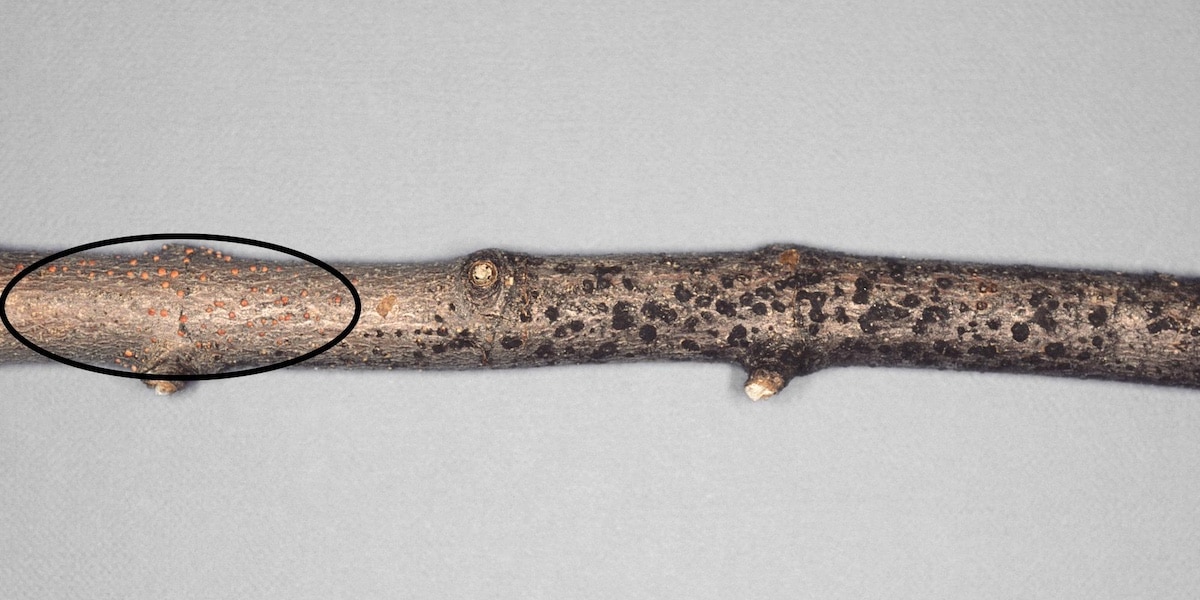
I’ve had a red-leaved Norway maple for nearly 18 years, and it seems to be suffering from a trunk disease. Since last summer, large patches of bark have been peeling off (mainly on one branch), and the exposed wood is covered with small red spots. I’d like to know how to treat this problem. A construction worker cut off a few branches, but I don’t know if that’s related to the disease.
Answer
It looks like this branch is severely affected by necrotic canker. The small red dots you see are its sporocarps. On the parts that have been killed by the fungus, the bark peels off in patches and eventually falls off.
This disease is troublesome because there isn’t necessarily an obvious reason for its appearance. It’s true that it may have been transmitted through pruning, but there isn’t necessarily a cause-and-effect relationship. Why is one plant—or just one branch—affected and not another? No one knows.
Given the severity of this canker and the risk that it will spread rather than heal, I would nevertheless be inclined to say that it would be best to remove the diseased branch to prevent the disease from spreading to the rest of the tree. However, you might consult a certified arborist for their opinion.
This article was originally published in the newspaper Le Soleil on April 2, 2011.
A chestnut tree with a sad look
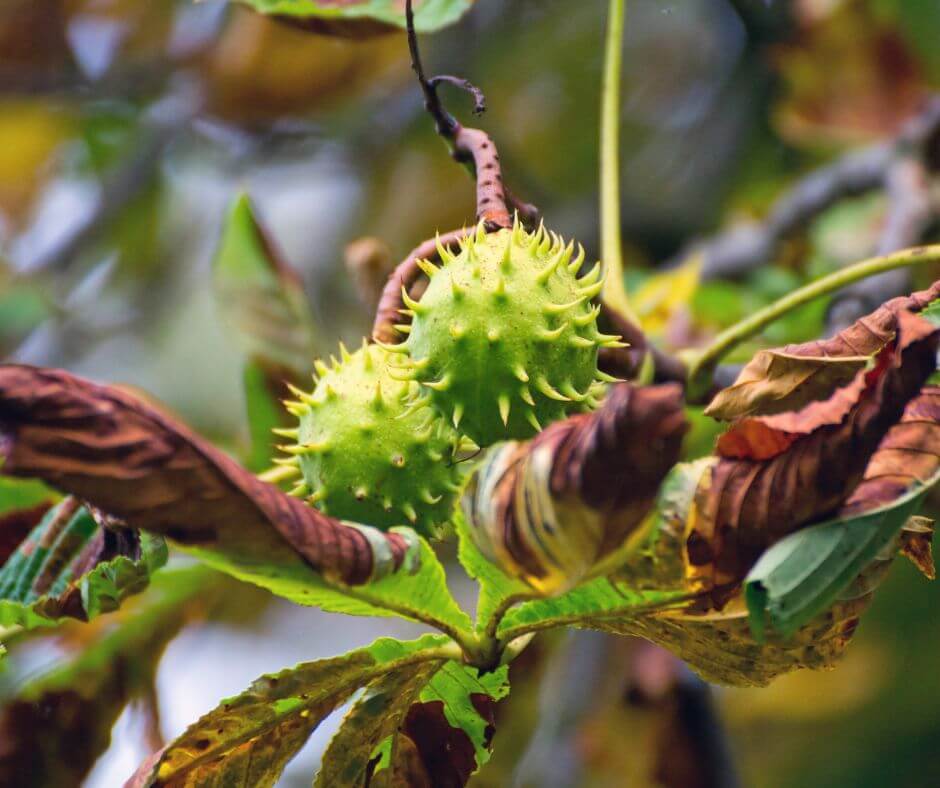
I have a chestnut tree that produces beautiful buds and leaves in early summer… but then things go wrong: it doesn’t bloom, and little by little the leaves turn yellow, develop rust-colored spots, and curl up. I give it compost, mulch, and plenty of water. How can I turn it into a magnificent tree like the one I had about twenty years ago?
Answer
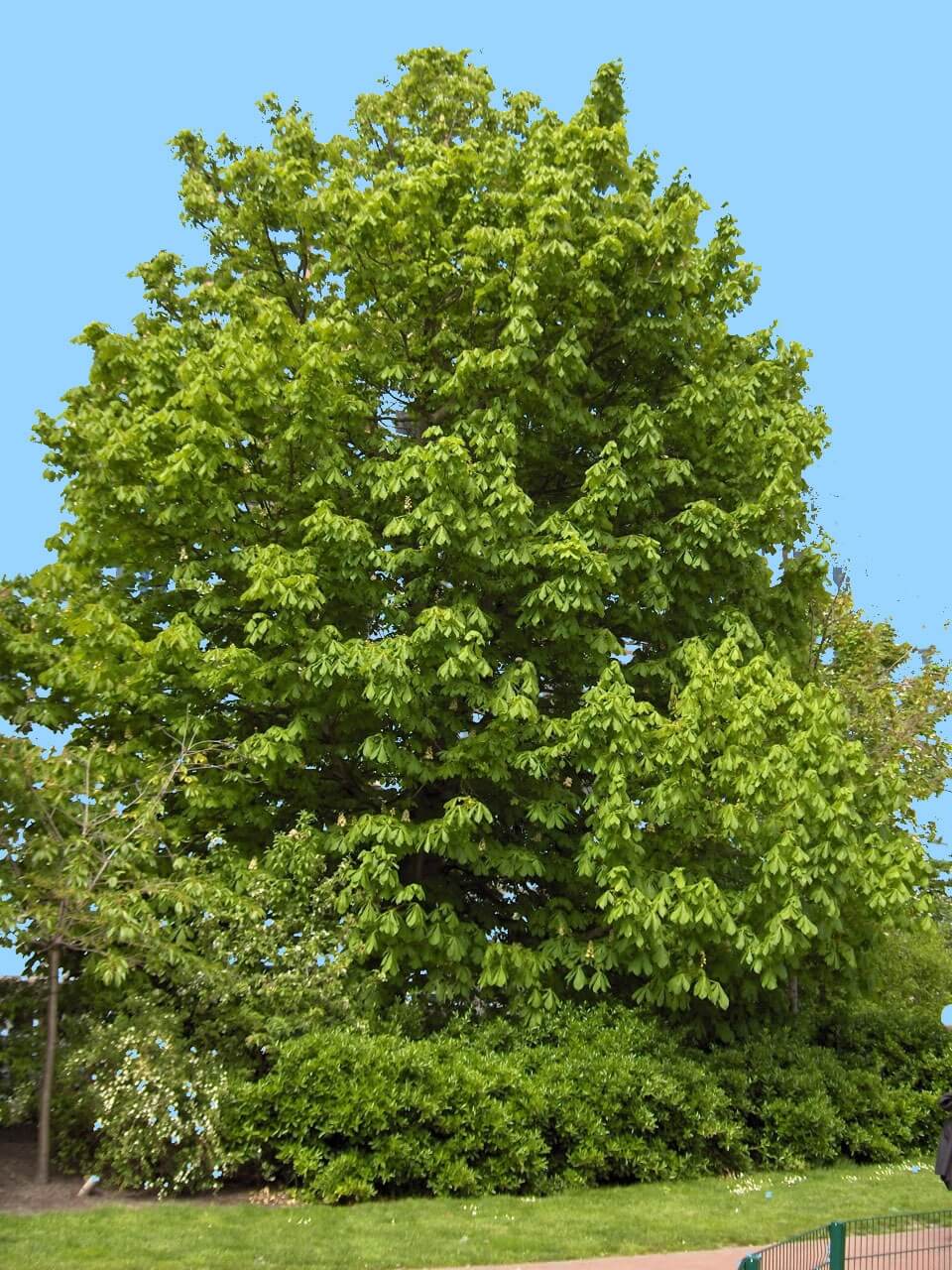
The European horse chestnut (Aesculus hippocastanum) is not highly recommended for our region due to its low hardiness (Zone 5b). (Some authors classify it as zone 4b, but I think they’re being a bit generous.) Granted, it survives in our climate, but it’s often damaged in the winter, when its flower buds freeze and it doesn’t bloom. Furthermore, since the climate causes severe stress, it becomes highly susceptible to various diseases, which disfigure its leaves in the summer.
You’re right to mulch it, because keeping the soil moist helps reduce disease. However, your comment that it “gets a lot of water” worries me a bit, as I’m afraid you might be overwatering it. In our climate, watering is rarely necessary except for the vegetable garden and potted plants. Too much water causes just as much stress (and resulting diseases) as too little. With good mulch, additional watering will rarely be needed.
That you’ve already had success with this tree doesn’t surprise me, however. Some horse chestnut trees seem to take root well in the region and even bloom profusely. The problem is that horse chestnut trees sold at nurseries usually come from elsewhere (notably Oregon) and are in no way adapted to our climate. I suggest you collect a few chestnuts from a horse chestnut tree that is thriving in the region and shows no signs of disease. Planting them will give you a good chance of growing a healthy, flowering tree that is hardy enough for our zone, Zone 4b.
This article was originally published in the newspaper Le Soleil on May 3, 2008.
This is a very good and practical article for gardeners.
Eggy Car runs smoothly on my phone’s browser, but there’s one problem: my fingers are kinda big, so I keep tapping the wrong spot on the touchscreen. The car then lurches uphill when I don’t want it to, and the egg falls within two seconds. https://eggycar2.io
A very informative and practical article. I appreciate how it addresses common tree-care problems with clear, easy-to-follow solutions that both beginners and experienced gardeners can benefit from.
Too much water causes just as much stress (and resulting diseases) as too little. With good mulch, additional watering will rarely be needed.