
Most people who ask me for advice about unwanted insects do so in response to an infestation that’s already well underway. Unfortunately, by that point, the insects have already gained ground and the plants have lost their vigor. The goal then becomes to contain the problem and limit the damage before regaining control.
I don’t blame them; it’s a direct remnant of the popular culture of pesticides: waiting until the problem is obvious to treat it with a product that kills. For a treatment to be effective, it must reach the insect, either directly or via the plant’s tissues that have absorbed a systemic insecticide (i.e., one that spreads throughout the plant’s system, rendering it unfit for consumption by both humans and insects—whether pests or beneficial species—which clearly runs counter to gardening that respects all life) .
We laidback gardeners advocate a preventive approach, focused on the life cycle and habits of insects. A better understanding of our targets is necessary, but the results speak for themselves: less damage, fewer chemicals, and less hassle!
A proactive approach allows for early control of problems, greatly limiting their impact on plants, crops, and, let’s face it, our mood. Let me introduce you to the concept of synchronization in pest control!
The best time to act was yesterday!
Whether for houseplants or our garden, the best time to think about pest infestations is, of course, before they even happen! How can we predict what’s coming? Depending on your experience and the situation, seeing into the future will be more or less straightforward…
Houseplants:
- Anyone who’s ever had an infestation knows: ALWAYS be wary of new arrivals. Adding a new plant to your collection means running the risk of bringing in pesky little insects as well. Quarantine is a must!
- Spring is a prime time for insect populations to surge. Even if there were only a few in the winter, they take advantage of the warm weather to accelerate their reproduction and can quickly multiply. This is a critical time for screening (and the perfect time to break out your magnifying glass).
In the garden
- The past is a guide to the future! Most garden infestations return year after year, since the majority of insects overwinter right where they are. Once settled in a tasty, comfortable garden, they stay put and carry on their family legacy.
- When a garden is new or you’re trying a new crop, it may take a while before insects discover it. Although they have highly developed senses, they are small and don’t see everything. Talking to neighbors or consulting local resources can help identify looming threats. This is an excellent time to introduce companion plants near sensitive crops that are still healthy; they will confuse the pests’ senses, delaying their discovery of the problem.
Changes over the course of the season
While our houseplants have the luxury of living sheltered from the seasons, the same cannot be said for our outdoor plants. These are directly exposed to the forces of nature and must adapt to Mother Nature’s whims—insects included. It makes a lot of sense to plan your maintenance schedule around the life cycles of insects!
The case of the Colorado potato beetle
Colorado potato beetles ravage potato crops all summer long, then burrow deep into the soil to avoid the deadly winter frosts. These insects are resistant to more than 50 chemicals. In their own way, they have contributed to the pesticide industry; every time a new molecule was discovered, they found a way to evade it. Whether by detoxifying themselves or limiting the product’s penetration through a modified cuticle, Colorado potato beetles are experts in insecticide resistance, giving french fry lovers a headache…
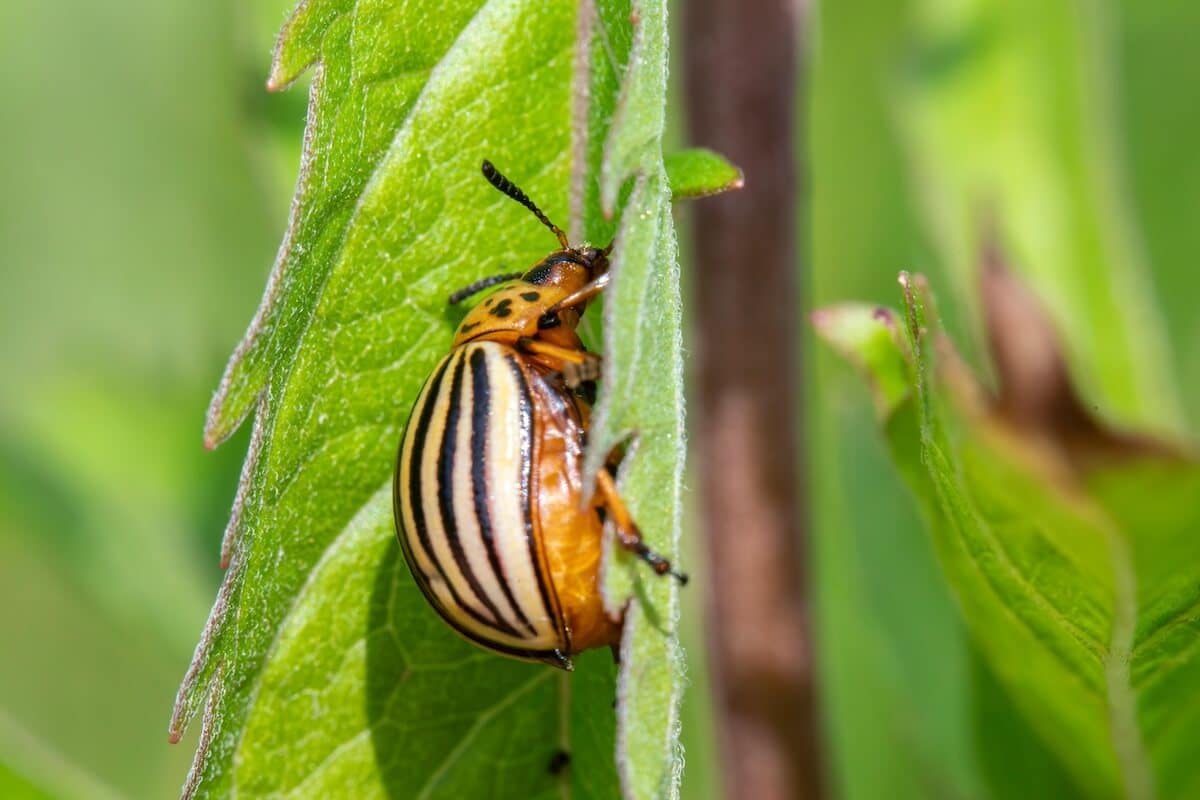
Choosing the right planting time based on their activity can greatly reduce damage. Colorado potato beetles spend the winter in the soil and emerge in spring when soil temperatures reach about 14°C (57°F). As soon as they emerge, they begin searching for food. If they quickly find the same crop they fed on the previous year, it becomes an easy feast, reducing their search time and allowing damage to begin sooner.
Crop rotation is therefore essential to avoid making their task easier. In many parts of North America, especially in cooler regions, it can also help to delay potato planting until after the first major wave of adult emergence has passed—often late May to mid-June, depending on local temperatures and climate.
Let’s imagine two scenarios:
- You plant your potatoes very early, hoping to harvest them sooner. The Colorado potato beetles in your garden wake up, go straight for them, and devour them. Your neighbor’s Colorado potato beetles wake up too, smell your new potatoes, and join you in the garden.
- You wait until they’ve left to plant your potatoes. The Colorado potato beetles wake up, look around a bit, and find nothing. They leave and leave you alone (they probably head over to your neighbor’s, who’s in more of a hurry).
The best example of this situation I’ve seen involves gardeners who lived near a commercial potato farm. In their first year, they planted their potatoes before the commercial ones were planted in the large fields. When the Colorado potato beetles emerged, they swarmed into the garden in large numbers. Needless to say, they waited until the buffet was open in the large neighboring fields before planting their own potatoes…
White grubs in the lawn
The case of white grubs in lawns (cockchafers, Japanese beetles) is also very interesting in terms of timing. Indeed, the optimal treatment windows for these pests are counterintuitive, but make perfect sense once you understand the life cycle of the target pest.

To control these pests, you need to act while they’re still underground and out of sight. That’s when they’re most vulnerable and easily targeted with our natural treatments.
Surprising fact: some species of cockchafers spend up to three years in the soil as larvae before becoming adults. They take their time to eat as many underground roots as possible. Others have a one-year life cycle, such as the Japanese beetle and the European cockchafer.
Knowing when to hunt them
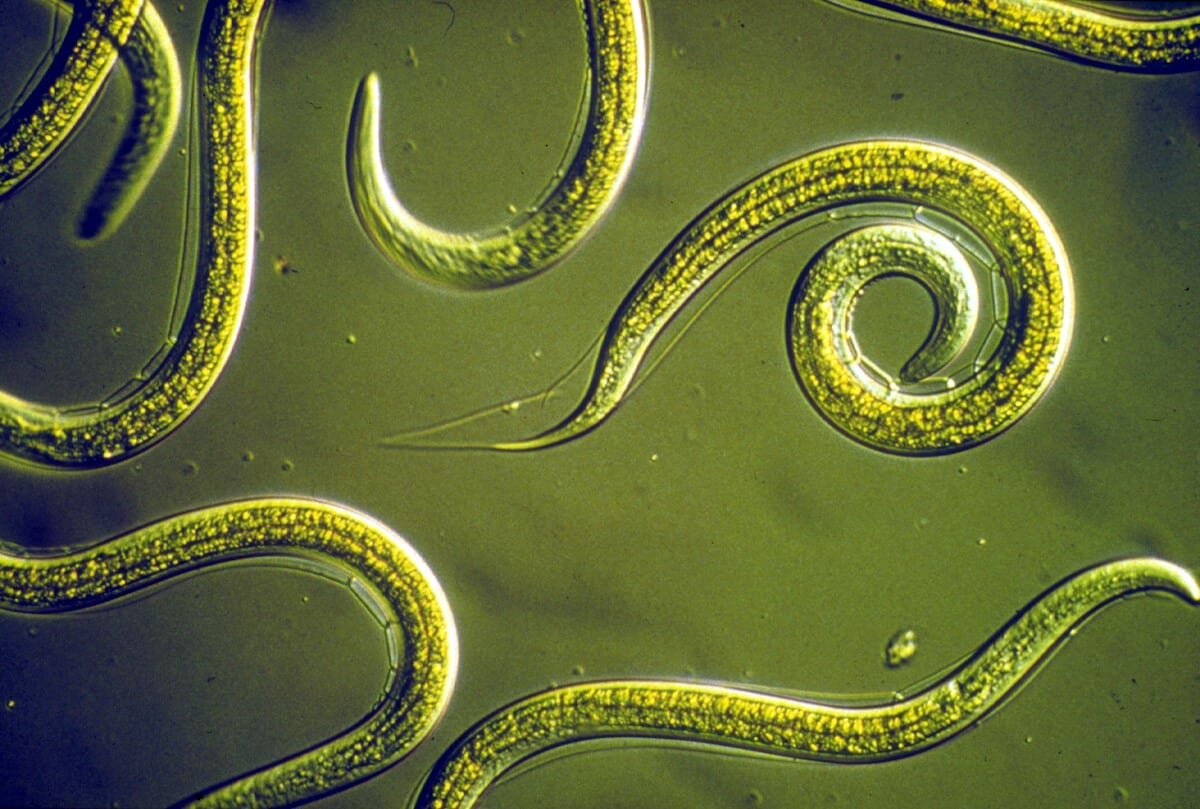
There are two optimal times to control them: at the beginning and, especially, at the end of the season. Our weapon: entomopathogenic nematodes, tiny worms that target and kill larvae in the soil.
When applied directly to the soil in affected areas, these nematodes disperse and set out in search of larvae to parasitize. They will find them; as long as the soil remains moist, they continue their search.
LGrubs spend the winter deep in the soil. In the spring, they slowly make their way up to the surface, ready to feed. It is when they are at the soil’s surface that they can be targeted.
You can try to reduce the damage caused by grubs that survived the winter, but keep in mind that they are nearing the end of their growth cycle. Larger and with tougher skin, they are much more difficult for beneficial nematodes to penetrate than young fall grubs. If you decide to apply nematodes at this time of year, wait until nighttime temperatures consistently remain above 10°C (50°F); otherwise, these tiny allies may become inactive from the cold and unable to hunt effectively.
Once the adults have emerged, it is unfortunately already too late, but don’t worry—you can make up for it before fall, and that’s all the more important! As temperatures cool, the larvae make the reverse journey: they move from the surface to deeper in the soil. These new larvae of the year are all the more vulnerable, since they are still small and fragile, making them easier for our nematodes to infiltrate.
For optimal treatment of white grubs, the best time is before these new larvae burrow too deep into the soil, at the end of the season. So you have to let them be in the summer to better target them in the fall. A small larva on the ground is much easier to hunt than a flying adult!
“Timing” throughout the day
The seasons bring their own fluctuations in temperature, but the time of day also has a major impact on insects’ behavior. Some prefer to wait until nightfall, when things are quiet, to become active. Others prefer full sunlight to warm themselves up.
Early morning is a good time to scout for and manually collect certain insects, such as Colorado potato beetles and leaf beetles. Still groggy from sleep, their reflexes will be slowed down.

In summary
It’s important to act at the right time, and that optimal time isn’t necessarily the one that comes to mind right away. Understanding the growing conditions and the life cycles of insects goes a long way toward helping you target your interventions.
Specially formulated nematode mixture are very easy to apply using a sprayer: just attach it to your garden hose, spray, and let nature take its course.
Which insects would you like me to demystify in the next column? I look forward to your comments!
Thanks for this! I’ve been testing Wan 3.0 and it’s been really impressive for video creation.
I heard nematodes don’t work well for cucumber beetle larvae. Your thoughts?