
Forgive me, but I’m going to talk about my trip to Spain again. It’s the third week in a row, I know. But this trip really inspired me (and cost quite a bit, so I’m going to squeeze as much content out of it as I can, hehe!). And besides, between you and me, spreading it out over three posts is a very “laidback” kind of approach!
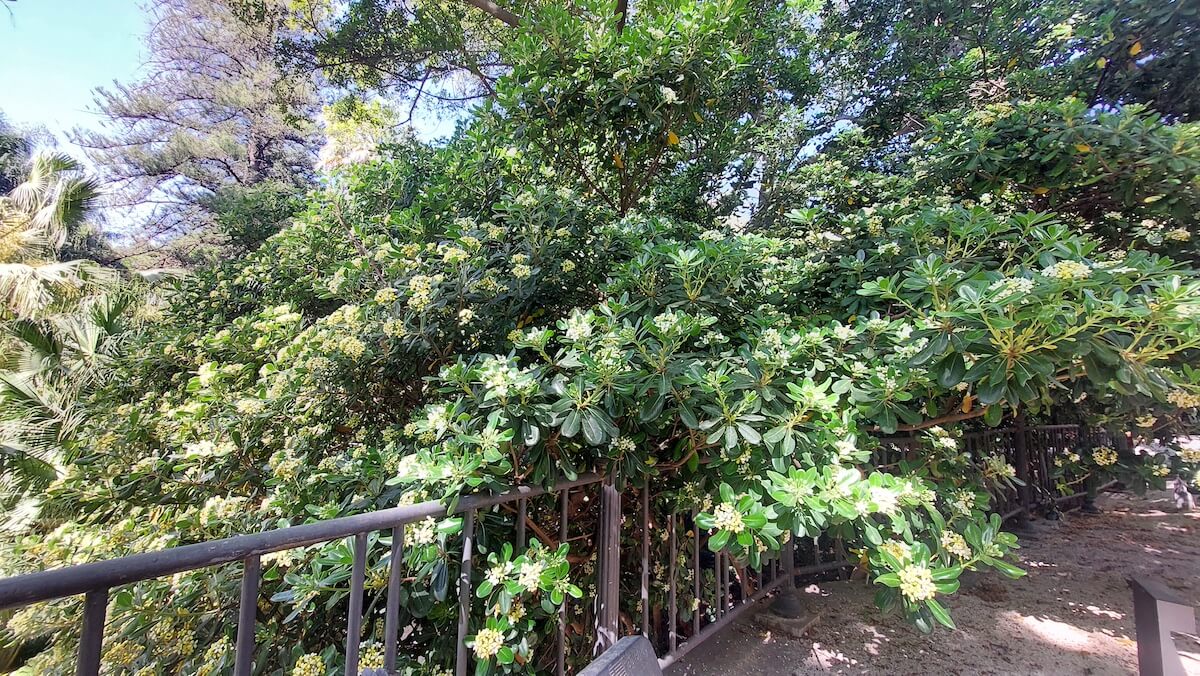
So. In Spain, I visited the Malaga Botanical Garden—I’ve already told you about it in a previous post. But one thing really intrigued me during the visit: there was a path lined with 80 species of trees from all over the world. From Asia, Africa, South America, Australia, Europe… But North America? Nothing. No maples, no spruces, no birches.
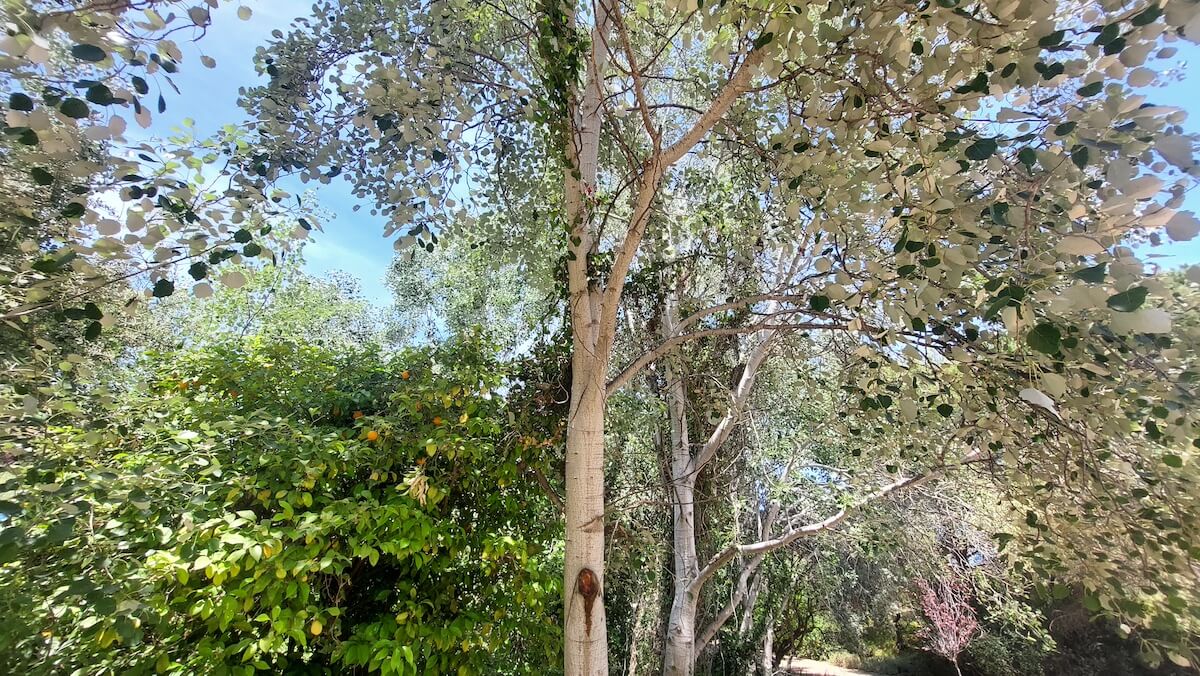
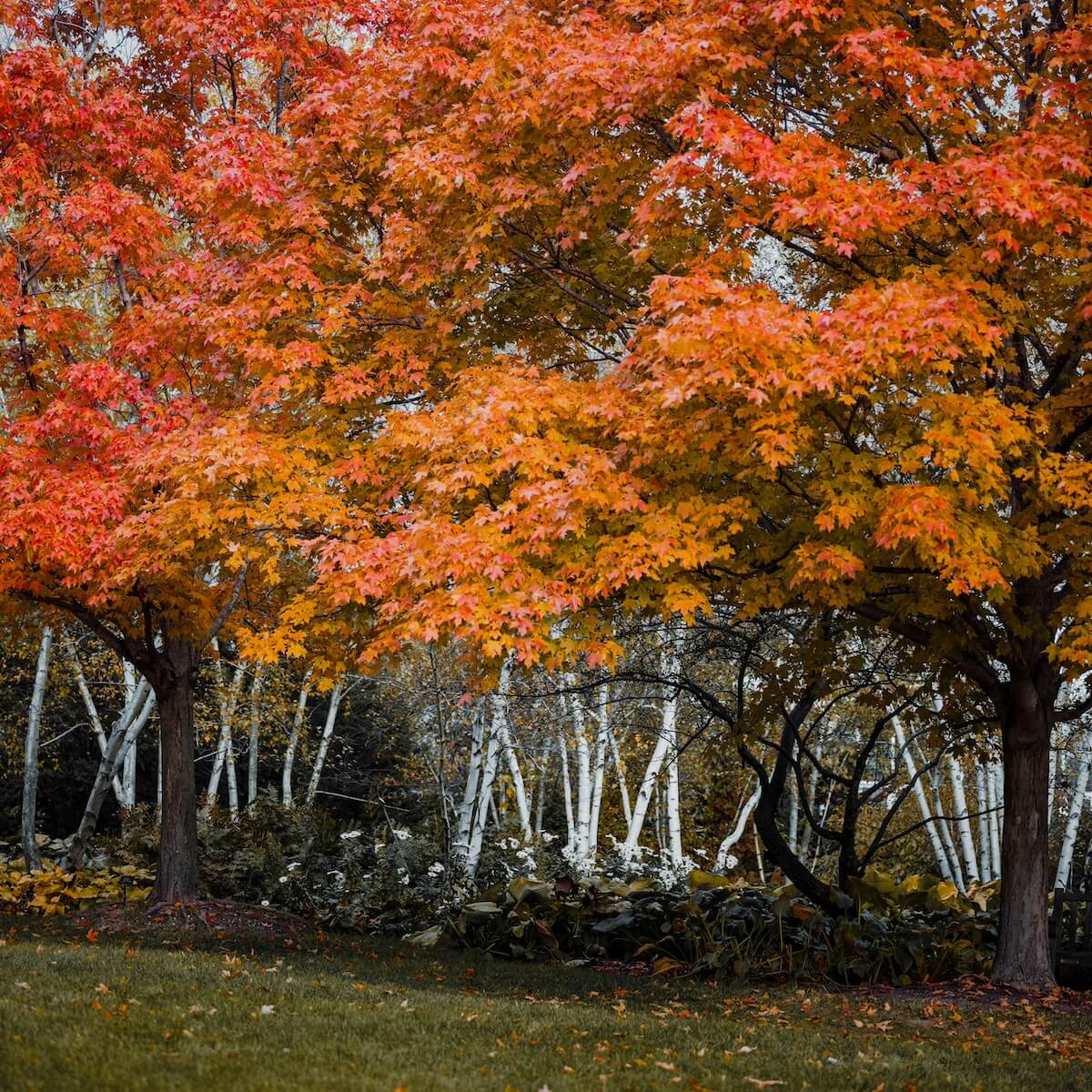
At the time, I thought to myself: well, it’s true that we don’t have tons of different species back home. Compared to the Amazon, our boreal forest is certainly rather sparse. But still… a beautiful mature sugar maple has real charisma! And then, thinking back on my other travels, I realized it was the same everywhere: I’ve never seen our northern trees growing in more temperate regions!
So the question has been on my mind all week: is it possible that our trees simply can’t live without frost? Not just “tolerating the heat poorly,” but needing the cold as a condition for survival?
We intuitively understand that a palm tree freezes and dies here in winter (unless it has REALLY forward-thinking owners!). But the reverse is less obvious. Why couldn’t a sugar maple, a white spruce, or a paper birch thrive under the Andalusian sun? It’s not simply a matter of heat. It’s much more subtle than that—and so biologically fascinating—that I’ve decided to share this with you!
The problem with the alarm clock
Let’s start with an analogy. Imagine your alarm clock is set for a specific time zone. If you take it from Montreal to Seville without adjusting it, it will go off at the wrong time for weeks, until your body finally adapts. The trees in our northern forests also have an internal alarm clock, but unlike ours, it cannot be reset in a matter of days. Millions of years of evolution have hardwired it into their genes.
That internal alarm clock is the photoperiod: the length of the day. But here, what matters is the amplitude of the changes. In Montreal (45°N), daylight ranges from about 9 hours in December to nearly 16 hours in June: a variation of roughly 7 hours. In Málaga (37°N), the swing is more modest: from about 9½ hours to just under 14¾ hours, a difference of around 5 hours. It may not sound like much, but for boreal and temperate trees, that 2-hour difference is fundamental.
Light and latitude
To put it simply, plants have evolved to interpret the light signals specific to their latitude. Northern trees have a critical threshold for day length that is genetically hardwired into their development. What I mean is that the signal in the fall that says: “OK, everyone, last call—we’re storing all our sugar in the roots, stripping down, and heading to bed!”—well, what triggers that signal is the length of the day. Below a certain number of hours, regardless of the temperature, trees (and no doubt other plants!) shift their metabolism.
This threshold for hours of sunlight is higher for northern trees; in other words, northern trees start preparing for winter while the days are still relatively long. In a southern garden, the signal would never arrive quite at the right time, and the tree would be out of sync with its environment, going dormant too late and waking up too early.
The countdown to the coldest hours
But the issue of photoperiod is only half the story. There’s also what’s known as “chill hours,” or, in scientific jargon (watch out, I’m raising my little finger and putting on my fancy act), the need for vernalization in trees that require dormancy.
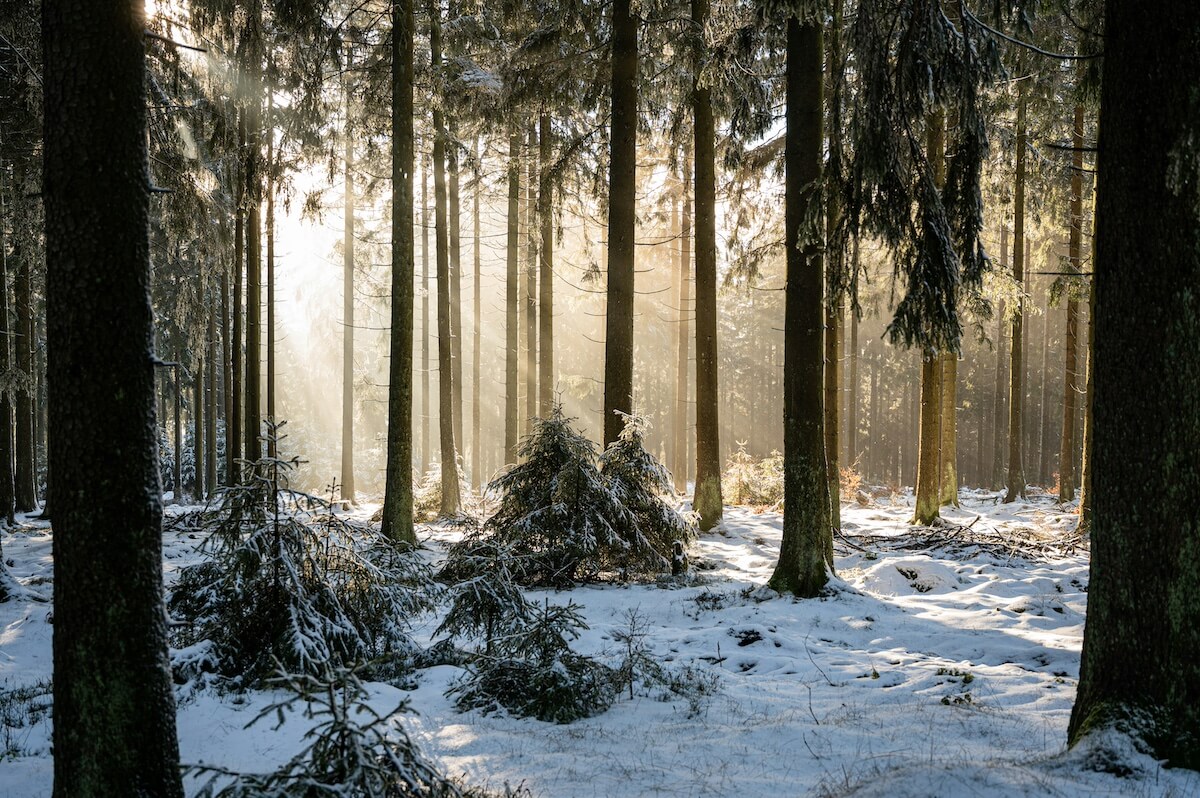
Here’s how it works: when our trees go dormant in the fall, they don’t just sleep—they accumulate “chill hours” like a wind-up clock (if you don’t know what I’m talking about, ask your grandparents!). This accumulation is essential for dormancy to end properly in the spring. Without this “countdown” completed, the tree wakes up out of sync: buds bursting erratically, stunted shoots, abnormal growth.
Studies conducted on Canadian boreal species have measured the amount of cold required. White and black spruce need about 300 to 500 cumulative hours of cold. Aspen and lodgepole pine need more than 1,100 hours! However, an Andalusian winter provides nothing of the sort: nighttime temperatures barely drop below 5–8 °C (41–46 °F) for a few weeks a year, which is truly insufficient to meet the chilling requirements needed to get going again in spring (remember, they can heat their homes with olive pits!).
What about the sugar maple?
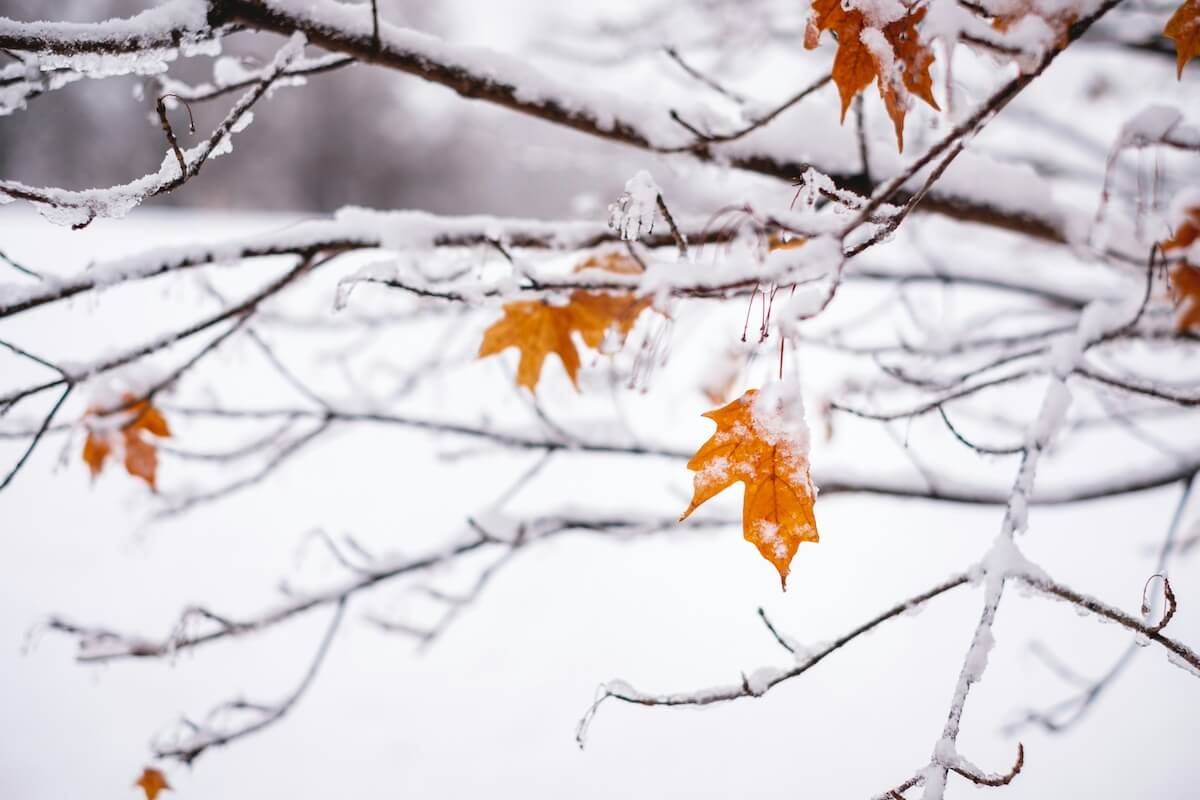
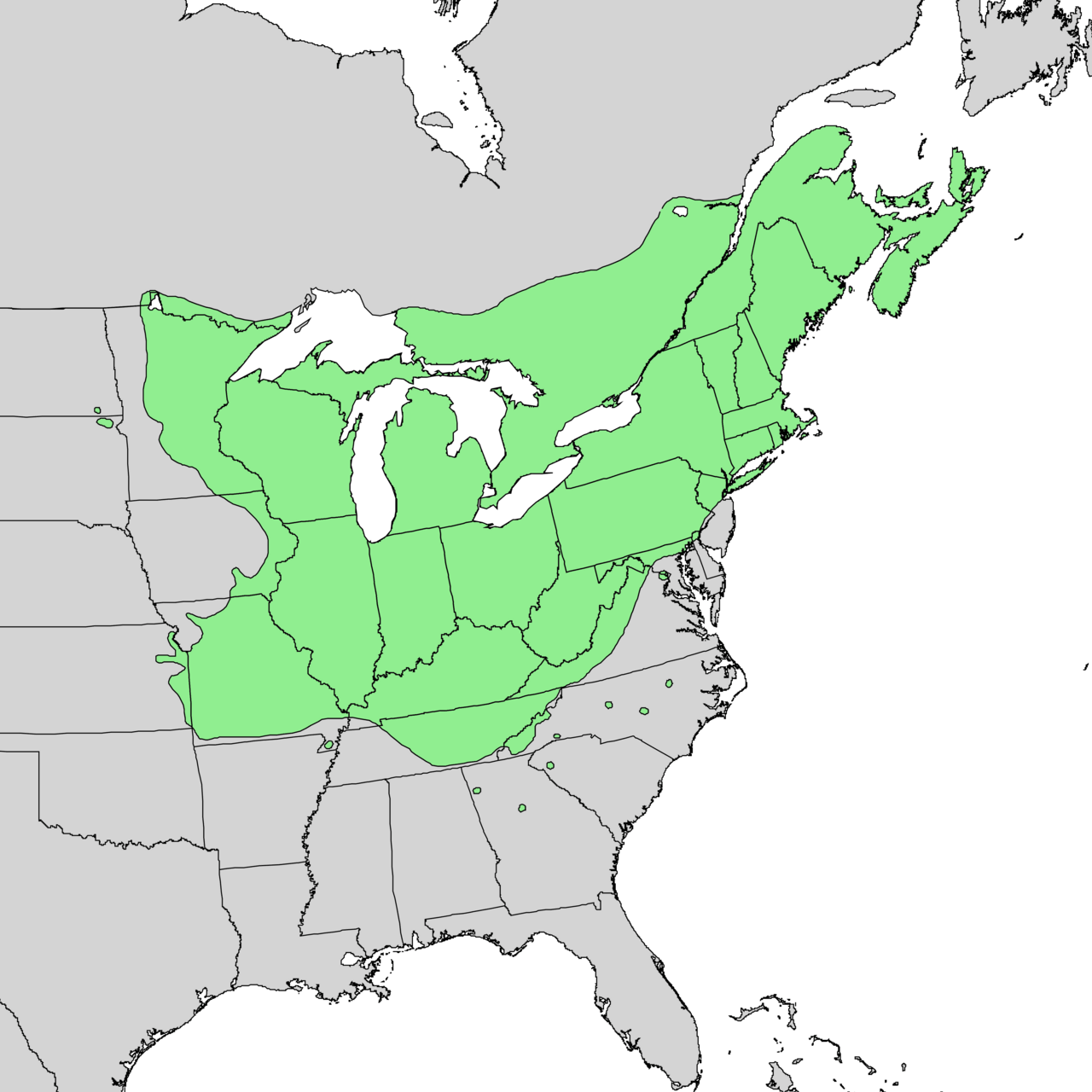
In addition to sunlight and cold winters, the Sugar maple adds a third layer of complexity to all this: it also suffers from summer heat. Researchers tested the introduction of sugar maples from three Canadian provinces into subtropical southern China, where the average annual temperature is close to 16 °C (61 °F).
The result? Trees from Ontario, the warmest Canadian climate tested (with an average annual temperature of 9.4 °C/49 °F), struggled to survive. The trees from Quebec and Manitoba (with average annual temperatures of 4.2 °C/39.5 °F and 3 °C/37 °F) died within four years. They didn’t become scraggly and unattractive — no, they DIED! Meanwhile, humans practically stampede through airports just to enjoy one week of warmth in winter…!
How can you explain that?
Well, scientists have found that intense heat increases a tree’s evapotranspiration.
What now? Audrey, your article already has enough numbers in it — don’t start inventing words too!
Basically, the hotter it gets, the more water a tree loses through its leaves during respiration and photosynthesis. That’s what creates those wonderfully cool pockets of air near large trees in summer. Our maples are comfortable losing a certain amount of water, but too much becomes a problem. Unlike some hot-climate plants, they can’t simply “pause” their metabolism for a while, and their roots aren’t able to pull up enough water to keep pace with such extreme water loss. Put simply: when it’s hot, we drink more to cool ourselves down and replace the water we lose through sweat — trees do the same thing! Imagine trying to spend the whole day weeding in the August sun while carrying only a 2 L (half-gallon) water bottle. Fine in cool weather… not so great in a heat wave!
The sugar maple loves cool conditions. It prefers north-facing slopes, deep moist soils, and moderate summers. This is a tree that evolved with long winters and short summers. Transplanting it into a hot country is like attempting a 100 km (62 mi) hike with that tiny 2 L (half-gallon) bottle of water! Canadian studies even show that maple growth gradually declines along the southern edge of their current range as summers warm up. And because of other environmental constraints, they can’t simply keep moving north forever…
What about the other way around?
The same logic applies in reverse: why do tropical and Mediterranean plants refuse to grow in Canada, even if we bring them indoors to a greenhouse in the winter? These plants have their own signals, and they simply don’t understand ours! Have you ever tried to get a poinsettia to bloom? You have to lock it in a closet at 5 p.m. for months; otherwise, the light will cause it to stop blooming! It’s technically possible, but you have to be really motivated to recreate those natural conditions for it!
There you go—I hope this wasn’t too heavy to read with all those numbers and technical terms! But another question came to mind while writing this article… Have you ever come across potted Canadian plants down south? Because I look at my houseplants and I actually have several miniature versions of southern giants (Norfolk pine, elephant’s foot, rubber plant, etc.). So, would a miniature version of a maple or a birch be possible somewhere? In a well-air-conditioned office or a condo in Florida? I want to know if you’ve ever seen one!
0 comments on “No Palm Trees up North, No Maples Down South!”