


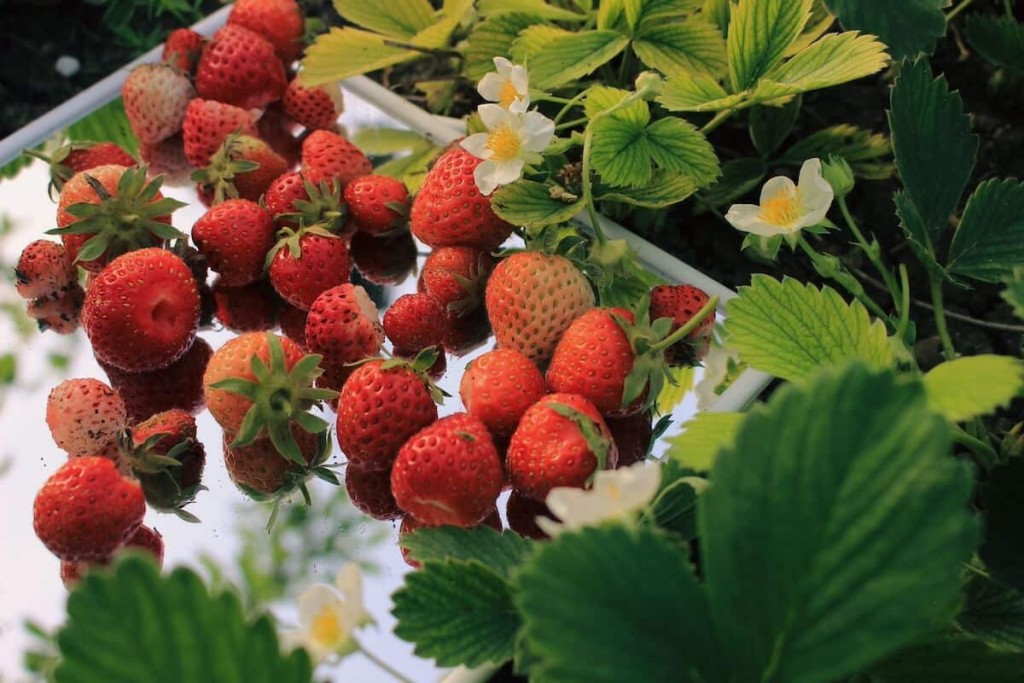
My favorite fruit is the strawberry. Sweet, juicy, and incredibly versatile, it finds its way into everything—from salads and cakes to a bowl of breakfast cereal. Every bite feels like an indulgence, even though, at the end of the day, it’s just a piece of fruit. In fact, it’s one of the most honest fruits you’ll ever eat, as you’re about to discover.

But here’s the thing: not all strawberries are created equal. And I’m not talking about different varieties. I’m talking about the difference between that big, bright-red strawberry you pick in June or July from your own garden—or from a local berry farm—and the pale, rather bland one you find at the grocery store in the middle of winter. No, you’re not imagining the difference. You’ve probably heard the usual explanation: they come from far away. But that’s only part of the story. It’s not because a strawberry was grown in another country that it tastes worse. A strawberry picked fully ripe in Mexico can be every bit as delicious as one picked fully ripe in Canada. The real culprit is… a fungus!
Why strawberries can’t fake ripeness
There are two main types of fruits when it comes to ripening. First, there are climacteric fruits, such as bananas, tomatoes, and apples. Even if they’re picked a little early, they continue to ripen after harvest. That’s why you can buy green bananas and watch them turn yellow on your kitchen counter (while tossing last week’s black ones into the freezer for banana bread).
Strawberries belong to the other group: non-climacteric fruits. And that makes all the difference.
A green banana comes prepared. While it’s still on the plant, it stores starch as an energy reserve. After it’s picked, a burst of respiration triggers enzymes that gradually convert that starch into sugar. That’s why a green banana becomes sweeter as it ripens on your counter.
Strawberries don’t have that luxury. They don’t store large starch reserves, nor do they have the same postharvest ripening mechanism. Whatever sugar they accumulate while they’re attached to the plant is all they’ll ever have. They may soften and change color slightly after picking, but they won’t become any sweeter. A strawberry picked white will stay white, bland, and disappointing forever. (Well… until it gets moldy, anyway!)
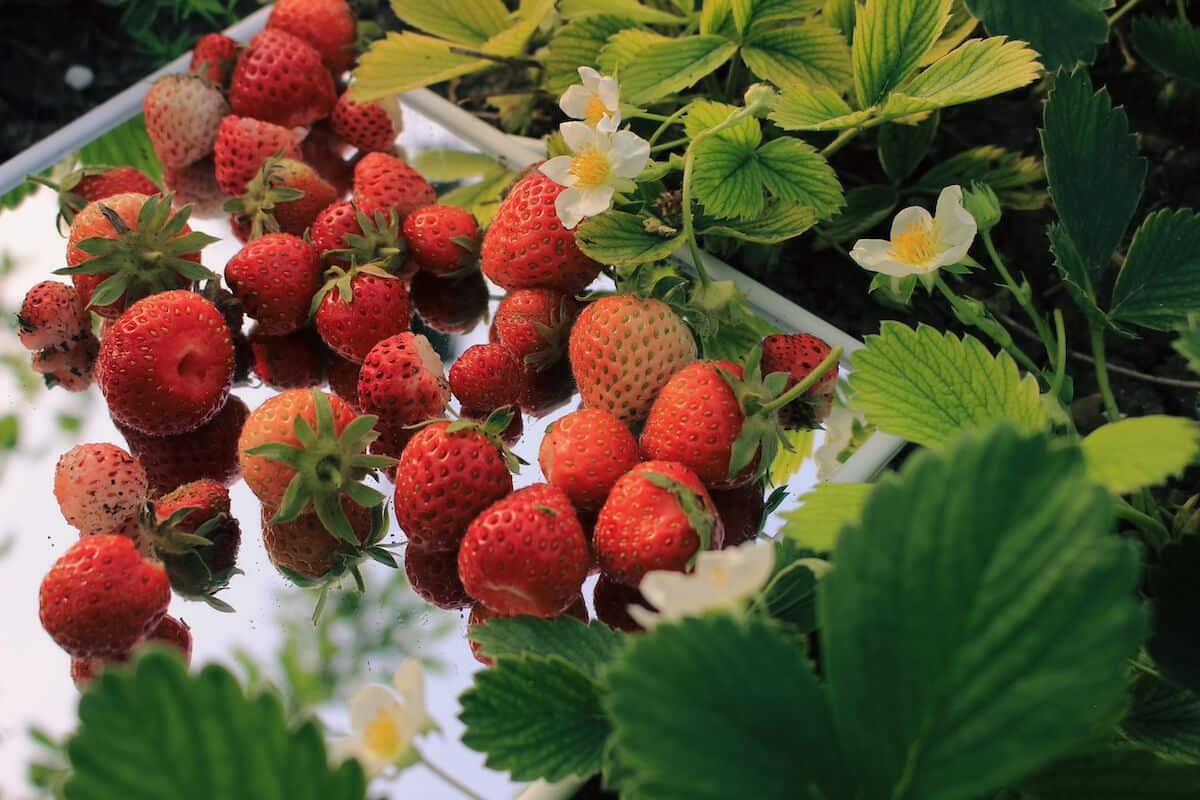
That’s why a strawberry that ripens on the plant, nourished until the very last moment, is in a completely different league from one that has to travel long distances. To withstand shipping—which can take several days, or even more than a week from harvest to your plate—growers have to pick strawberries before they’re fully ripe. As a result, the fruit is harvested a little too early, and it will never make up for what it missed, no matter how long it sits on your kitchen counter.
Ripe strawberries: you’re not the only one who loves them!
So why not just let strawberries ripen on the plant and ship them afterward? Unfortunately, strawberries are one of those fruits that simply don’t stay fresh for very long. And that’s the real reason they’re picked early: mold.
You know that fuzzy gray mold that sometimes appears on strawberries forgotten in the back of the refrigerator? That’s Botrytis cinerea, also known as gray mold. But it doesn’t suddenly appear once the fruit starts to spoil. More often than not, it was already there, hiding in the strawberry since it was a flower.
The fungus infects strawberry blossoms during bloom, then quietly establishes itself in the developing fruit as a latent infection. It simply waits for the right moment. As the fruit ripens and conditions become favorable—warm temperatures and moisture—it wakes up and begins to grow, often while the strawberry is still in the field. That’s why growers have to harvest strawberries as soon as they’re ripe. They simply can’t afford to leave them on the plant for another week.
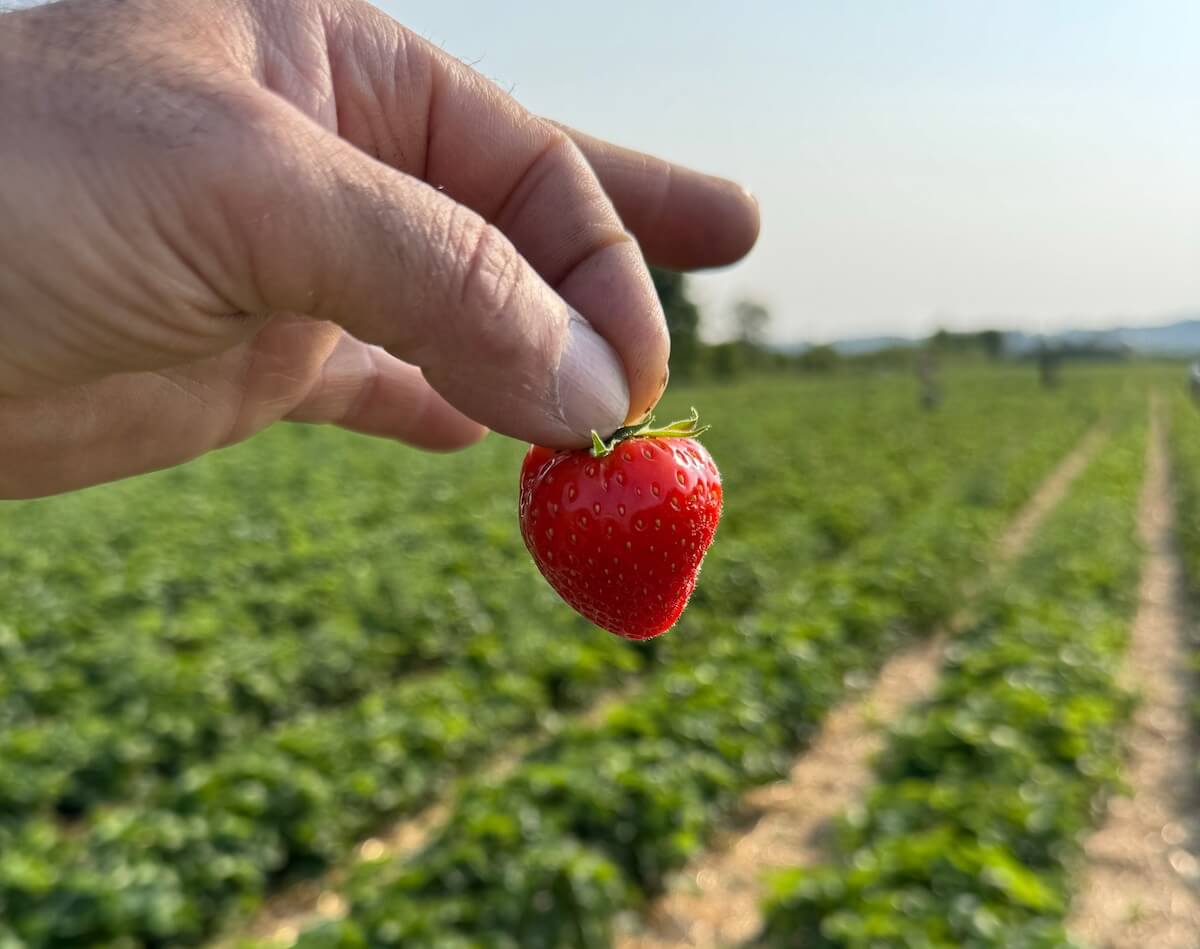
How the fungus grows
That’s partly why the clock starts ticking so quickly at room temperature. Left on the kitchen counter, a strawberry will usually stay in good condition for only a day or two before it starts to soften or show signs of mold. In the refrigerator, however, the fungus slows down considerably. Unwashed strawberries will typically keep for 3 to 7 days, sometimes a little longer if the container is well ventilated and you promptly remove any berries that begin to spoil (because the fungal threads, or mycelium, can spread from one berry to another through direct contact).
Now imagine the dilemma faced by growers shipping strawberries over long distances. They can leave the fruit on the plant for another three days, allowing it to develop more sugar—but risk losing it to gray mold before it even reaches the packing shed. Or they can harvest it a little earlier, making sure it survives the journey. It’s an easy choice. That trade-off, more than the distance itself, is what explains why strawberries that have traveled far often taste less flavorful.
A plant that clones itself
Now that we’ve settled the score with the traveling strawberry, let’s talk about the plant itself. The cultivated strawberry (Fragaria × ananassa) has a trick up its sleeve that I find absolutely delightful: it reproduces by cloning itself.
Strawberry plants produce long, creeping stems called runners (technically known as stolons) that spread across the soil. At regular intervals, each runner produces a small rosette of leaves. When that rosette touches the ground, it takes root and—just like that—a brand-new plant is born, genetically identical to its parent. No mixing of genes, no surprises: it’s a true clone, much like taking a cutting, except the plant does all the work for you.

That’s exactly why commercial strawberry growers are so particular about where their plants come from. Propagation by runners ensures that every new plant has the same desirable traits as the original—flavor, harvest time, fruit size and shape, and more. You don’t get that kind of consistency when you grow strawberries from seed.
But there’s an important catch. This propagation doesn’t happen in fruit-producing fields. It takes place in specialized nurseries using certified disease-free, and often virus-free, stock. That’s because clonal propagation faithfully passes along diseases just as easily as it preserves desirable traits.
Removing the runners
But in a fruit-producing strawberry patch (or your own garden!), it’s a different story. Runners need to be removed because they’re diverting valuable energy away from fruit production and into making new plants. You can’t have your strawberries and multiply them too!
Commercial growers remove runners throughout the growing season. That’s also one reason many strawberry fields are covered with black plastic mulch. Besides warming the soil more quickly and helping retain moisture, it prevents runners from reaching bare soil where they can take root. The result? The plant puts all its energy into what we actually want: big, sweet strawberries. The army of baby plants can wait!
My strawberry plants, my army
I bought three strawberry plants a few years ago, and I’ve basically done the exact opposite of what commercial growers do. Instead of removing the runners, I encourage them. Thanks to this remarkable cloning strategy, my strawberry patch has grown far larger than when I started. Sure, I only harvest a handful of berries each year, but before long they’ll have completely taken over one of my raised beds. In a few years, the red gold will be mine!
Speaking of less-domesticated strawberries, those tiny wild strawberries that pop up in lawns every June aren’t the same as the ones we grow in our gardens. The large garden strawberry is actually a hybrid created in the 18th century by crossing two North American species. Our little wild strawberries are most commonly the Virginia strawberry (Fragaria virginiana), a species native to much of eastern North America—and, in a charming twist, one of the two parents that gave us today’s large garden strawberries.
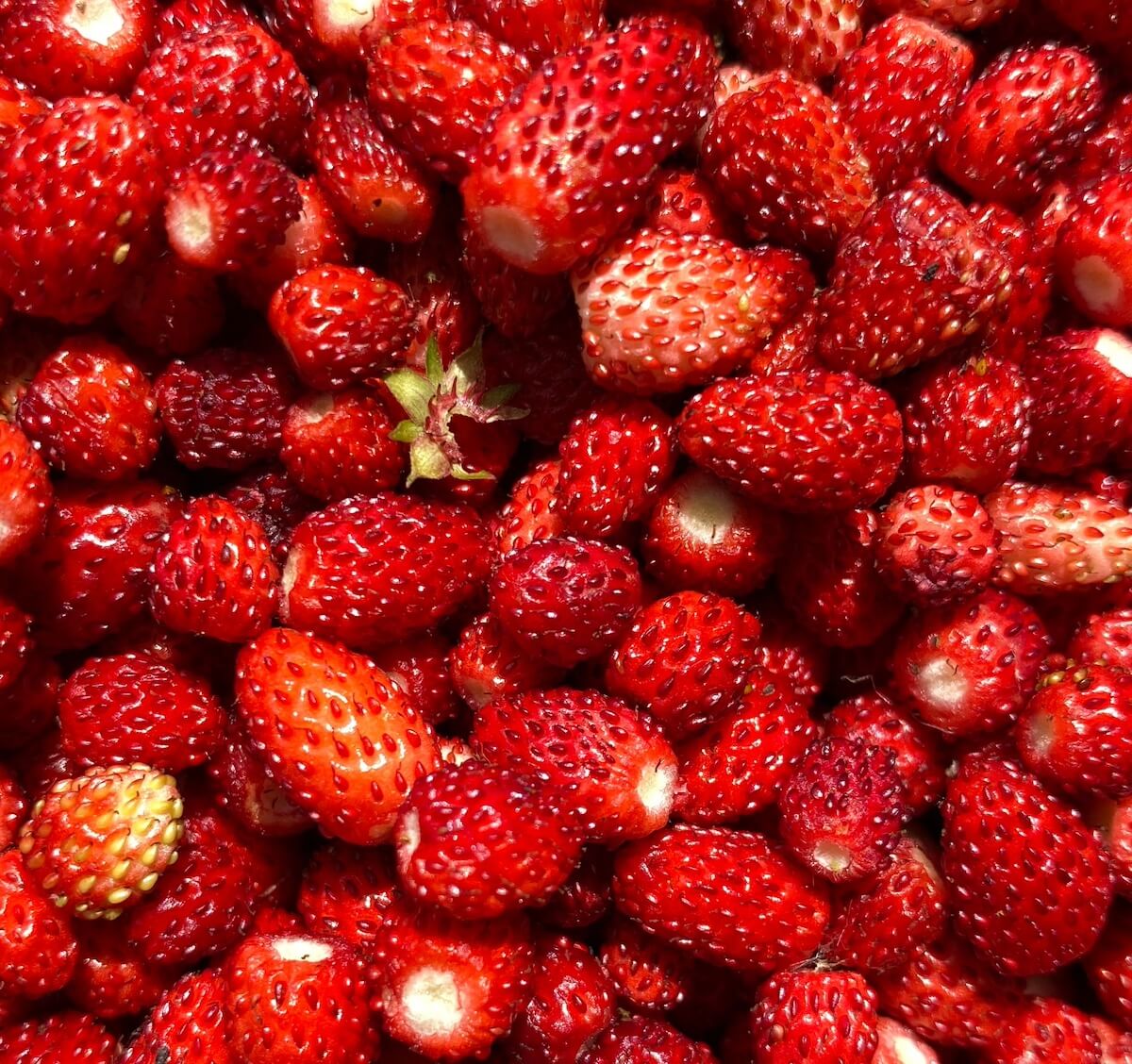
They’re just as edible, and this year they were absolutely spectacular in terms of size—probably thanks to all the rain we’ve had. The only thing I noticed was that they didn’t seem quite as sweet as usual. I don’t have any scientific evidence to back this up, just a curious gardener’s hypothesis: could all that extra water have diluted the sugars in the fruit? If anyone has solid research on the subject, this biologist would love to hear about it!
So the next time a basket of strawberries catches your eye and you hesitate at the price tag, remember that you’re buying a fruit that refuses to fake it… and one that was probably still ripening on the plant that very morning.