
I must admit I’ve never been a big fan of Japanese beetle traps. I realise that in the middle of July, when they’re at their most active and voracious, there aren’t a whole lot of options: either you pick them up by hand (am I really going to spend hours catching bugs?), or you set up pheromone traps.
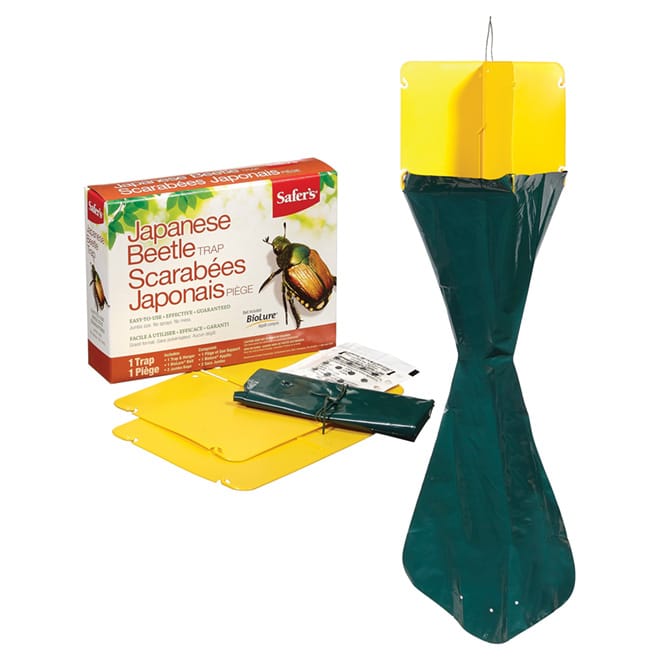
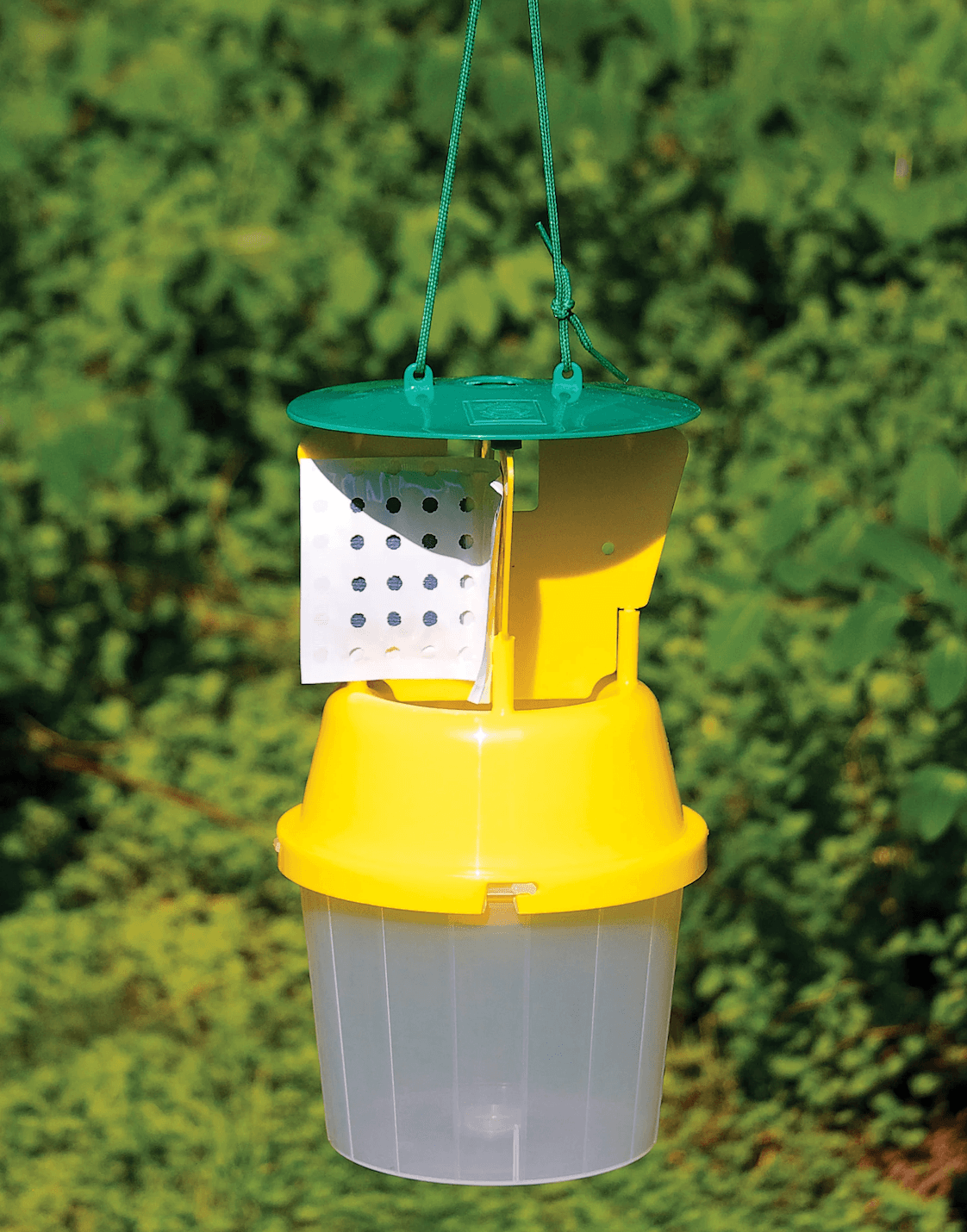
Japanese beetle traps work by combining two attractants. The first is a sex pheromone that mimics the one released by females and attracts males. The second is a floral lure that reproduces the scents emitted by certain host plants, attracting both male and female beetles in search of food.
Once captured, the beetles can be killed by emptying the trap into a bucket of soapy water. The soap reduces the water’s surface tension, preventing the beetles from floating and causing them to sink quickly. Sounds simple, doesn’t it? So why doesn’t everyone have a trap in their yard? Surely we’d eventually wipe out all the Japanese beetles in North America!
If it were that simple, it would have happened already.
The problem
Pheromone traps have two major drawbacks.
The first is that they attract beetles from the surrounding area to the spot where the trap is set up… and so straight into your garden, close to all the plants they love to devour. In some situations, this can actually make the problem worse rather than solve it.
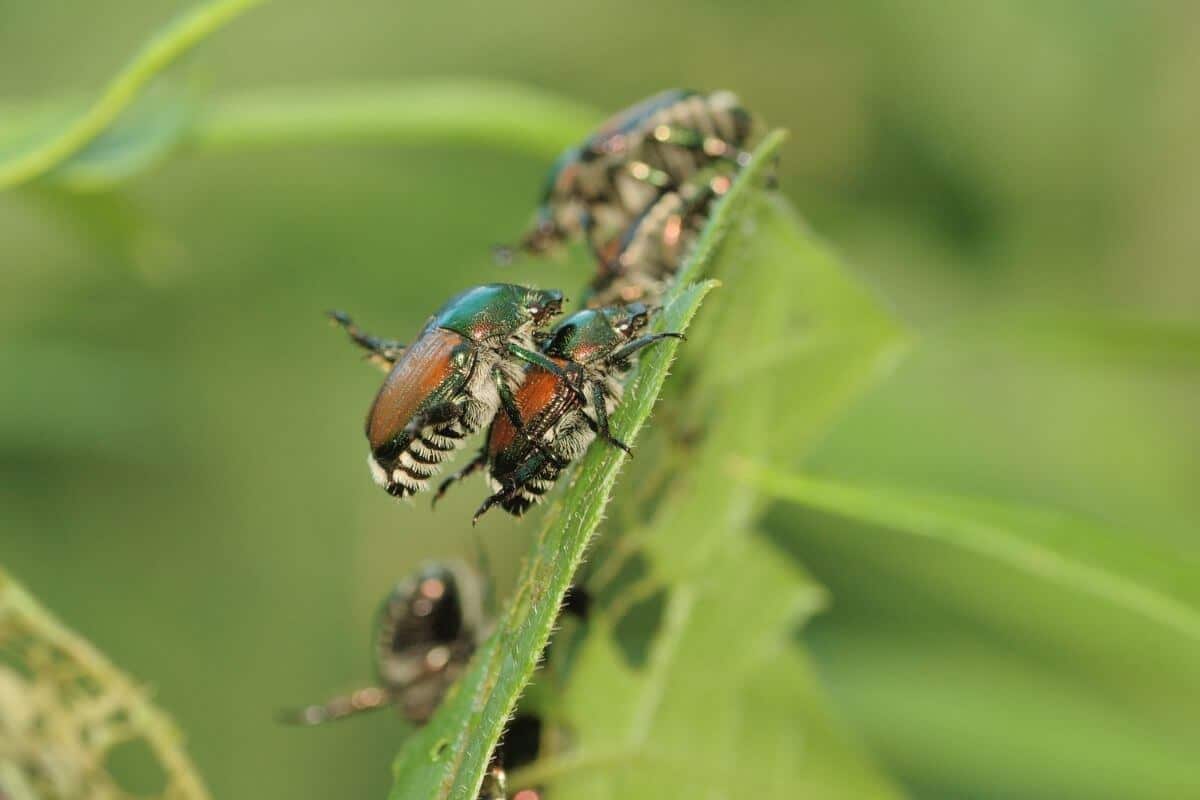
The second point is that the traps can fill up astonishingly quickly. During a severe infestation, they sometimes need to be emptied every day, or even several times a day. And what happens when the trap is full? The beetles attracted by the pheromones do not simply vanish into thin air: they simply turn their attention to the most appetising plants in the vicinity. This phenomenon, whereby insects attracted to the trap end up damaging neighbouring plants, is known as the spillover effect.
As if that weren’t enough, researchers have just highlighted a third problem with these traps.
Impact on biodiversity
A recent study conducted by Simone Aubé, under the supervision of Jacques Brodeur, a professor in the Department of Biological Sciences at the University of Montreal, measured the number of pollinators and necrophagous beetles (insects that feed on animal carcasses and play a vital role in their decomposition) accidentally caught in Japanese beetle traps.
Conducted on 20 farms in southern Quebec, the study analysed 360 trap samples collected between June and September 2025. The researchers then analysed these catches in relation to the time of year, the abundance of Japanese beetles, the composition of the surrounding landscape and weather conditions.
The results show that pollinators are mainly caught accidentally at the start of the season, particularly on farms surrounded by natural habitats, when temperatures are high and humidity is low.
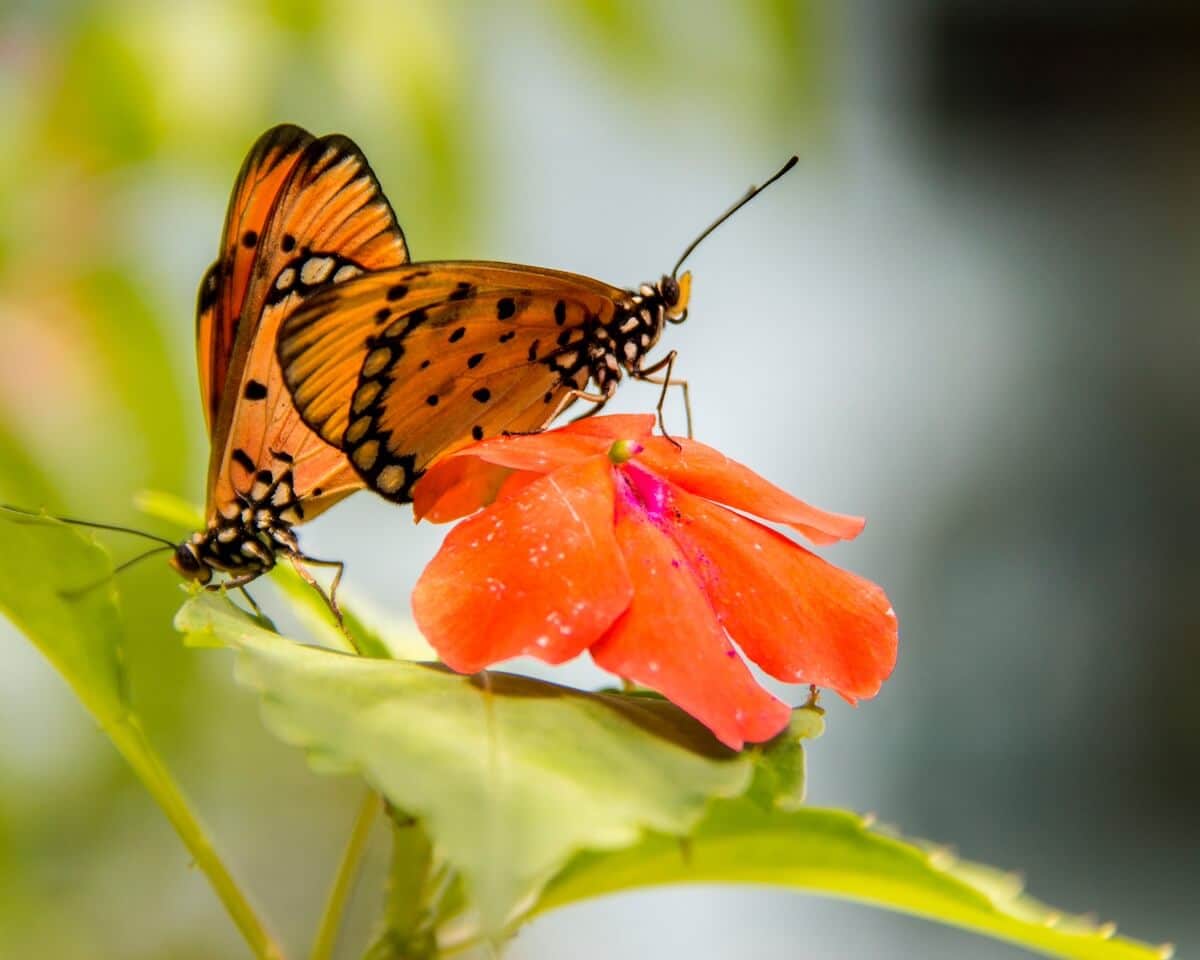
Carrion beetles, on the other hand, were captured mainly in late August, when conditions were cooler and more humid.
The researchers suggest that pollinators are attracted by the floral compounds used as lures in the traps. They also hypothesize that as dead Japanese beetles accumulate, they gradually release volatile compounds associated with decomposition, which may attract carrion beetles.
As early as the 1970s, several studies had already shown that some Japanese beetle lures also attracted bees and other beneficial insects. The main contribution of this new study is that it provides a modern quantification of the phenomenon under Québec agricultural conditions.
Should we stop using beetle traps?
Researchers do not recommend completely abandoning the use of Japanese beetle traps in agricultural settings, but rather using them more judiciously.
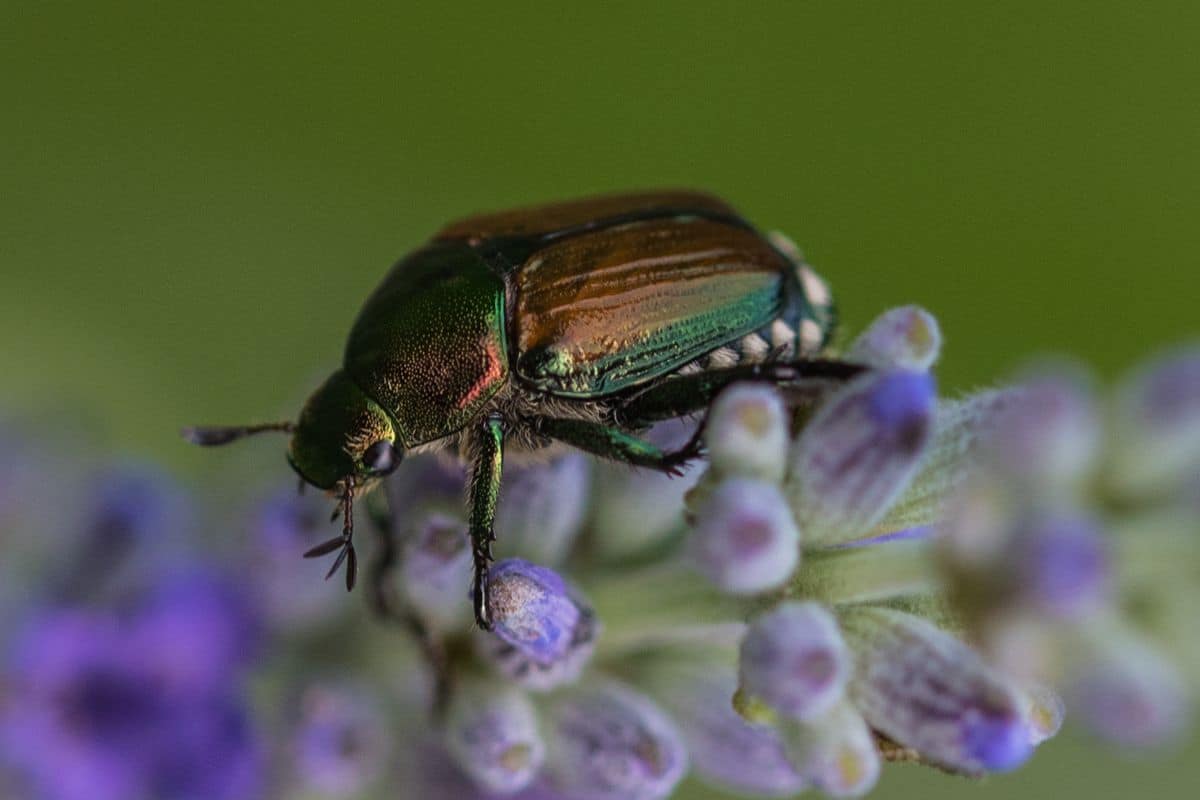
In particular, they suggest installing them later in the season, when populations of Japanese beetles are more abundant. As pollinators are particularly active at the start of the season, this measure would help to reduce incidental catches. Japanese beetles are still few in number; floral attractants therefore become relatively more attractive to pollinators.
The authors also recommend avoiding yellow or white traps, which appear to attract pollinators more strongly. Finally, they suggest prioritising attractants that do not contain geraniol, a floral compound that is particularly attractive to many beneficial insects.
The researchers are keen, however, to qualify their findings. In their view, Japanese beetle traps pose a limited but very real threat to certain beneficial insects. Their aim is therefore not to recommend discontinuing the use of these traps, but rather to improve their use in order to minimise their side effects.
And what about our gardens?
That’s all well and good in agricultural settings, but what about our gardens? According to Jacques Brodeur, “The traps work very well in agricultural settings when installed in large numbers, on the edges of crops and facing the prevailing winds. But they are not generally recommended for private gardens.”
When we take into account not only the accidental capture of pollinators but also the spillover effect, it does indeed become difficult to justify their use in most domestic gardens.
In my opinion, Japanese beetle traps should be regarded as a temporary solution. If your garden is suffering from a particularly severe infestation and you are growing several highly susceptible plants, a trap may help to limit the damage for a single growing season. However, this is not a long-term solution. The beetles will return year after year. The best strategy is to gradually replace affected plants with species that the beetles avoid.
Traps are not the only way to control Japanese beetle populations. Entomopathogenic nematodes, applied to the soil to target the larvae, can also form part of an integrated pest management strategy.
If you do decide to use a trap, set it up only when the beetles are active – usually from late June to early July, depending on your region – and remove it as soon as their active period is over, around August. Place it as far away as possible from susceptible plants, ideally about fifteen metres away. Choose a model fitted with a large collection bag to minimise the risk of saturation; avoid yellow or white traps as well as attractants containing geraniol; and empty the bag regularly. This will help prevent the trap from overflowing whilst reducing the build-up of dead beetles, which may attract scavenging beetles.
The large collection bag
Researchers at the University of Montreal have developed a prototype trap fitted with a larger-capacity reservoir. During their trials, this model captured around 2.4 times as many Japanese beetles as a commercial trap. The authors believe that this improvement is largely due to the fact that the captured beetles continue to feed on the foliage placed in the reservoir.
Although this prototype is not available on the market, it highlights a very real problem: trap bags can sometimes fill up very quickly. When a trap is full, the risk of overflow increases.
If you use a trap, you should therefore opt for a model fitted with a large collection bag or, where available, high-capacity replacement bags. Although no study has yet demonstrated this, they should make it possible to space out emptying intervals and limit the periods during which the trap is saturated.
Beetles already doomed
Not all Japanese beetles are destined to continue wreaking havoc. Some are already parasitised by Istocheta aldrichi, a fly introduced into North America to control this species. The female lays a small, white, clearly visible egg on the beetle’s thorax. After hatching, the larva burrows into its host and gradually feeds on it.
At the end of summer, the larva leaves the beetle to burrow into the soil, where it spends the winter as a pupa. It will emerge the following spring as a new fly, ready to parasitise other Japanese beetles. The beetle, meanwhile, dies before the end of the cycle.
If you spot a Japanese beetle carrying this small white egg, bear in mind that it is probably already doomed. By allowing it to complete its life cycle, you are also enabling Istocheta aldrichi to complete its own and to contribute naturally to the control of the Japanese beetle.
Three strikes… and you’re out!
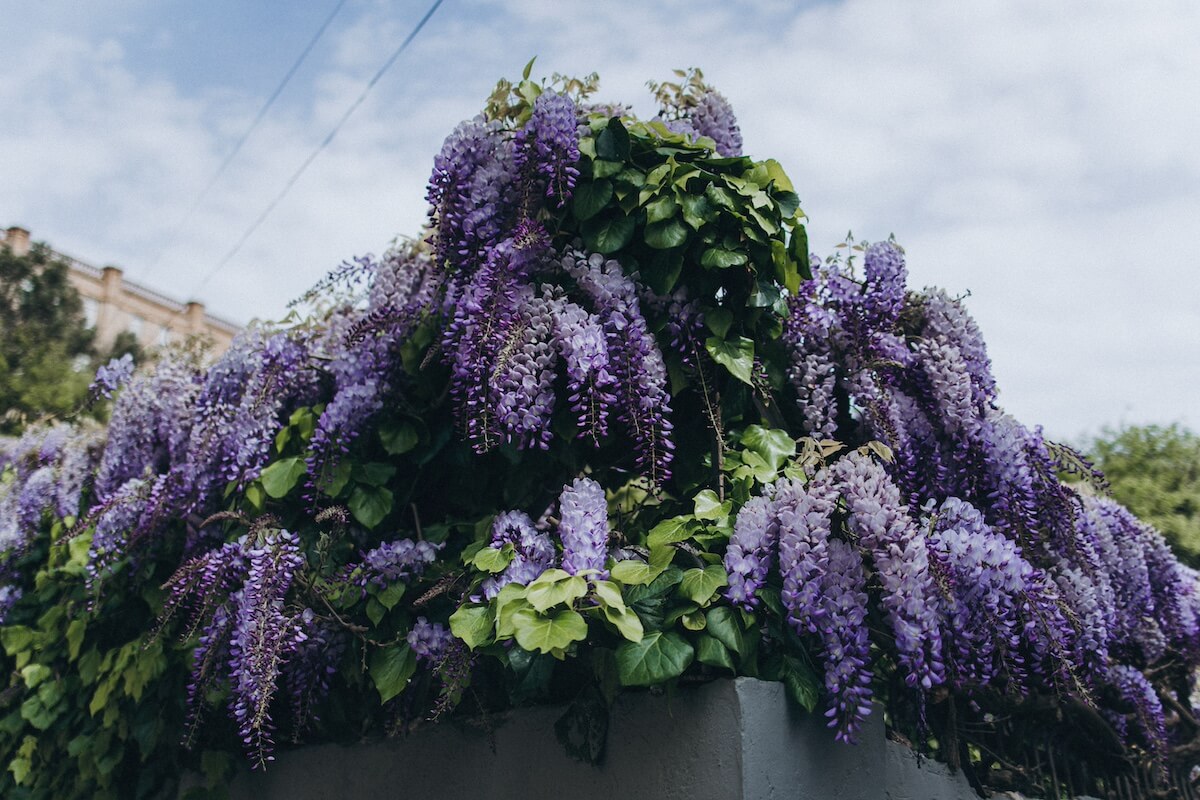
All things considered, the best way to keep Japanese beetles at bay is often simply to have a garden filled with plants that they simply have no desire to eat.
It reminds me of my father’s ‘three strikes rule’, Larry Hodgson. It applies just as well to the Japanese beetle as it does to many other pests… and even to several diseases.
He used to say: ‘If, after three attempts at eradication, the problem is still there, I take the view that it’s not the pest that’s at fault, but the plant. A plant that requires so much care doesn’t deserve a place in my gardens. That’s it. I pull it out.”
In other words, rather than battling the same problem year after year, it’s better to gradually replace the most vulnerable plants with species or cultivars that the Japanese beetle naturally ignores. Ultimately, this is often the most sustainable solution… and the laziest one.
To find out more about the various methods of controlling the Japanese beetle, see Larry Hodgson’s article ‘Controlling Those #$@&%* Japanese Beetles’.
I had no idea Japanese beetle traps could attract more beetles and accidentally harm beneficial pollinators. You should play Geometry Dash Meltdown because mastering each level can be both frustrating and incredibly satisfying.