
Since the start of July, I’ve been talking to you about harvesting your vegetables at the right time, and let’s just say that so far, I’ve mainly given you reasons to be a bit on edge. Zucchini that you leave for two days too long and which turn into seed-filled clubs, strawberries with such a short window of perfection that you’d think they were doing it on purpose…
So, for this third instalment of my little series on the ripening of fruit in the vegetable garden, I’ve got some good news: I’m going to tell you about a vegetable (fruit!) that’s very flexible when it comes to its harvest date. Or at least, when it comes to its stage of ripeness. It’s a fair bit more laid-back than its mates, and I’d even go so far as to say that with this one, harvesting a little early can actually do you a favour. I give you… the tomato!
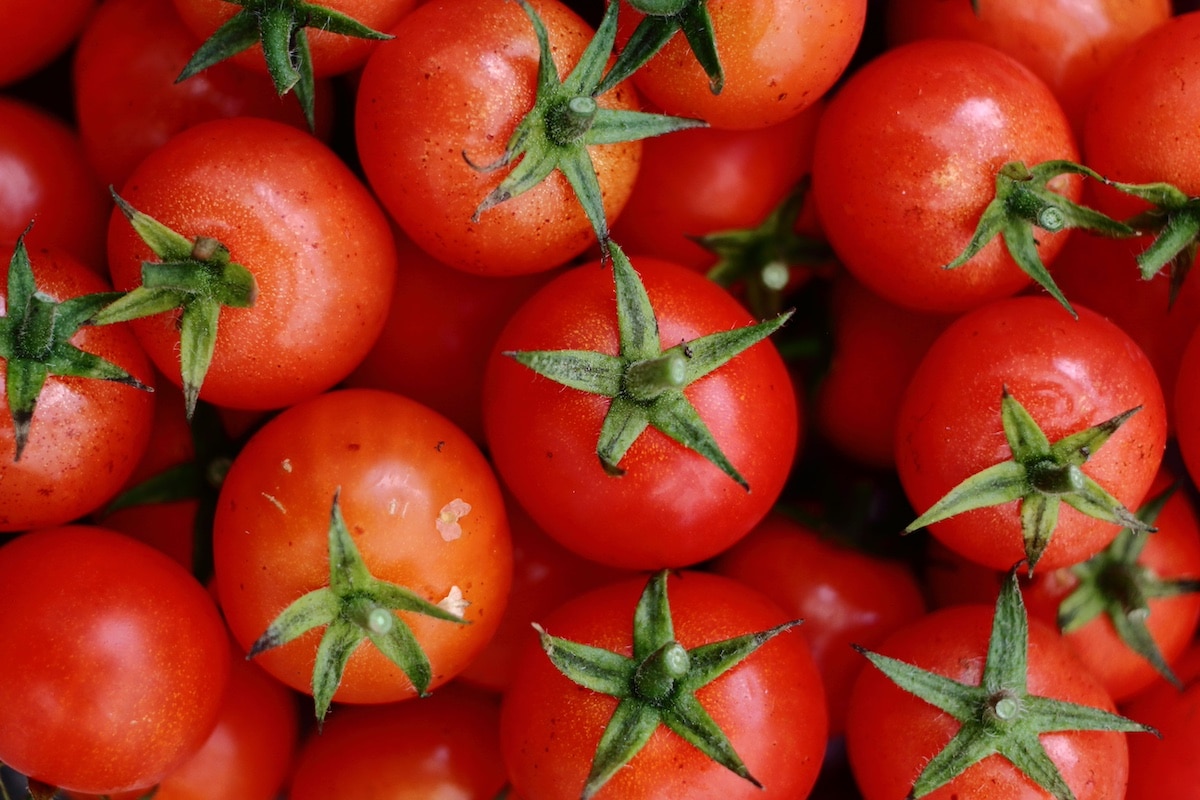
After the amazing potato, the astonishing tomato!
Do you remember last week, when I explained that strawberries are non-climacteric fruits? It’s a fancy word for saying that once they’ve been picked, that’s it – they don’t ripen any further. Hence the need to pick them at exactly the right moment.
Well, tomatoes are the complete opposite. They’re climacteric fruits, meaning they can continue to ripen after being picked from the plant. Apples, bananas, pears, kiwis, avocados, mangoes: this whole lovely bunch works the same way! You probably buy green bananas that turn yellow on your kitchen worktop, or slightly firm pears that you leave out of the fridge for a few days… That’s exactly it: tomatoes continue to ripen even after they’ve been picked!
But be careful – there’s a ‘but’. And this is where it gets important!
The famous breaker stage
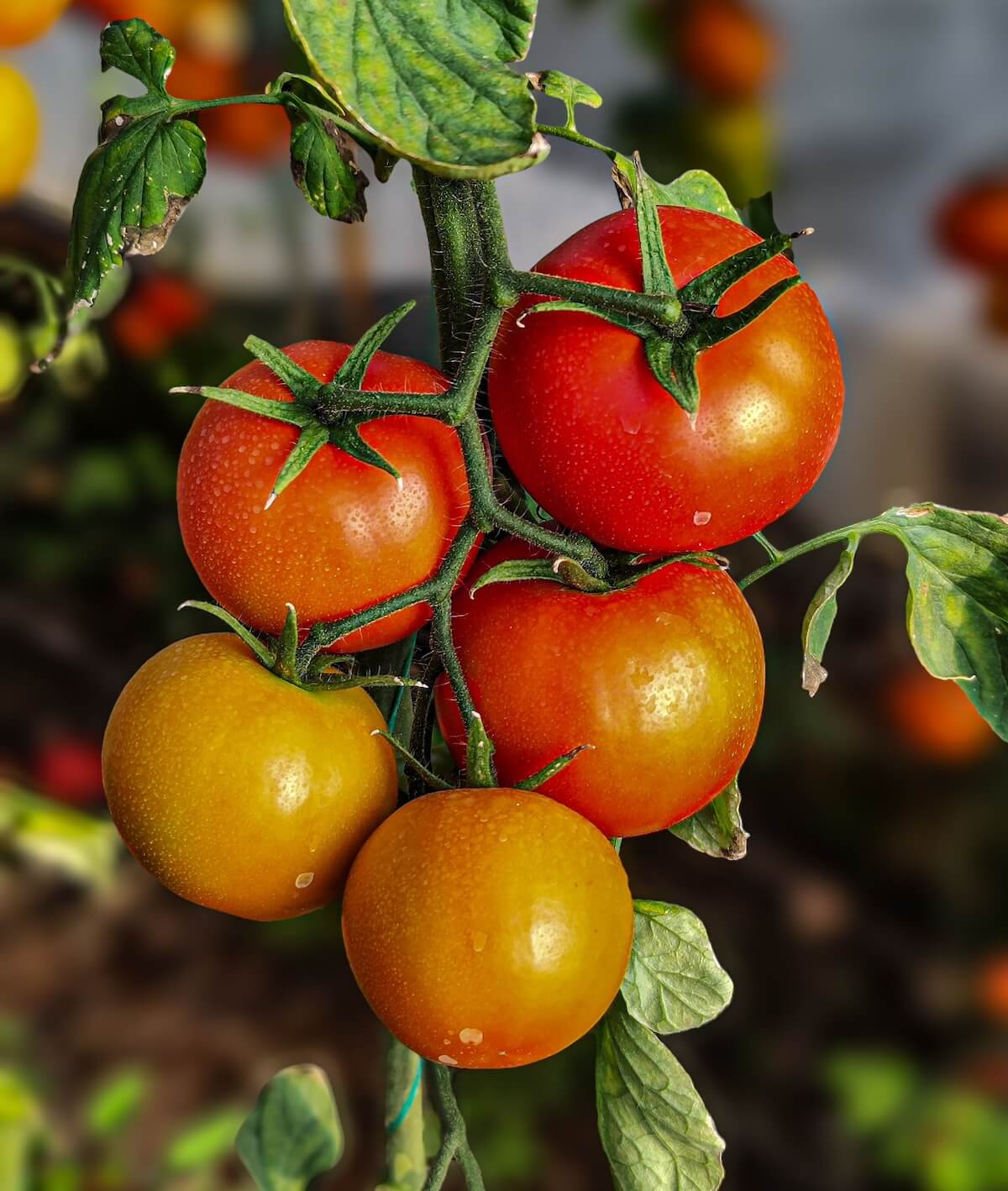
A tomato can’t ripen off the vine at just any point in its life. There is a tipping point—a specific stage at which it has accumulated everything it needs to finish ripening on its own. This is known as the breaker stage: the moment when the fruit first begins to change color, with just a small hint of yellow, orange, or pink appearing on an otherwise green tomato. From that point on, you can harvest it without worry—it will finish ripening right on your kitchen counter.
And there’s no need for old wives’ tricks! Putting tomatoes in the sun, wrapping them in newspaper, and all that… Your tomatoes are perfectly capable of ripening on their own, just like bananas.
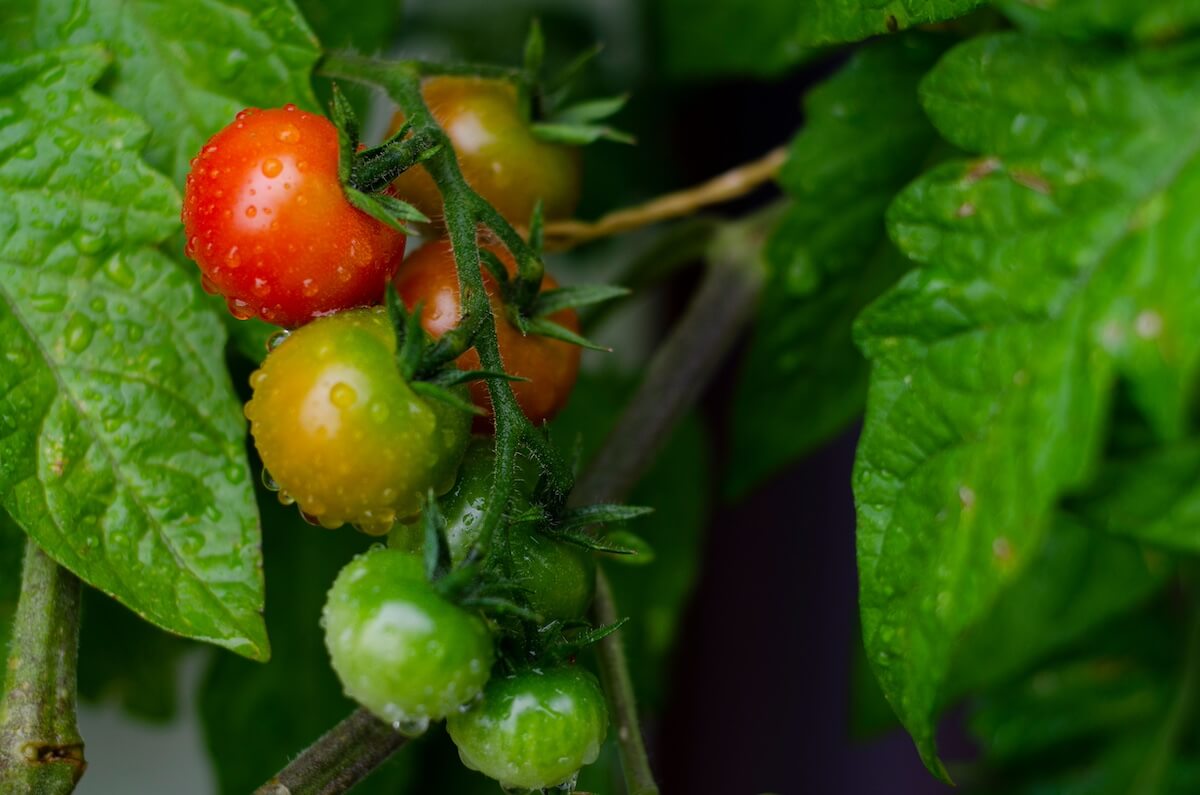
Before that little splash of colour?
Well, that depends on how far back we’re talking—and this is where it’s important to be precise.
A tomato that has reached its full size but is still green can also ripen off the vine, provided it has turned a pale, light green rather than remaining a deep, dark green. (That shift from dark green to light green is actually a sign that it’s approaching the breaker stage.) It will ripen, but the flavor won’t be quite as good as if you had waited until the breaker stage.
On the other hand, a tomato that is still small, immature, and a rich dark green—one that hasn’t even finished growing yet—is a different story. Leave it on the vine. If picked at that stage, it won’t ripen properly; it will simply rot on your counter. It just hasn’t yet developed the ability to ripen on its own.
In other words, the closer a tomato is to the breaker stage when you harvest it, the better the final flavor will be. This situation most often comes up in fall, when you’re picking the last tomatoes of the season and some are still green. In the middle of summer, though, the breaker stage remains the safest bet for the best-tasting tomatoes.
How does it work?
What happens inside a tomato at the breaker stage is nothing short of a biochemical chain reaction. The fruit begins producing its own ethylene, the plant hormone that acts as the master conductor of the ripening process. Once a tomato starts making its own ethylene, it can complete the entire transformation on its own: chlorophyll breaks down (the green color fades), lycopene accumulates (the red color develops), the tissues soften, and the sugars and characteristic tomato flavors continue to develop.
At that point, the tomato no longer depends on the plant to ripen. It has become self-sufficient—but only after the vine has supplied everything it needs. And that happens at the famous breaker stage.
What does a tomato that’s been picked a bit early taste like?
That’s THE question. Because, as gardeners, we all harbour this deep-seated conviction that a tomato ripened on the vine, bursting with sunshine, is bound to be better than anything else. It’s romantic; it seems logical on the face of it… but is it true?
Researchers asked themselves exactly the same question, and carried out blind taste tests. They asked people to taste tomatoes left to ripen fully on the vine alongside tomatoes harvested at the ‘turning’ stage (or just after) and ripened indoors. And the result surprised a great many people: in the majority of cases, the tasting panels were unable to reliably distinguish between the two! A tomato picked as soon as it starts to change colour, then left to ripen on the kitchen worktop, develops virtually the same sugar content and the same flavours as its counterpart left on the vine. (Of course, this is just one study; depending on the variety, there could be differences, but it’s still a truly astonishing fact!)

And what about shop-bought tomatoes, in all this?
Everyone knows that homegrown tomatoes taste better!
And they’re right… but not for the reason most people think. The real difference in flavor between a garden tomato and a grocery store tomato isn’t whether it ripened on the vine or off the vine (as is the case with strawberries). The biggest difference is the variety.
In our gardens, we choose tomato varieties primarily for their flavor. Commercial growers, on the other hand, have other perfectly legitimate priorities. They often need varieties that produce high yields, resist diseases, withstand shipping and handling, look uniform on the shelf, and store well.
Flavor, in that equation, tends to take a back seat—sometimes a very distant one. The result is tomatoes with a more generic flavor and less complexity.
Growing and ripening conditions also matter, especially temperature. A tomato that finishes ripening at around 18–20°C (64–68°F) develops better flavor than one ripened in extreme heat or—worse yet—in the refrigerator. (Never refrigerate an unripe tomato. Cold temperatures stop the ripening process in its tracks.)
An economic reality
It’s not a conspiracy—it’s simply an economic reality. A tomato that has to travel 2,000 km, be handled by dozens of people, and still look perfect after three weeks on a store shelf cannot be bred with the same priorities as Grandma’s heirloom tomato picked fresh from the garden the day it’s eaten. (And to all the local growers out there: you’re definitely in the “Grandma’s tomato” category, not the “2,000-km tomato” one! We know how much care—and flavor—you put into your crops.)
So where did the myth that tomatoes must be “vine-ripened” to taste their best come from? Partly from marketing. (Sorry to burst the bubble, but the “vine-ripened” tomatoes sold in grocery stores are also harvested at the breaker stage.) And partly from an influential study published in the 1970s that did find a difference in flavor. However, in that study, the “early-harvested” tomatoes were picked at the mature green stage—before the crucial tipping point. Naturally, they tasted worse because they had not yet reached the stage at which they could finish ripening properly. It’s an important distinction.
That’s where it becomes a matter for a shrewd gardener
Well, that’s all very interesting in theory. But what does it actually mean for you and your garden this summer?
Simply put, it gives you one terrific insurance policy!
You know as well as I do that an almost-ripe tomato is a magnet for trouble. Squirrels take one bite and knock three more to the ground. Tomatoes split. Slugs, stink bugs, and other pests move in. A tomato left on the vine until fully ripe is exposed to all of those risks for several extra days.
So if part of your garden is under pressure from pests or diseases—or if you don’t make it out to the garden every day—you can harvest your tomatoes as soon as they reach the breaker stage, when you first see that hint of color, and let them finish ripening indoors without sacrificing flavor.
That doesn’t mean it’s better than letting them ripen on the vine. It’s simply safer. If everything is going well in your garden, there’s no reason not to let your tomatoes finish ripening on the plant.
And what about solanine in all this?
I can hear you saying:
But Audrey, aren’t green tomatoes poisonous?
Those of you who followed my Halloween series last autumn (2025) may remember my article on tomatine (the infamous cousin of solanine that lurks in green tomatoes). A quick reminder: yes, green tomatoes do contain defence compounds, which are indeed toxic. But to make you ill, you’d have to eat a truly unreasonable amount – something like several kilos of very green tomatoes all at once.
That little tomato just starting to turn that you’re leaving to finish ripening on the worktop? No worries: the toxic molecules actually break down as the fruit ripens, transformed by the plant’s enzymes.
So no, nobody’s going to poison themselves by picking their tomatoes a bit early. I promise!
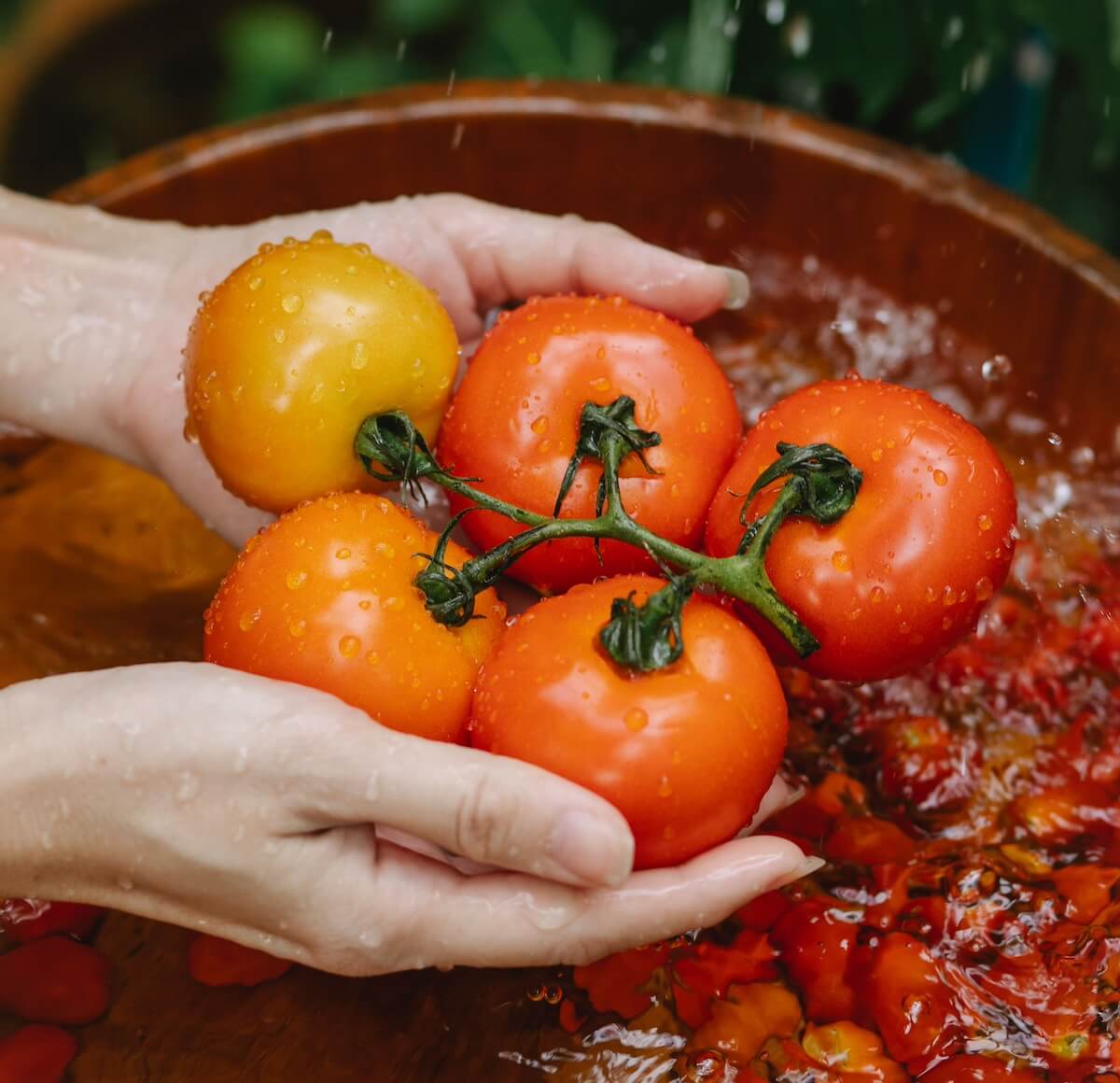
Having talked to you about the art of harvesting at just the right time, it’s nice to introduce you to a plant that allows you to take it easy. That’s the beauty of plant biology: every plant has its own strategy, its own internal clock, its own way of ripening its fruit. What’s a mistake with strawberries becomes a clever trick with tomatoes.
And what about you? Are you the sort who religiously leaves your tomatoes to ripen on the vine right up to the last minute, or more the sort who picks them as soon as they start to turn colour to keep them safe from bugs? I must admit I used to wait until there was no green left, but that’s bound to change this year to save me a few trips out to the garden! A laidback gardener’s trick, heh heh!
Tell me about your habits in the comments – I’m curious to know if you were already savvy gardeners without even realising it!
So that’s why when I pick all the mature tomatoes in the fall, they slowly ripen over the next few months .