


Recently, I told you the story of European gardens from their beginnings through the Middle Ages. Here is the next part.
The Renaissance
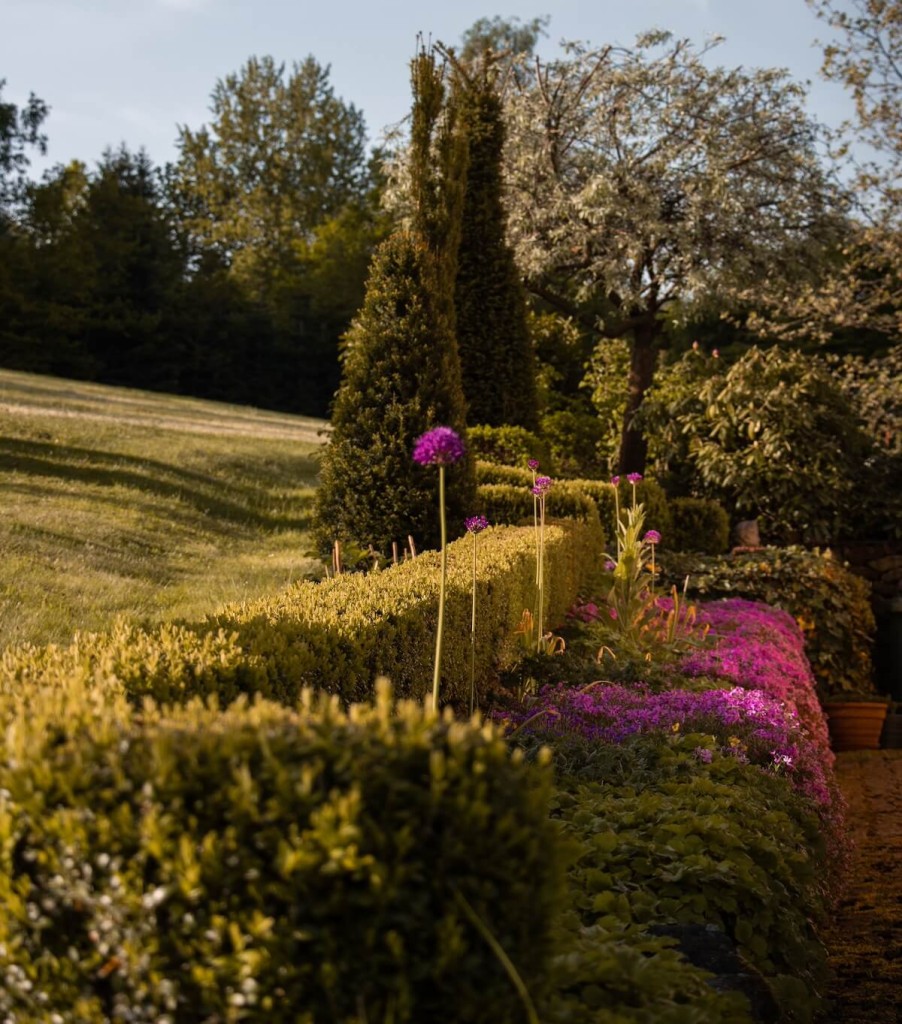
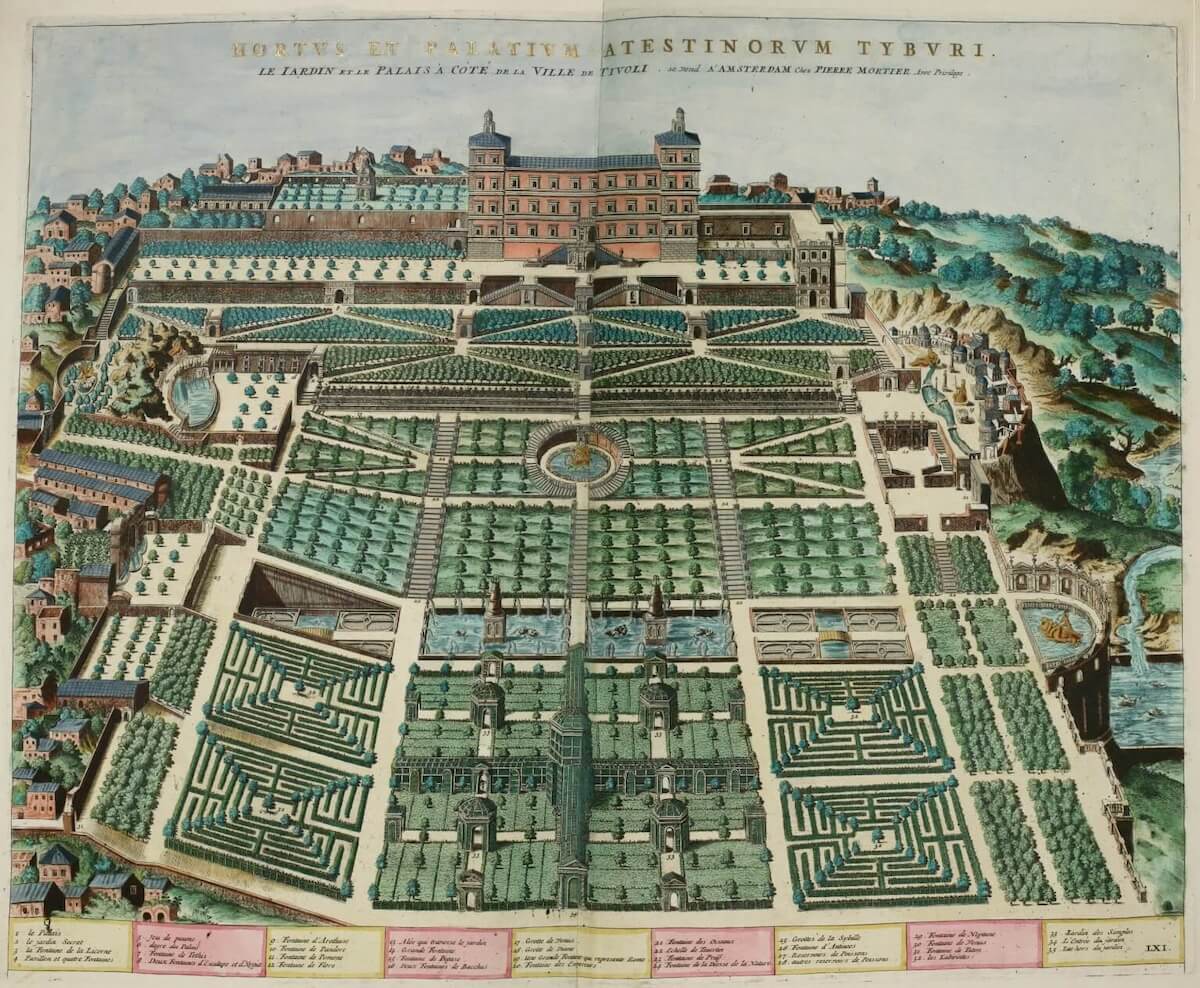
In Italy during the late 14th and 15th centuries, the rediscovery of descriptions of the villas and gardens of ancient Rome inspired the creation of a new style of garden. Often adorned with statues unearthed from the ruins of ancient palaces, the Italian-style garden typically consisted of terraces arranged in tiers along a central axis and decorated with refreshing fountains. The plantings, however, were sparse: mainly columnar cypresses and boxwoods trimmed into geometric topiaries, used to highlight the numerous statues. Beginning in the 16th century, under the influence of the Baroque style, gardens—which had initially been fairly intimate—became more expansive and, above all, much more ornate. The classic example is the Villa d’Este in Tivoli, created in 1550, with its countless sculptures and fountains.
The French landscape architect André Le Nôtre (1613–1700) drew inspiration from the Italian garden to create, between 1658 and 1661, the garden at the Château de Vaux-le-Vicomte for Nicolas Fouquet, the King of France’s Superintendent of Finances. Le Nôtre envisioned the garden on a grander scale than the Italian-style garden: his garden was designed to dominate the landscape as far as the eye could see and thus demonstrate the power of its owner. Thus was born the French formal garden, which, with its axes stretching as far as the eye can see, its groves, its embroidery parterres, its fountains, and its statues, expresses man’s dominion over the universe.
The competition
Louis XIV was so shocked to see that his superintendent had a more beautiful garden than he did that he had Fouquet imprisoned and hired Le Nôtre to work on his own project, the Palace of Versailles, which would become the epitome of this new style. Both gardens—Vaux-le-Vicomte and Versailles—still exist today.
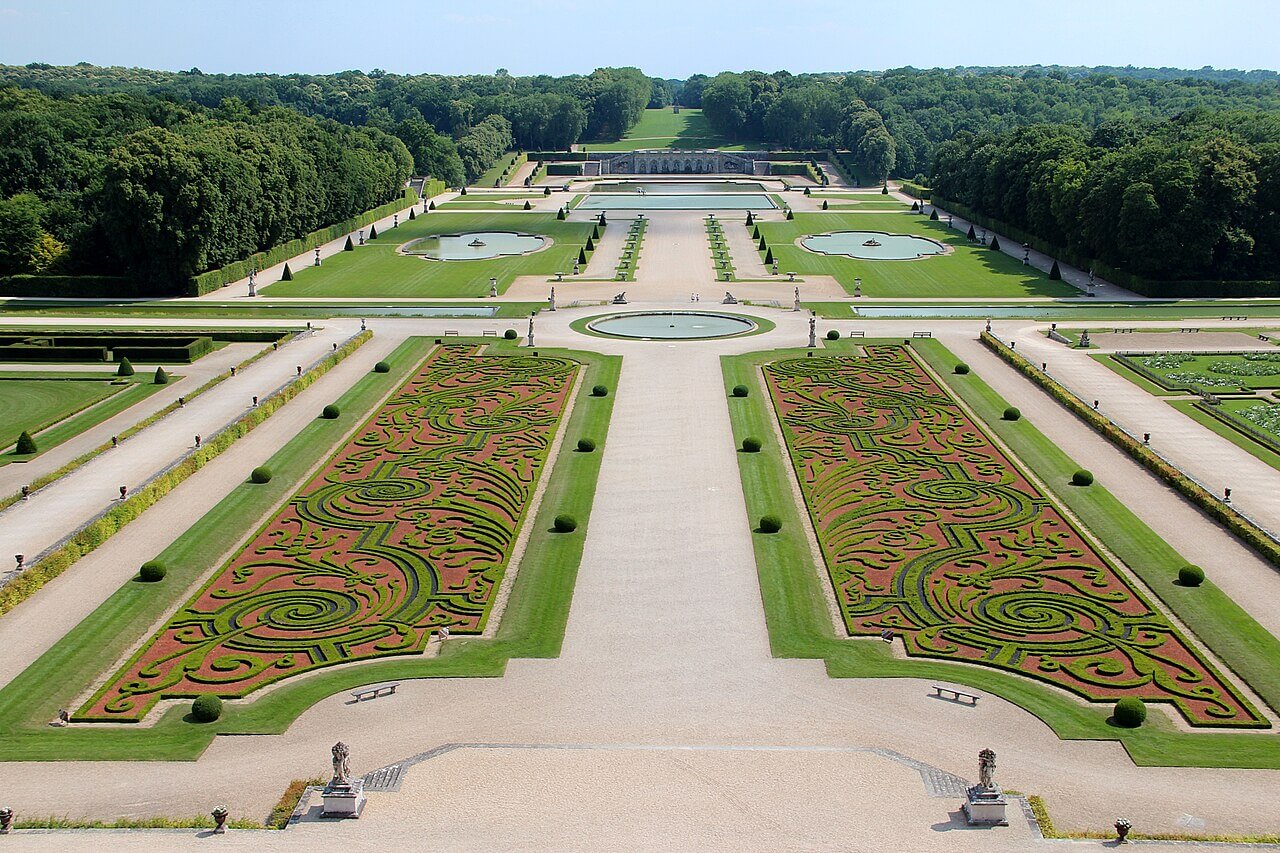
The French garden, also known as the classical garden, is generally more or less flat—unlike the Italian garden with its tiered terraces—and is characterized by a high degree of symmetry. New ideas were introduced, such as the orangery, a type of greenhouse designed to protect cold-sensitive plants, such as orange trees, during the winter. For two centuries, all the major European courts strove to create French-style gardens on their estates. Schönbrunn in Vienna, Peterhof in Saint Petersburg, and Caserta in Italy are a few examples that still exist today.
A style from England
One man would change everything: the English landscape architect Capability Brown (1716–1783). He did not invent the so-called “picturesque” garden, but he perfected it. His concept: nature enhanced. He created lush landscapes with undulating lines dominated by hills, groves, streams, and lakes that looked completely natural and bucolic. Scattered here and there were “folies”—often grandiose but strictly ornamental structures: a Greek temple, a Norman tower, a Chinese pagoda, Gothic ruins, and so on.
The Picturesque style swept across Europe in the 18th and 19th centuries. European nobles, who were less wealthy than before, could no longer afford to pay the hundreds of gardeners needed to maintain a French-style garden. By comparison, even a Picturesque-style garden required only three or four gardeners. The vast lawns, for example, were mowed at the time by sheep and cows. Most French formal gardens were replaced by this new style and remain rare, even in France.
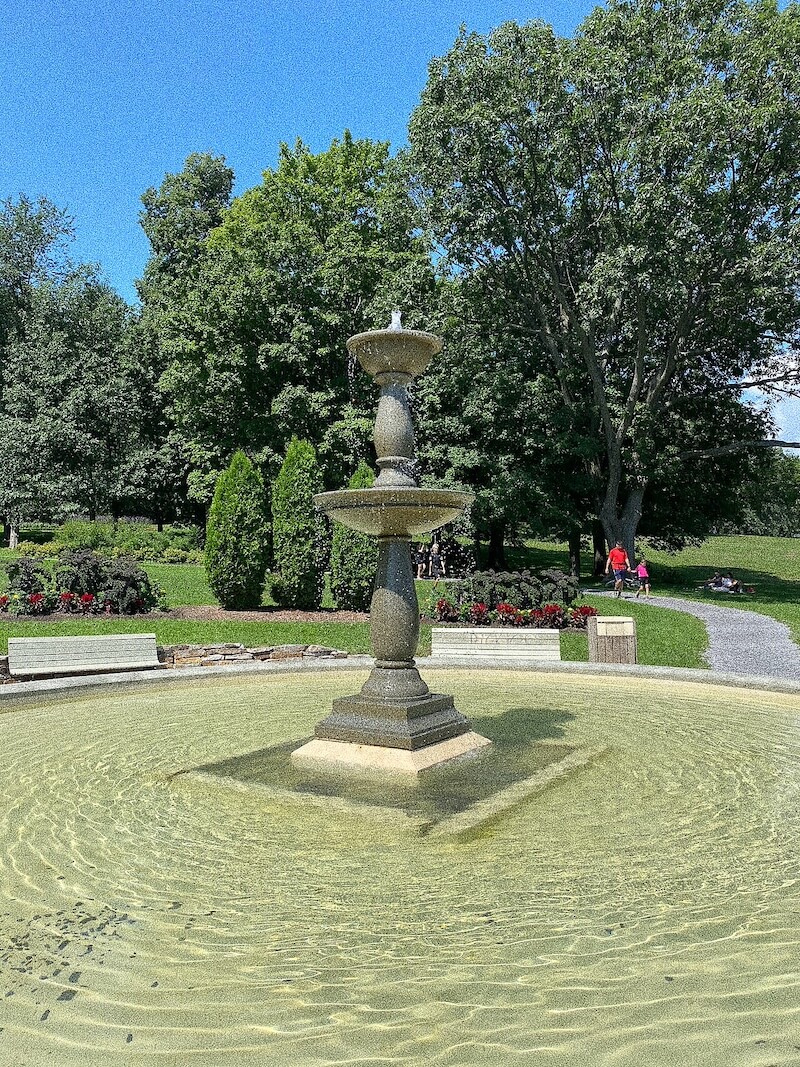
The picturesque garden is still very much alive today, even in Canada. The vast, lush parks in our cities remain, for the most part, picturesque gardens. The large estates in Sillery, such as Bois de Coulonge and Cataraqui, and even many cemeteries, largely belong to this style. And what about the Plains of Abraham? Originally designed by engineer Frederick G. Todd, then by landscape architect Louis-Anatole Prévost—who drew the current winding paths—this century-old park, with its many rolling hills, green lawns, and groves of trees, plus Martello towers that could pass for follies, is in the purest picturesque style.
Gardens on our own scale
It wasn’t until the late 19th century that gardening became more widespread. By then, there was a large middle class in Europe, often living in the suburbs or in the countryside, and thus with space for gardening and a desire to beautify their surroundings. This is when the Englishwoman Gertrude Jekyll (1843–1932) entered the scene with her concept of the “herbaceous border” (the large perennial bed she perfected as part of the Arts and Crafts movement), inspired in part by the charm of the cottage gardens she had seen in her childhood around small thatched cottages in the countryside.
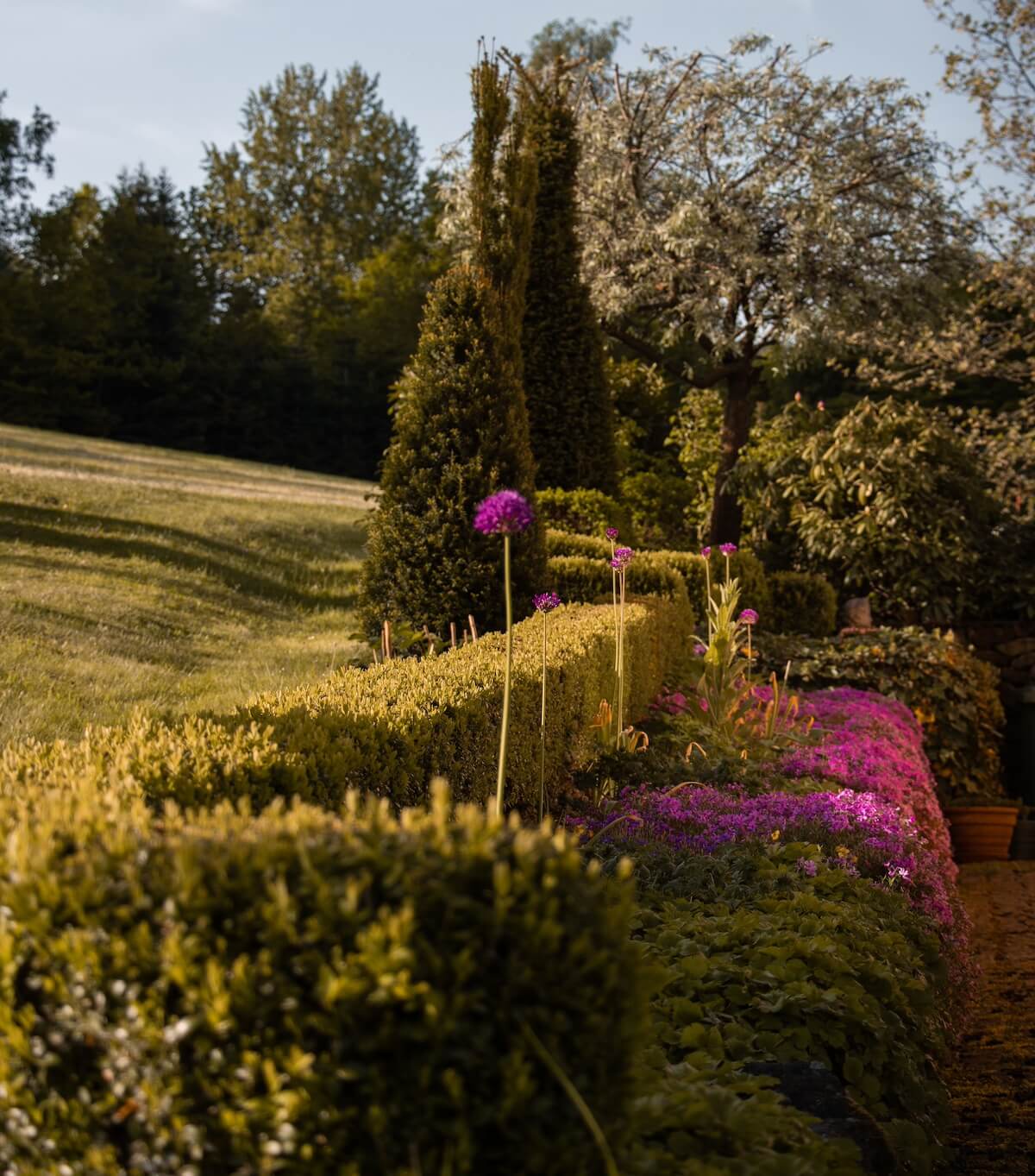
She took the idea of the flower bed—which had previously been strictly rectangular—and expanded it, sometimes giving it curves, and filled it with flowering plants, particularly perennials and biennials. Miss Jekyll showed gardeners how to arrange colors and combine plants with different flowering periods to ensure a continuous display of flowers throughout the summer. This “English-style flowerbed” quickly spread throughout Europe and then to America. The flower gardens we create in our own homes are almost always of this style.
The contemporary garden
Several trends are currently popular. In addition to the English-style flowerbed, the “lawn bordered by shrubs and hedges”—so typical of the suburbs—is considered picturesque. There’s also the so-called “modern” garden, with clean lines where plants—if any are present—serve almost as sculptures, and the garden as an extension of the home, where people cook, bathe, and relax. There’s also the edible garden, where edible plants are integrated with ornamental plants to create a beautiful effect, and the “tropicalissmo” style, where plants with colorful and uncommon foliage dominate. And let’s not forget Chinese and Japanese gardens, whose history is as long and fascinating as that of European gardens… but that’s another story.
The important thing, however, is to understand that, in the way we garden at home, we are all influenced—directly or indirectly—by the gardens of the past.
Larry Hodgson has published thousands of articles and 65 books throughout his career, in both French and English. His son, Mathieu, has made it his mission to make his father’s writings accessible to the public. This article was originally published in Le Soleil on August 23, 2014.