
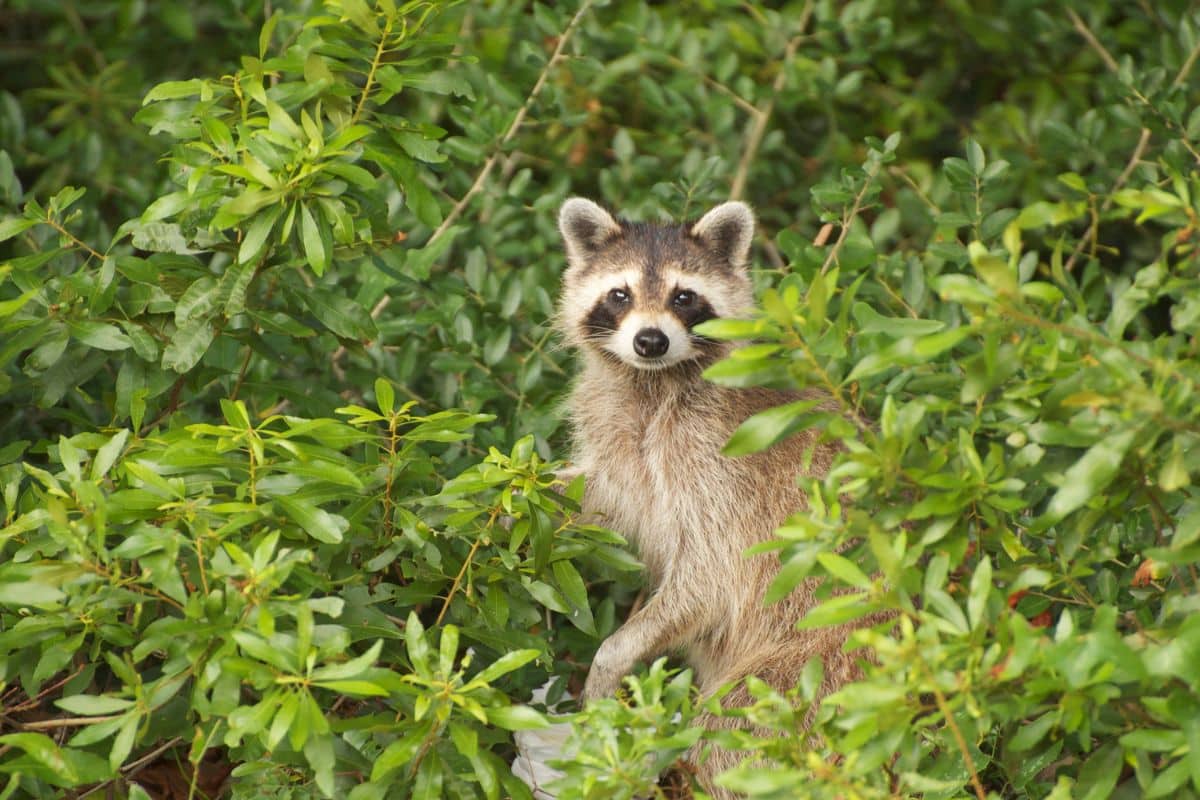
My strawberry harvest had to be shared with raccoons, who came every night to take their share of ripe fruit while devastating the beds. Raspberry season is beginning, and they will come and break the canes when ripening ensures a strong harvest. Later, it will be corn’s turn. What can I do?
I managed to keep the deer out of the orchard by surrounding it with an electric fence, but not the raccoons! I lowered two electric wires to 25 cm (10 in) and 50 cm (20 in) above the ground, hoping to prevent them from entering the garden, but that doesn’t seem to be enough.
Answer
Few animals are as difficult to control as raccoons. They are particularly intelligent and seem to take great pleasure in thwarting all our efforts to restrict their movements. Your electric fence wasn’t “tight” enough to stop a raccoon: they can easily flatten themselves to slip under a wire just 5 cm (2 in) above the ground! What’s more, they can jump over a fence that’s only 50 cm (20 in) high. And if necessary, they won’t hesitate to dig a hole under a fence to get through.
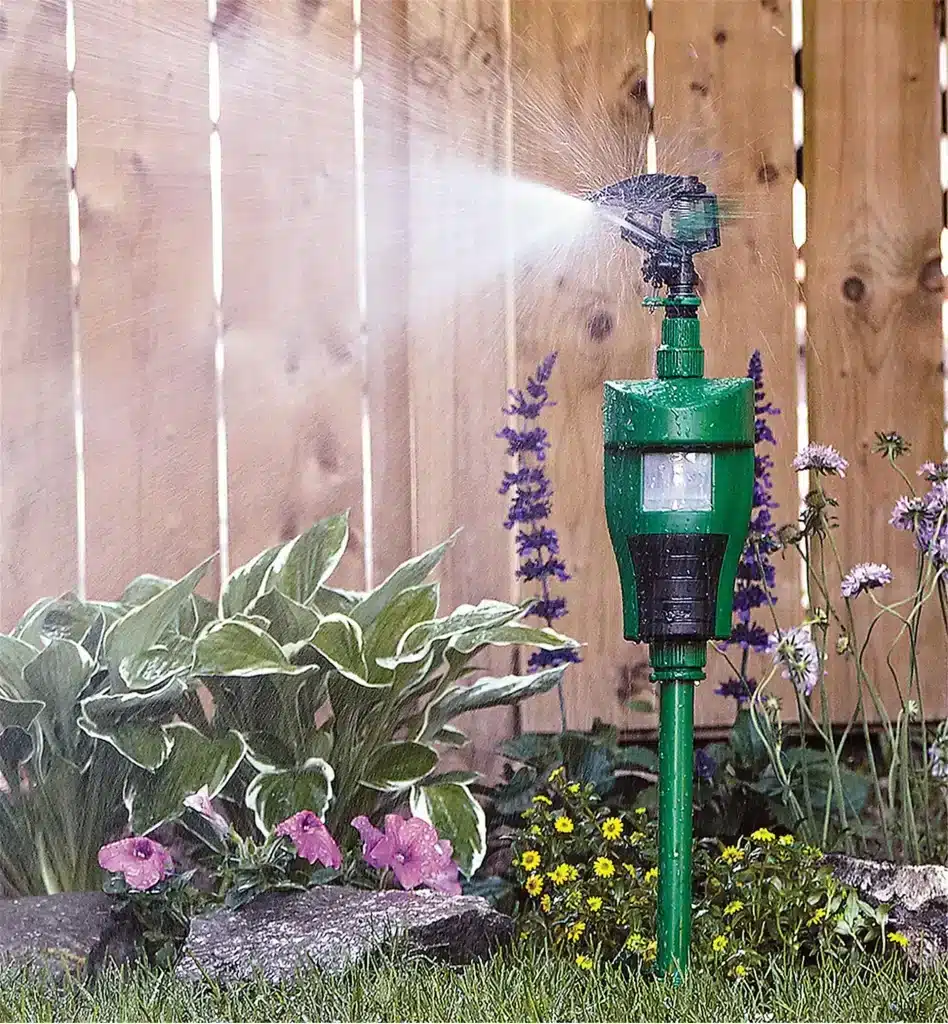
I have two suggestions. If you have access to a water tap, attach a motion-activated sprinkler that sprays water when the animal approaches the protected area. Okay, raccoons aren’t afraid of water, but they are afraid of being hit and will flee the area when they get sprayed in the face.
Alternatively, there is a “recipe” for a raccoon-proof fence. Drive posts 180 cm (6 ft) into the ground around the area, leaving 120 cm (4 ft) exposed. Buy chicken wire 120 cm (4 ft) wide and bend it into an L shape so that it is 90 cm (3 ft) high and 30 cm (1 ft) wide at the base. Staple the wire to the posts, burying the bottom 30 cm (1 ft) and pointing it outward. This way, if the raccoon tries to dig, it will be quickly stopped.
Above the wire mesh (which stands 90 cm / 3 ft high), attach two electric wires: one 15 cm (6 in) above the mesh, and the other 15 cm (6 in) above the first. The raccoon will not be able to get through. However, you must also remove any overhanging branches, otherwise it will use them to climb over your fence.
Carrot and Beet Seedlings Eaten
This year, I sowed carrots three times and beets twice. Both vegetables sprouted and leaves emerged from the ground, but then they disappeared, and nothing more came up. When I sowed the second time, I sprinkled ash on the seeds. Apparently, this is a way to combat certain insects, but it didn’t work. Is this a myth or reality? It’s now too late to sow these vegetables again. I planted a few pumpkin seeds in the empty space, and leaves have sprouted and seem healthy.

Answer
It was rather cool and damp in the spring, and I wonder if your seedlings simply rotted in soil that was too wet. Clay soils are often to blame in such cases. If so, next time try growing carrots, beets, and other root vegetables in a raised garden bed filled with good, well-draining soil. Avoid mixing clay soil with this new soil.
The fact that your pumpkins seem to be growing well may simply be a coincidence: you may have sown them a little later, when the soil was warmer and less waterlogged.

Again, it could be insects or other pests: wireworms, cutworms, slugs, etc. To control them, you really need to know which one is the culprit, otherwise the treatment will be ineffective. Ashes, for example, are known to control maggots, but will not be effective against other insects. When you see seedlings disappearing, check the soil at the base of the plants or go out with a flashlight in the evening. Once you have identified the culprit, it is usually fairly easy to find a remedy.
Larry Hodgson has published thousands of articles and 65 books during his career, in both French and English. His son, Mathieu, has made it his mission to make his father’s writings accessible to the public. This text was originally published in Le Soleil in August 2005.
0 comments on “Answers to Your Questions: Destructive Raccoons and Disappearing Seedlings”