


Disease Affecting Maple Trees
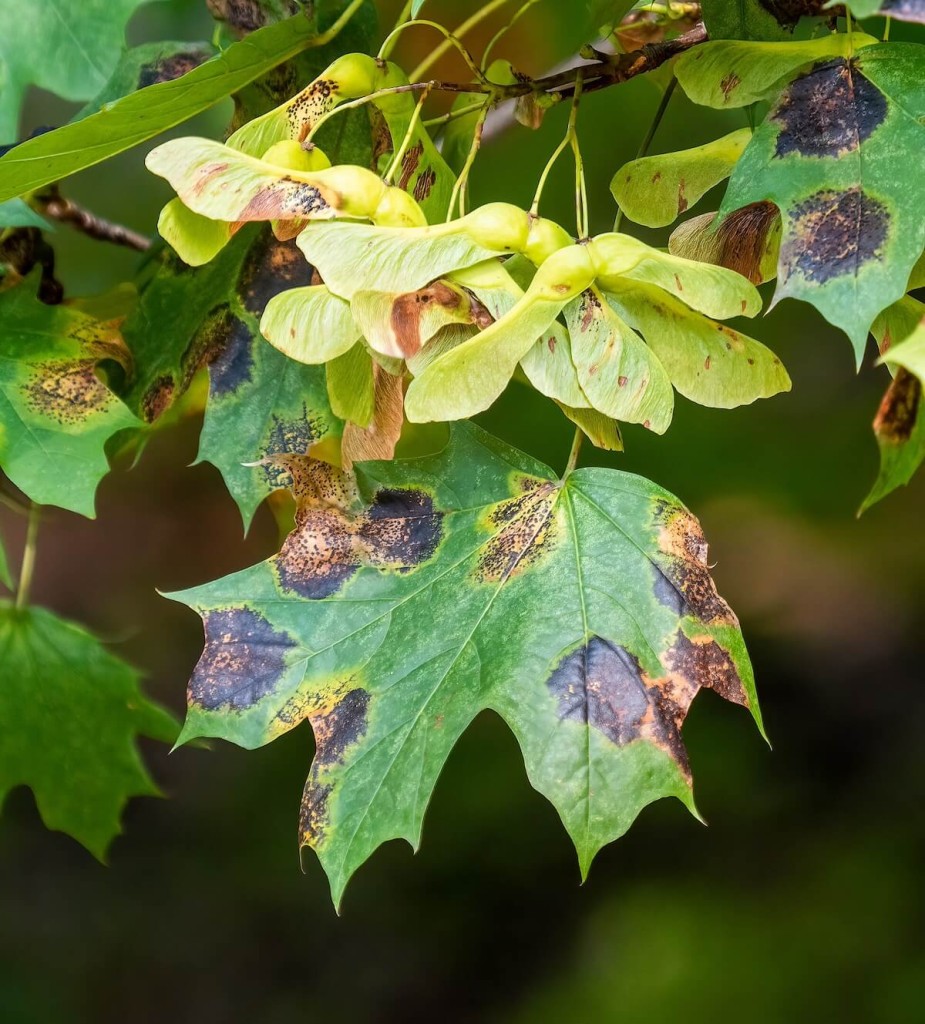
I would like to know if there is anything that can be done about the black spots on maple leaves. The entire street is lined with trees that have leaves identical to these.
Answer
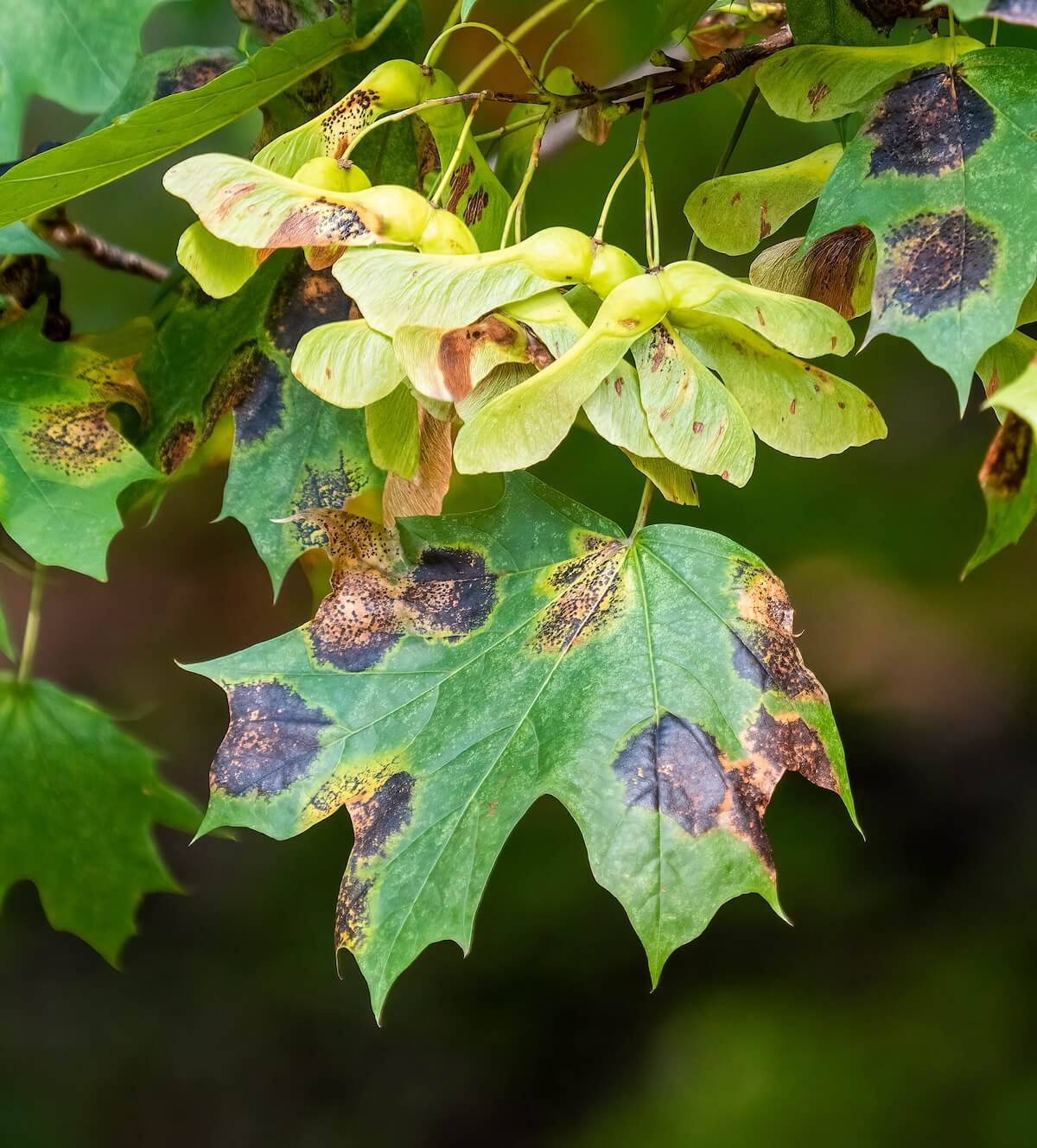
This is tar spot (Rhytisma acerinum). It is a very common fungal disease today, but one that has recently spread to Quebec.
Formerly associated almost exclusively with Norway maple (Acer platanoides), it now affects several species of maple, including sugar maple and red maple. Large black spots, similar to tar splatters, appear on the leaves in late summer, destroying the tree’s ornamental value.
It is mainly a cosmetic disease: affected trees survive without any lasting damage, even if their leaves fall a little earlier in the fall. There is still no effective treatment, despite what some “experts” eager to sell you miracle products may claim.
The only useful measure is to collect and compost the infected leaves in the fall to reduce the amount of spores present the following spring.
Norway maple, which remains the most susceptible species, is now officially classified as invasive in Quebec because it tends to supplant sugar maple in urban and natural forests.
The arrival of tar spot does not threaten native trees, but it is one more reason to avoid planting this European maple in our environment.
Apple Scab
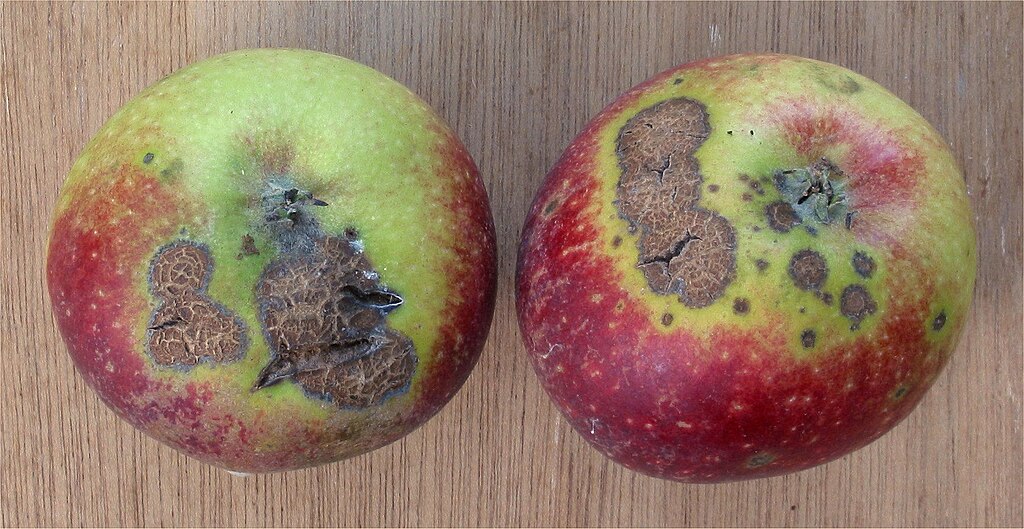
The grounds of our condominium are embellished by numerous crabapple trees. Until now, they have always appeared healthy and seemed to be growing well. They bloomed nicely at the beginning of summer, but then began to show signs of trouble: premature loss of some of the leaves, which appeared rusty, rapid fruit drop, etc. It seems that most of our crabapple trees are affected. What do you think?
Answer
This is undoubtedly apple scab (Venturia inaequalis), a very common fungal disease that thrives in cool, rainy springs. It causes olive-brown spots on the leaves, which eventually turn yellow and fall prematurely, while the fruit becomes deformed or falls too early.
In the past, commercial orchards controlled this disease with numerous chemical treatments, sometimes up to twenty per year. Today, we know that this is unnecessary—and unthinkable—in a residential setting.
The solution is simple: plant resistant varieties (both for apple trees and ornamental crabapple trees) and collect diseased leaves in the fall to break the fungus cycle.
Larry Hodgson has published thousands of articles and 65 books during his career, in both French and English. His son, Mathieu, has made it his mission to make his father’s writings accessible to the public. This text was originally published in Le Soleil on November 12, 2011.