
We have a ‘Harlequin’ honey locust tree in our yard that was planted by our parents in 1979. It is still magnificent for a 46-year-old tree.
In July, while weeding the rock garden next to the tree, we discovered a young honey locust growing there, about 3 feet tall. With the beautiful summer weather, it grew a lot (reaching about 5 feet), began to form branches, and produced many leaves. We had planned to install a stake to protect it during the winter.
Unfortunately, the top and about half of the trunk were broken under the weight of the snow during the storm on November 11.
Can our little honey locust tree be saved?

Answer
I have not found any mention of a honey locust tree named “Harlequin” in horticultural literature. It is therefore likely that this is an old, regional, or now obsolete commercial name used to refer to an ornamental cultivar of the American honey locust (Gleditsia triacanthos).
Snow damage is not particularly worrying in the case of honey locust. This species heals very well after breaking and is quite capable of reforming a main trunk from a vigorous shoot. Over time, simple corrective pruning will help guide the tree’s structure and correct its shape. This type of damage is rarely fatal, especially in young, healthy trees.
Thorns with that?
However, there is another, even more important consideration.
Thorns
The honey locust tree exists in two main forms. The typical form, Gleditsia triacanthos, is the wild form of the species. It usually has long, very hard thorns, often branched with three points, directly on the trunk and main branches, and frequently produces long, abundant pods. Its foliage is also denser, creating significant shade. Although it is an extremely hardy and ecologically important tree, these characteristics make it unattractive for residential landscaping, particularly for safety and maintenance reasons.
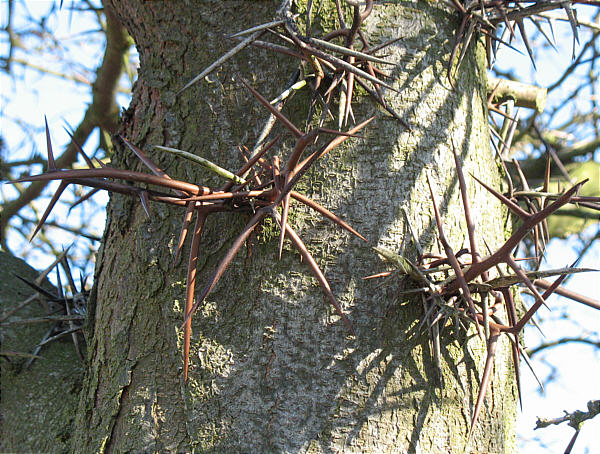
No thorns
Conversely, Gleditsia triacanthos var. inermis (the term inermis meaning “without thorns”) is a natural variation of the species, with few or no thorns. It is this form that has served as the basis for most of the ornamental cultivars used in landscaping. These cultivars have been selected to be thornless, produce few or no pods, and offer finer, more filtering foliage, which allows plants to grow better under their canopy.
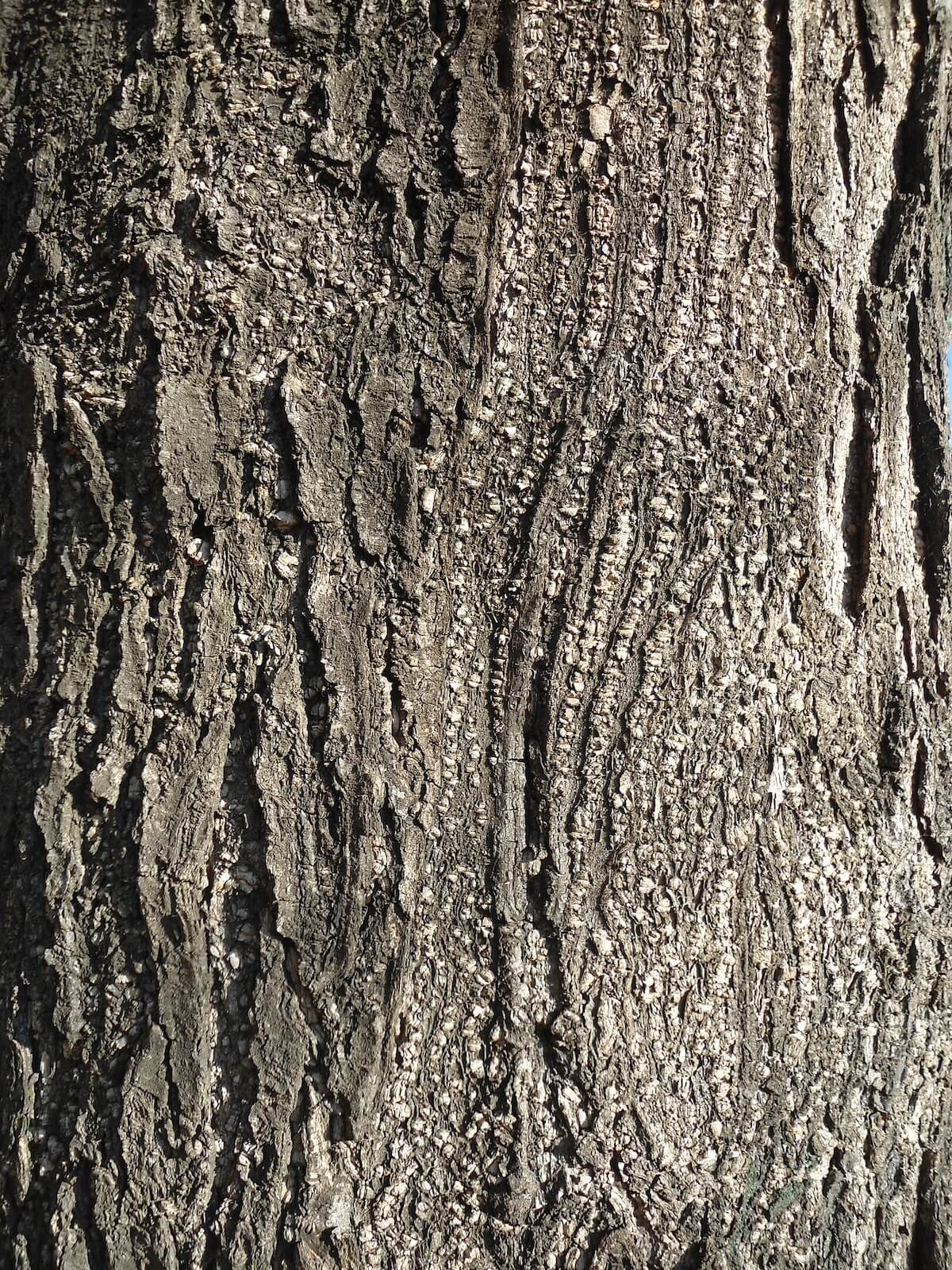
In horticulture, thornless cultivars of honey locust are almost always grafted. The scion (the upper part of the tree) comes from a selected cultivar of Gleditsia triacanthos var. inermis, while the rootstock is usually a wild, thorny honey locust (Gleditsia triacanthos). This practice ensures perfect genetic fidelity to the cultivar, while taking advantage of the exceptional vigor of the rootstock, which is well suited to difficult urban conditions such as drought, salt, and compacted soils.
Thornless honey locust cultivars are therefore excellent urban trees: they can live for 100 years or more, are very hardy, and tolerate heat, urban pollution, and poor or compacted soils well. Your honey locust, planted in 1979, therefore probably still has many years ahead of it.
Seed or sucker
Honey locust trees can reproduce by seed or by suckers, which grow from the roots or base of the trunk. Thornless honey locust trees used in landscaping are normally propagated by grafting, which means they are genetically identical to the original selected tree.
If your young honey locust tree is grown from seed, it will be different from its parent and may exhibit various characteristics of the wild form, such as increased variability in size and habit, the possible presence of thorns, and pod production.
If it is a sucker, there is a good chance that it comes from the rootstock, i.e., a wild American honey locust. In this case, there is every reason to believe that it will develop thorns and produce pods in abundance.
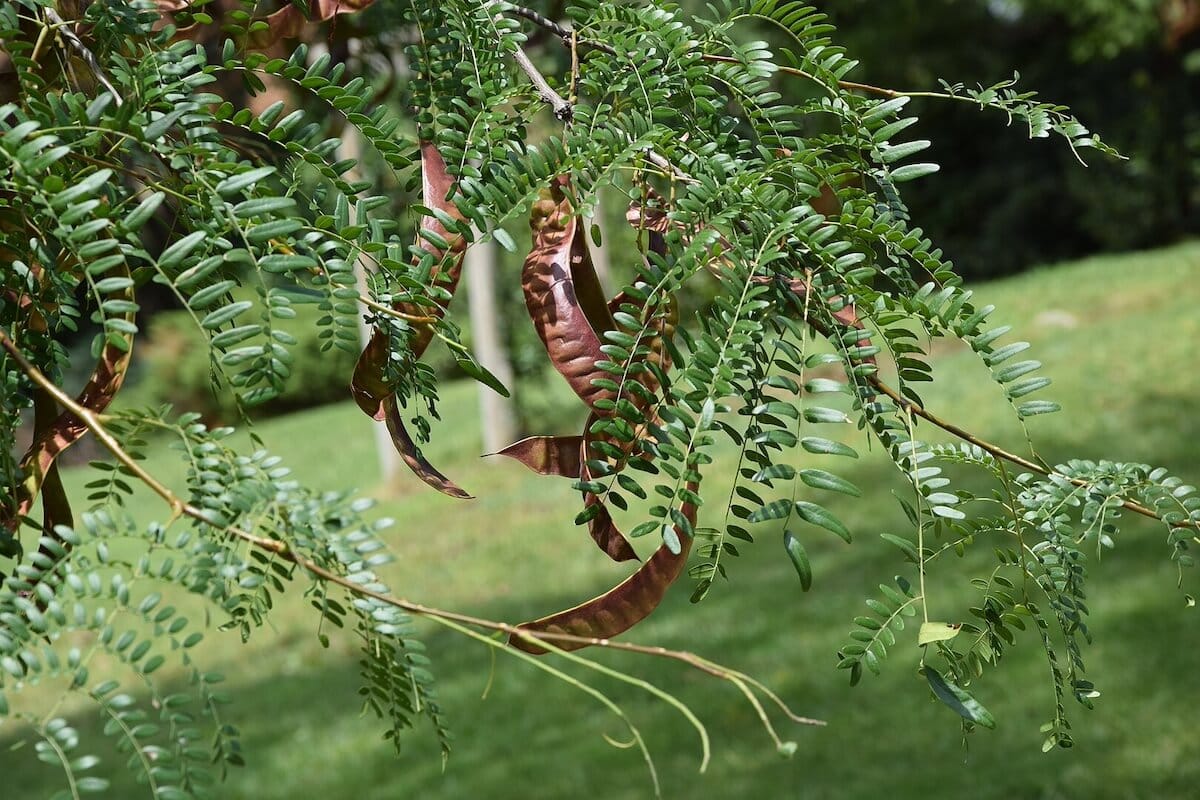
In any case, even if your honey locust recovers well from the damage sustained during the storm, it is unlikely that this young honey locust will be identical to the parent tree you love so much. You can let it grow for a while to observe its characteristics, but it is best not to wait too long before making a decision: in several municipalities, a permit is required to cut down a tree with a trunk diameter greater than 10 cm (4 inches).
I really enjoyed your geometry online post! It was awful to see such gorgeous branches broken. Your pruning and care recommendations are quite useful; I only wish I had read them sooner! I’m feeling lot more secure in nursing it back to health.
Registering at SkyCrown Casino Australia is fast and straightforward. Simply provide your email, create a secure password, and confirm your country to start exploring the games and promotions. Once your account is ready, you can easily log in and manage your deposits or withdrawals using the skycrown login, giving you quick access to your favourite pokies, table games, and ongoing bonuses. The process is designed to be smooth, so players can start enjoying the casino with minimal delay.
Excellent advice! I had no idea about any of this. Thank you for the early morning education ??
(Those two question marks were thumbs up emoji gone wrong LOL)