
Aloe vera is undoubtedly one of the best-known plants among gardeners and one of the most beloved by those who prefer a more relaxed approach to gardening! Its ease of cultivation is legendary. However, A. vera is not alone in the world. It belongs to a vast group that includes several hundred interesting aloes suitable for indoor growing. Opening a box containing the Aloe genus is like plunging into a bottomless abyss, discovering a whole range of plants to collect and cherish, because aloes in general are just as easy to grow as our classic Aloe vera.
Here are ten varieties that you will easily come across on the market and that deserve your full attention!
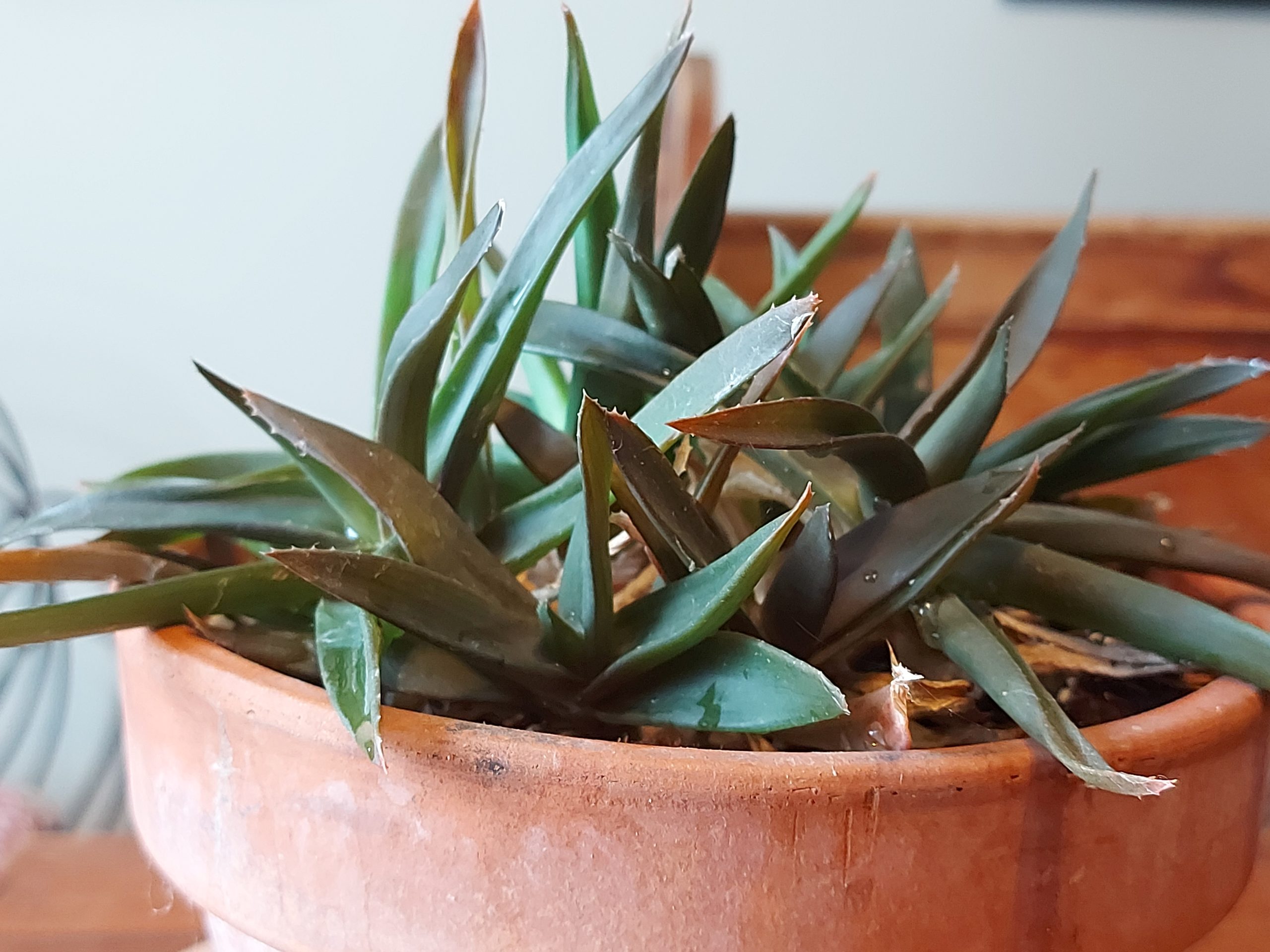
Aloe ‘Black Gem’
We all have a good number of ultra-easy-to-grow houseplants at home that have faithfully accompanied us for ages… but whose names we don’t know! Among these is often the ‘Black Gem’ aloe. No taller than 15 cm, it’s a plant that quickly fills a pot with its dark green rosettes. It’s in slightly more direct sunlight that the leaves turn a deep red, almost brown. It’s also called Alworthia ‘Black Gem’, indicating that it’s a cross between Aloe and Haworthia.
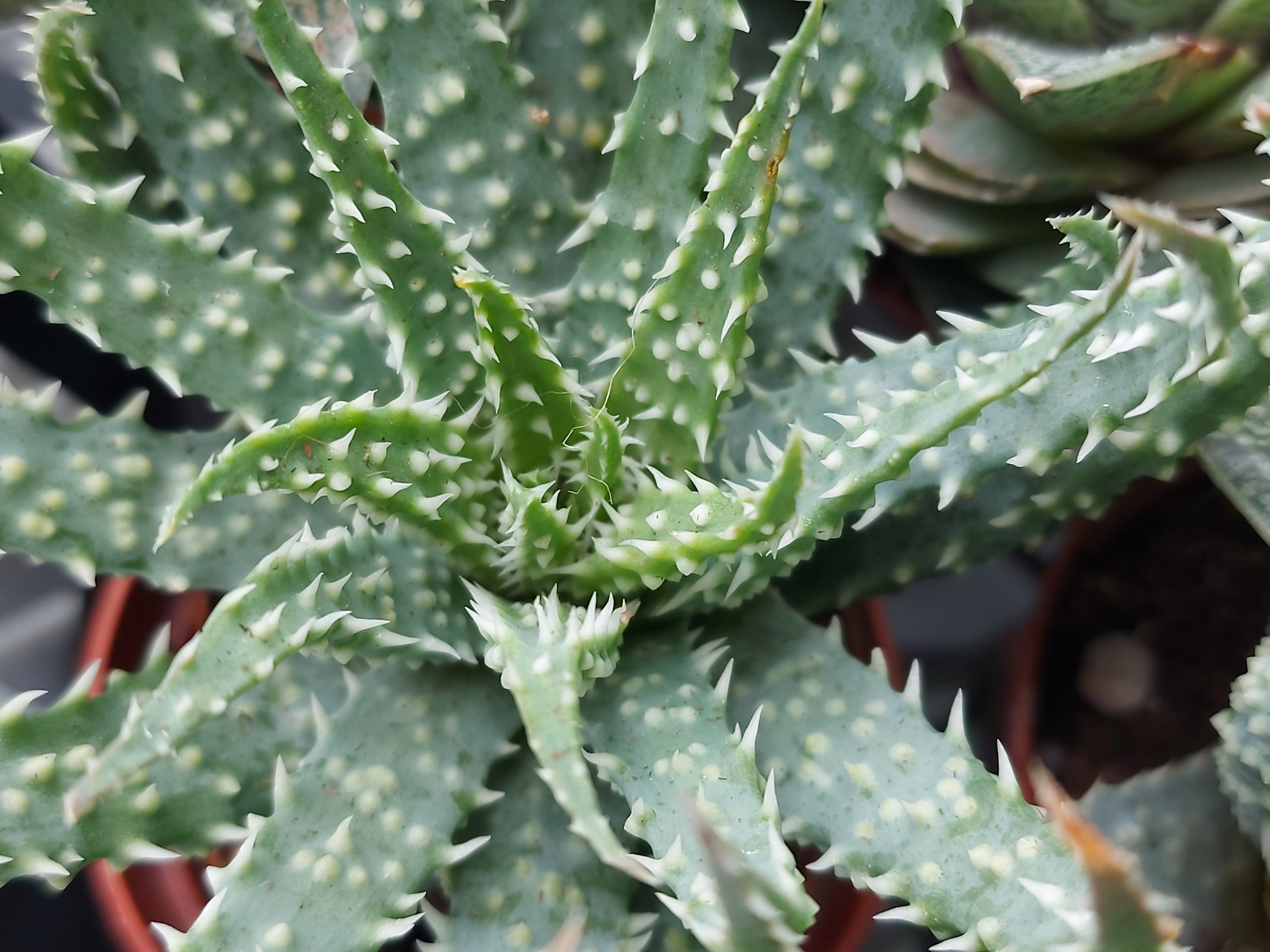
Aloe humilis
In size, it closely resembles a Haworthia or a miniature agave. Some call it the spider aloe. Its grayish-green leaves are covered in teeth that point inwards, giving it the appearance of a shark’s mouth (in fact, there’s a variety of aloe called ‘Jaws’!). At maturity, it barely exceeds 20 cm in height. Aloe humilis is also one of the aloes that will grace you with its flowers more often than other species of this genus.
Aloe ‘Delta Lights’
When I first saw this aloe, I thought it was a miniature agave (and I have a soft spot for agaves in general). But by touch, you quickly realize that the leaves aren’t tough enough and that it’s actually an aloe! The ‘Delta Lights’ variety has short, broad leaves speckled with green and gray stripes. It’s true, the leaves have an otherworldly look! At maturity, this aloe reaches 30 cm in height. The ‘White Fox’ aloe is very similar to ‘Delta Lights’, but it’s paler.
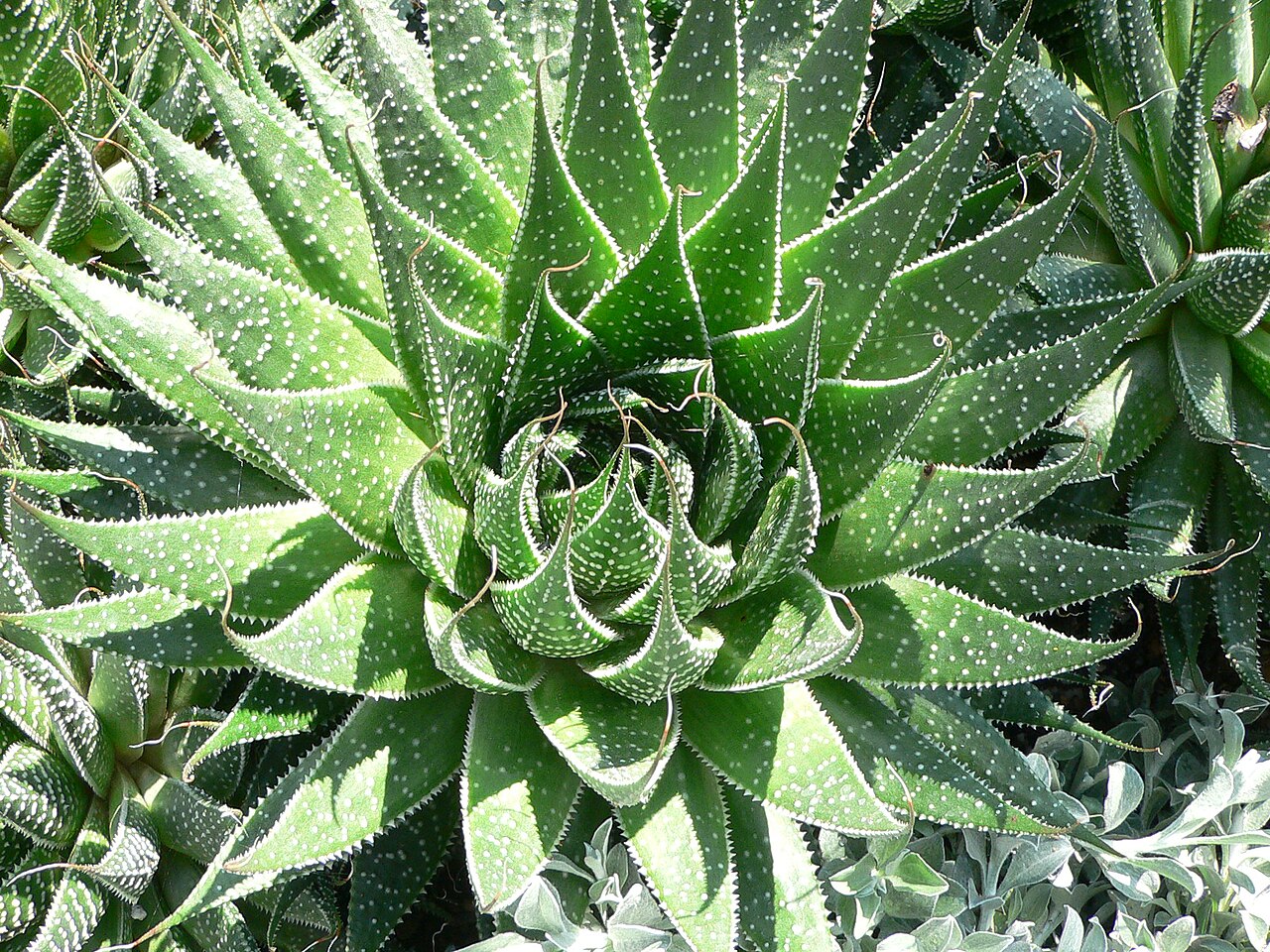
Aloe aristata
This is another very small aloe that looks remarkably like a Haworthia. And here’s where I reveal the big secret for recognizing a miniature aloe: generally, the margins of aloe leaves have regular teeth. I say generally because, in the wonderful world of plants, there are always exceptions… In English, it’s called Lace Aloe, which supposedly refers to the lacy appearance of the patterns on the leaves (well, that’s my personal interpretation). This is another species that won’t grow taller than 20 cm.
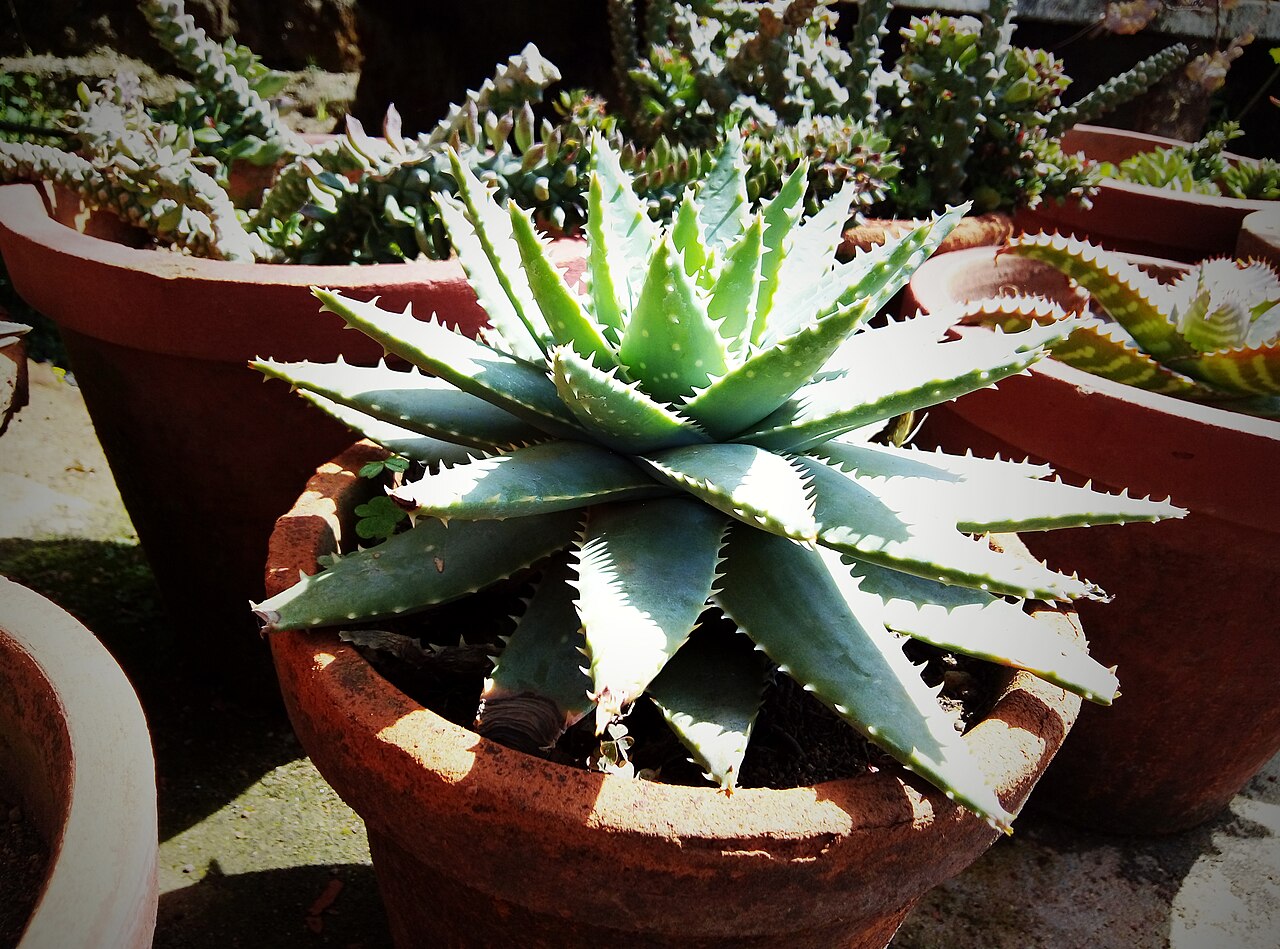
Aloe brevifolia
It’s called the short-leaved aloe. There’s also a variegated-leaved variety (‘Variegata’). This species closely resembles Aloe humilis, but with broader leaves. Here too, the thorns are fierce! It’s worth noting that this species is endangered in its natural habitat, yet it’s widely propagated in greenhouses for resale, without any involvement in harvesting it from its native environment.
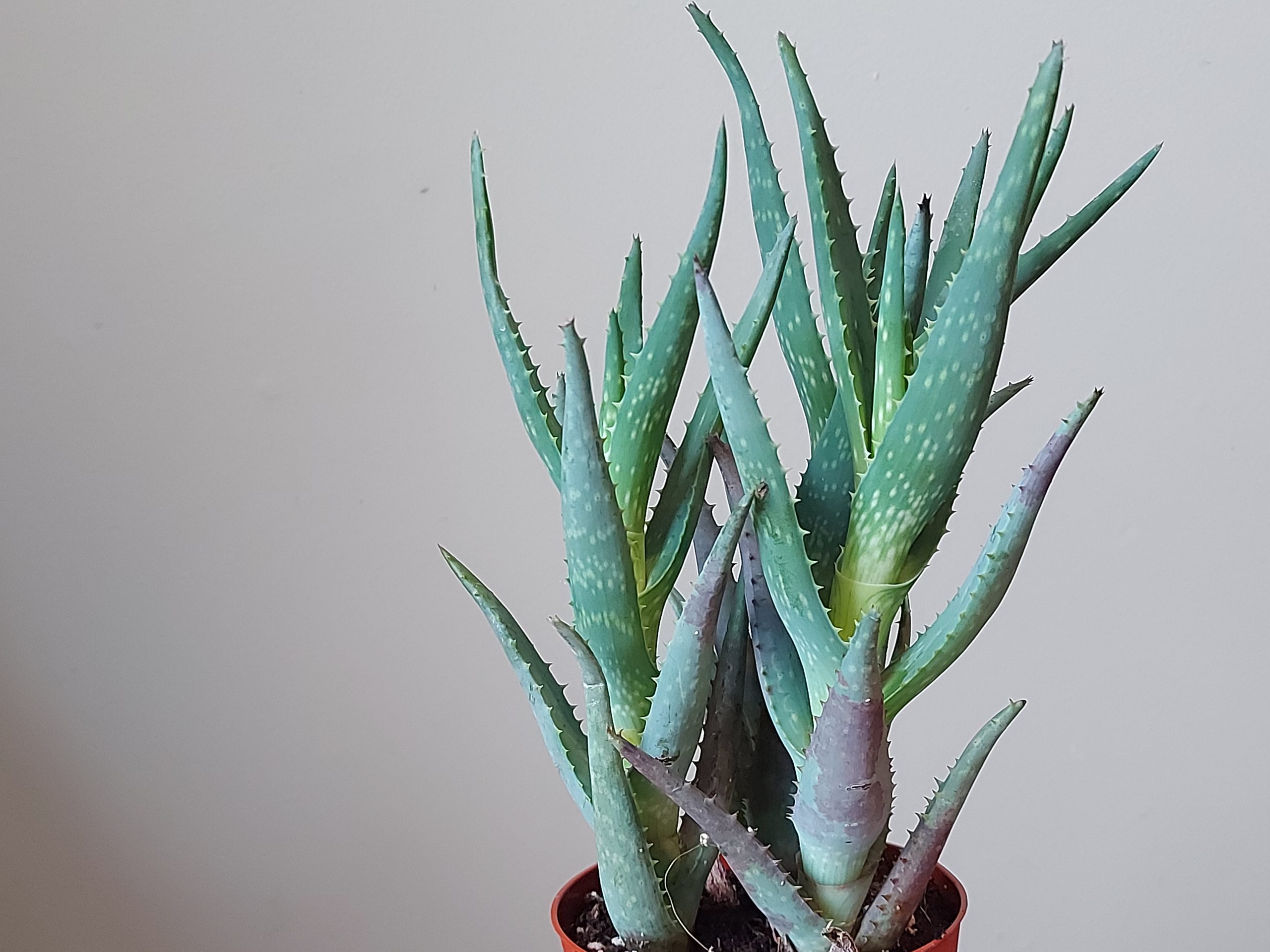
Aloe arborescens
Its unusual name, torch aloe, refers to the orange flowers that rise like flames high above the foliage. I wouldn’t go so far as to say the plant looks like it’s on fire. It’s also called the octopus plant, which is a bit more fitting, as the leaves are elongated and curve in all directions. Unlike many aloes that grow for years as a rosette (though they all eventually elongate), this one clearly produces upright stems and eventually a trunk. Each leaf can reach up to 30 cm in length, and ultimately, it grows into a small tree. So, be prepared to watch this plant grow quite large.
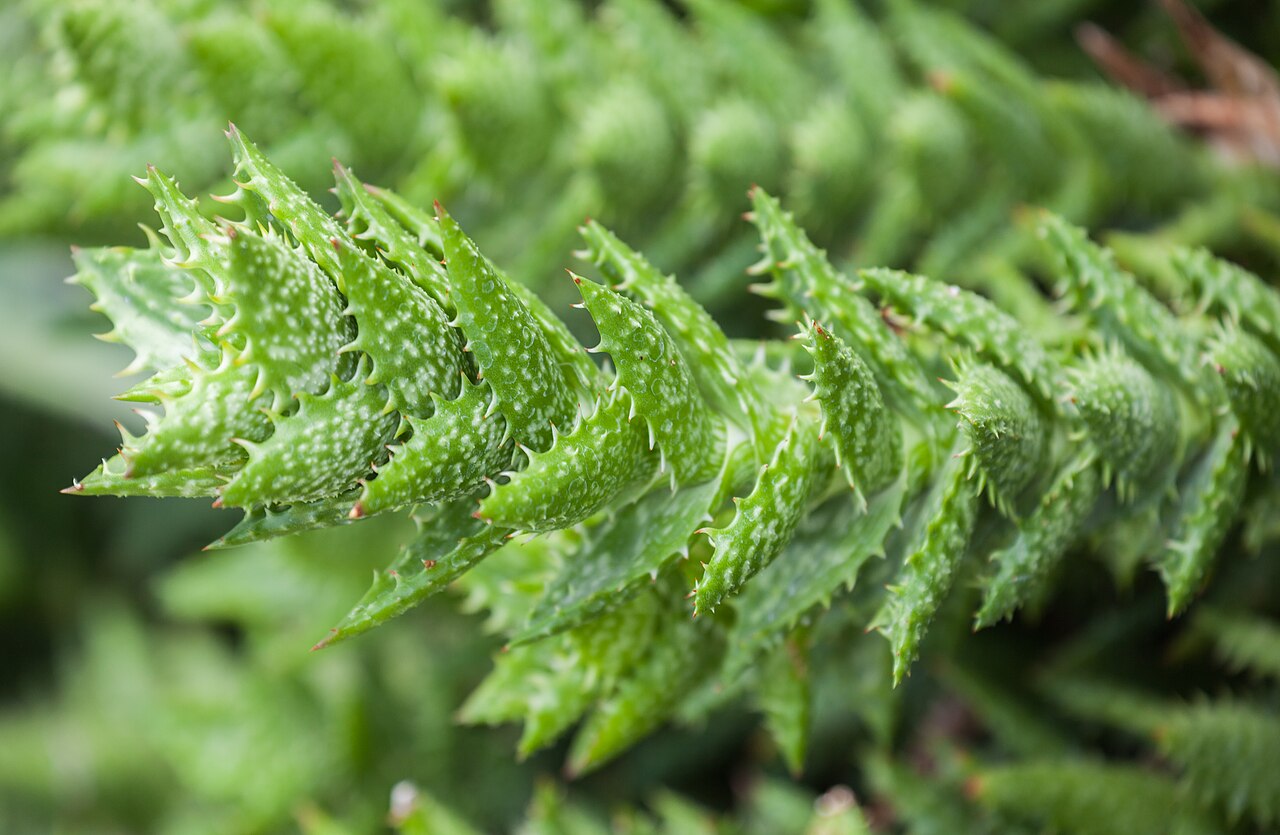
Aloe juvenna
Its name, Tiger’s Teeth, is particularly fitting! This aloe eventually produces stems about 30 cm long, covered in leaves with pronounced teeth. It grows in clumps and can easily fill a pot, much like the ‘Black Gem’ aloe. When it starts to become sparse after a few years, you can simply prune back the overly long stems and allow the plant to develop a new mass of more attractive stems.
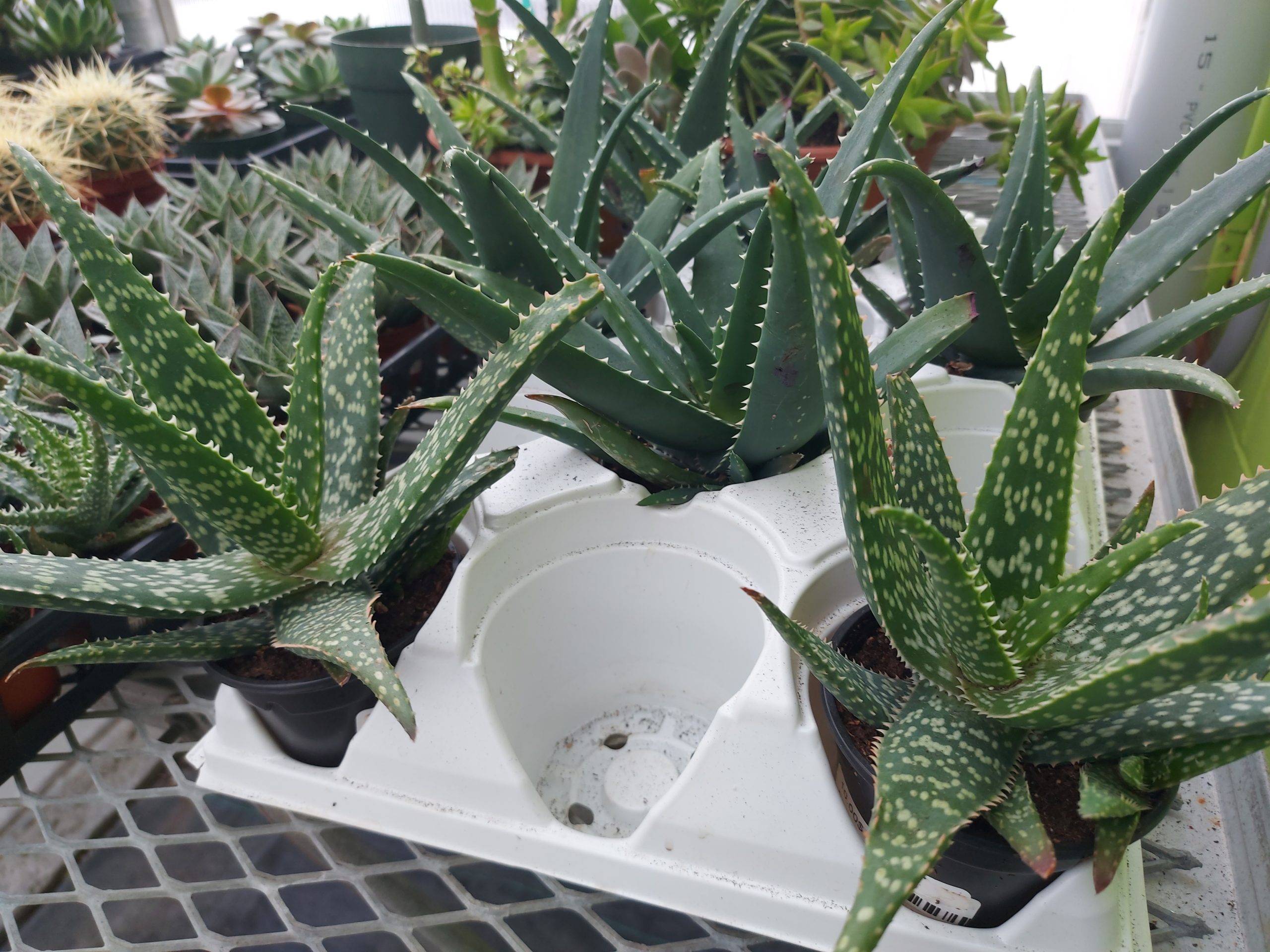
Aloe Medivera
This aloe is often sold in two forms: mostly green (‘Medivera Equator’) or speckled with white (‘Medivera Tropical’). Of all the aloes I present here, this one most closely resembles Aloe vera. At maturity, it is slightly smaller, but it displays the same long, rosette-shaped leaves. ‘Medivera’ aloe is not a species, as many retailers imply, but rather a hybrid of Aloe vera that possesses all its medicinal properties, but in a more compact form.
Aloe ‘Firebird’
It’s a true miniature version of Aloe vera. The leaves are green, slightly speckled with white, and rather smooth. Only the margin is toothed. These small rosettes, 15 cm in diameter, eventually give rise to a long stem of orange flowers.
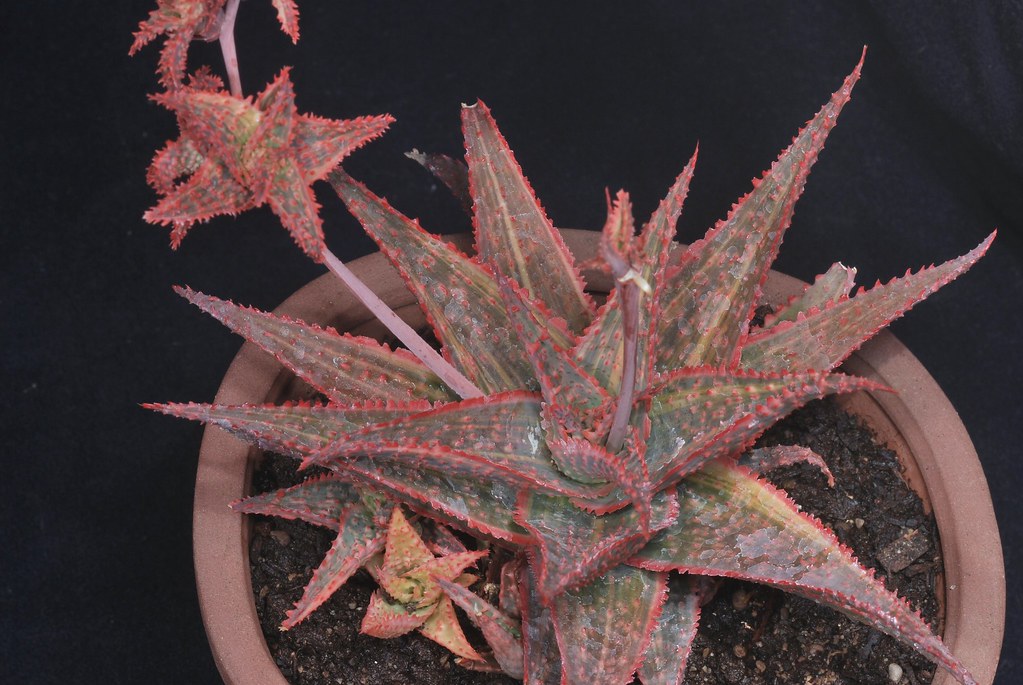
Aloe ‘Christmas Carol’
I’ve saved the best for last! My first encounter with indoor aloes that aren’t Aloe vera was with Aloe ‘Christmas Carol’! Among the poinsettias, cyclamen, and Christmas cacti was this beautiful succulent with red-tinged leaves. It was a unique find. But the experience didn’t end there, because I also discovered a plant that’s easy to care for for a long time. From there, my interest in other aloes grew (Thanks, Santa, for this new obsession?!). You can also find a similar cultivar under the name ‘Christmas Sleight’.
With these 10 plants to discover, you’ll quickly understand just how interesting aloes are. I’ll mention, just like that, that you can EASILY find and grow over 70 species and cultivars of aloe, each more fascinating and easier to cultivate than the last. Sorry, not sorry!
So many species of Aloe are marketed as Aloe vera that I do not know which is the real Aloe vera.