
Every year, once the snow has finally given us a break, I find myself standing in the mud by a stream, boots on, eyes on the ground, searching for the tiny pale green spirals poking through the dead stems of the cattails. Picking fiddleheads is one of my favorite late-spring rituals.
Audrey! That fern is a vulnerable species! You’re going to harm the wild populations!
Let me explain my position, because I’ve given this some thought: does responsibly harvesting a third of the fronds from mature ostrich fern (Matteuccia struthiopteris) plants—which grow in huge quantities just ten minutes from my home—do more harm to nature than buying plastic-wrapped broccoli imported from Mexico? Honestly, I doubt it. My most eco-friendly April/May vegetable is definitely this one.
OK, it’s more eco-friendly—until there aren’t any left and the species goes extinct!
Let me emphasize: “responsibly” is the key. When harvested properly, it doesn’t harm the fern populations. But before I tell you about harvesting, let’s talk about these famous ferns, because they’re a fascinating plant that we actually don’t know much about!
Why is that coiled thing so beautiful?
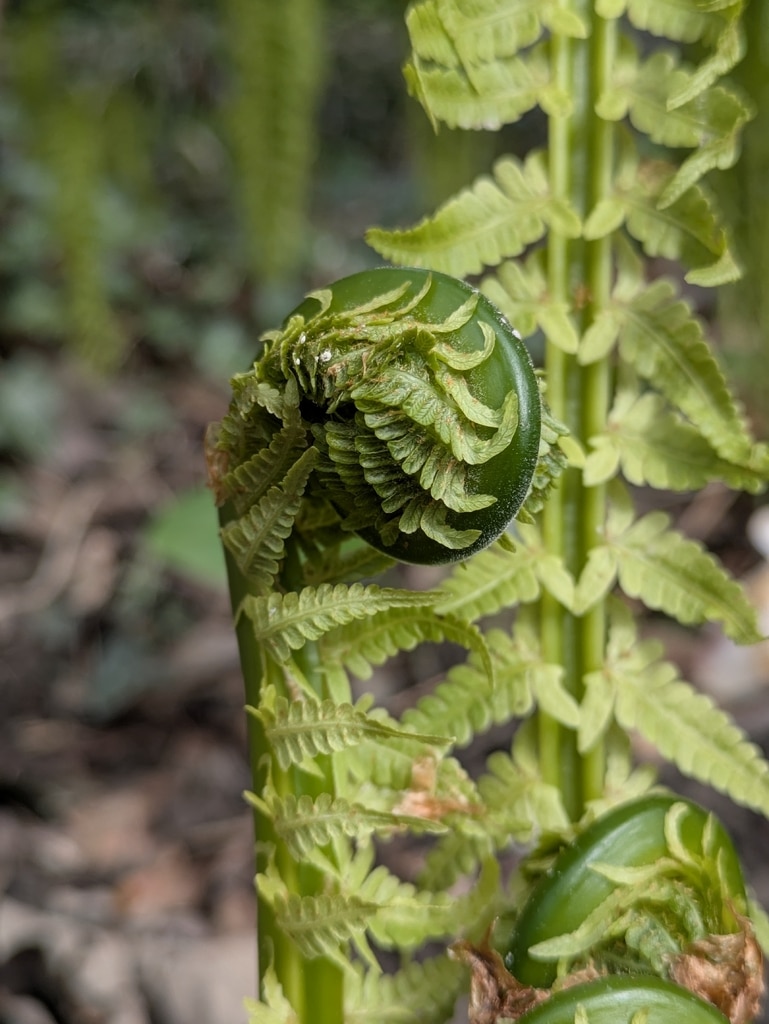
The spiral shape of the fern frond is no accident. In botany, this is called “circinate prefoliation”—which is a fancy way of saying that the young frond curls up on itself for protection. Think of your fist clenched to protect your fingers: that’s exactly what the fern does. The growing tip, which is the most vulnerable part, remains safely sheltered at the center of the spiral while the frond gradually unfurls toward the light.
I could watch ferns unfurling in the forest all day long!
It’s such an effective mechanism that virtually all ferns in the world do the same thing. Of the 10,000 to 12,000 known fern species, almost all begin their lives as a club, or rather: as a spiraled pre-leaf! It’s their universal signature, their way of saying “spring!”—though they say it cautiously, remaining all twisted up. It makes sense: ferns are among the first understory plants to appear, and their leaves persist all summer long, without producing new ones. A late frost, a sudden snowfall, or a gale-force wind must not completely destroy the young leaves, or else the entire plant would die!
While almost all ferns produce fronds, only one is truly edible here: the ostrich fern (Matteuccia struthiopteris), also known as fiddlehead. It is the only plant native to Canada to have achieved real commercial success as a vegetable. Not bad for a fern!
La cueillette: la règle du tiers
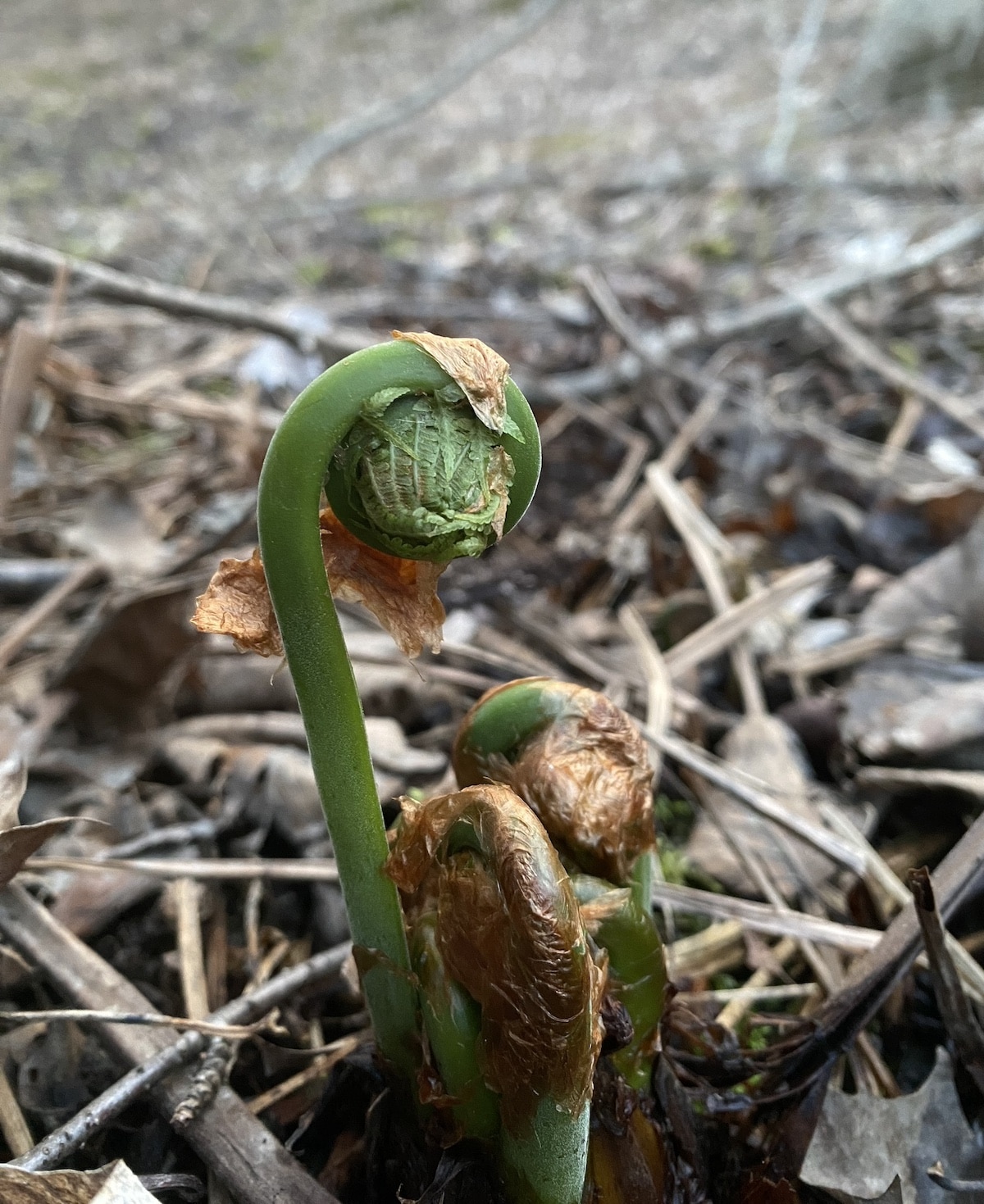
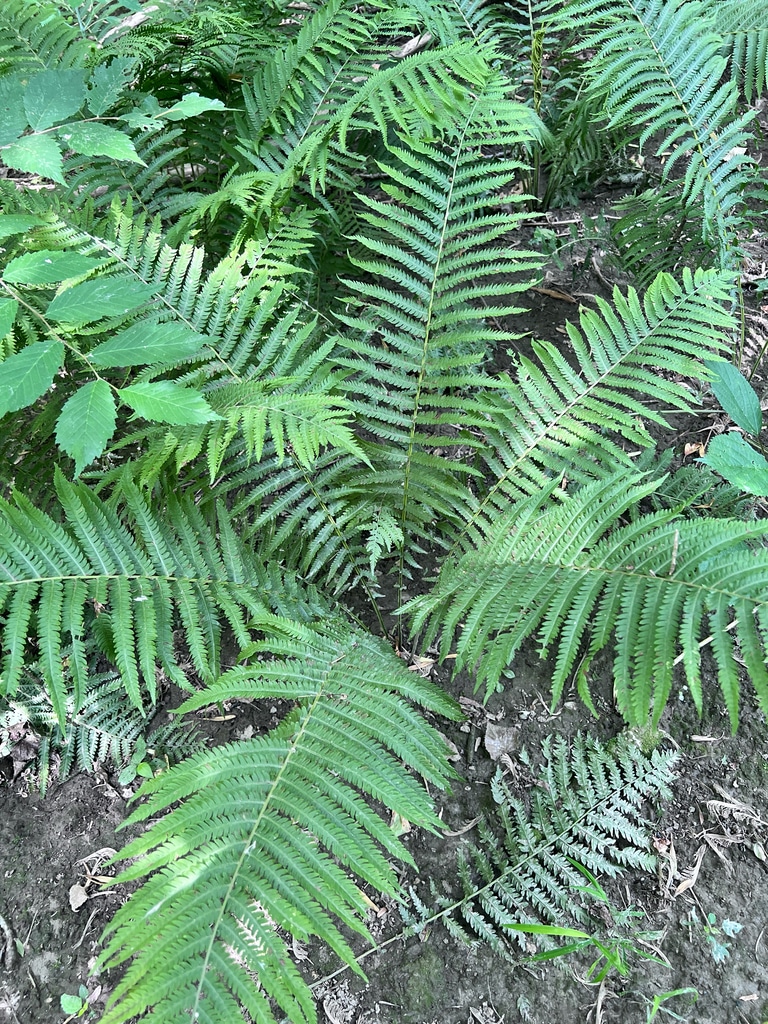
The ostrich fern is easily recognized by its characteristic brown scales that cover the fronds when they are still young, and by the celery-like shape of its main stems (they are not round; if you cut them, they form a U-shape). Its large mature fronds resemble ostrich feathers and can reach two meters in height in a rich, moist environment. Its range covers a vast area of North America, extending mainly from Newfoundland to Alaska and reaching southward to the Midwestern and Northeastern states of the United States, often along waterways or in moist woodlands.
If you’re lucky enough to find them in the wild (or in your own garden!), the golden rule is to harvest no more than one-third of the shoots from a single crown. No more. This rule isn’t just symbolic: researchers at Laval University have shown that harvesting more than half the fronds from a single plant depletes its energy reserves and reduces its vigor the following year. The ostrich fern is, in fact, classified as a vulnerable species in Quebec, not because it is rare, but because more than 70,000 kilograms are harvested each spring in the province. That’s a lot for fronds that are harvested when they’re barely 10 cm long!
The mystery of the unknown toxin (and why you should cook them!)
Well, here’s the part that always surprises people. Ostrich fern fronds contain a toxic substance… that hasn’t been identified yet. Yes, we know it’s there; we know it causes nausea, vomiting, and diarrhea within 30 minutes to 12 hours after ingestion (Health Canada and the MAPAQ have been documenting this since the 1990s), but we still don’t know exactly what it is. Scientists like to keep a little mystery!
The good news is that cooking destroys this substance, and no cases of poisoning associated with properly cooked arrowhead have been reported. The bad news is that “sautéing in a pan” doesn’t count as sufficient cooking. Here’s the proper procedure: first, remove the brown scales by shaking the shoots in a bag, then rinse them thoroughly under running water. Next, boil them in water for 5 minutes, discard the water, and repeat for another 5 minutes. Important detail: discard the cooking water, which may contain the infamous mystery substance. After this step, you can sauté them in butter, add them to an omelet or pasta, or serve them in a warm salad! Their flavor, somewhere between asparagus, broccoli, and spinach, lends itself to many different preparations.

Raw? Never. Just pan-fried? Nope. Pre-cooking is absolutely non-negotiable. It’s a shame if, like me, you prefer your veggies still a little crunchy, but it’s local, eco-friendly, and free! And since this is often one of the first hikes of the year, it has that special taste of the first harvest!
The best solution: grow them at home
You can grow ostrich ferns in your garden, and it’s actually a great idea for your wallet, for biodiversity, and for wild populations that don’t need to be harvested any further.
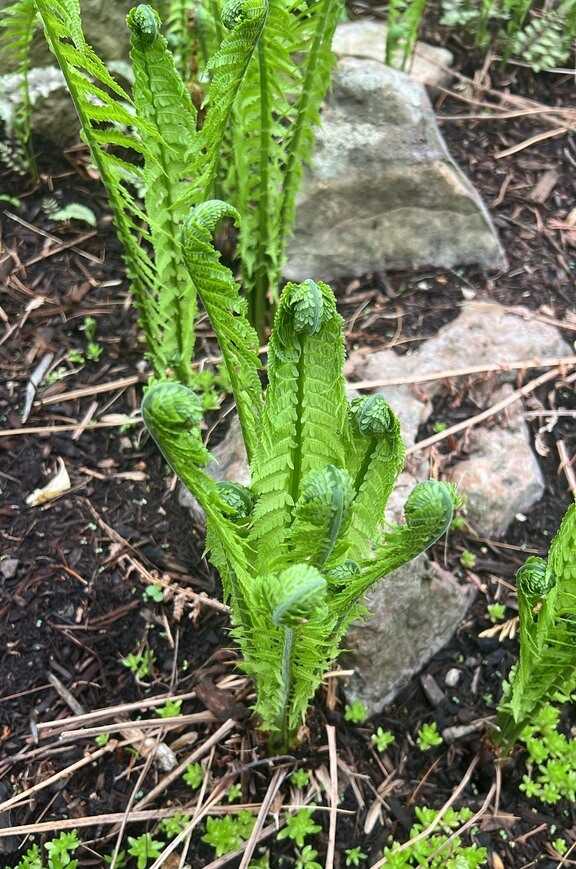
The ostrich fern is hardy down to zone 3, which covers much of Canada. It grows in partial shade or full shade in cool, moist, well-drained soil: exactly the conditions often found in the less sunny corners of the garden, the ones where you never quite know what to plant. Ostrich fern likes moisture but not standing water. It spreads via underground stolons (creeping stems that produce new clumps nearby), which means that after a few years, you’ll have plenty—enough to harvest and enough to leave in place.
Espace pour la Vie even suggests that growing ostrich ferns at home is the best thing you can do to reduce pressure on wild populations. By growing the plant, you also learn to harvest it in moderation: when it’s your own plant that you’re weakening, you naturally become more sensible!
For landscaping, its large mature fronds look stunning along hedge edges, under trees, or at the back of a shaded flower bed. And in the spring, when the shoots emerge from the ground still covered in their tiny golden scales, it’s truly one of the most delightful signs that the warm season is approaching.
This year, pick some for me
This year, however… I have some terrible, terrible news. I might just miss the perfect moment. The shoots might reach their fateful 15 cm (6 inches) without anyone coming to harvest a third of them. The season might pass me by…
Why? Because as you read these lines, I’ll be in Spain. Yes. I know. Tragic…
Well, “tragic” might be a bit of an exaggeration when you’re in a Spanish botanical garden under the sun! I can always eat a few tapas to the health of my fiddleheads!
Next week, I’ll take you on a journey by sharing my Spanish discoveries: don’t miss it!
0 comments on “Fiddlehead: Spring in a Bite”