
Messy maple
My neighbor’s maple tree is causing me trouble. Most of its branches hang over my driveway and my property. Every spring, it’s the same problem: by the time I’ve finished cleaning up my yard and flower beds, this tree has covered the ground with debris—even my balconies. What kind of maple is it? Is there anything I can do to force my neighbor to have it cut down, even if it means replacing it with a less troublesome species of maple?
Answer
This is a red maple (Acer rubra), a species native to Quebec that blooms in the spring. After blooming, the small red flowers fall to the ground and can accumulate there. In a natural environment (forest, field, etc.) or on a lawn or flower bed, they decompose quickly and enrich the soil with organic matter, leaving nothing to pick up. On a driveway or balcony, however, they turn brown and pile up, decomposing very little.
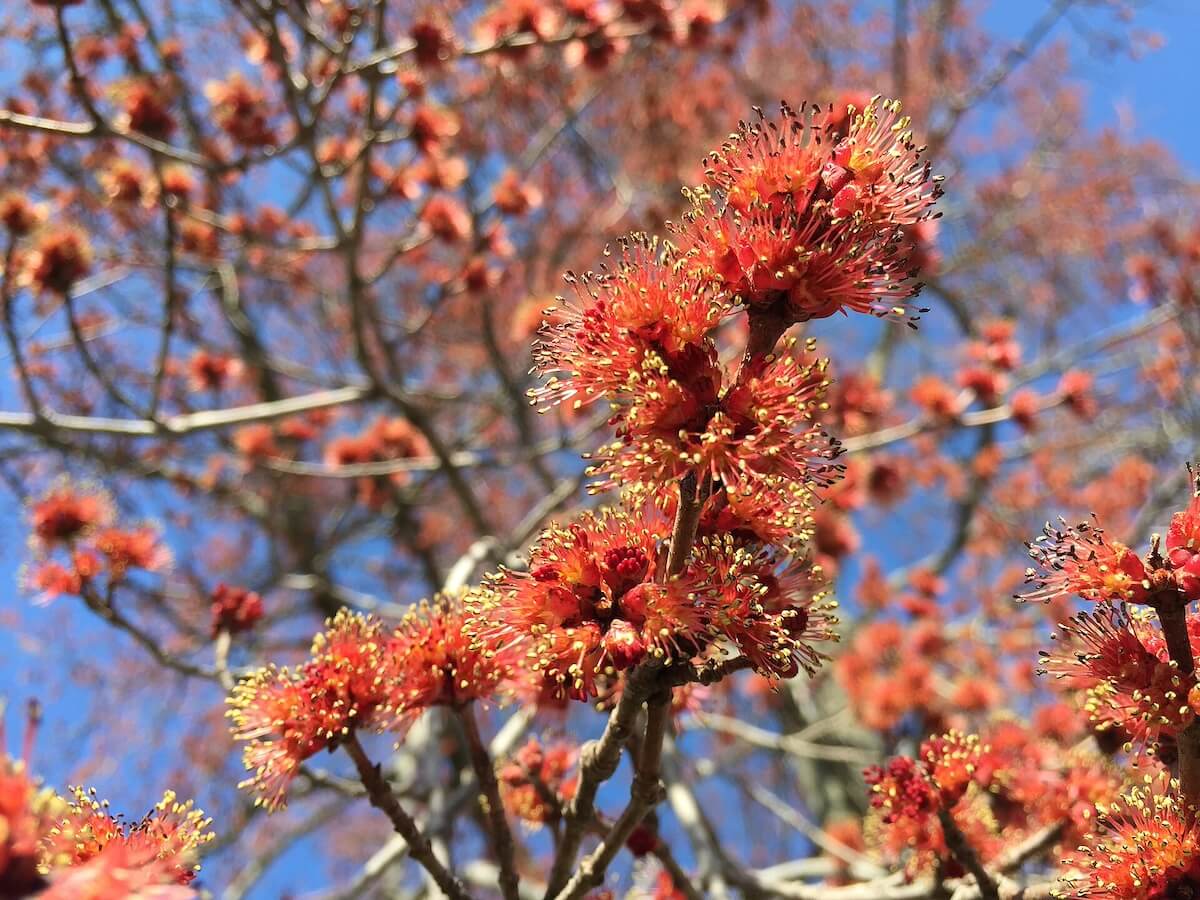
It is perfectly natural for dead leaves, wilted flowers, weak twigs, and other debris to fall from trees, and this will happen regardless of the type of tree planted, so changing the tree won’t make much of a difference. Also, most municipalities want to increase the number of trees in their area rather than reduce them, so it is unlikely that your neighbor will obtain permission to cut down the tree, even if he agrees to do so. You can always ask them to trim the branches of the tree that are on your side of the property line, but based on your description, it seems to me that this would be equivalent to cutting down the tree.
Have you considered delaying your spring cleaning by a week or two so you can include the fallen flowers? That way, you’ll achieve the cleanliness you desire without significantly increasing the workload.
Spring flower to identify
Can you tell me the name of the yellow wildflowers that grow in clusters along ditches in the spring and look like small dandelions without leaves?
Answer
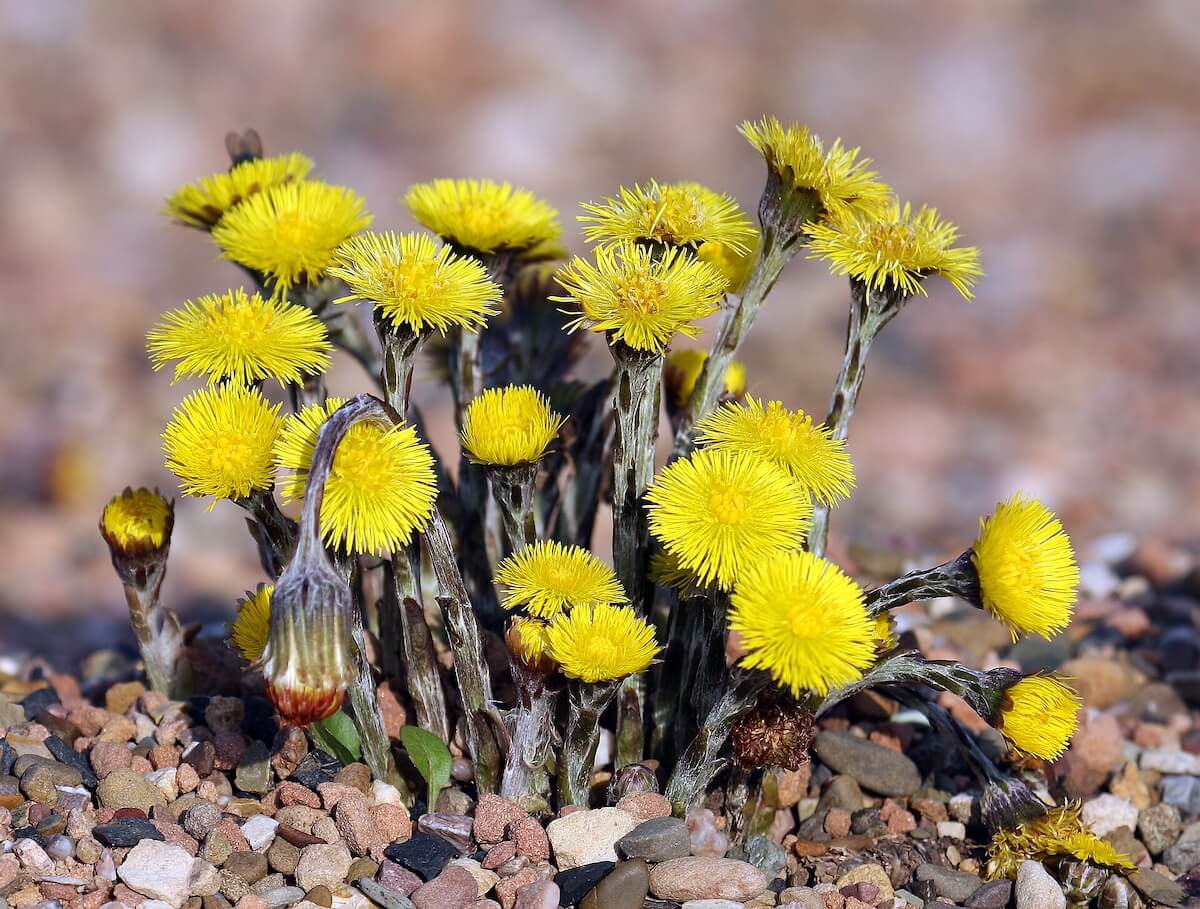
This is coltsfoot or ass’s-foot (Tussilago farfara), a Eurasian plant introduced to North America as a medicinal herb that has since escaped cultivation and spread so widely that it is now found across much of the continent. Coltsfoot blooms early in spring with small, bright yellow composite flowers that do indeed resemble dandelion blooms, and it is often among the very first flowers of spring in many areas. The leaves appear later and are heart-shaped or, as one of its common names suggests, shaped somewhat like a donkey’s hoof.
It is a highly invasive plant, spreading by rhizomes, preferring open areas, and tolerating almost any type of soil. As a result, it readily appears in freshly disturbed ground: it is the very definition of a pioneer plant.
Invasive grass
I have to redo my flower bed every year because the grass keeps taking over! I’ve tried damp newspaper and geotextile fabric, but nothing works. It’s pretty discouraging! What would you recommend?
Answer
Lawn grass is primarily composed of grasses that are naturally invasive due to their creeping rhizomes. We appreciate this trait when the grass is in the right place, as new shoots fill in any gaps in the lawn, but we’re much less fond of it when it invades our flower beds and vegetable gardens.
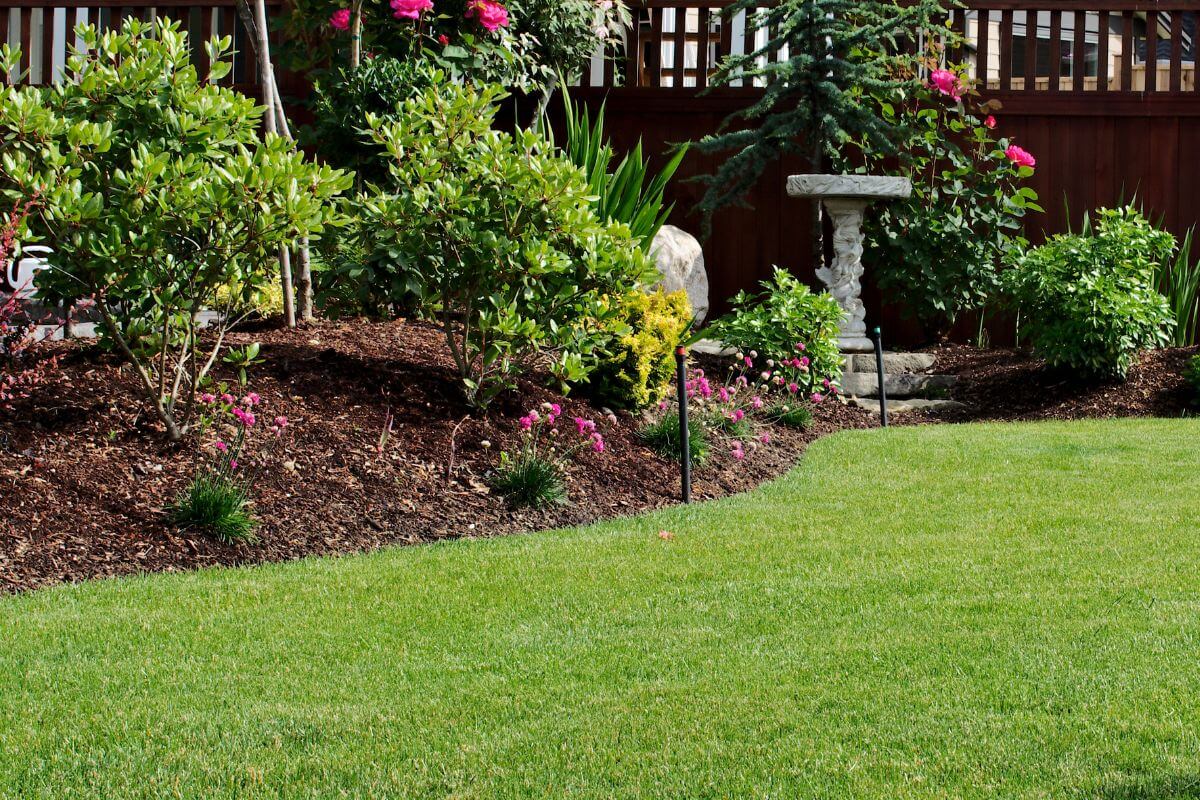
I suggest, as a first step, that you install a lawn edging. Opt for a professional-grade edging, which is taller, sturdier, and more durable. Installation instructions are usually clearly marked on the packaging. The top of the edging must extend at least 2 cm (¾ in) above the ground to effectively stop the grass, as its rhizomes can crawl over a barrier that is too low. This barrier will help prevent future lateral spread.
Once that is done, you can start again using damp newspaper, 7 to 10 sheets thick, which will prevent the grasses already present in the flower bed from regrowing, since grass deprived of light will eventually die. Cover the newspaper with 20 cm (8 in) of weed-free soil, and you will have a planting bed ready to use and free of lawn grass. The newspaper will decompose within a few months, allowing the roots of your new plants to establish themselves.
After planting, don’t forget to cover the soil with mulch to prevent grass seeds (since lawn grass spreads not only by rhizomes, but also by seed) from returning.
Larry Hodgson has published thousands of articles and 65 books throughout his career, in both French and English. His son, Mathieu, has made it his mission to make his father’s writings accessible to the public. This article was originally published in Le Soleil on May 5, 2012.
Those messy maple seeds are driving me completely crazy this year! I swear I’m pulling them out of every single flower bed, and don’t even get me started on that invasive grass. After three hours of weeding this afternoon, my back was absolutely wrecked. I finally gave up, came inside, and spent the evening playing the Dead Plate Game just to forget about my yard chores for a while. Thanks for the great advice, I’ll try your grass trick this weekend!
Vahan 4.0 makes RC Renewal Online Vahan 4.0 simple and convenient for vehicle owners across India by digitizing the entire registration renewal process. Through the official Parivahan portal, users can apply for renewal of their vehicle RC, upload required documents like insurance and PUC, and track application status online. https://vahanin.com/
Wow, this post is packed with useful insights! I never realized how messy maple trees can get in spring. Have you tried any specific methods to manage the mess? I once planted a few near my garden and didn’t anticipate the leaf drop—what a learning experience! Also, are there particular spring flowers you’d recommend that pair well with maples? I’d love your thoughts! speed stars