
Last year, I had planned to host a dinner party and serve a nice salad as an appetizer. Everything looked beautiful and healthy, and I never would have guessed that in just one week things would go so wrong! Instead of the lovely, tender leaves I’d hoped to harvest, I was left with a 60 cm (24 in) tall vegetable Eiffel Tower. My lettuce had bolted. Too bad for the guests!
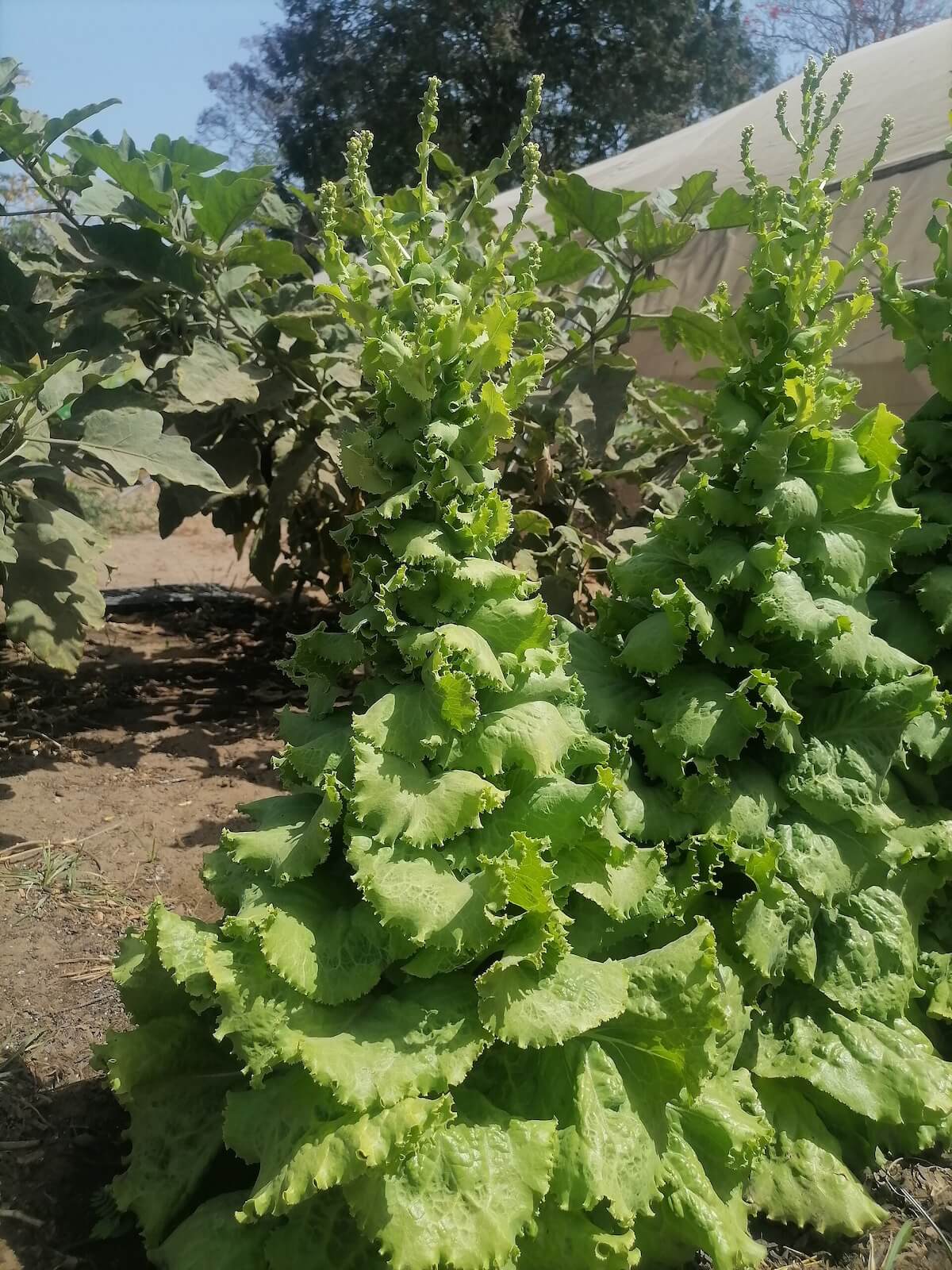
If you’ve been gardening in Canada for a few years, you know that dramatic moment: spinach, arugula, cilantro, lettuce… Vegetables that seemed to be off to such a great start, only to decide overnight to shoot up, cover themselves in flowers, and turn as bitter as bitterness itself (I couldn’t find anything bitter enough to finish my sentence—that’s how much of a face I pulled when I tasted my bolted salad anyway!). And you’re left wondering what on earth you could have done wrong.
The good news? You probably didn’t do anything wrong. The bad news? Your lettuce was destined to bolt even before you planted it.
You might also like the article Which Lettuce is the Best Choice for Laidback Gardeners?
Light and warmth: a perfect pair
Seed formation is the point at which a plant shifts from “vegetative growth” mode (producing leaves for nourishment) to “reproduction” mode (producing flowers and seeds to perpetuate the species). This is normal; it’s a process these plants have been following for millions of years. And it depends on two triggers that your lettuce is constantly monitoring.
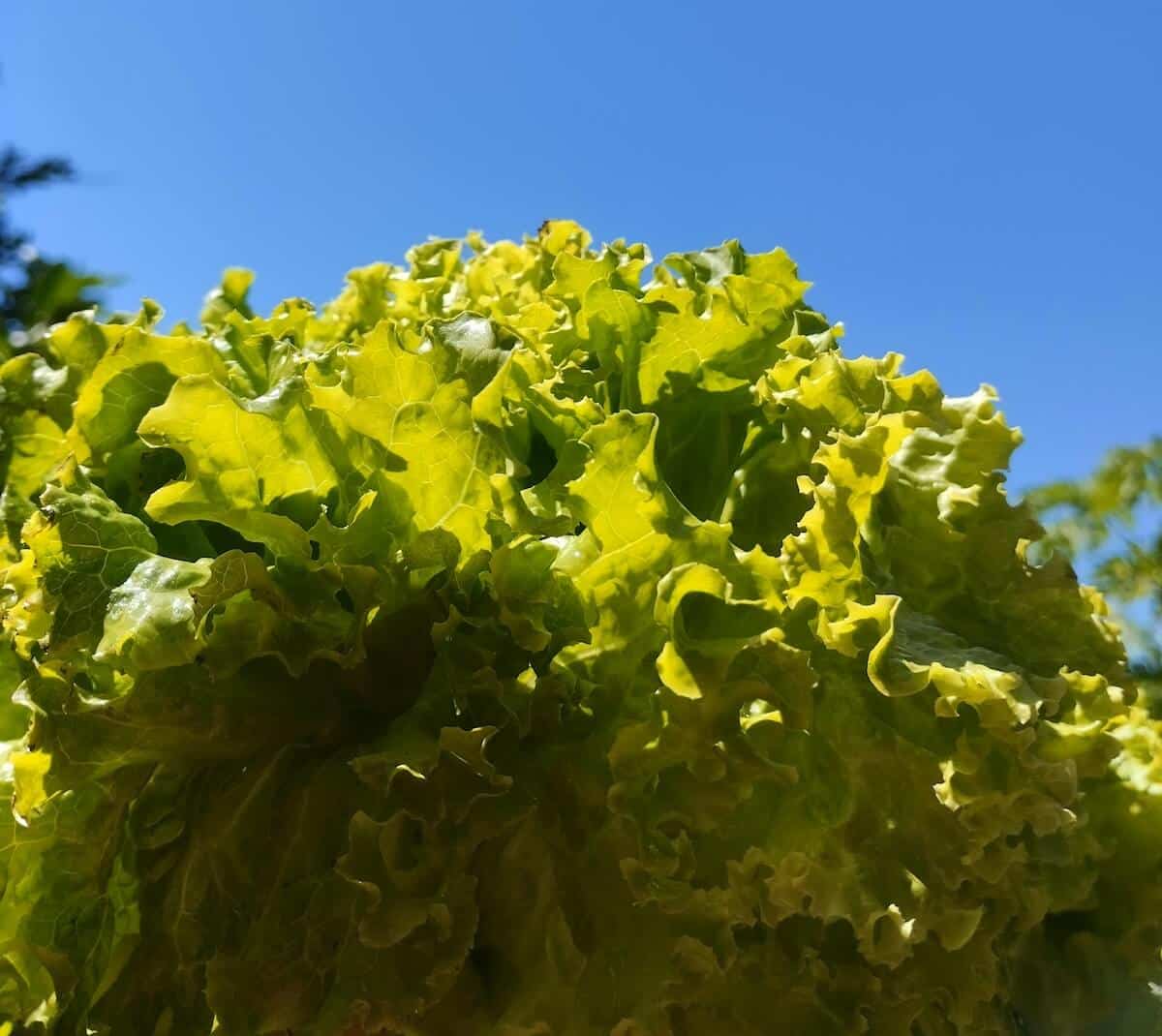
Here’s something that really surprised me: heat isn’t the main factor that triggers bolting in lettuce and spinach. It’s the length of the day.
Lettuce (Lactuca sativa), spinach (Spinacia oleracea), and arugula (Eruca sativa) are “long-day plants”: they have evolved to reproduce when light exceeds a certain threshold (about 14 to 16 hours, depending on the species). In their evolutionary logic, “long days” mean that summer is approaching, that the warm season will soon end, and that it is time to set seed and die with dignity. It is their biological clock.
That’s why bolting happens so often around the June solstice, even in a chilly year. In Southern Canada, days exceed 15 hours of light starting in late May. It doesn’t matter if it snowed last week, or if you’ve been watering regularly: the light signal has spoken, and your lettuce obeys.
Heat, on the other hand, is the second accomplice. When temperatures rise, the plant speeds up the process. That’s why heat waves always hasten the disaster. But (and this is the important point) even in cool weather, if the days are long enough, your lettuce will bolt anyway. Light ignites the fire. Heat, on the other hand, pours oil on it.
Opium lettuce
I have a little historical tidbit! It’s been a while, hasn’t it? The compounds that make bolted lettuce taste so bitter have a secret!
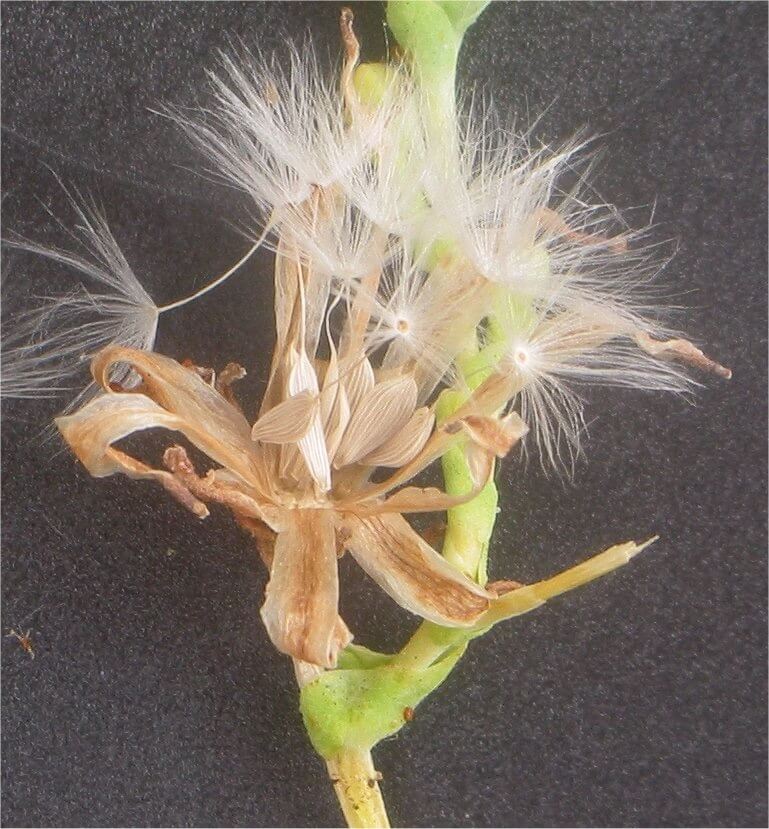
When lettuce bolts, it concentrates molecules in its milky white sap—which is where it gets its name: Lactuca comes from the Latin lac, meaning milk. These bitter molecules are actually natural pesticides: the plant produces them to make itself less appealing to insects just as it’s putting all its energy into reproduction. It’s exactly the same principle as the sulfur compounds in onions.
But here’s the interesting part: wild lettuce (Lactuca virosa), the cousin of our garden lettuce, has been used for centuries as a mild sedative and pain reliever thanks to these very same molecules. It was called “opium lettuce.” Its dried sap, lactucarium, was prescribed in the 19th century as a substitute for opium to treat insomnia and relieve pain. A catalog of medicinal plants described it as a “good, safe remedy for inducing sleep, to be used when opium and other narcotics are undesirable.” (Drug regulations were still in their infancy back then. Important context!)
I don’t know about you, but I’ve always found lettuce bland. It doesn’t have much flavor, much personality, and, let’s be honest, most varieties don’t even have an interesting texture! But here’s the thing: this utterly ordinary vegetable, which doesn’t shine without dressing, was used in medicine alongside opium!
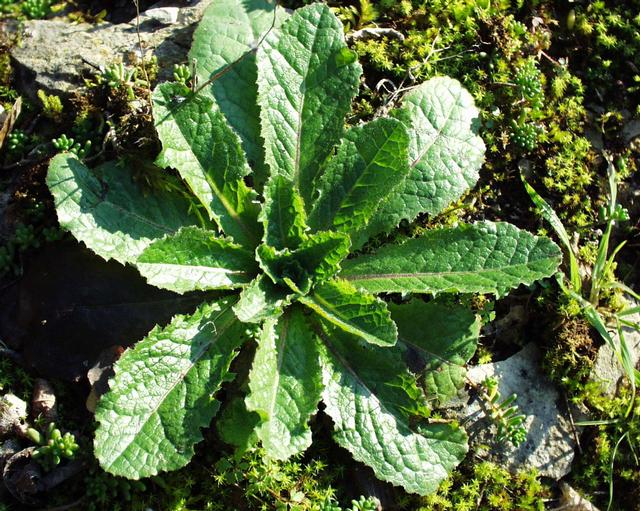
Wondering if the beautiful lettuce from your garden can have the same effect? Short answer: no. Centuries of selective breeding to reduce bitterness have also caused the concentrations of these molecules to drop in our cultivated varieties. Lettuce that’s gone to seed does contain more of them than fresh lettuce, yes, but still far less than wild lettuce. Your bitter salad won’t put you to sleep on the couch.
Myths
“If I water it more, it won’t bolt.” False. Watering helps reduce heat, which can slightly delay the process. But if the days are long enough, your lettuce will bolt anyway. Water can’t counteract the light signal.
“If I cut off the flower stalk as soon as it appears, it will stop everything.” Partially false. Cutting the stem slows down the physical growth. But the hormonal shift is already underway inside the plant, long before you see anything. Bitterness in the leaves will develop anyway (especially near the base of the stem), even if you were quick with the scissors. You gain a few days of edible leaves, at most.
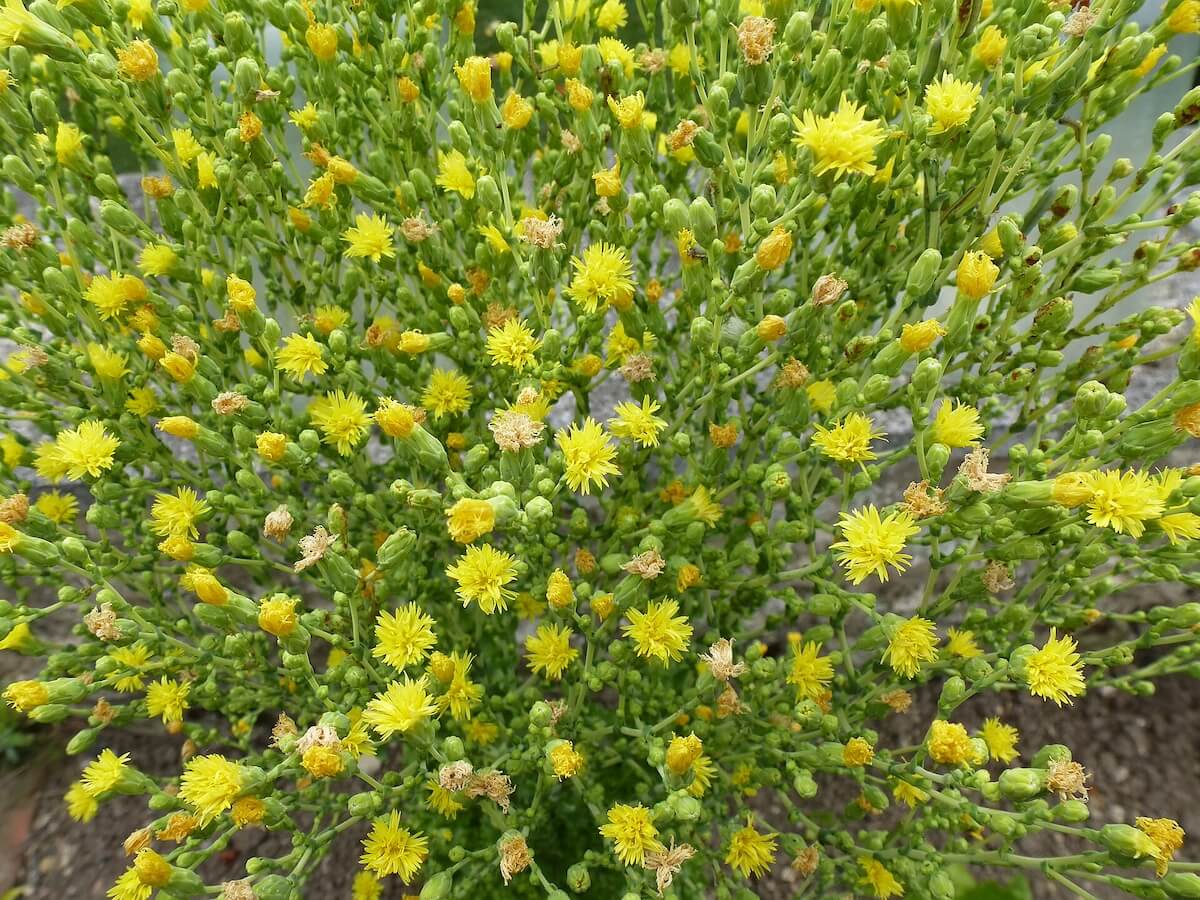
“Bolted lettuce is dangerous to eat.” Completely false. It’s bitter, sometimes very bitter, but perfectly edible. In fact, the flowers are edible too!
So, what should we do?
Bolting is inevitable. But we can make it harder for the plants.
The strategy of staggered sowing works, but not for the reason you might think. Plants sown two weeks apart will all receive the same light signal, but the younger ones will take two more weeks to mature enough to bolt. While the first batch shoots up, the second is still tender. We’re not preventing anything at all—we’re just playing with the timing.
Also look for slow-bolting varieties. These seed packets often say “bolting-resistant” or “slow bolt.” These varieties have been selected to have a higher trigger threshold, which gives them a few extra weeks.
Another tip: plant your lettuces in the shade, under taller plants or between rows of tomatoes. Cooler soil temperatures slow down the bolting process.
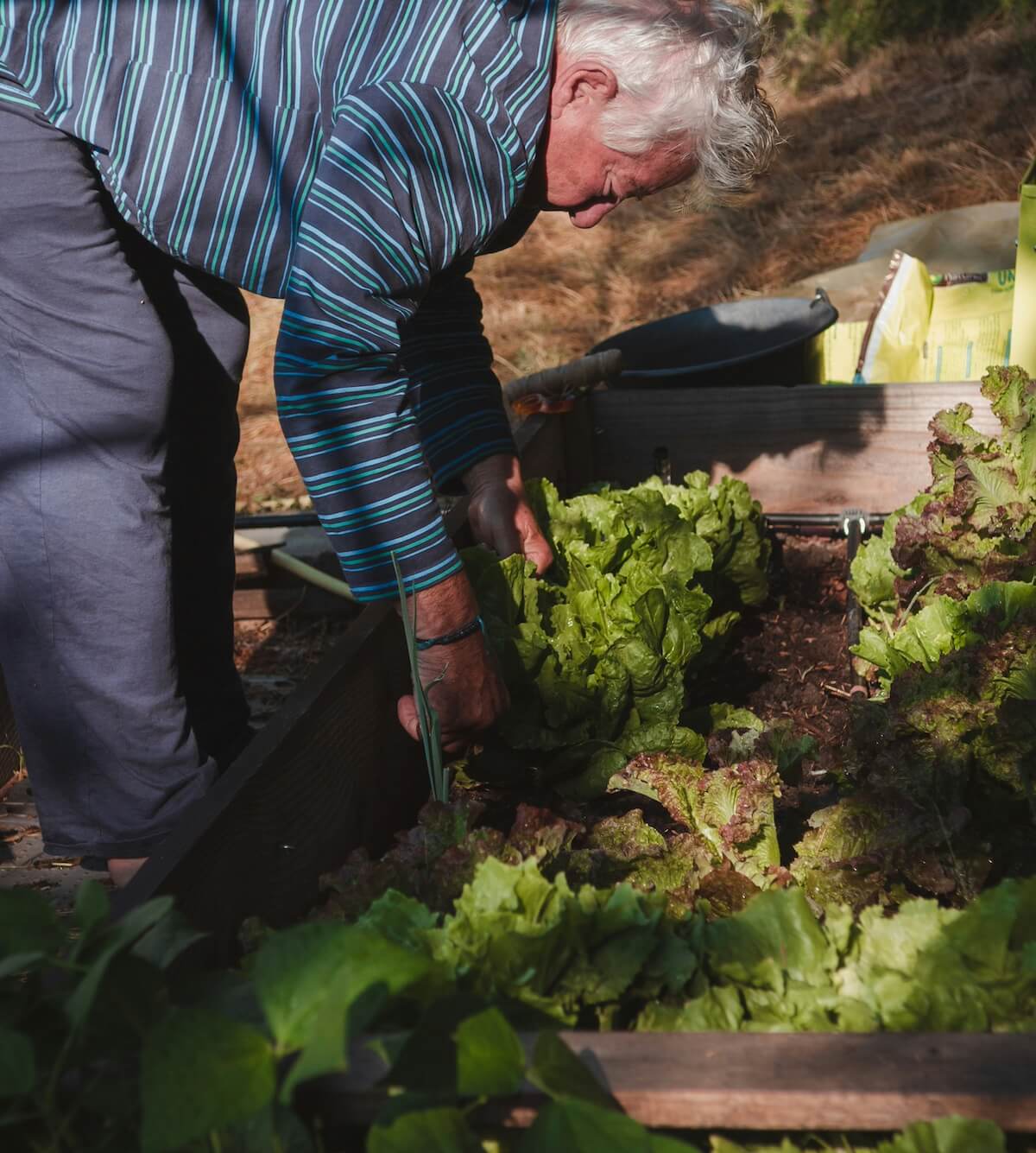
But if you really want to make your life easier, remember this: after the June 21 solstice, the days start to get shorter. Spinach and arugula sown in July and August grow under conditions that are exactly the opposite of those that trigger bolting. The result? They grow, they don’t bolt, and they last until the first frosts. It’s honestly a revelation. Just know that the best lettuce in Canada is fall lettuce.
The unexpected gift of the rebellious lettuce
One last thing, and I’ll wrap up with this: the flowers of your leafy greens are edible. Arugula flowers have a delicious peppery flavor on pizza. Cilantro flowers are lovely in salsa.
And if you let a few plants go to seed completely, you can harvest seeds to replant in the fall—lettuce is particularly well-suited for this. For other species like spinach, it’s more complicated (dioecious plant, wind-pollinated, requires multiple plants). We might come back to that in another article!
Your lettuce hasn’t let you down. It’s just given you the tools to start over next month!
P.S. I love lettuce—even if it’s a bit “bland” on its own, a good salad is still one of my favorite summer meals! So if you’re seeing the first signs of your crop bolting and you absolutely have to harvest everything in a rush, here’s my secret to eating it every day without getting bored! A perfect salad, includes a fruit, a cheese, a protein, and something crunchy, topped with a good homemade vinaigrette. That’s it! There are thousands of delicious combinations to discover!
Oh no, the dreaded lettuce bolt! I’ve been there, staring at a bitter, towering green monster instead of a crisp salad. It’s so frustrating when you put in all that effort. Sometimes gardening feels like a delicate dance, doesn’t it? On the bright side, maybe it’s time to try some indoor growing? Or, if you need a different kind of thrill, you could always check out Drift Hunters for some high-octane virtual fun:Drift Hunters
You guess two hidden five-letter words, receive color-coded clues, and continue narrowing down the possibilities until both dordle puzzles are solved.
Crossy Road demonstrates how risk-reward mechanics can be implemented effectively, as players must constantly decide whether pursuing coins is worth increasing their chances of failure.
Very informative and fun article! I enjoy your writing style, Audrey. Alas, I have far too much foraging wildlife around to grow much of anything. I keep reading these Laidbacks though, kidding myself that one day I’ll figure out the magic solution to the ravenous squirrels, rabbits, rats, chipmunks, deer, and birds that carry off every vegetable and chew every lettuce to the ground.