
Following up on my article published in late April, here is the next installment of flowering plants that can promote biodiversity in your lawn while tolerating mowing and moderate foot traffic.
A flowering lawn will delight pollinators, and if you let the grass grow a little longer (10 cm or 4 in.), you might be in for some pleasant surprises!
Your comments and suggestions are welcome! Please note, however, that this list was compiled for the province of Quebec, where we have extremely harsh winters (temperatures can drop to -30°C / -22°F), but where we also generally have plenty of snow to protect perennials.
Flowers for the lawn
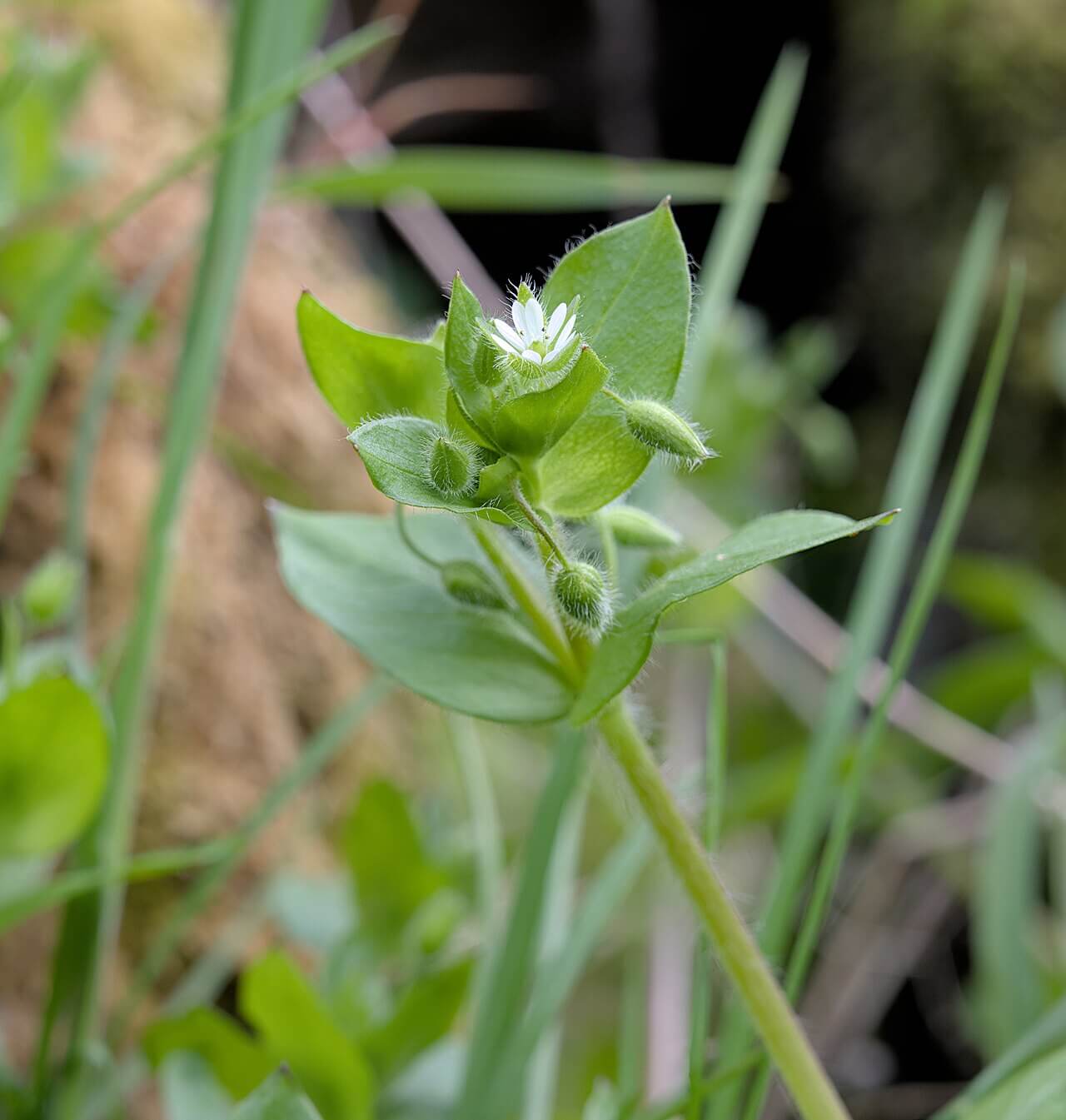
Chickweed (Stellaria media)
- Introduced annual plant
- Edible and medicinal
- Prefers moist soils rich in organic matter
- White star-shaped flowers from May to October
- Height: creeping stems 5 to 40 cm (2–16 in) tall
- Personal observations: I haven’t often seen it growing in lawns — perhaps it isn’t very tolerant of foot traffic?
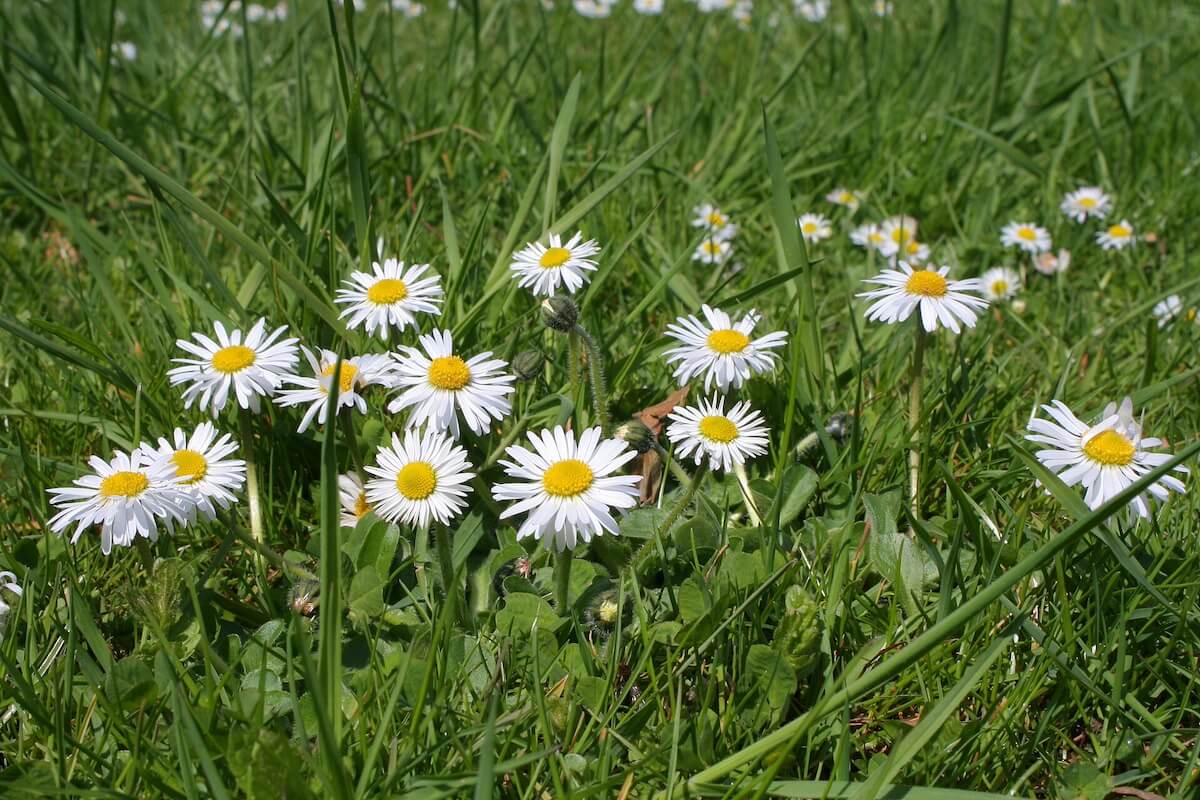
Common daisy (Bellis perenis)
- Introduced perennial plant resembling a small daisy
- Sun or partial shade
- White flowers from May to September
- Height: 6–10 cm (3–4 in)
- Personal observations: Very common in temperate Europe Likely near the limit of its hardiness in Canadian climate
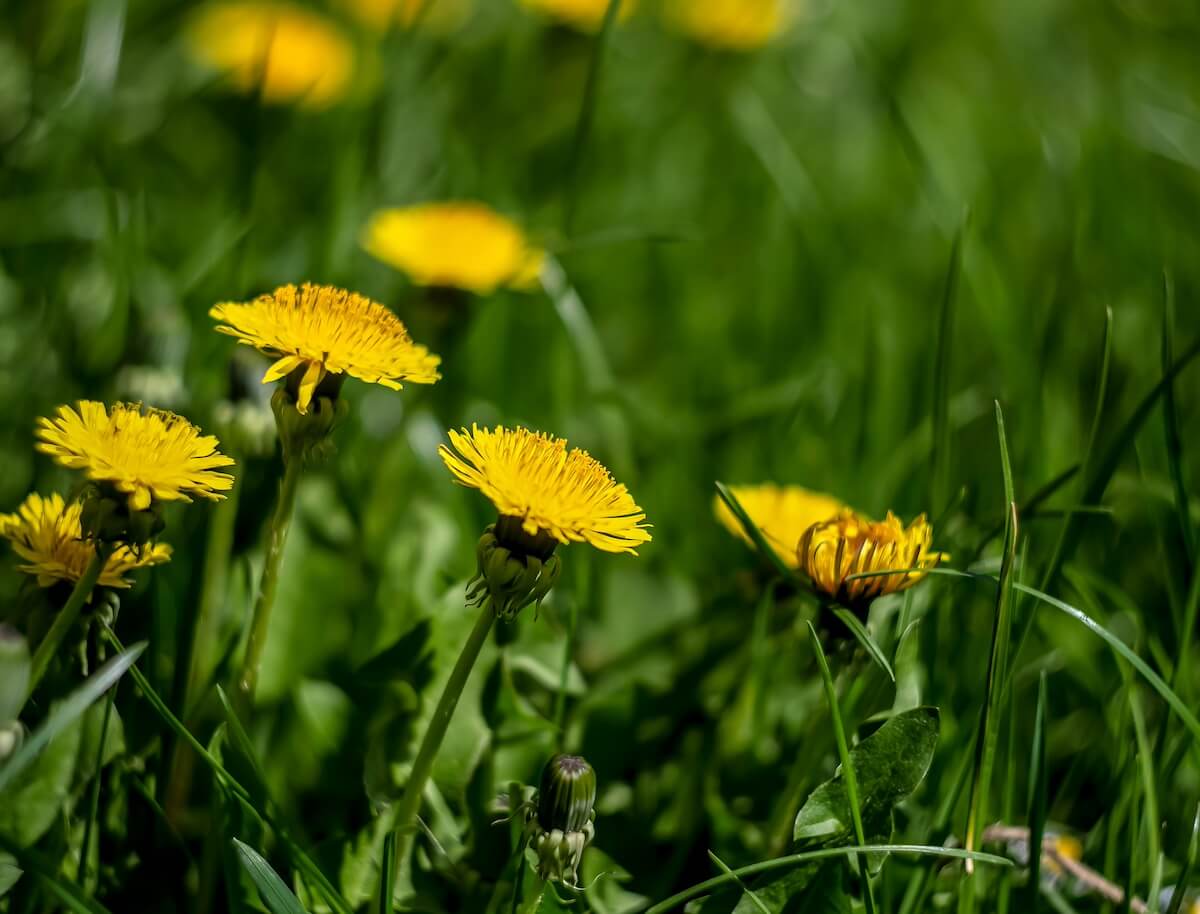
Dandelion (Taraxacum officinale)
- Introduced perennial plant and, of course, extremely common
- Edible and medicinal
- Very tolerant of a wide range of conditions
- Abundant yellow blooms from late April to late May, with only occasional flowering afterward
- Height: 5 to 30 cm (2–12 in), up to 60 cm (24 in) in rich soil
- Prefers full sun, but tolerates partial shade
- Personal observations: We’re not going to win the battle against dandelions! In a dense lawn, the foliage tends to disappear after flowering. A very beautiful plant in deep, fertile soil. Children love it!
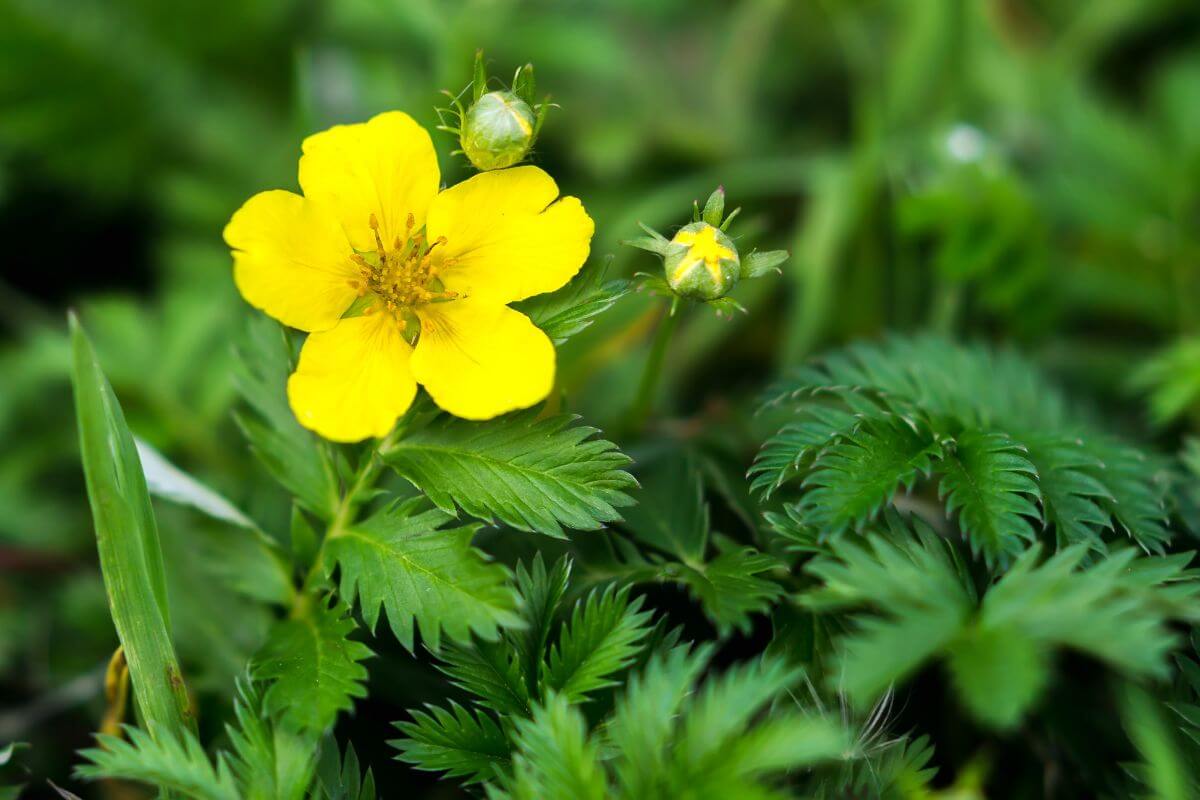
Silverweed (Potentilla anserina)
- Native perennial plant
- Edible and medicinal
- Yellow flowers in July and August, usually with 5 petals
- Height: 15 cm (6 in)
- Beautiful pinnate leaves with silvery undersides
- Spreads by stolons
- Likes dry, sunny locations such as roadsides and uncultivated areas
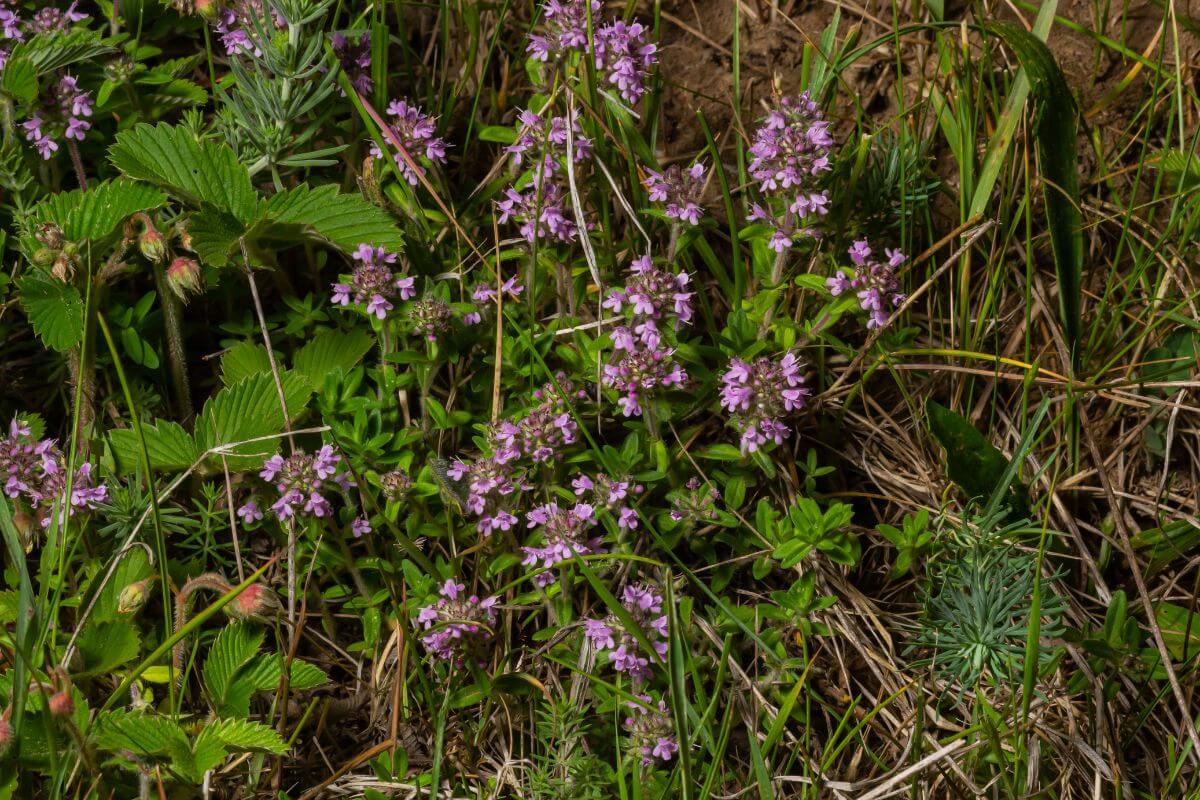
Creeping thyme (Thymus serpyllum)
- Introduced perennial plant, with many cultivars available
- Also known in Europe as wild thyme, which distinguishes it from French thyme commonly used in cooking
- Tolerant of foot traffic
- Very drought tolerant
- Pretty small flowers ranging from pink to mauve to white
- Forms beautiful colorful carpets in June and July, with no mowing needed
- Height: 5–10 cm (2–4 in)
- Very small leaves that blend well with turfgrass
- Tolerates poor, dry soils
- Full sun for maximum flowering
- Personal observations: Slow to establish from seed. Seeds are tiny and should be left almost on the soil surface. Much easier to establish using small plants. Ideal for covering sloped lawns or embankments
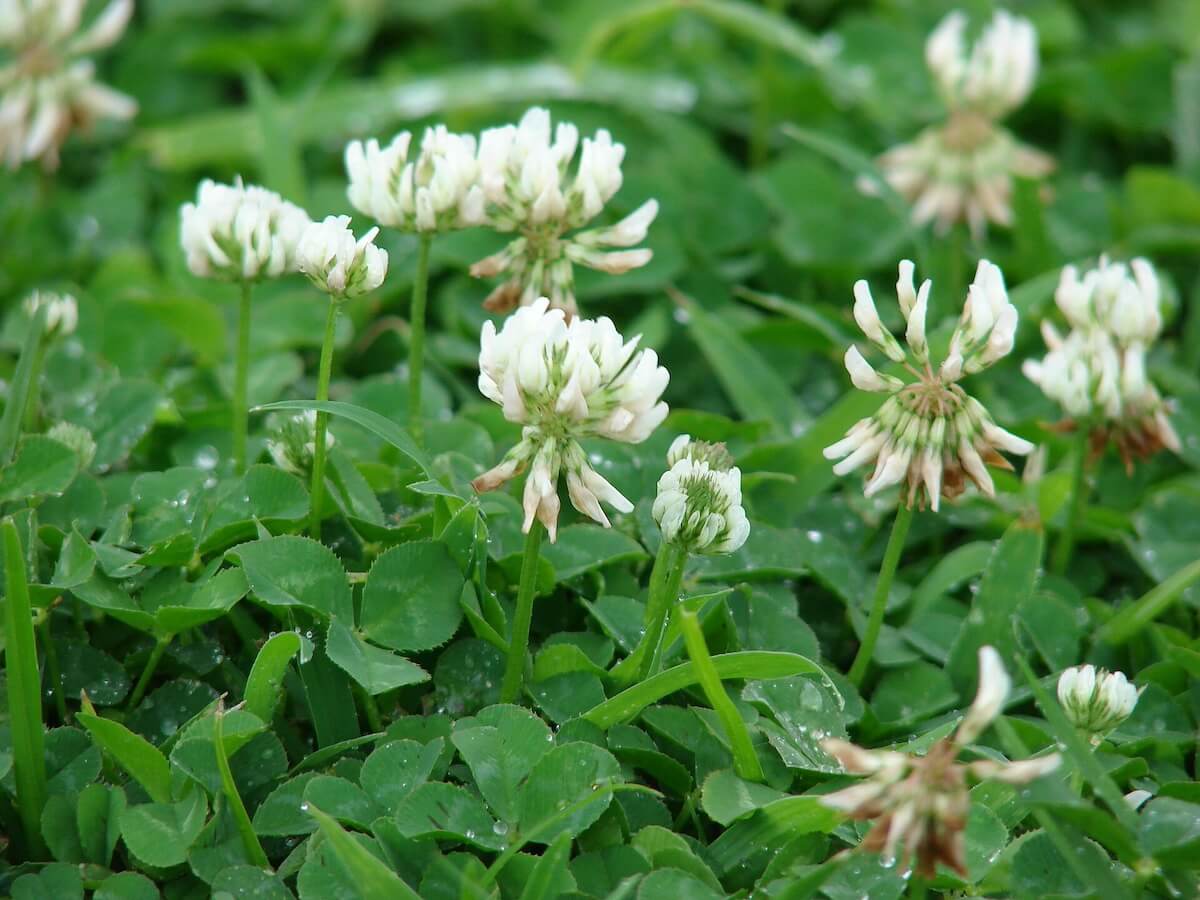
White clover (Trifolium sp.)
- Introduced perennial plant
- Tolerates moderate foot traffic
- White flowers throughout the summer
- Small leaves with 3 leaflets (sometimes 4!)
- Height: 8–10 cm (3–4 in), sometimes up to 30 cm (12 in)
- Improves the soil through its ability to fix nitrogen
- Tolerates poor, dry soils
- Does not tolerate heavy foot traffic (such as sports fields)
- Personal observations: This plant used to be an integral part of a beautiful lawn before the arrival of selective herbicides. White clover breaks up the monotony of grasses and makes other “weeds” seem more acceptable. Red clover is a much larger plant, growing 20 to 80 cm (8–30 in) tall, which is not well suited to urban lawns but can be used in a flower meadow. Microclover is a cultivar with smaller leaves and flowers, ideal for those who want a shorter-looking lawn. It is also more expensive.
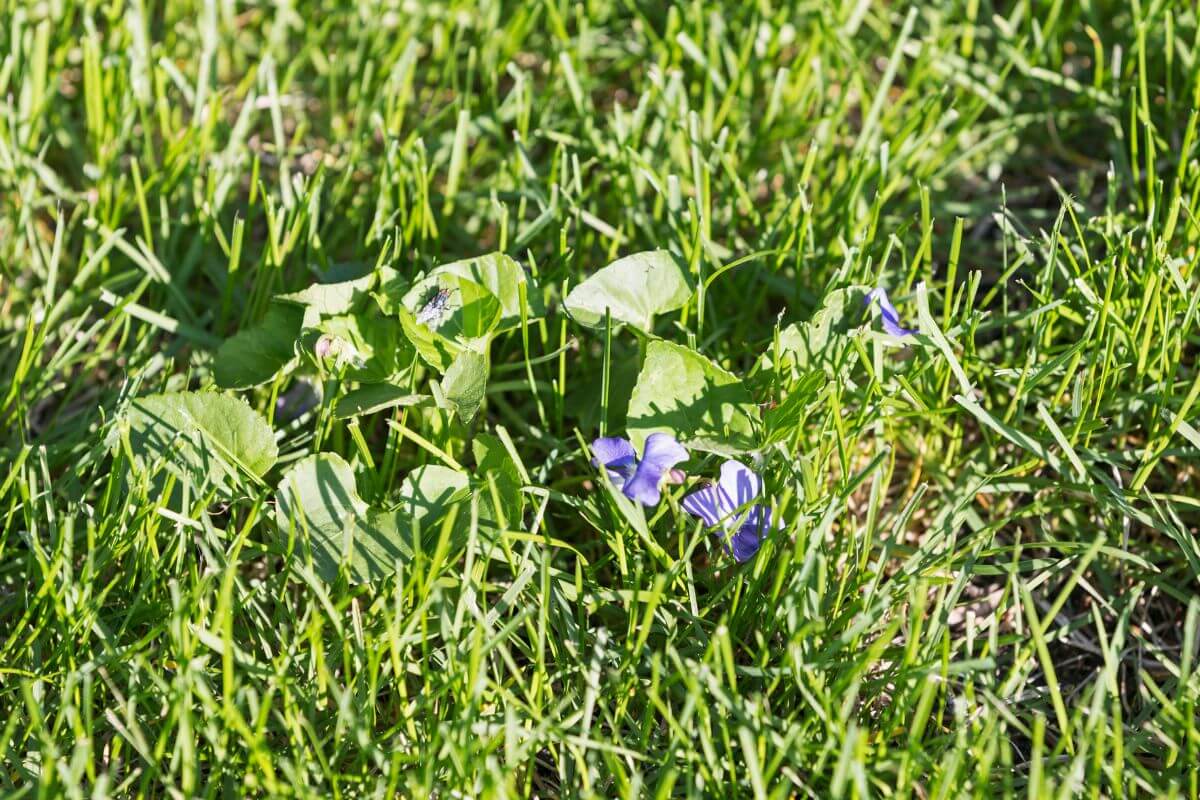
Violets (Viola sp.)
- More than twenty native perennial species in Quebec
- White, yellow, or various shades of violet flowers in May and June
- Height: 10 to 15 cm (4–6 in)
- Prefers somewhat moist lawns
- Tolerates moderate foot traffic
- Drought tolerant
- Personal observations: Among the most beautiful lawn flowers. Wait until flowering is finished before mowing.
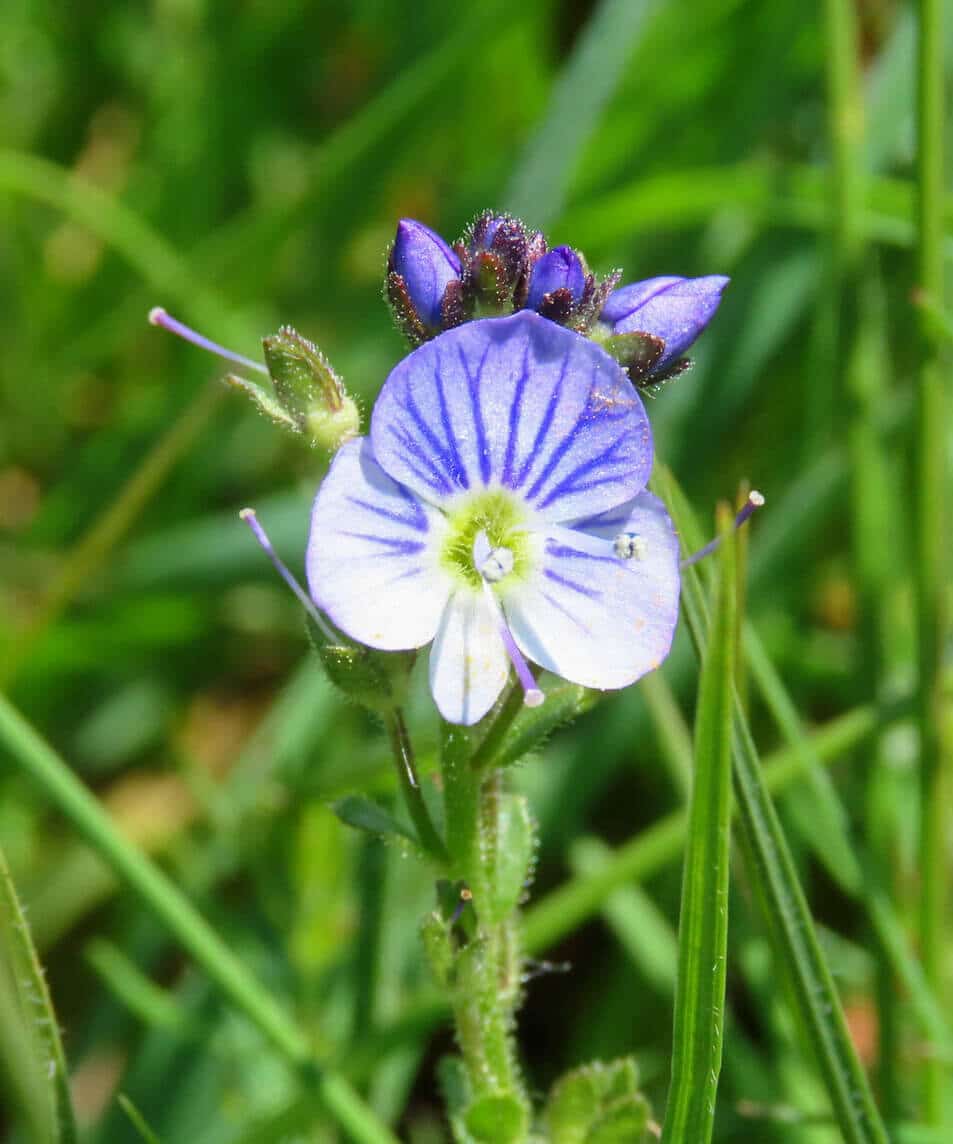
Thyme-leaved speedwell (Veronica serpyllifolia)
- Introduced perennial plant
- Very small pale blue flowers from May to October
- Height: creeping stems 5 to 25 cm (2–10 in)
- Small leaves that blend into the lawn
- Grows in sun or shade
- Likes moist lawns
- Tolerates foot traffic
- Personal observations: This species appeared spontaneously in my lawn and tolerates mowing very well. Another species, germander speedwell (Veronica chamaedrys), which is prettier but taller, was growing along the edge of my lawn.
I’m thinking of creating a chart with all these lawn flowers and their characteristics once I’ve received all your comments, additions, and suggestions.
In the fall, I could also make a list of small spring-flowering bulbs to plant in your lawn.
I’ve been trying to let a few friendly weeds stay in my yard too and it’s surprising how much life they bring in. White clover and violets are my favorites because they look soft and don’t mind a little mowing. My kids point out the bees now instead of just asking when the lawn will be cut. I also glanced at https://grasshopper-mower.pissedconsumer.com/review.html while comparing mower experiences, just out of curiosity.