
Yes, I know. It’s a tired topic, and many have already addressed it…
But let me explain before I go! Larry has already written, with his usual honesty, that after a decade of following the principles of companion planting, he no longer believed in it. The results were too mixed, the explanations too vague, and those famous companion planting charts? A great way to spend hours planning your vegetable garden only to end up planting just about anything.
So why am I bringing this up again?
Because the conversation always ended at the same point: “it works” or “it doesn’t work.” What no one really explains is the why. Why do some combinations really work (or could work), and others not at all? And why do unfounded beliefs end up taking root in our gardeners’ minds as firmly as they do in the soil?
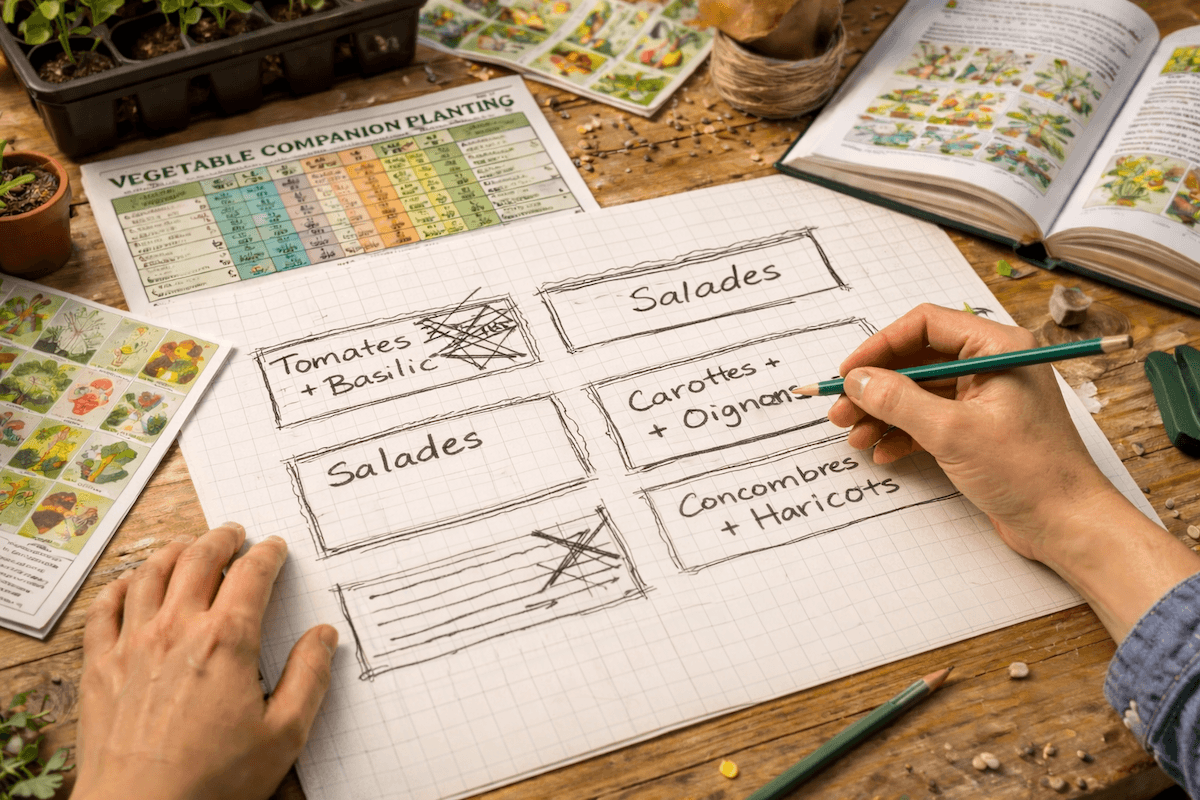
I dug through the scientific literature to find out where these stories came from, and whether anyone had actually, scientifically, tested companion planting… So this isn’t an article saying whether it works or doesn’t work; it’s an article explaining WHY it works or doesn’t work. Okay? Have I managed to keep you with me? Let’s get started!
Plants communicate, but not in the way we think
The science behind companion planting is mainly allelopathy. (Yes, it’s a big word. It’s worth 17 points in Scrabble!). It refers to something very concrete: the ability of certain plants to send chemical messages to their neighbors, for better or for worse.
These messages aren’t metaphors; they aren’t vibrations or mystical energies. They are real molecules that can be measured in a lab, and they travel via multiple pathways at once.
In the air, first of all. Do you know the smell of an herb garden on a hot day? The smell of a tomato plant? These are volatile molecules that plants release. Some attract pollinators, others repel predators, and still others affect neighboring plants.
Through the roots, next. Roots constantly secrete substances into the soil around them, and this is often the most powerful route because the molecules remain concentrated and act directly on neighboring roots and soil microorganisms.
Rain and watering also play a role: they carry chemical compounds present on leaves and stems down into the soil.
And even after they die, plants continue to release substances as they decompose, sometimes for years.
It’s a proven fact!
All of this is very real—it’s communication between plants, and it’s proven, measurable, and observable. They send messages like: “I’m here, grow somewhere else!” Or: “Watch out, my sap is toxic to microbes!” Or even: “I’m sooooooo thirsty!” And certain plants, insects, or soil microbes can pick up on these messages and react to them.
The nuance—and this is where popular comparison charts oversimplify things—is that most of these effects have been demonstrated in the laboratory, under controlled conditions with much higher concentrations of molecules than are found in actual garden soil. In nature, these chemical signals are diluted, transformed by soil microorganisms, and dispersed by rain. The effect measured in the lab is real, but it is often much more nuanced in the field.
When Science Says Yes
In 1999, a Chinese researcher demonstrated that Chinese chives (Allium tuberosum) planted alongside tomatoes sent chemical signals through their roots that stimulated beneficial soil bacteria, enabling them to suppress the bacteria responsible for bacterial wilt in tomatoes. Tomatoes planted near the chives were much less likely to get sick. A well-understood mechanism, reproducible results: this is true companion planting, validated by science.
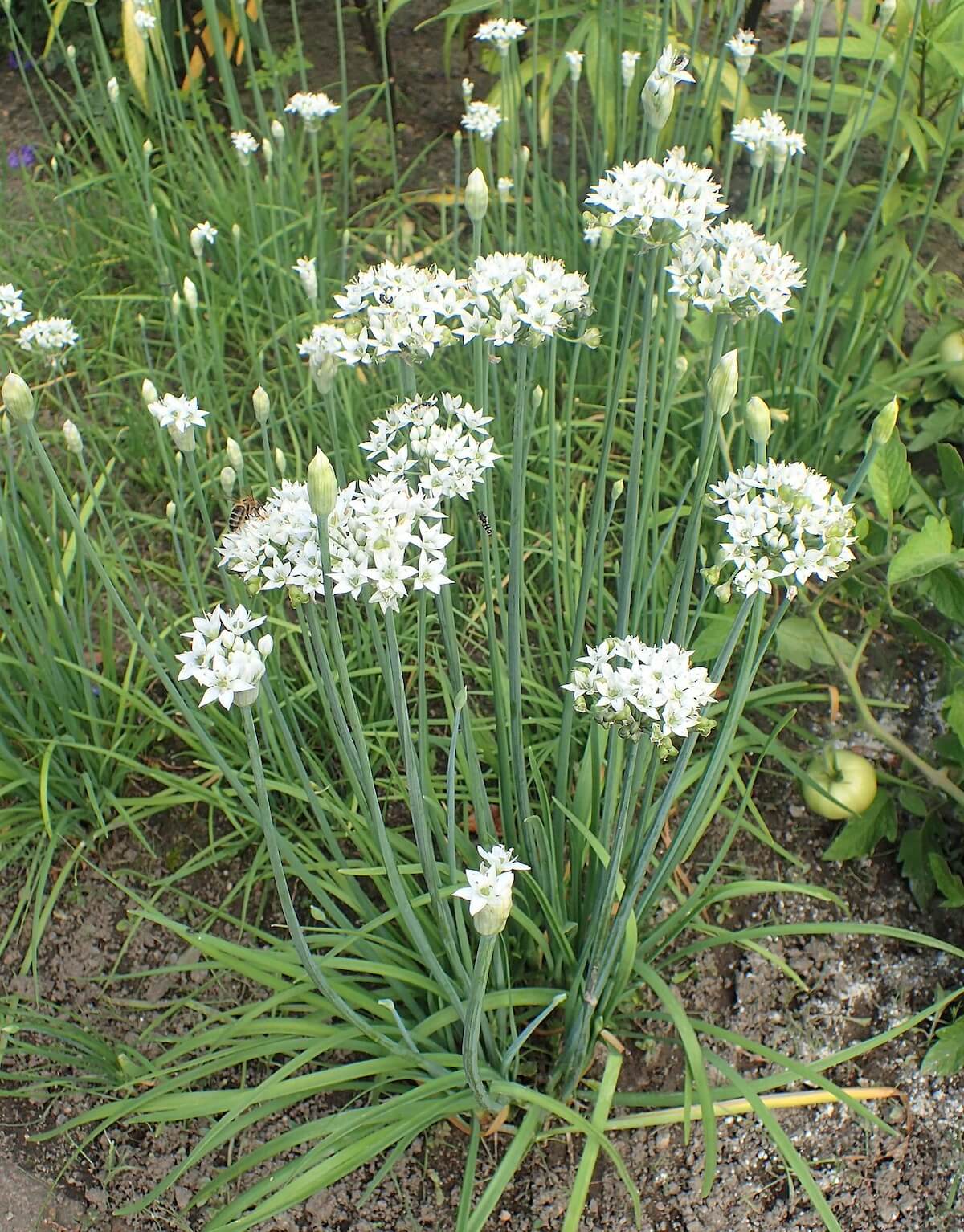
(A quick note for us: bacterial wilt is mainly a problem in the hot, humid tropics. In Canada, it’s less of a daily reality for us. But this example perfectly illustrates how companion planting can work when there’s a real chemical basis behind it.)
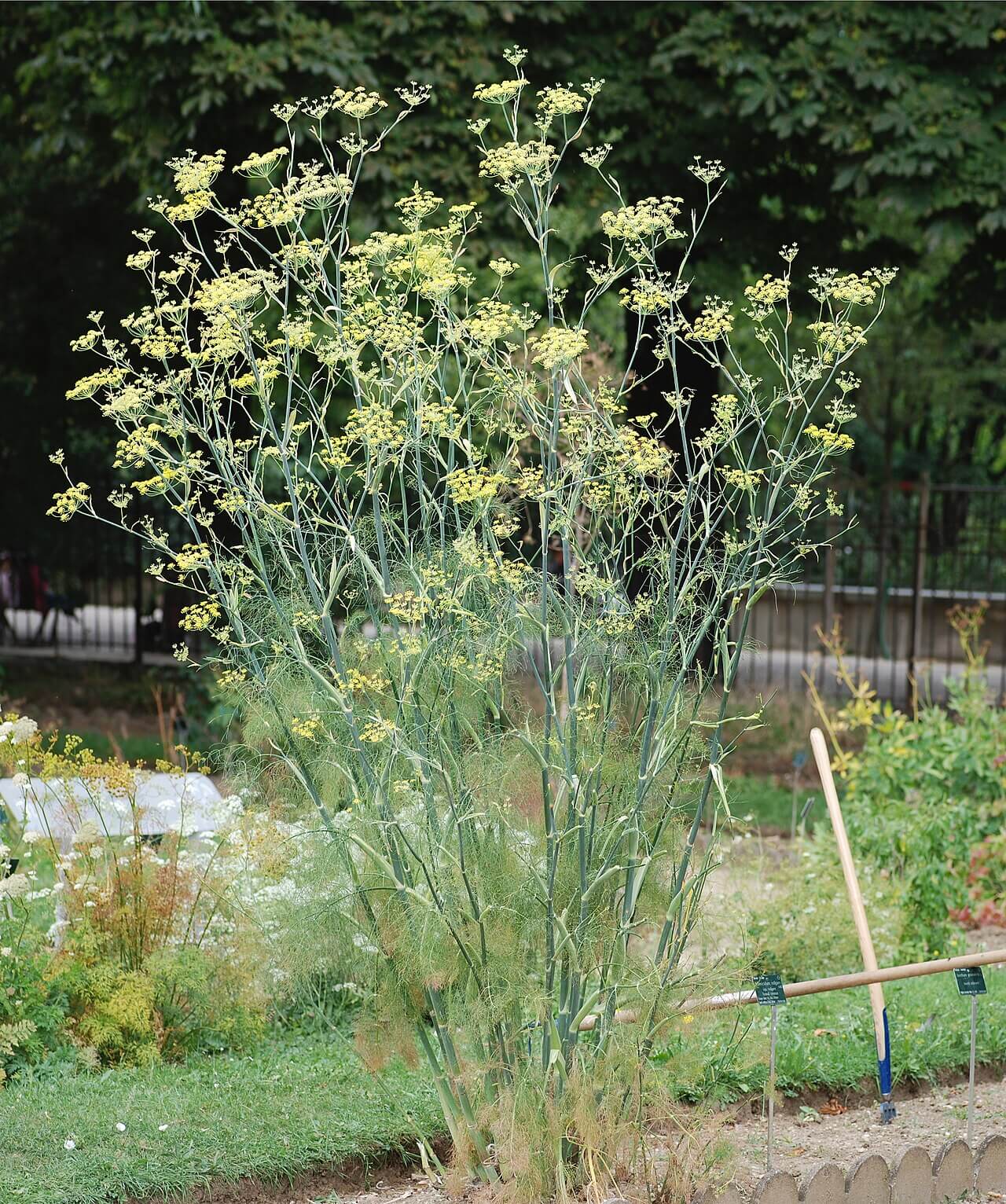
When it comes to bad companions, there’s one well-documented culprit: fennel. Its roots release substances that really slow down the growth of its neighbors, particularly tomatoes, beans, and most legumes. It’s also an extremely demanding crop that literally drains water and nutrients from the soil. If your fennel is sitting in the middle of the garden and everything around it is growing sluggishly, there’s a concrete chemical and physical explanation: choose a secluded spot for it instead!
Other plants have also passed scientific efficacy tests (whether the effect is good or bad!). We’ve already discussed in other articles how marigolds combat nematodes, the black walnut and its devastating juglone, and sunflowers that quietly poison their neighbors. These are all examples where science has identified actual molecules and documented mechanisms. But this should be taken with a grain of salt: if you plant a patch of marigolds in the middle of a massive field… well, it’s like eating a stick of celery between two poutines and hoping to lose weight!
Trap plants
In fact, these plants, which are so good at attracting pests, are often called “trap plants.” Nasturtiums, for example, draw aphids to them like a magnet. They can therefore “protect” your vegetables by drawing aphids to themselves instead of your tomatoes: that’s some really great companion planting!
But let me ask you a question before you go out and buy your nasturtium seeds: do you currently have an aphid problem in your garden? If the answer is no, well, you’re about to invite them in…! I know—I did it last year!
So is companion planting 100% wrong? No, certainly not! Understanding what works can be a huge help, but it always comes down to context.
When Science Says No
There are also examples of companion planting that have been scientifically tested and officially declared ineffective! And here’s my favorite example: planting basil next to tomatoes improves their flavor and keeps pests away.
This is probably the most widespread of all companion planting beliefs. It’s everywhere—in every organic gardening book—repeated every spring with absolute conviction.
American researchers had the good sense to test it thoroughly: some tomatoes were grown with basil, others without, and blind taste tests were conducted over three years. The result?
No difference.
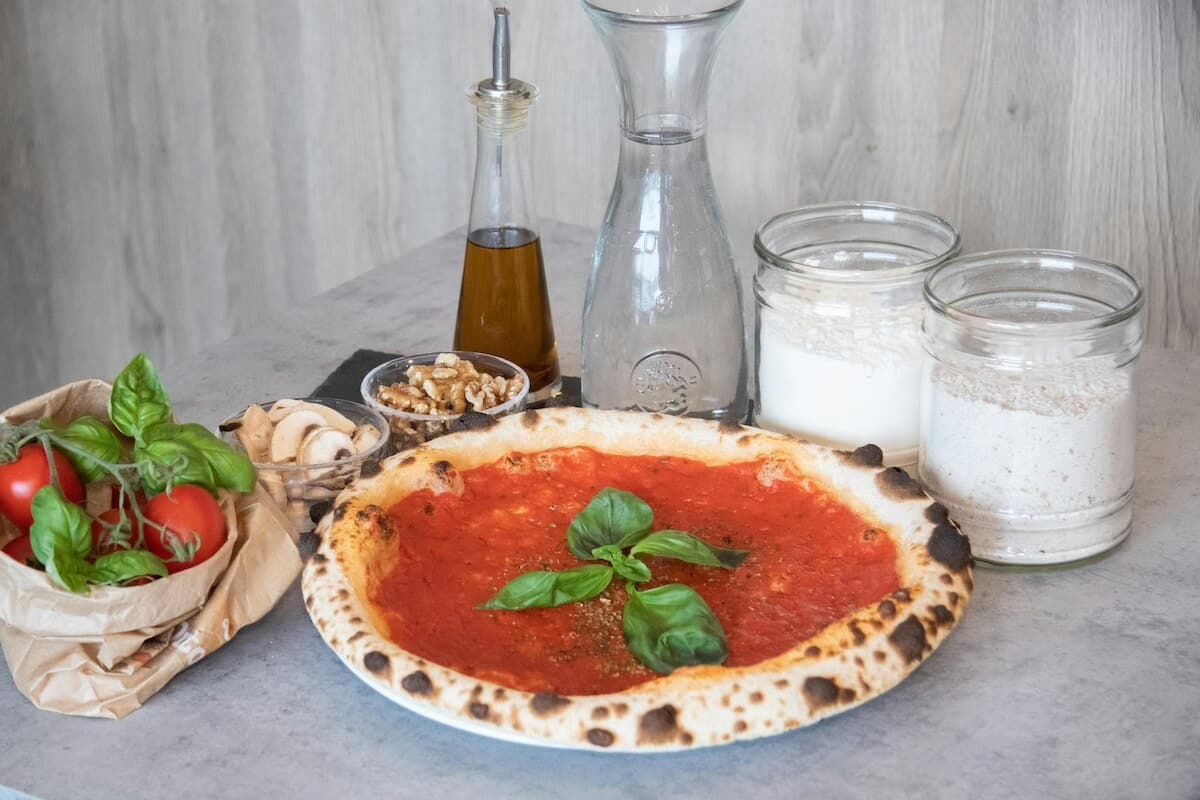
Tomatoes pair wonderfully with basil… on the plate! But in the garden: absolutely no difference in taste!
That said, a Japanese study published in 2024 did indeed show that the volatile compounds released by basil activate the tomato’s defense mechanisms against insects. In the presence of basil, the tomato reacts more quickly and more intensely when attacked; it acts, in a way, as a stimulator of its natural defenses. The chemistry is therefore there, measurable, real… Except that the experiment was conducted in a hermetically controlled growth chamber, not in an open-air vegetable garden with rain, wind, and all the complexity of living soil.
In short, claiming that the little basil plant in the middle of the 20 enormous two-meter-tall giants surrounding it is going to have a real impact… In my opinion, that would warrant field studies before claiming victory! But at the same time, you have nothing to lose by trying, until science has made up its mind!
Where do these myths come from?
Most of the companion planting advice still circulating today stems from two books published by the American author Louise Riotte in the 1970s: Carrots Love Tomatoes and Roses Love Garlic. These books are still being reprinted and sold today. They contain no scientific data and make no reference to controlled studies. They are compilations of personal observations and folk traditions. There’s no ill intent here, but no scientific rigor either.
Here’s how it goes: Ms. Riotte plants her basil next to her tomatoes. That year, by chance, the weather conditions are perfect and she has an exceptional harvest. She makes the connection. She writes it down. Someone else repeats it. Someone else writes it in another book. Fifty years later, it’s presented as a universal truth on every gardening website. But in the meantime, no one wonders how her tomatoes fared in the years she didn’t plant basil next to them!
This is what’s called confirmation bias: our brains latch onto coincidences that confirm what we already believe and forget the data that doesn’t fit. It’s human, it’s universal, and it’s exactly why so many gardening myths survive from generation to generation. (I’m the first to admit it, by the way. I won’t even tell you about the first time I tried to create a 100% companion planting garden and threw my notebook across the room after two hours of racking my brain!)
So, what should we do?
Companion planting works very well in the lab, when specific molecules are isolated under controlled conditions. In a real garden, with rain, wind, soil microorganisms, and unpredictable weather, it’s much more complicated.
That said, there’s one idea in all this that really holds up: diversity. Not because your carrots “like” your leeks, but because a diverse vegetable garden is simply more resistant to pests than monocultures. A pest that specializes in carrots will spread much less easily from one carrot to another if they’re interspersed with celery. A fungal disease that loves your tomatoes will be slowed down if they aren’t all planted in tight clusters. But here, I’m no longer talking about some magical chemical interaction between species; I’m simply talking about ecology.
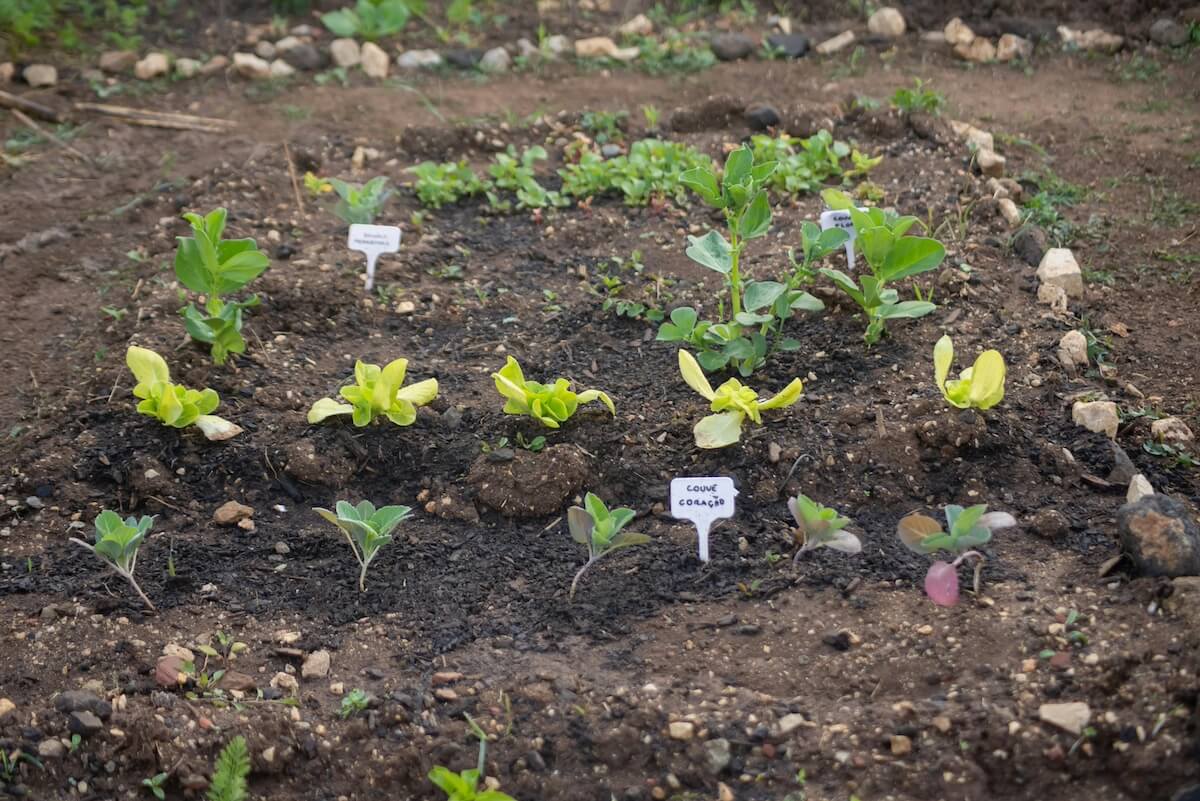
And that’s ultimately where Larry had ended up too: logical companion planting—the kind that takes into account space, light, pests, and the garden’s layout—that works. The charts that tell you your carrots “don’t like” beets? Not so much.
There are so many variables in a garden, and we can’t control half of them. That’s what makes gardening fascinating. And sometimes even a little humbling!
I’m sure there have been a few exaggerations conveyed about companion planting. However, certain herbs don’t do well together. Some can die off if place too close to others but I’m sorry I cannot give you examples.
I had the Carrots Love Tomatoes book and knew all about basil and tomatoes, but never had any great results! So, I read about myths and also read Larry’s thoughts and learned the sad truth! I really enjoyed learning more from you today.
Great article Audrey. I do my own simplified form of companion planting based on root types: legumes with tap roots and shallow roots such as peas, carrots and lettuce or early maturing crops with later ones. Not traditional ‘companion planting’ but they make good companions based on their growth and maturity habits.
Thank you so much for this! I’ve gone back and forth to both sides of the debate for years, and you so clearly explain the importance nuance that is missing from companion planting “information”.