
A mountain ash in distress
We cut down a beautiful, large mountain ash tree, leaving 2 meters of trunk above ground. Since then, large mushrooms have been growing all over the tree. What should we do? Should we cut down the tree, and if so, how can we do it without spreading the mushrooms to the flowers at its base or to the surrounding area?
Answer
Pruning a tree too severely causes it great stress, and not all trees can survive it. The fungi that grow there take advantage of the tree’s weakened state to proliferate. Note that the mountain ash (Sorbus spp.) is a pioneer tree that quickly establishes itself in bare areas, but is not genetically programmed to cope with complications. When things go wrong, it is more likely to die than to fight them off. Thus, like most pioneer trees, it generally has a short lifespan. The presence of fungi signals the beginning of the end, and I fear you have no choice but to cut it down.
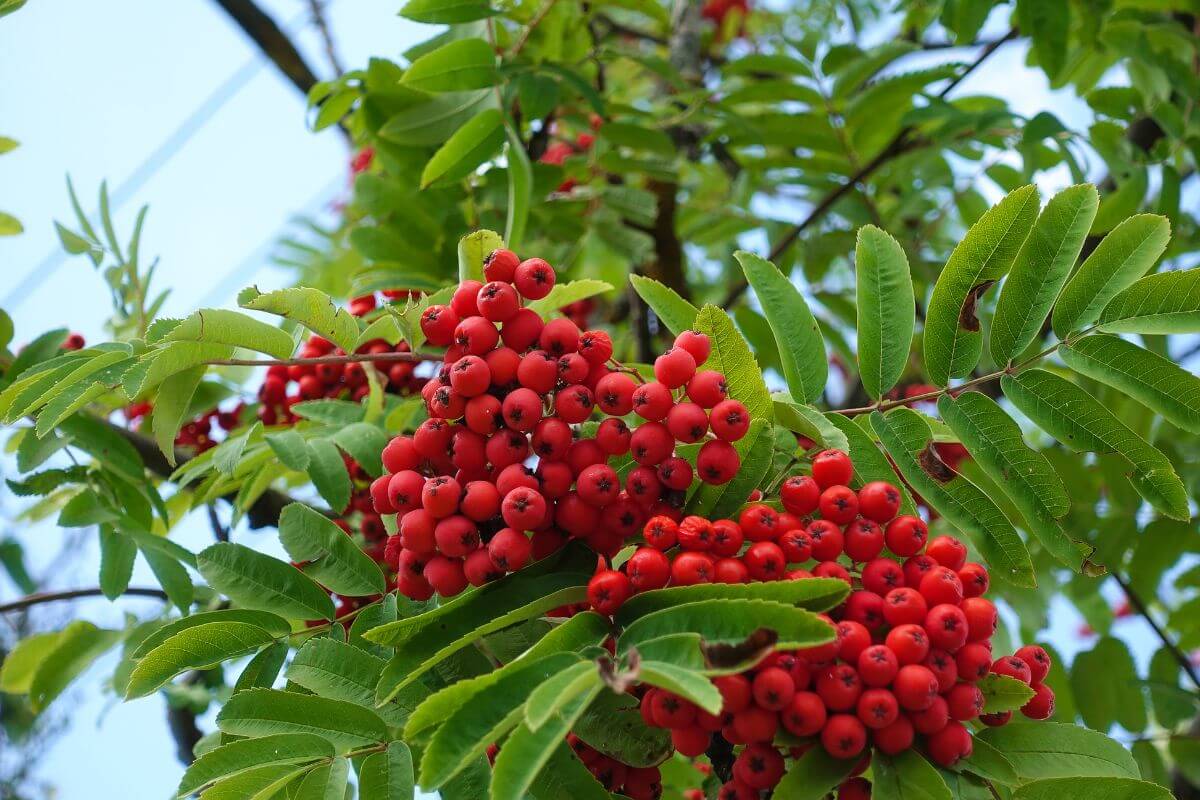
As for the flowers growing at its base and the surrounding environment, don’t worry that the fungus will harm them. The vast majority of fungi are highly specific, affecting only a very limited number of species—and even then, only when those species are under stress. So, unless there’s a stressed serviceberry tree in the area…
Why do mushrooms grow on trees?
The presence of fungi on a trunk does not always mean that a tree will die immediately. Some fungi simply live in dead wood or old wounds. However, when large fungi appear on the main trunk or at the base of a tree, this often indicates that part of the internal wood is already decaying. Trees weakened by severe pruning, injury, drought, or compacted soil become much more vulnerable to these decomposing organisms. In many cases, the real danger is not the disease itself, but the loss of the tree’s structural integrity, which can cause it to become brittle or unstable over time.
Plant to identify
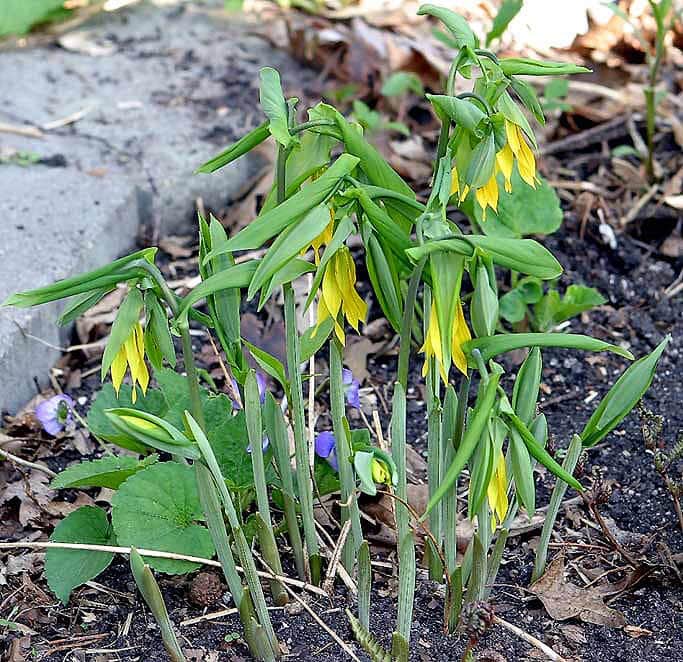
I recently spotted a forest plant with drooping yellow flowers in Gatineau Park. It was growing in a wooded, shady area. Could you help me identify it?
Réponse
It was likely the large-flowered bellwort (Uvularia grandiflora), a pretty native perennial found in the deciduous forests of southern Canada.
In the spring, it produces delicate, drooping yellow flowers with slightly twisted petals. Later in the season, the flowers give way to upright seed capsules, which may make the plant a little less spectacular… but still interesting to observe.
It’s an excellent plant for partially shaded to shaded gardens, as well as woodland-style or naturalized landscapes. As always with native plants, it’s best to avoid collecting them from the wild and instead turn to specialized growers.
A beautiful native plant for shady gardens
The large-flowered bellwort is still rarely used in landscaping, despite its many qualities. This native perennial grows naturally in the rich maple groves and deciduous forests of Canada. It thrives in cool, organic-rich soil but requires very little maintenance once established. Its foliage fades discreetly in the fall without becoming invasive. It pairs particularly well with ferns, woodrushes, bloodroot, tiarellas, and hostas in naturalized shade gardens.
Great Q&A! It’s always fascinating to learn how to identify plant diseases and mysterious flowers with practical gardening advice. Articles like this make gardening much more approachable. After spending time in the garden, I enjoy relaxing with a few puzzles in Meowdoku.