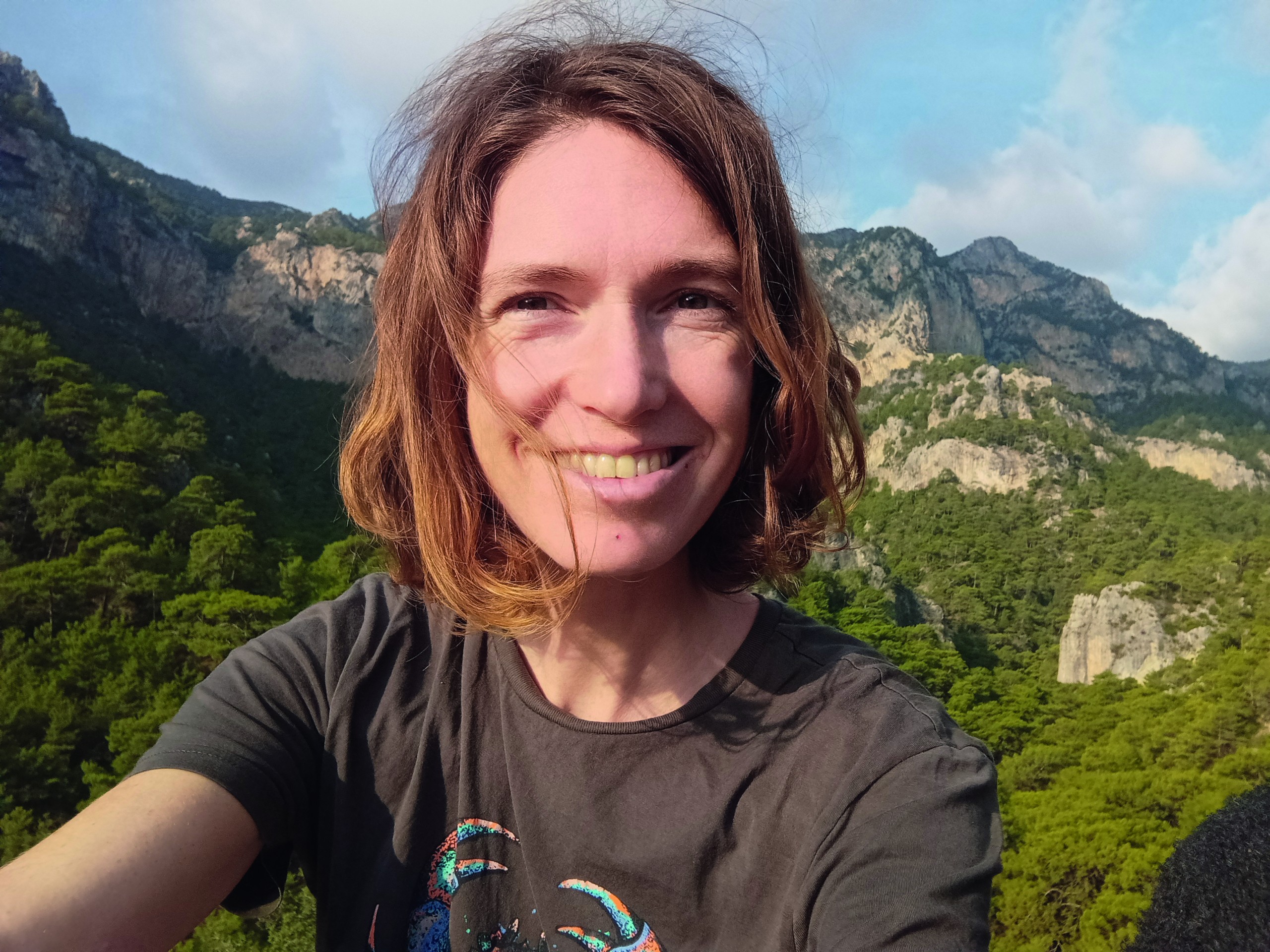
With their smartphones in hand, millions of nature enthusiasts are photographing, geotagging, and identifying species for the benefit of science. A look at the citizen science app iNaturalist.
This article is reprinted with permission from the Friends of the Montreal Botanical Garden. It was originally published in Quatre-Temps, volume 50, issue 2.
Some people scroll through social media or dating apps in search of love. Étienne Lacroix-Carignan, on the other hand, spends several hours a week identifying plants and locating sedges.
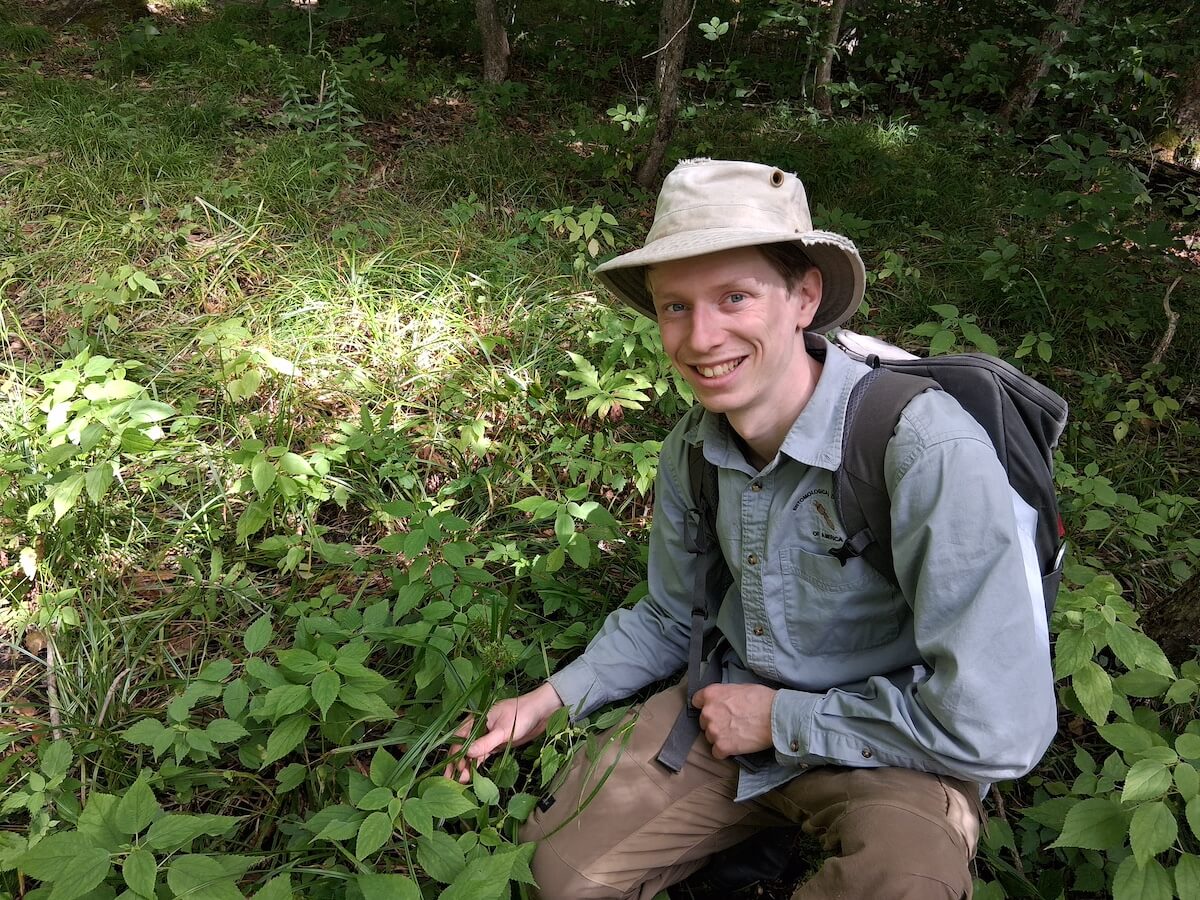
With approximately 225,000 plants identified and 22,000 plants observed across more than 3,700 species, he is the top contributor to iNaturalist in the province of Quebec. When he walks through the forest, the doctoral candidate takes photos of the plants he observes. In the winter, he trains his eye to identify them. Through his involvement, he helps improve artificial intelligence’s (AI) ability to accurately recognize plant biodiversity.
“In 2017, I discovered iNaturalist; it changed my life,” he says enthusiastically. “It’s a platform that brings together a community of naturalists. It’s the best way to connect with people who share the same passions, exchange ideas with other botanists, or propose collaborations.”
The iNaturalist app
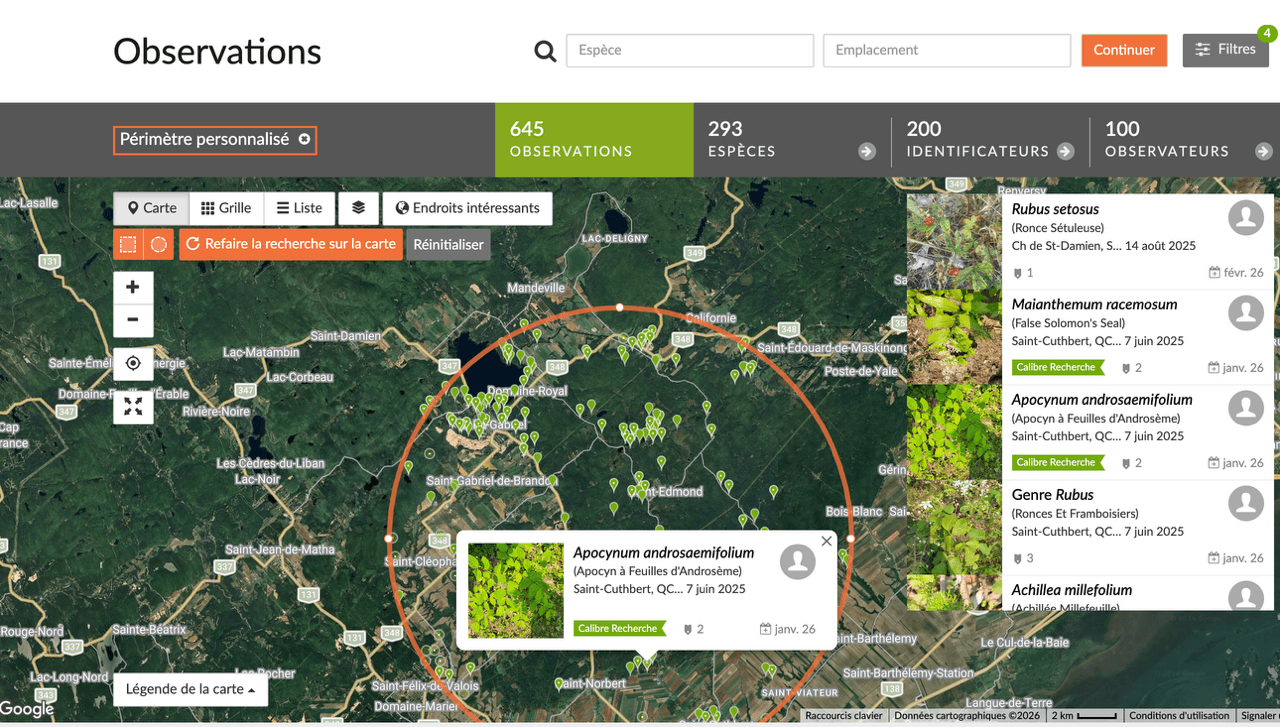
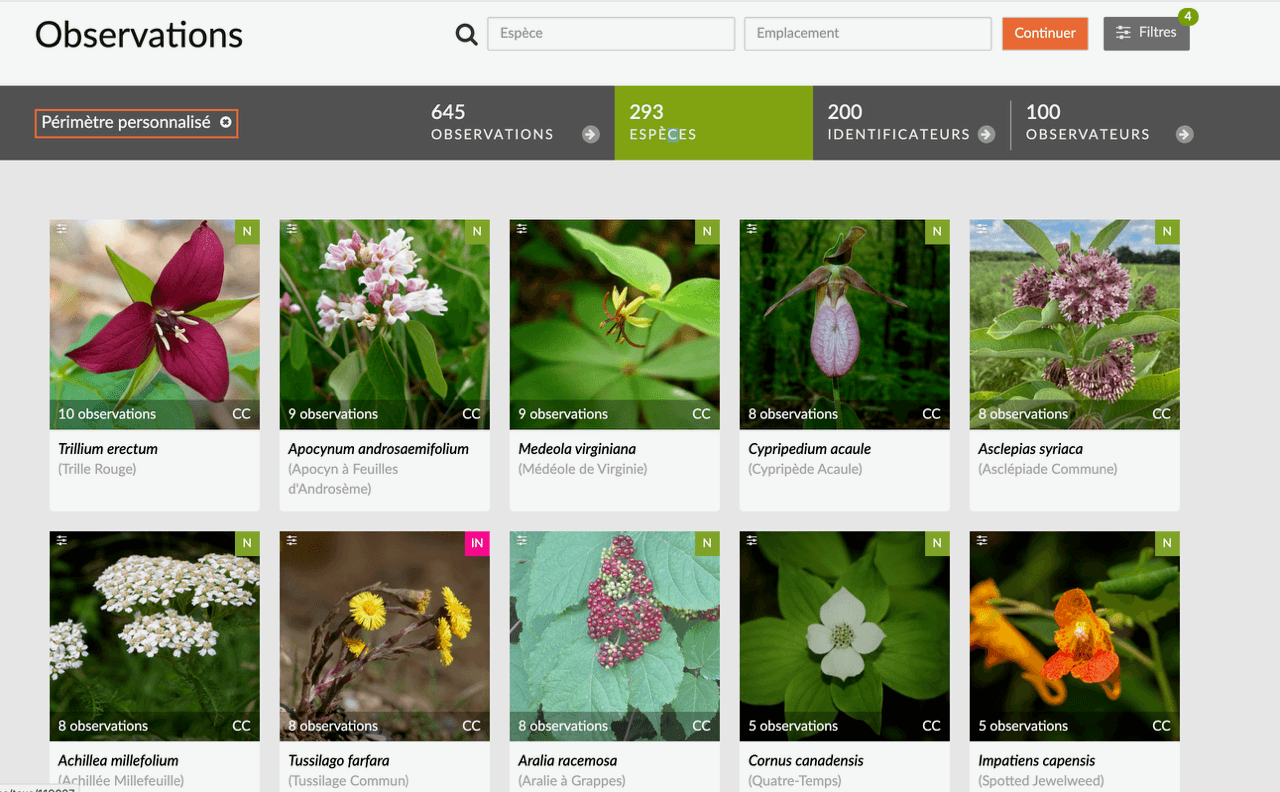
iNaturalist is easy to use. All you have to do is take a photo and enter a location and date. The app’s AI suggests an identification, which the app’s 8 million users may or may not validate. When two or three people confirm the species, the observation is shared with scientific databases, including the Global Biodiversity Information Facility (GBIF) and the Quebec Natural Heritage Data Center (CDPNQ). The citizen science platform is thus a goldmine of information for research and conservation.
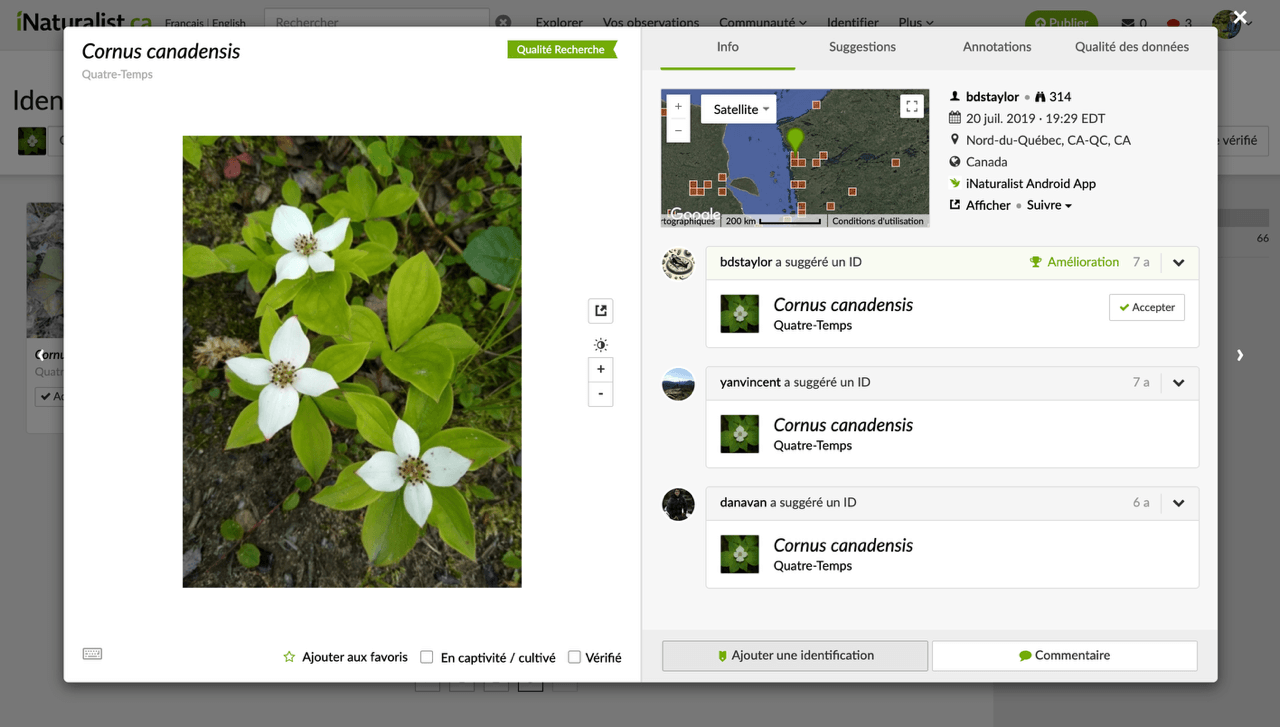
According to a study published in the American Journal of Botany, the iNaturalist app is believed to have led to the discovery of at least 12 new plant species in 2022 and 2025. Experts in botany and taxonomy have highlighted the importance of these citizen science observations, with tens of thousands of plant specimens uploaded every day. By March 2026, iNaturalist had accumulated 300 million verifiable observations and 7,000 scientific publications associated with data collected through the app.
A valuable database
“By sharing a photo and geotagging it, you might be able to help researchers,” confirms Frédéric Coursol, assistant botanist at the Montreal Botanical Garden. He cites the example of the woodland pinedrop (Pterospora andromedea), a chlorophyll-lacking herb classified as a threatened species in Quebec. Populations of the species were known to exist in the Mauricie and Gaspésie regions, until a photo led to the discovery of a third population in Lanaudière. The app protects the location data of these threatened species by shifting the GPS point within a radius of several kilometers.
Frédéric Coursol frequently uses the app during his travels to identify plants. In 2020, he photographed species in a rainforest along the Brazilian coast. “iNaturalist suggested an identification, and then a contributor advised me to write to a researcher in Switzerland.” What happened next surprised him even more: he had just documented a species unknown to science on his very first day in Brazil!
Sedges
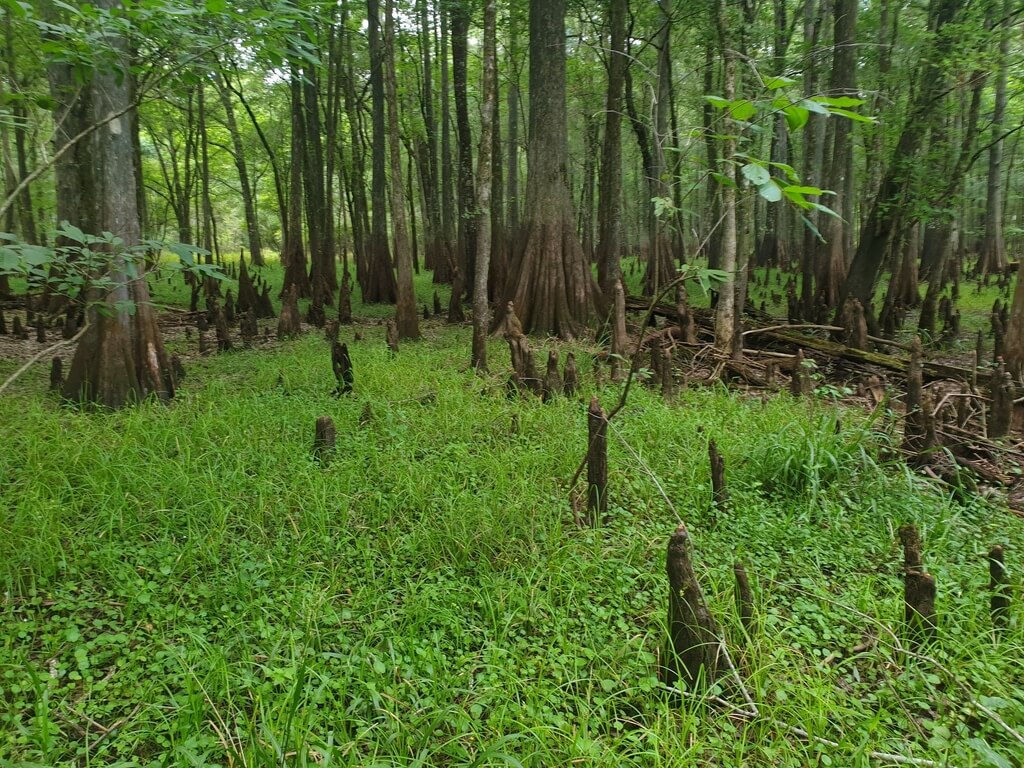
For his part, Étienne Lacroix-Carignan also uses the platform as part of his research on sedge taxonomy in Étienne Léveillé-Bourret’s laboratory at the Montreal Institute for Plant Biology Research (IRBV). In particular, he “rediscovered” a species described in the 19th century that had since more or less fallen into obscurity: Carex gator. “I went on iNaturalist to find out where the species had potentially been observed. I returned to the exact same spot to collect specimens to include in my genetic studies.”
According to the student researcher, identifying plants is one of the best remedies for “botanical blindness,” a cognitive bias that causes people to tend not to notice or distinguish plants in their surroundings. “It helps you realize that there’s often a lot of richness in greenery,” exclaims the enthusiast, who is convinced that giving something a name means understanding it better and, as a result, wanting to protect it.
Thanks to the magazine of the Friends of the Montreal Botanical Garden
You have just read an article originally published in Quatre-Temps, Volume 50, Issue 2, the magazine of the Friends of the Montreal Botanical Garden.
Since 1976, Quatre-Temps has been introducing readers to the plant world through popular science articles on botany, horticulture, ecology, biodiversity, and major environmental issues. Each issue features in-depth features, scientific news, inspiring initiatives, and stunning photographs that fuel curiosity and wonder.
Published four times a year in digital format, the magazine brings together experts from the scientific, horticultural, and journalistic communities, as well as enthusiasts who help spread knowledge about the plant world.
If you enjoyed this article, we invite you to explore other issues of Quatre-Temps (French only) or visit the Friends of the Montreal Botanical Garden website.
Many people associate AI with chatbots or image generation, but some of its most meaningful contributions are happening in fields that have nothing to do with entertainment. Citizen science projects show how AI can help identify species, organize huge amounts of observational data, and support biodiversity research while still relying on human knowledge and verification. The same collaborative approach is finding its way into industry, where ai packaging helps automate complex label and packaging reviews, reducing repetitive work while keeping people involved in the decisions that matter most.
What strikes me about iNaturalist is how it turns casual walks into meaningful contributions. I downloaded it two years ago after a friend showed me how she identified a rare orchid in her backyard. Now I use it every time I hike, and I’ve logged over 400 observations. The AI suggestions are surprisingly accurate, but what really hooked me is the community – experts like Étienne who verify identifications and share their knowledge. I once posted a blurry photo of a mushroom, and within hours, a mycologist from Finland confirmed it was a species I’d never heard of. That kind of connection is rare. The fact that iNaturalist has led to new species discoveries and feeds into scientific databases makes me feel like I’m actually helping, not just collecting pretty pictures. I also appreciate that the app protects sensitive location data for threatened species, which shows they take conservation seriously. If you enjoy being outside and want to learn more about what you see, this app is worth your time. Just don’t forget to back up your photos because losing a year of observations would be devastating. I use https://mfax.to/ to send my observation logs to researchers who request them, because some still prefer fax for formal data submissions. It sounds outdated, but it works. The whole experience has changed how I see the world around me.
This is a fascinating example of how AI can support meaningful real-world projects. I really like the idea of combining citizen science with technology to help document and protect biodiversity. In my own work, I’ve used Clever Humanizer https://cleverhumanizer.ai/ to improve AI-generated content and make it sound more natural and engaging. It saved me time during editing and produced better readability. Seeing AI applied both in communication and environmental research shows how versatile these tools can be.