
I was wondering if I could use cedar mulch around my potted plants and container gardens.
Answer
Yes, that’s certainly possible. However, it’s not the type of mulch I would recommend first for this situation. In fact, as a general rule, I rarely recommend cedar mulch. You’ll understand why once we’ve gone over the details.
The benefits of cedar mulch
Cedar mulch is a very popular product in our gardens. With the rise of low-maintenance landscaping, mulching has become almost indispensable, and cedar offers several appealing qualities.
For starters, it gives containers and flower beds a neat, uniform appearance. It comes in several shades, some more natural-looking than others. Aesthetically speaking, it’s probably one of the most popular mulches.
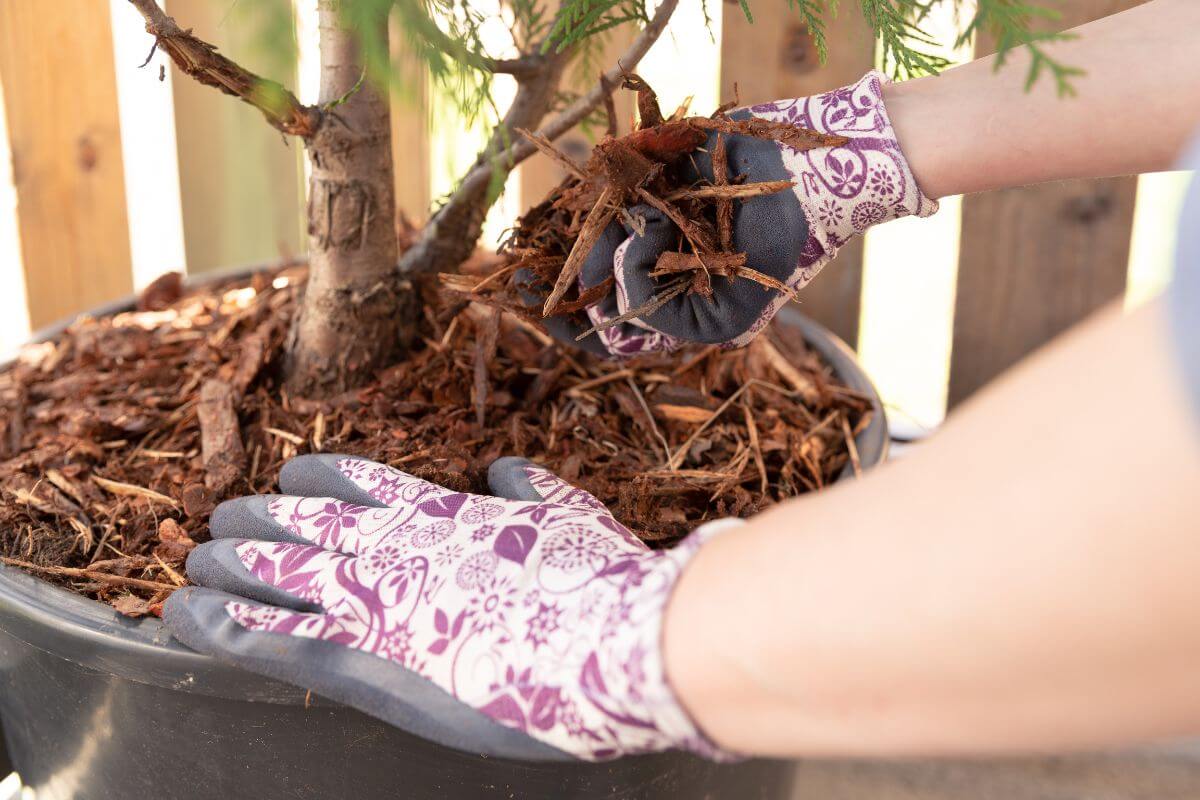
Like any good mulch, it serves several important purposes. It helps retain soil moisture by reducing evaporation, protects the soil from wind and the sun’s drying rays, limits temperature fluctuations at the root level, and reduces erosion caused by rain or watering. It also inhibits the germination of many weeds by blocking light. Finally, it limits soil splatter on foliage, which can help reduce certain soil-borne diseases.
Another major advantage is its durability. Cedar wood decomposes much more slowly than most other organic mulches. This is one of the reasons why this wood is often used in outdoor structures. As a result, cedar mulch needs to be replaced less often than other materials such as shredded leaves, straw, or even ramial chipped wood (RCW).
The real problem
The main advantage of cedar mulch is, paradoxically, also its main disadvantage: it decomposes very slowly.
In open ground, this durability is often appreciated. In containers, it’s a different story. People frequently grow annuals—such as flowers or vegetables—in containers, replacing them every year. During this process, some of the mulch inevitably ends up mixing with the potting soil.
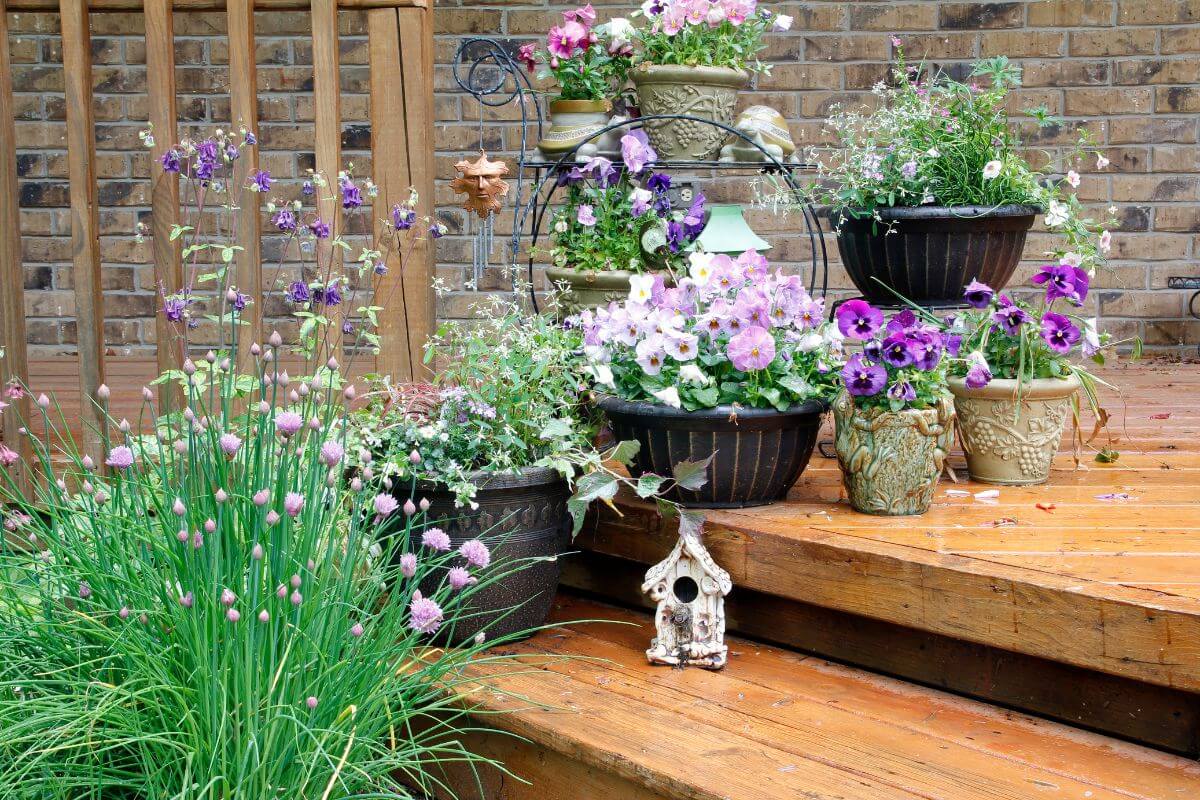
Over the years, cedar chips accumulate in the potting mix. Since they decompose very slowly, they can gradually alter its texture and disrupt its porosity. Potting mix containing a high proportion of coarse wood fragments retains water and nutrients much less effectively in the short term, causing the pot to dry out abnormally quickly, while also becoming harder to manage as the seasons change. Furthermore, when mixed with soil, this carbon-rich wood forces microorganisms to draw nitrogen from the potting mix in an attempt to break it down, which can temporarily reduce the amount of nitrogen available to plants.
Unlike other organic mulches, cedar does little to enrich the potting mix in the short term. Shredded leaves, compost, straw, or ramial chipped wood eventually turn into stable organic matter that feeds soil organisms and gradually releases nutrients. Even when accidentally incorporated into the soil, these materials decompose relatively quickly and help improve it.
Few additional benefits
Cedar mulch effectively protects the surface of the potting mix, but it offers few additional benefits once mixed into the substrate.
That’s why I rarely use it, even in garden beds. I prefer mulches that help nourish the soil as they gradually decompose, just as they do in natural environments. In the forest, fallen leaves, twigs, and branches form a layer of litter that continuously nourishes soil life. In grasslands, it is the leaves and stems of grasses that decompose year after year and enrich the soil.
I’m simply trying to mimic these natural processes. Good mulch isn’t just for covering the ground—it should also contribute to the soil’s long-term fertility.
The best mulch for containers
In my opinion, the best mulch for pots and planters is definitely shredded leaves. First of all, because they’re usually free. You can make your own in the fall or collect them from neighbors who are looking to get rid of them.
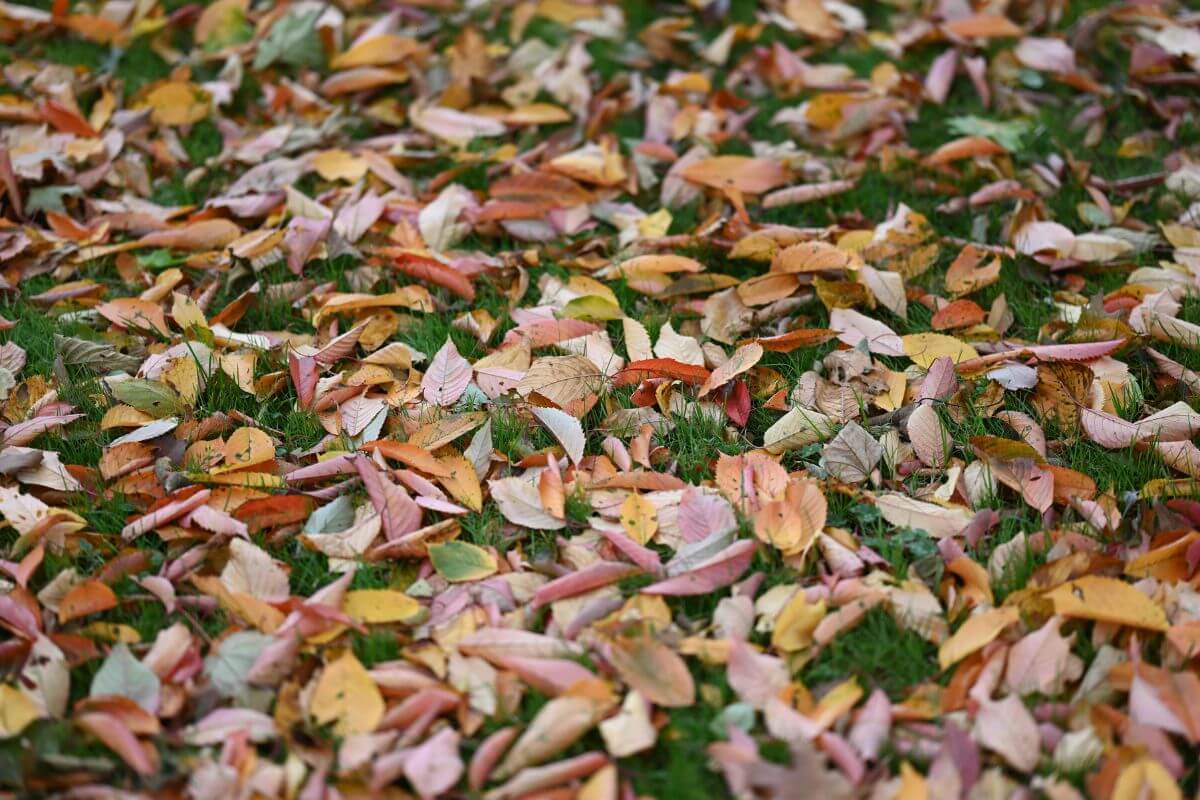
Once shredded into small pieces, the leaves decompose relatively quickly due to the action of bacteria, fungi, insects, and other organisms living in the soil. This characteristic is particularly beneficial in containers. If some of the mulch mixes with the potting mix during planting or repotting, it decomposes quickly and even helps improve the soil’s structure by contributing to humus formation.
Personally, I collect the leaves in the fall, shred them, and use them directly as mulch on my containers. In the spring, when it’s time to plant, I simply move them aside, add a little compost and a slow-release organic fertilizer—then put the mulch back in place.
The main drawback of shredded leaves is precisely their quality: they decompose quickly. By the end of the season, there’s sometimes almost none left. Fortunately, since they’re free and abundant, it’s easy to add a fresh layer the following fall.
Chipped ramial wood
Branch-and-leaf mulch is my favorite type of mulch… for use in open ground, in perennial and shrub beds. It’s made from shredded young branches, often from pruning. Some companies even grow willows specifically to produce this type of mulch, although most BRF simply comes from pruning waste that would otherwise have been discarded.
It decomposes more slowly than shredded leaves, usually over several years. So you don’t need to add more every season. Like other mulches, it protects the soil from erosion, reduces water evaporation, moderates temperature fluctuations, and limits soil splashing that can spread certain diseases.
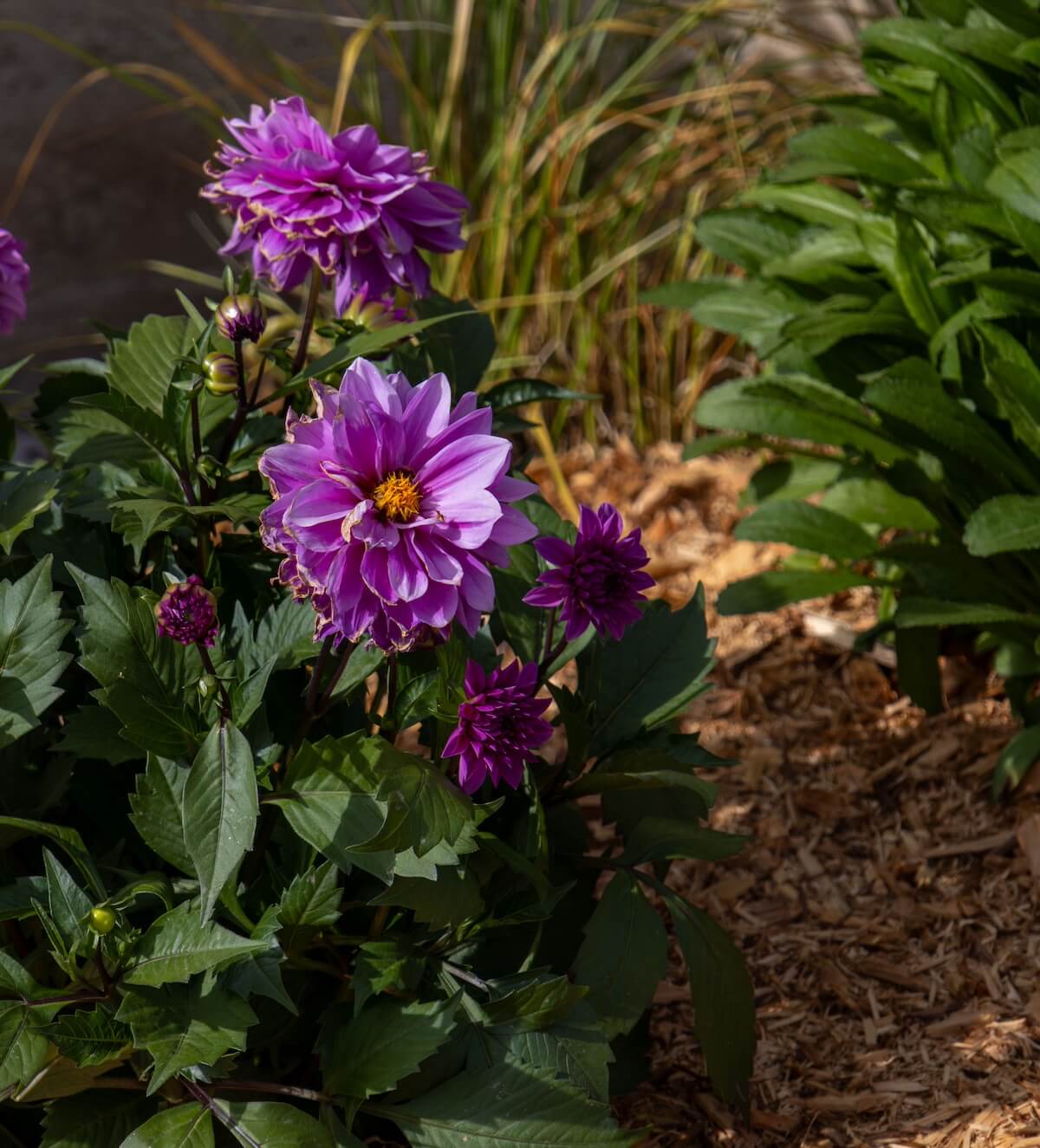
When used in containers, however, I am a bit more cautious. Since BRF decomposes slowly, it often ends up mixing with the potting mix during planting and repotting. In the short term, this can alter the texture of the growing medium. Furthermore, when incorporated into the potting mix, its decomposition causes the nitrogen-immobilization effect mentioned earlier.
Fortunately, when used on the surface as mulch, this effect is generally limited to the top few millimeters of the growing medium and has very little impact on the plants.
If some of the BRF does end up buried, the problem is usually temporary. Since it consists of young branches, it decomposes much more quickly than commercial cedar mulch. Soil microorganisms are therefore able to convert it into useful organic matter more quickly.
For this reason, I generally prefer to use shredded leaves or straw in containers and in the vegetable garden. That said, I wouldn’t hesitate to use BRF in large containers holding perennials or shrubs that will remain in place for several years.
The best mulch is often the one you already have on hand
Ultimately, my philosophy remains the same: why buy mulch when you already have an excellent free resource right at home? If leaves fall on your property every fall, they often make the best mulch there is.
The best mulch is often the one you have on hand! Shredded leaves, stems, and twigs, pine needles, vegetable garden harvest scraps, plants pulled up before they go to seed, seaweed, wood chips from pruning, vegetable tops, and even the dead leaves from your potted plants can all be used as mulch.
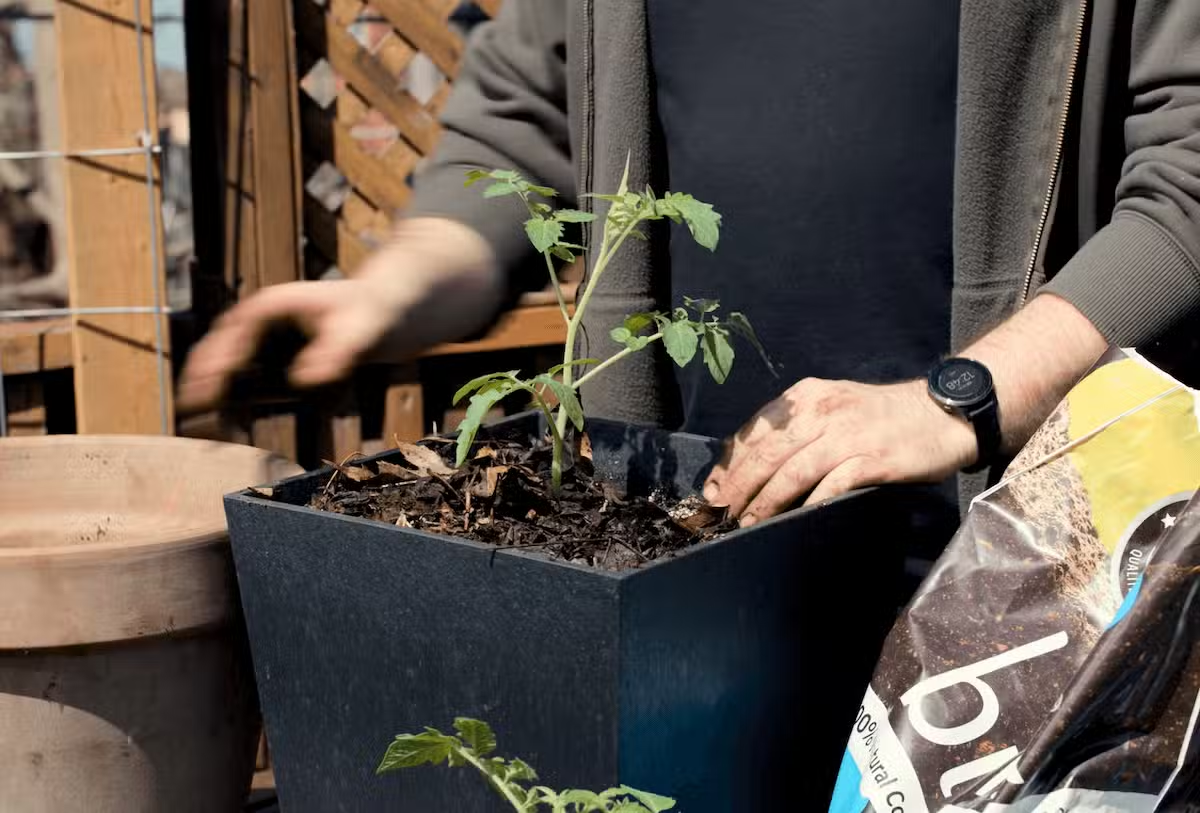
Nature already produces an impressive amount of materials that can protect and nourish the soil. Why send them to the recycling center only to buy bags of mulch later?
You’ll notice I didn’t mention cedar mulch. Maybe that’s because I almost never have any on hand!
0 comments on “Is Cedar Mulch a Good Choice for Pots and Planters?”