
By Julie Boudreau
I treated myself this summer by returning to explore the Mingan Archipelago for a second time. I could write twenty articles about this magnificent part of the world—there is so much to see and say. Havre-Saint-Pierre and the surrounding area is an exceptional place, not least because of its history, breathtaking landscapes, famous limestone cliffs, and the nesting sites of Atlantic puffins and common eiders. But above all, it is the warm welcome of the locals that makes it so special.
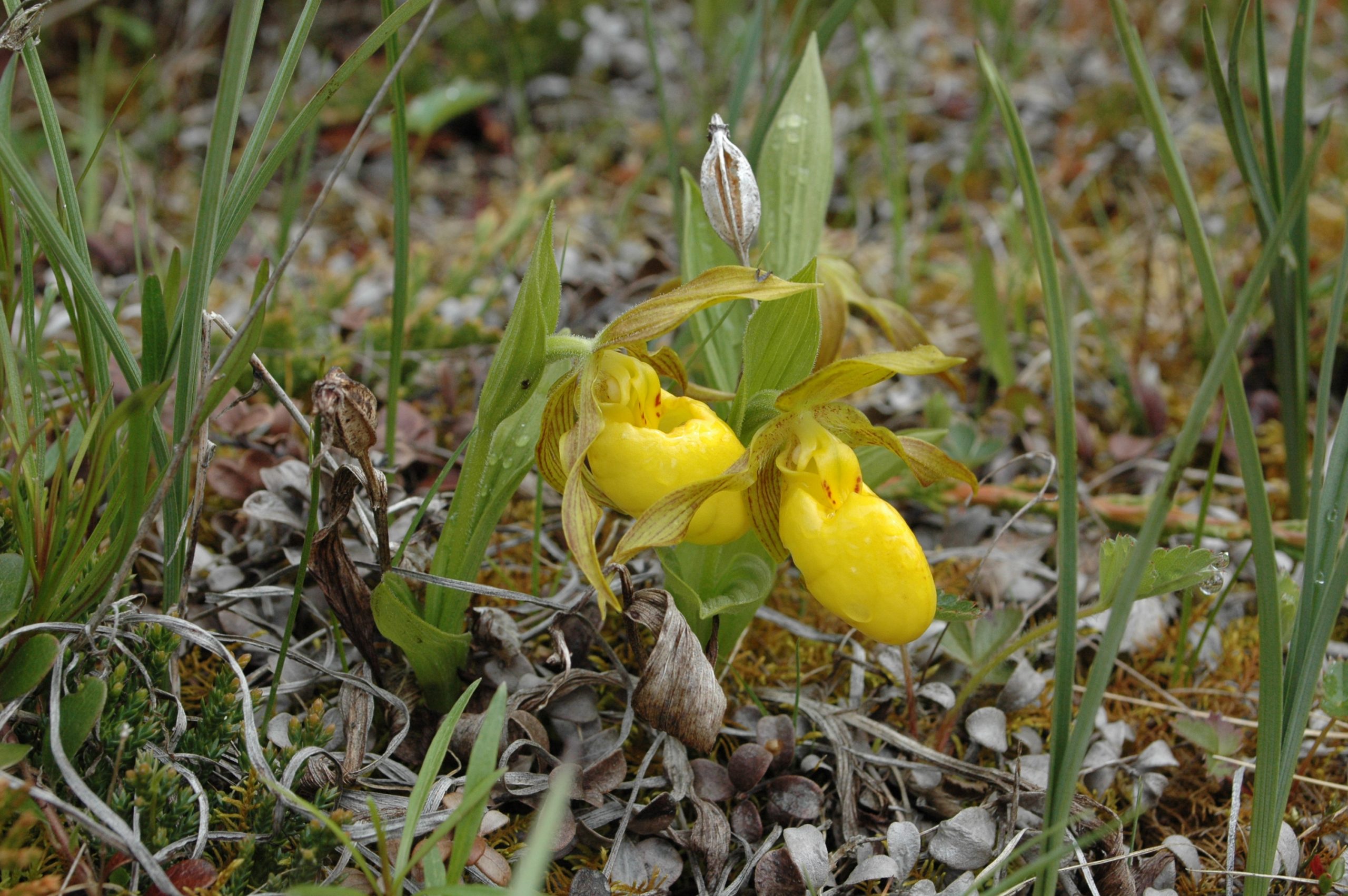
And of course, there are the plants! The Mingan Islands boast a unique flora rarely found elsewhere in Quebec. Each island has its own unique character, and in my humble opinion, you should visit them all!
Visit ALL the islands!
A bit of planning is required for a visit to the Mingan Islands, as everything revolves around the boat schedules that take you to these little island paradises. There are two departure points: one in Longue-Pointe-de-Mingan, near the church, which takes you to Île Nue and Île aux Perroquets; and the other near Portail Pélagie-Cormier in Havre-Saint-Pierre, which takes you to Grande Île, Quarry, Niapiskau, du Fantôme, du Havre and Petite Île au Marteau. Some of the islands offer rustic campsites or accommodation. You can reserve a campsite with Parks Canada and then book your transport with one of the companies that provide the boat service. Day trips are also possible, depending on the transport companies’ departure times. Sometimes the weather is so bad that the crossing is cancelled. You have to be prepared for this possibility (I’ll see you someday, Île Nue!).

I propose here to help you discover the flora, starting from your landing site, the coastline, then gradually moving “inland”, to meet the plants that inhabit the fir forest and the peat bog.
Coastal flora
Your arrival on the islands will inevitably be in company of a well-known trio! The first plants to inhabit the pebbly shores will be beach pea (Lathyrus japonicus), sand lymegrass (Leymus sp.), and oysterleaf (Mertensia maritima). Anyone who has visited the salty shores of the St. Lawrence River knows them well!
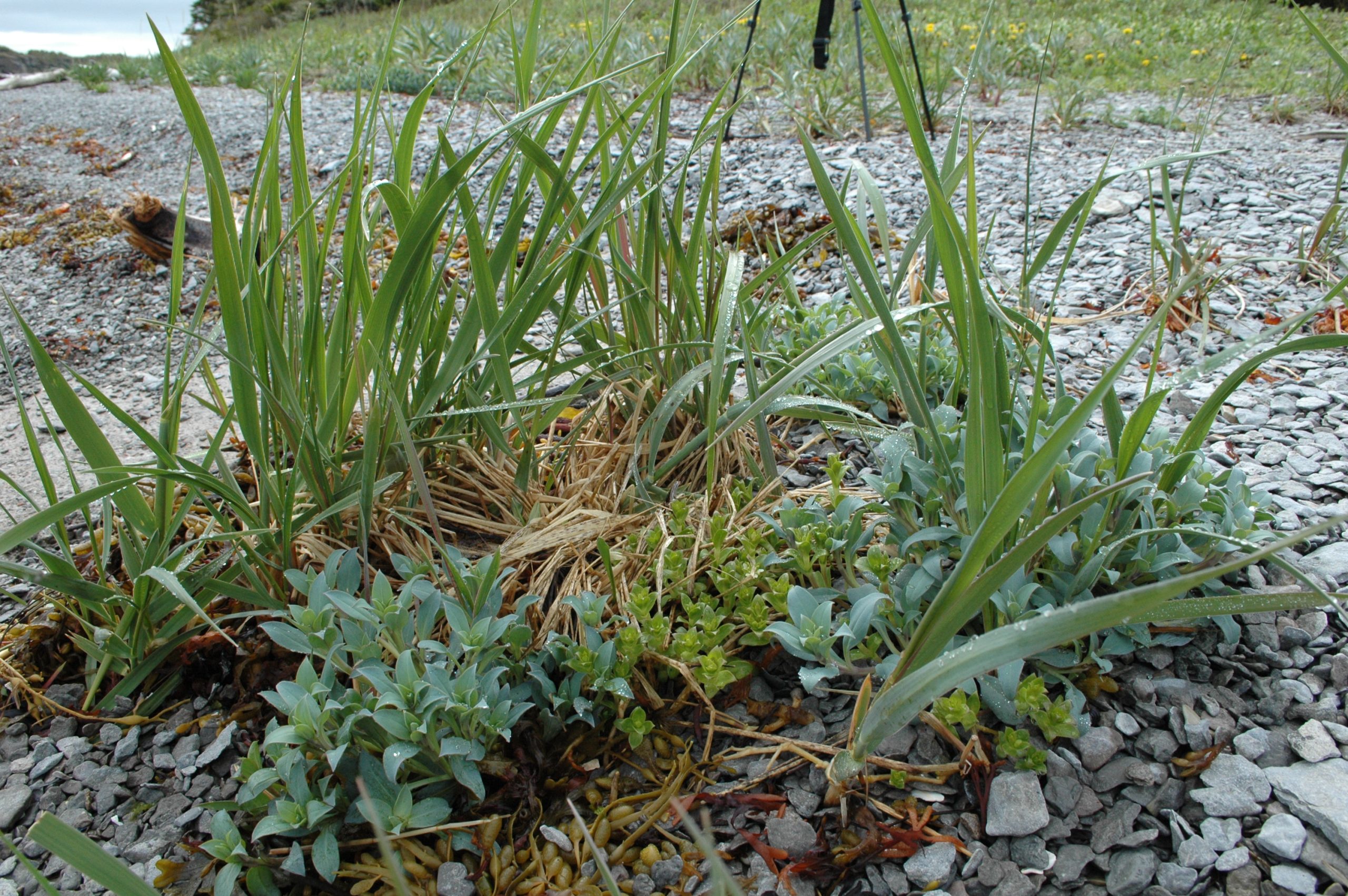
But among this trio that dominates the coastline, you’ll come across a creeping plant with thick leaves, the seaside sandplant (Honckenya peloides), which is also called sea sandwort. Even though it looks like a small sedum, it’s more closely related to carnations!
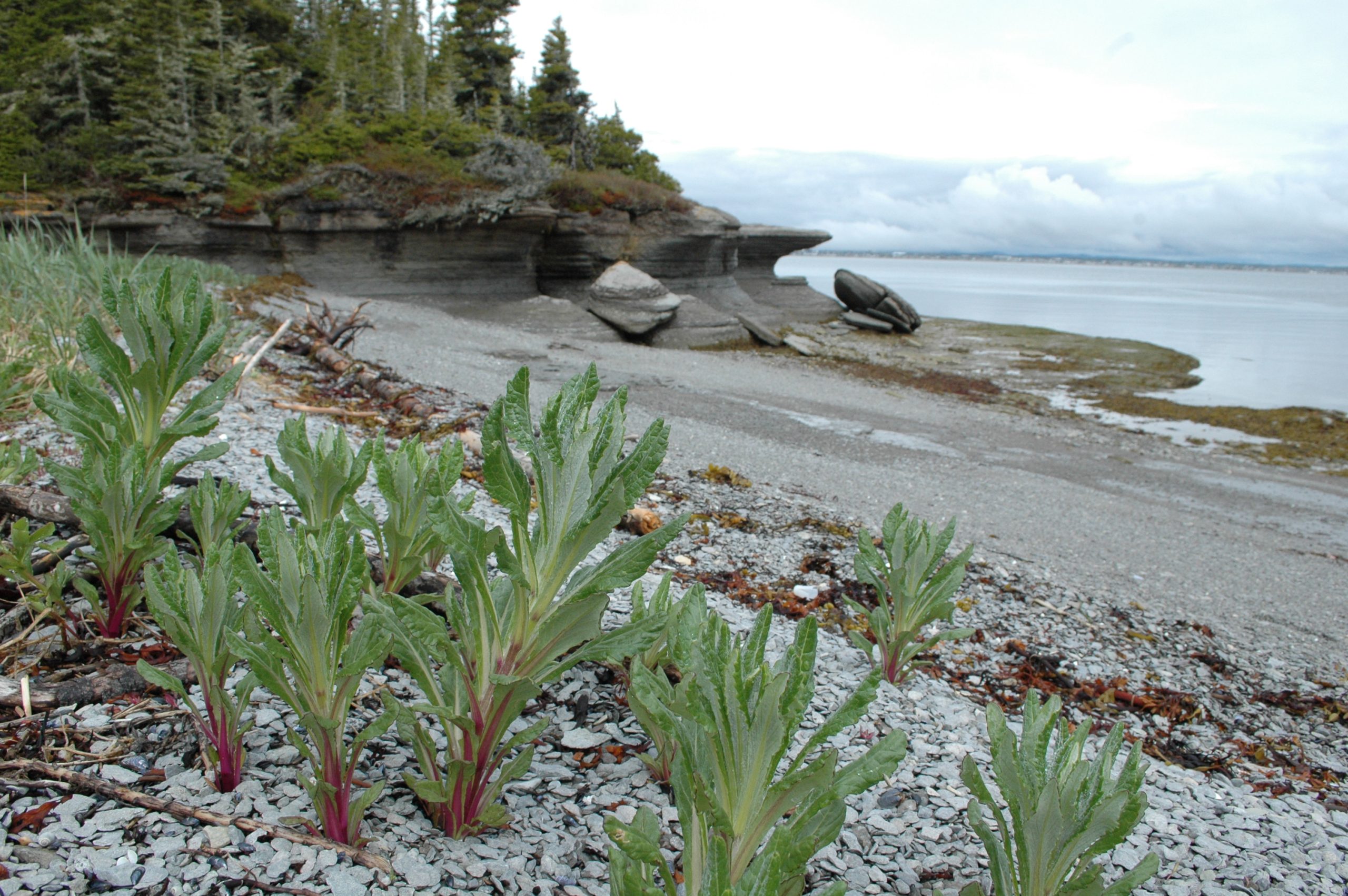
It is also along the coast that you will encounter a plant that inhabits the salty shores of the St. Lawrence River in Quebec and the Maritime provinces. The seaside ragwort (Senecio pseudoarnica) is a true ray of sunshine. It is an imposing plant with hairy foliage that produces bright yellow flower heads resembling sunflowers. In a world where one more often has to get down on one’s hands and knees to photograph Mingan’s plants, it is an exception. Moreover, in the Laurentian Flora, Frère Marie-Victorin described it as a plant that was both strange and remarkable. Since it flowers in August, one sometimes has to make a difficult choice, for choosing the best time to visit the islands: seaside ragwort or yellow lady’s-slipper!
The stony heath
It’s right at the top of the hill. You could describe it as the transition zone between the coast and denser vegetation. It’s a carpet of pebbles, through which conifers begin to appear. The first of these are the creeping juniper (Juniperus horizontalis), which has soft leaves, and the common juniper (Juniperus communis), which has prickly leaves. These are familiar to anyone who hikes in the mountains. Then, here and there, a few black spruces and stunted firs venture out alone to face the climate’s unpredictability.
It’s a relatively low and open strip of vegetation. In my opinion, this is where you find the best treasures! And, depending on the soil and the stones, the finds vary!
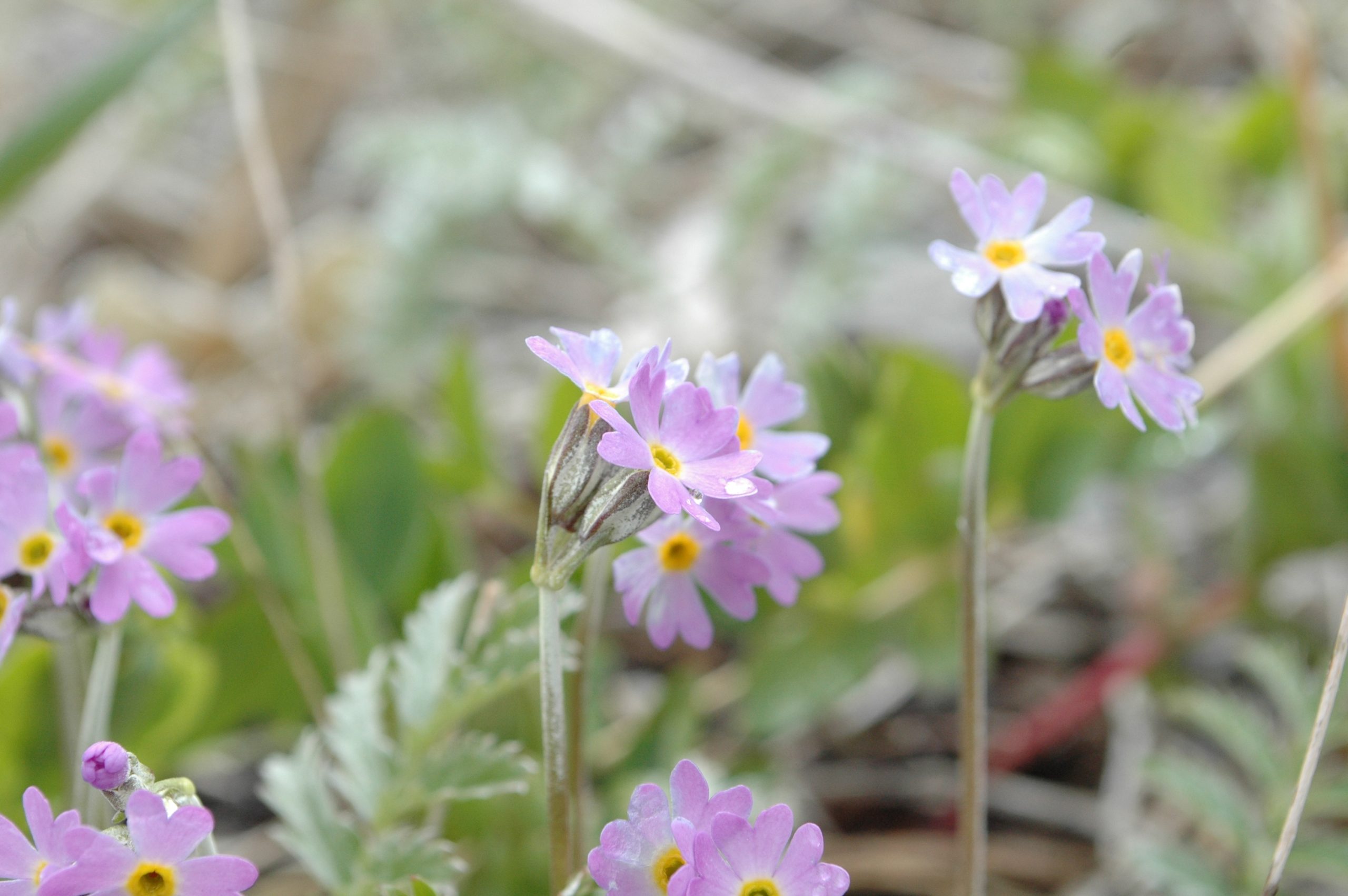
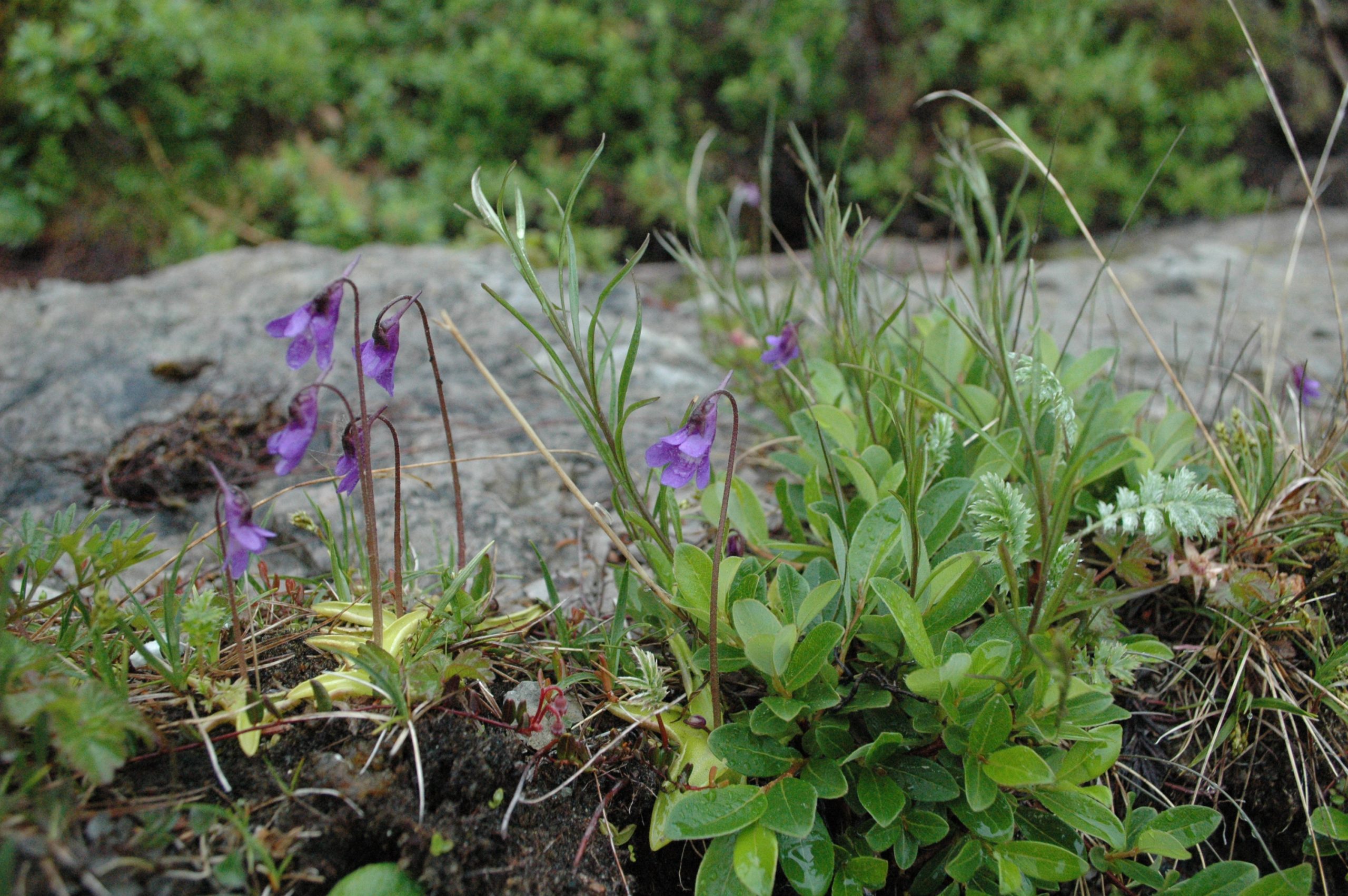
Our first treasure will be the Laurentian primrose (Primula laurentiana). Often no taller than 10 cm, but sometimes reaching up to 20 cm. You have to stop and bend down to see it! Never far away, you often come across a curious carnivorous plant, the common butterwort (Pinguicula vulgaris). Insects get trapped on its sticky leaves. The flower is spectacular with its small spur. I thought I’d find it in peaty areas, but no, there it is, on the rock face, in a small, damp depression.
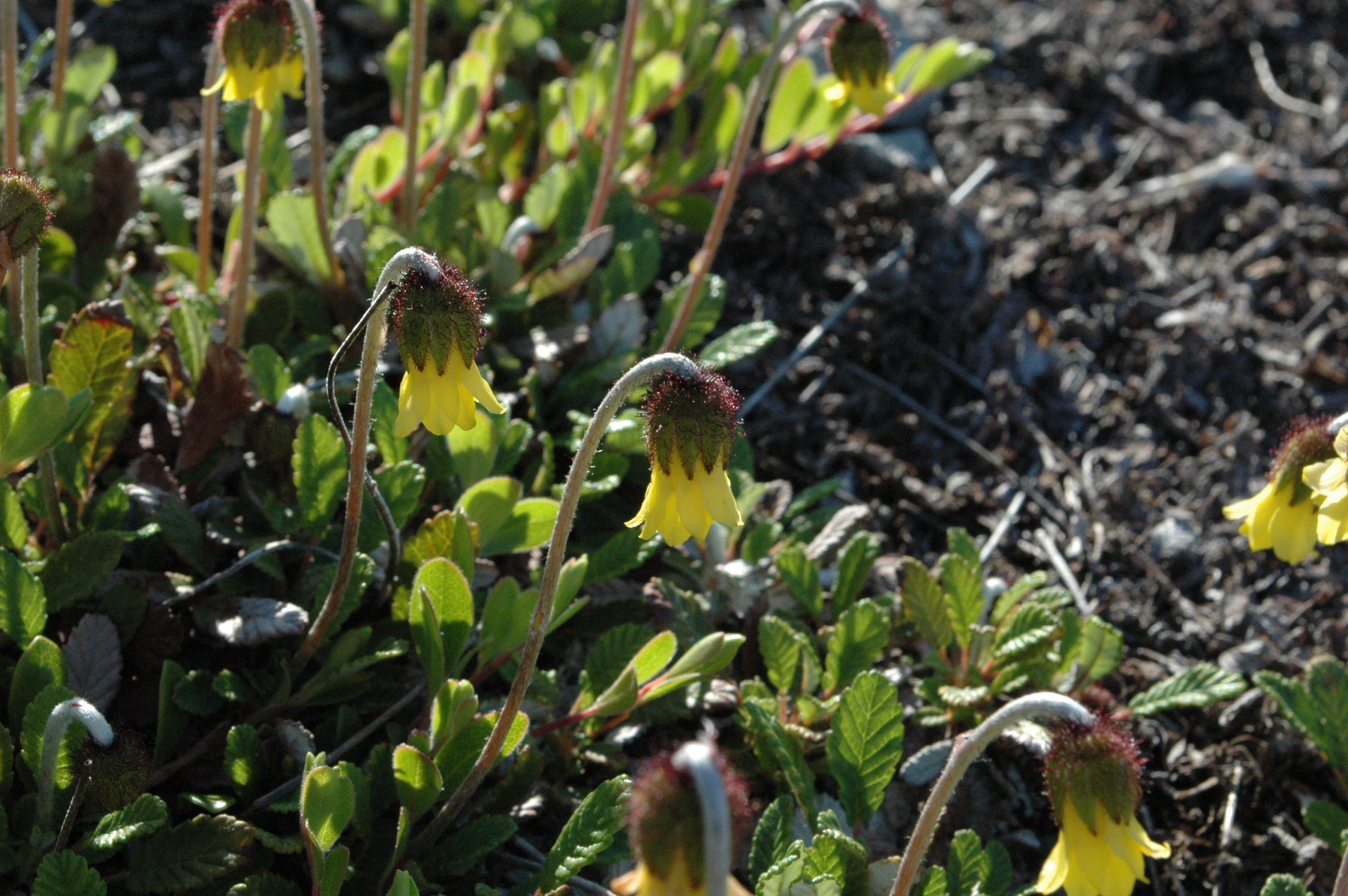
Then, in a completely different area, you’ll find Drummond’s mountain avens (Dryas drummondii), with yellow flowers, and the entire-leaved mountain avens (Dryas integrifolia), with white flowers. On my recent visit, towards the end of June, the latter was the queen of the islands! It was everywhere!
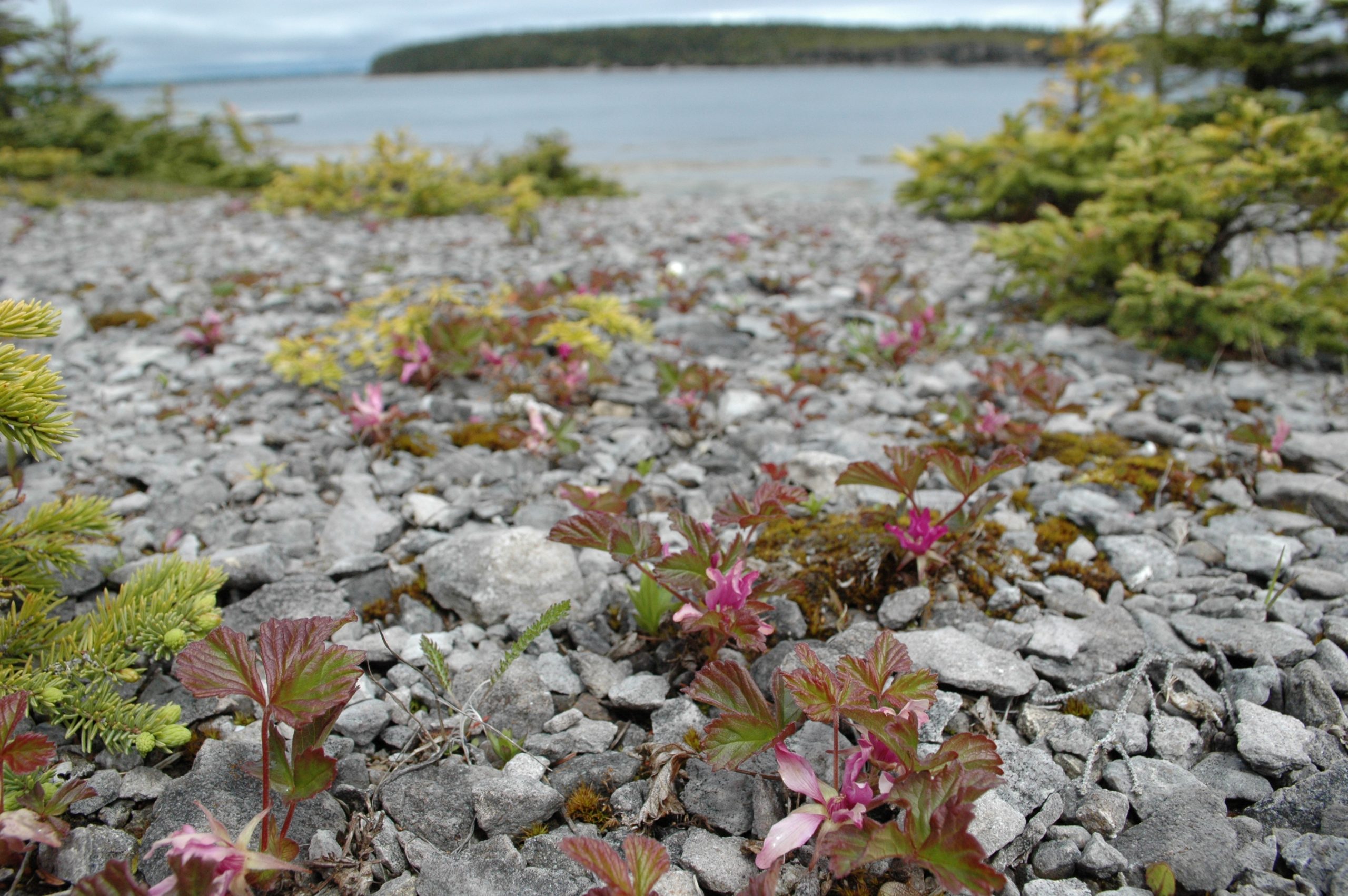
Finally, we can’t overlook the star of the Mingan Islands, the yellow lady’s-slipper (Cypripedium parviflorum). It’s undoubtedly the Brad Pitt of the Mingan Islands! It’s as flamboyant as a movie star! It’s astonishing to see it growing in piles of gravel, through rocks, in peat depressions, or among creeping shrubs. That plant is tuff! By mid-June, it’s everywhere! And you never tire of this fascinating flower.
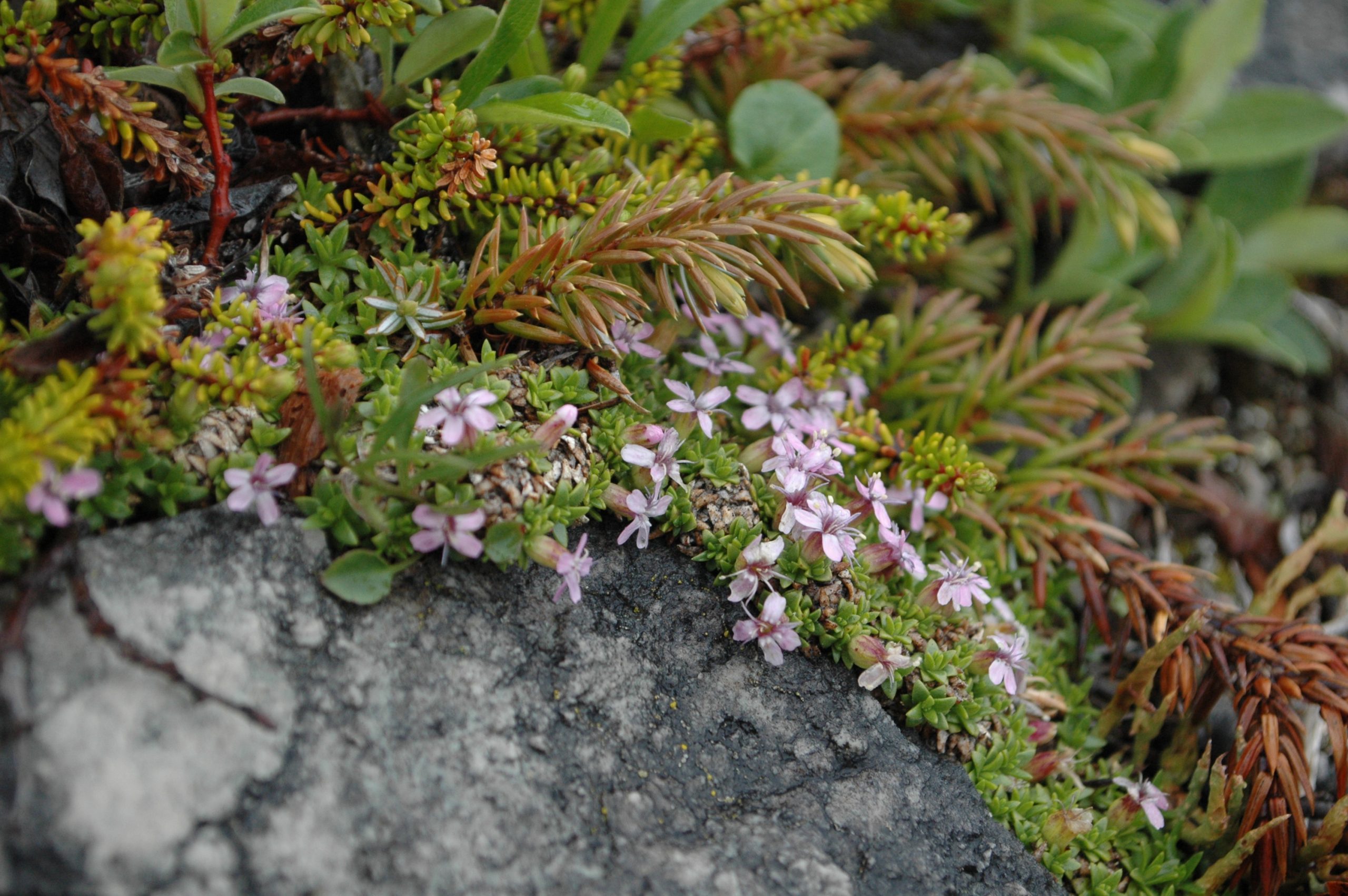
Finally, lovers of alpine plants (myself included) will swoon over small mounds of moss campion (Silene acaulis), tufted saxifrage (Saxifraga cespitosa), white mountain saxifrage (Saxifraga paniculata), and several drabas (Draba sp.), chickweed (Stellaria sp.), and stitchwort (Sabulina sp.). In short, a whole bunch of tiny plants. You often have to get down on your knees to see them properly! (It’s also the main reason why you’ll be strongly advised to stay on the rocks!)
In the shrubby heath
Here, the vegetation forms a carpet composed of a loose mixture of black crowberry (Empetrum nigrum) and the two native junipers mentioned above. Depending on the conditions, dwarf birch (Betula sp.) and bog bilberry (Vaccinium uliginosum) may also be found.
This is where we’ll discover a little-known shrub, yet one that’s quite common in Quebec: the soapberry (Shepherdia canadensis). It’s a rather interesting shrub, as it’s a nitrogen-fixing plant that isn’t a legume. In late summer, it produces red berries. When cultivated in gardens, it can reach nearly 4 meters (12 feet) in height, but here, the arid climate rarely allows it to grow taller than one meter (3 feet).
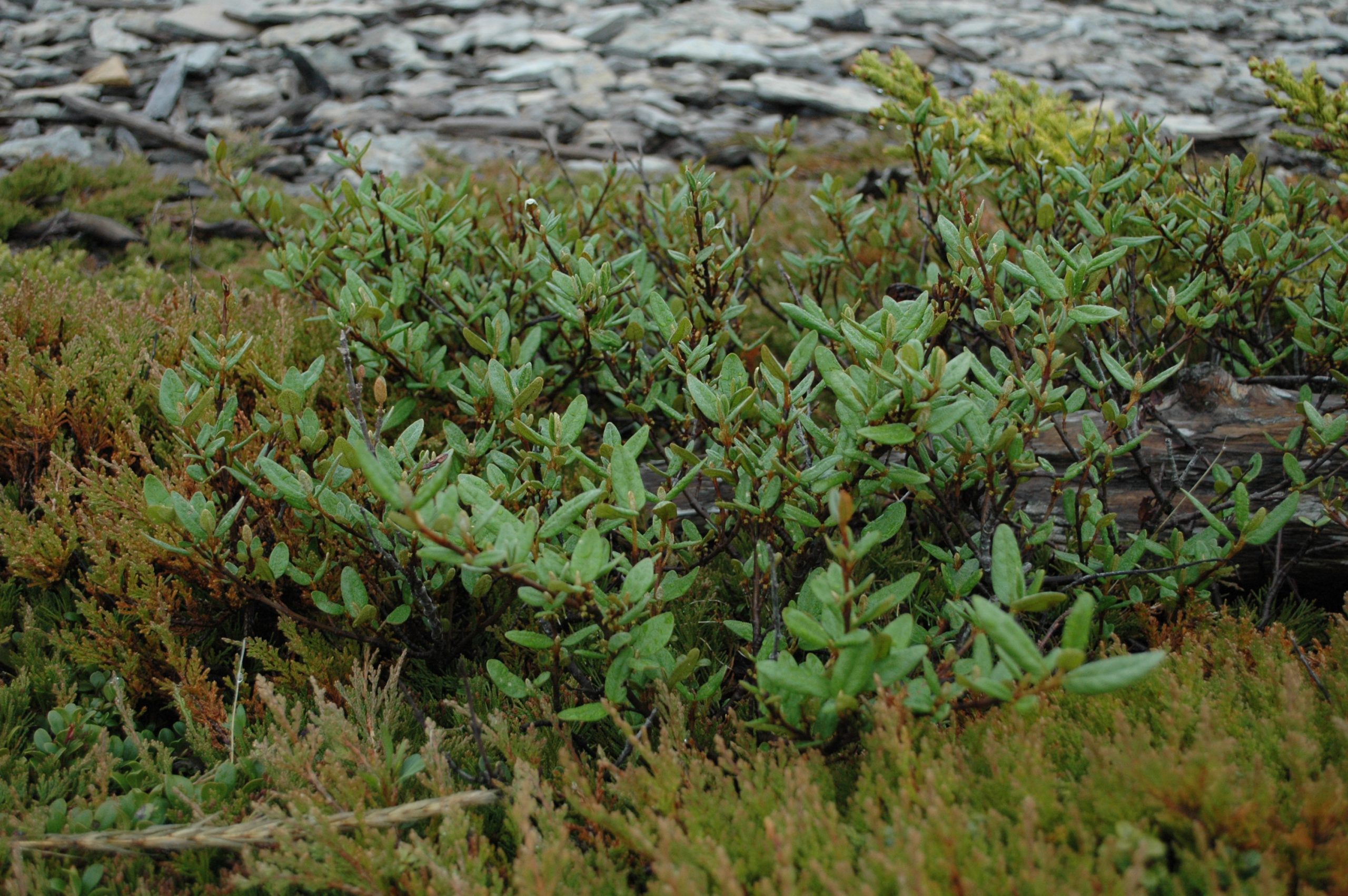
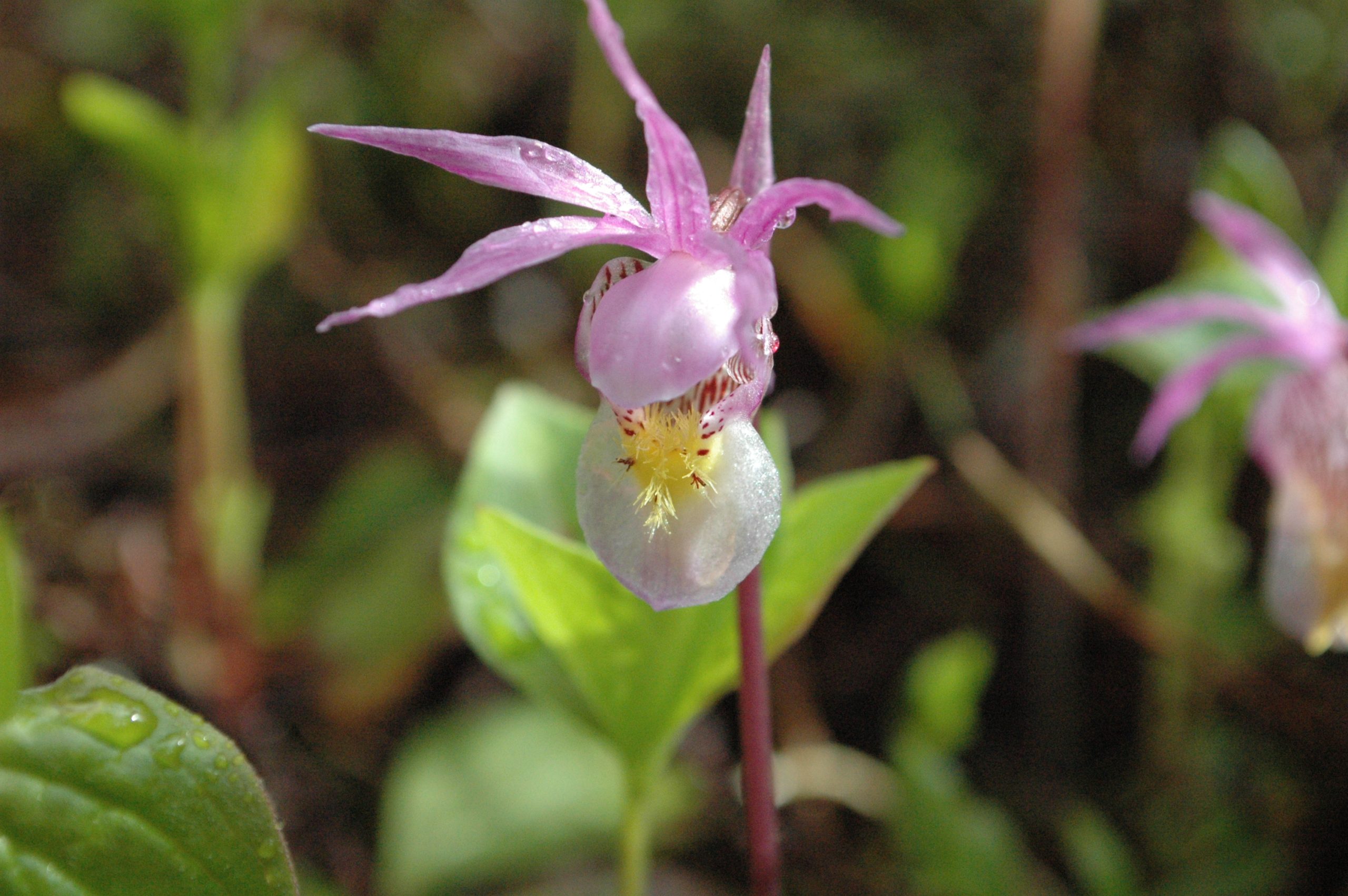
It is in this marvellous tapestry of vegetation, punctuated with grey patches of caribou moss, that one can discover one of the little beauties of the Mingan Islands, the calypso (Calypso bulbosa). Reaching a height of 10 to 15 cm (4 to 6 inches), it hides in slightly damp pockets, often concealed by the foliage of other plants. You have to look for it to find it! And there’s no need to walk through the vegetation (which is forbidden on these islands); it’s right there, at the edge of the trails!
In the fir forest
Most of the trails open to the public are located along the coastline. They typically circle the island or part of it. However, on rare occasions, such as on Quarry Island or Niapiskau, it’s possible to traverse the forested area of an island. This area is primarily composed of balsam fir and black or white spruce. Any deciduous trees will be dwarf mountain ash or white birch.
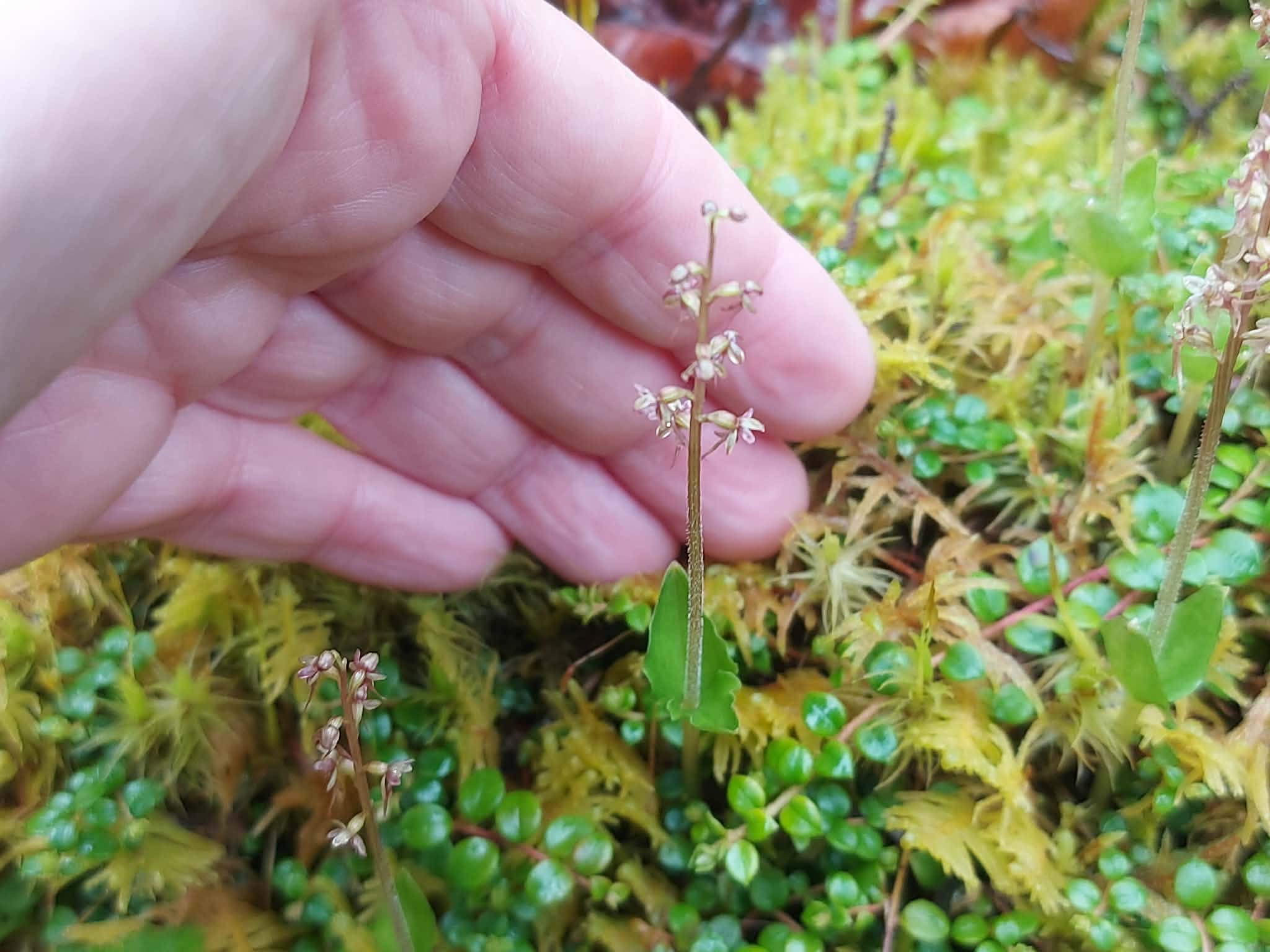
This is where you’ll need your magnifying glass to discover one of the dozens of tiny miniature orchids that inhabit the moss and sphagnum moss carpets of the forest canopy. My favorite of this trip was undoubtedly the heart-leaved twayblade (Neottia cordata), which I spotted right there, next to my campsite, and which I saw again and again during my stay on the Côte Nord region. Each greenish-burgundy flower is barely a few millimeters long and resembles a little elf with pointy shoes.
We will also encounter a shrub with foliage reminiscent of maple trees: the squashberry (Viburnum edule). This shrub produces beautiful umbels of white flowers in early July.
In the peat bog
It is on Quarry Island that you can cross a peat bog, a rare opportunity. In this carpet of damp sphagnum moss, classic shrubs thrive: leatherleaf (Chamaedaphne calyculata), Labrador tea (Rhododendron groenlandicum), and sheep laurel (Kalmia angustifolia). Then one discovers the superb northern pitcher plant (Sarracenia purpurea) and, above all, the cloudberry (Rubus chamaemorus), with its delicate fruit resembling an orange raspberry (cloudberry jams are the best!).
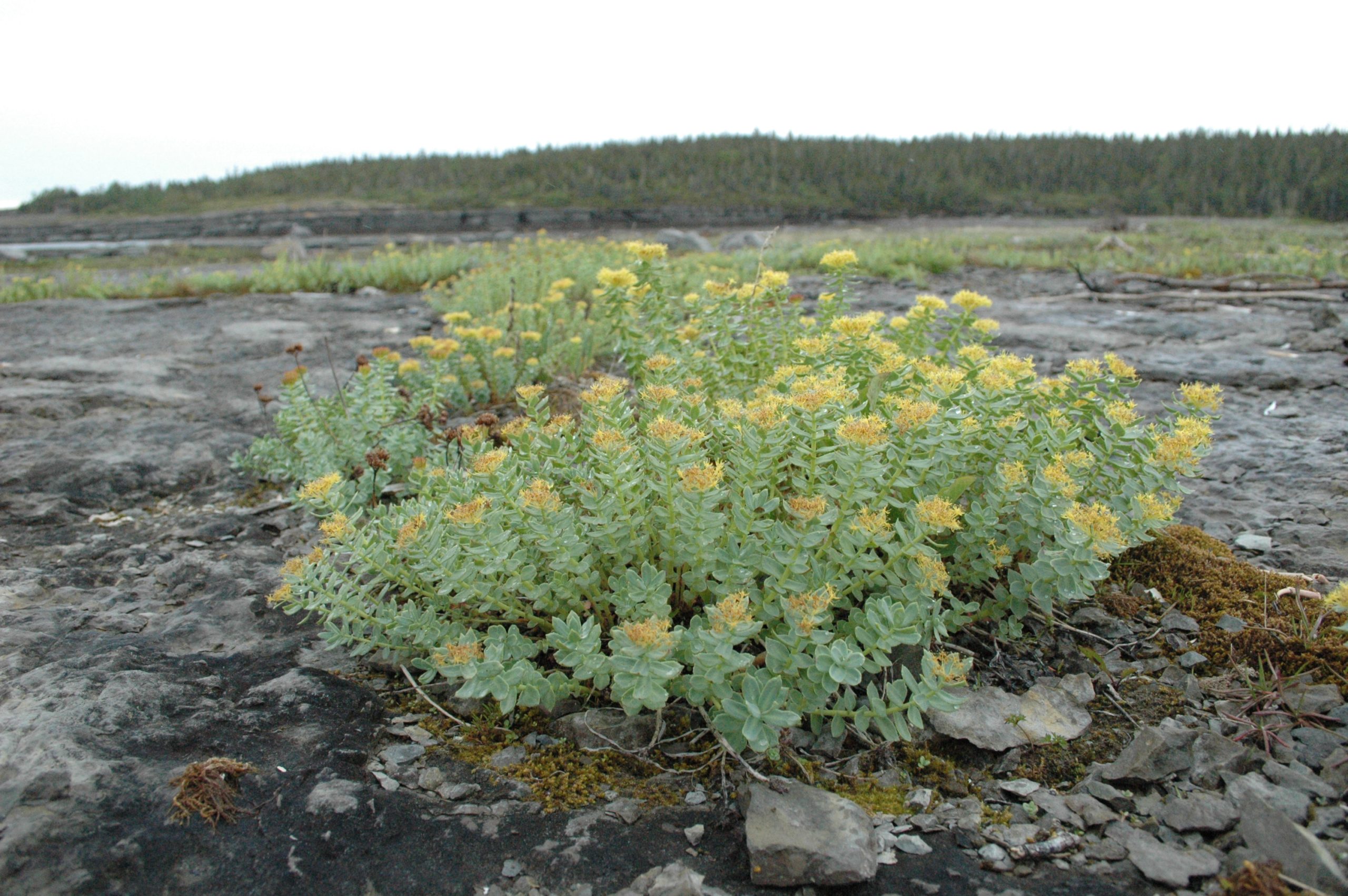
Finally, I must mention the presence in several surprising locations of roseroot (Rhodiola rosea), a close relative of sedums that thrives in rocky plateau crevices, steep escarpments, and even the summits of limestone clifts (how did it manage to end up there?). And lastly, the marvellous colonies of star-flowered false Solomon’s-seal (Maianthemum stellatum), always there to welcome us to the grassy heath.

Even though I feasted my eyes on the rich flora of the Mingan Islands and the surrounding area, and there are so many other beautiful plants I could show you (creeping willows, orchids, etc.), a trip like this is also a journey of encounters. I send my sincere thanks to Parks Canada for giving me the opportunity to visit Petit Marteau with them. Then, I offer my heartfelt greetings to Amber, Catherine, Chantal, Linda, Camil, Sylvie, and Jean, and to the friendly staff at the Café Boutique du Terroir Chez Julie who were my best tour guides! Each time I visit the Mingan region, I tell myself I didn’t stay long enough; next time, I’ll be there for a month, and in five years, I’m moving there!

The islands sound like a wonderful place. Botanizing is so much fun. Encourages you to slow down and observe all that’s around you.
These islands are magical! Wonderful article.