
There are some universal truths in the life of a gardener: the tool in your hand WILL disappear for a few moments the moment you let go of it; the new insect you’ve just spotted IS a pest; and you’re bound to find at least one cucumber that will grow HUGE. It’s a matter of mathematics: the inescapable fate of gardeners!
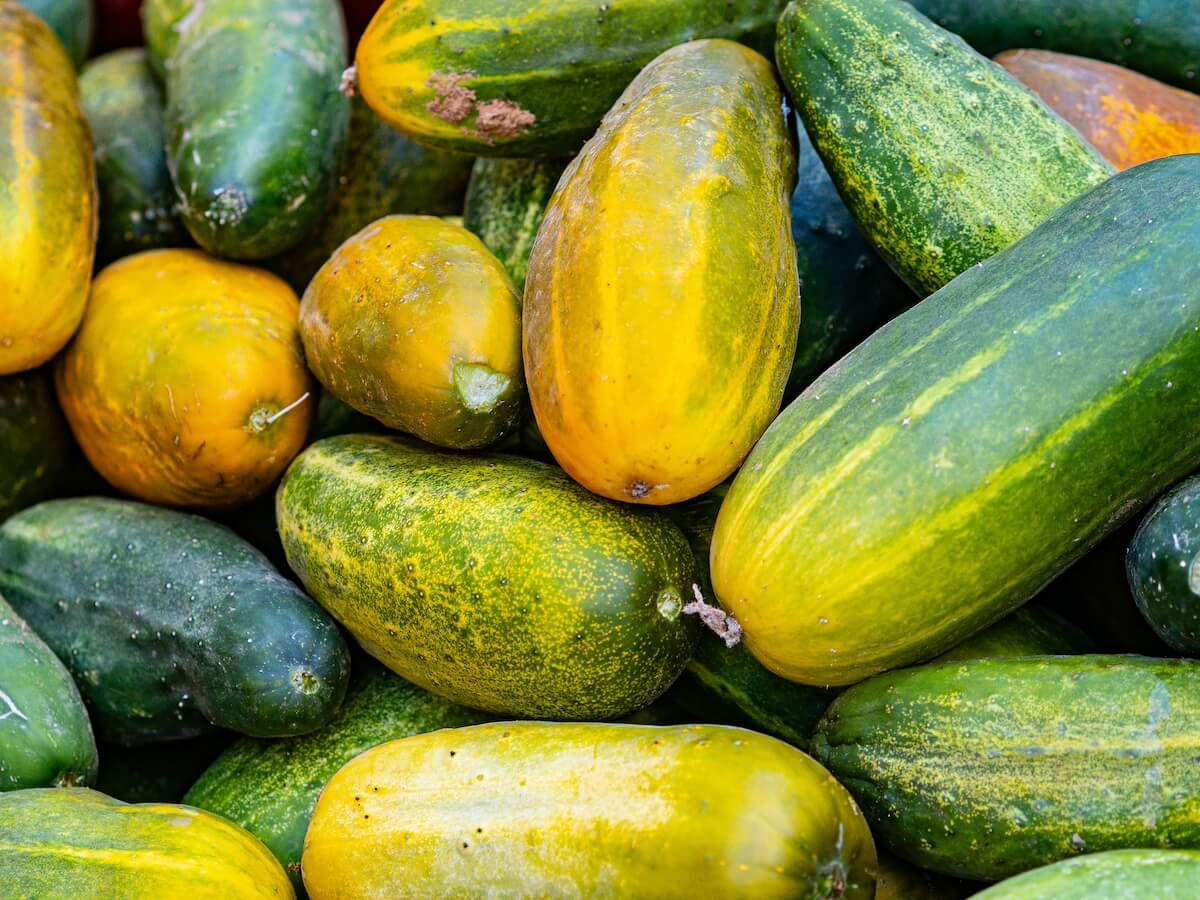
I can’t do anything about your tools or your first outbreak of leek worm, but I can certainly help you with your squash!
Here’s the problem: you inspect your zucchini plant on Sunday and spot a few adorable little fruits, no bigger than your fingers. You tell yourself you’ll give them a few more days—it would be a shame to pick them while they’re still so small. On Wednesday, you skip your garden visit because it’s raining. By Saturday, a zucchini the size of a baseball bat is staring back at you menacingly. Two pounds. Seeds that are starting to look like pumpkin seeds. And your plant seems to be sulking, too…
Oops!
The plant has just one purpose, and it isn’t to feed you
To understand why your zucchinis grow so quickly, you need to remember one thing: your zucchini plant isn’t running a catering service. Its goal is to make seeds. That’s it. As soon as a flower is pollinated, the plant switches into reproduction mode and directs much of its energy into that particular fruit. Much of the sugar produced by the leaves through photosynthesis is funneled straight into that developing zucchini.
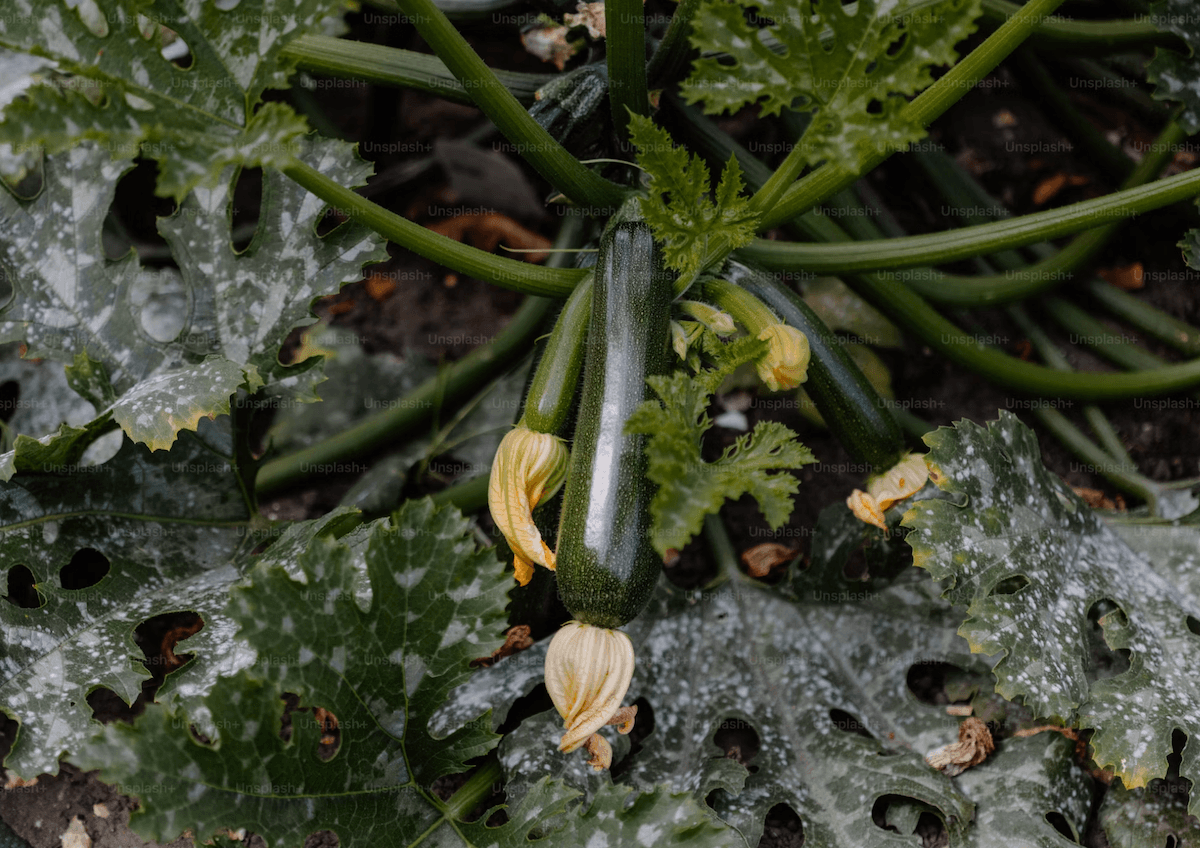
That’s why a zucchini can grow 2–3 cm (about 1 inch) per day under good growing conditions. An inch a day is incredible! From the day a flower is pollinated, it takes only 4 to 8 days for the fruit to reach a good harvest size. During a hot Québec July, that happens fast. The plant isn’t being fussy or unpredictable—it’s simply very efficient at what it’s trying to accomplish.
In other words, if you only visit your garden once a week… don’t be surprised to find something that looks more like a marrow than a tender zucchini. (Larry, by the way, preferred growing yellow zucchini because they’re much easier to spot than the green ones.) A flower pollinated on Thursday couldn’t care less that you’re busy this weekend!
What speeds things up even more is that it’s the developing seeds inside the fruit that demand the most resources. As they grow, they require more and more of the plant’s energy. That’s also why a small zucchini tastes so much better: its sugars are concentrated in firm, tender flesh. In an oversized zucchini, those sugars have been diluted throughout a much larger, more watery fruit, and some have been diverted into the now fully developed seeds.
Let’s just say you and the plant didn’t have the same plans!
That forgotten courgette costs you more than you think
Leaving an oversized zucchini on the plant doesn’t just ruin the quality of that particular fruit. It also sends a very clear message to the plant: mission accomplished—the seeds are developing, so there’s no need to produce more flowers. Researchers have shown that developing fruits produce signals that slow down, or even stop, the formation of new flowers. From the plant’s perspective, this makes perfect sense: why spend energy making more fruit if it has already succeeded in producing viable seeds?
In other words, that baseball bat–sized zucchini hanging on your plant is slowing down your future harvest. By leaving it there, you’re sacrificing both flavor and productivity. Two mistakes caused by just a day or two of inattention… and they can be costly!
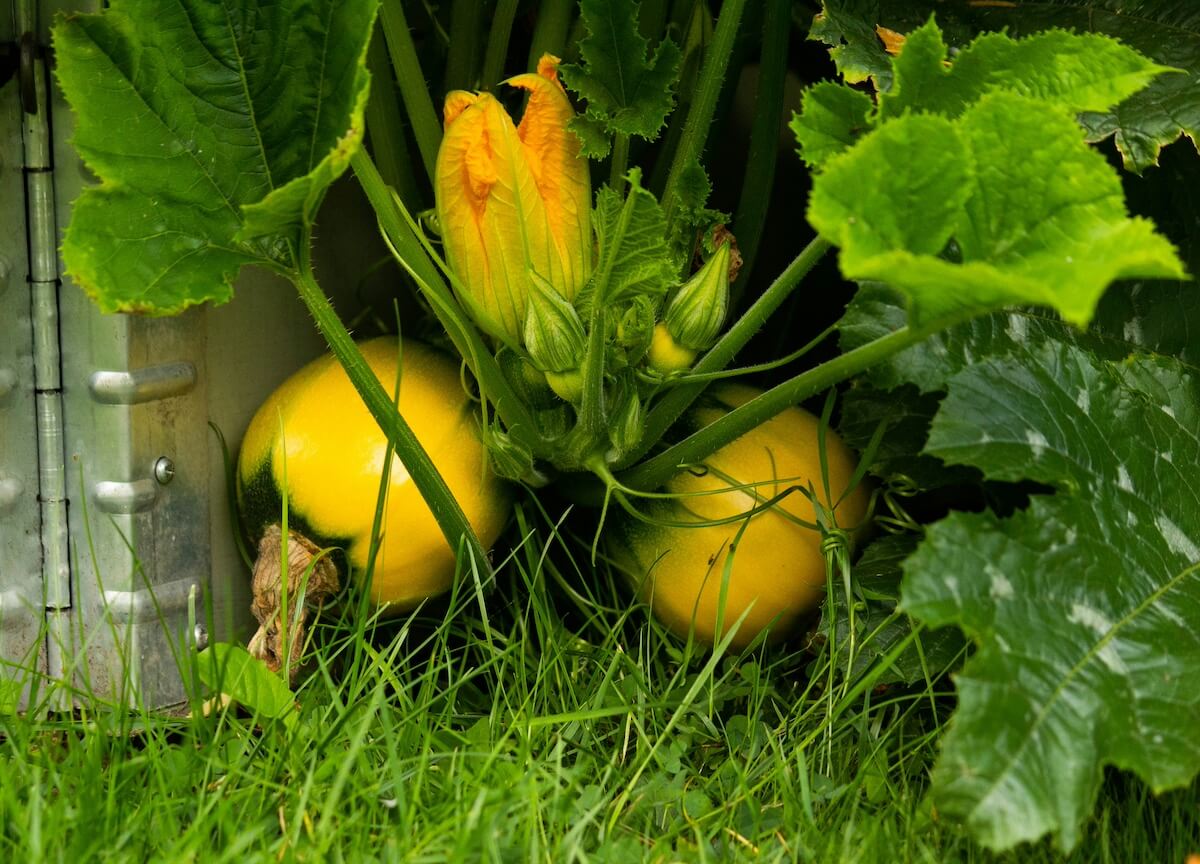
If, despite your best intentions, you discover a dinosaur-sized zucchini hiding under a leaf, pick it anyway! Yes, it won’t taste as good. But by harvesting it, you’re sending the signal your plant needs to start producing flowers again. A giant zucchini grated into muffins or blended into soup is far better than a plant that stops producing for the rest of the season.
In a way, it’s the golden rule of the vegetable garden: the less you harvest, the less you harvest. And the more you harvest… the more you harvest. As strange as that sounds!
The same principle applies to cucumbers. Even if you think one could get just a little bigger to make your harvest “worth it,” don’t wait. It’s better to pick it 2 cm (about ¾ inch) too small than 2 cm too big. Harvesting a little early keeps production going and helps you avoid missing that perfect sweet spot.
Does it work for all my vegetables?
Good question—and the answer is: for many vegetables, yes… but it depends! Not all vegetables follow the same strategy.
For crops where we eat the fruit while it’s still immature, the same logic definitely applies. Snap beans are a perfect example: just like zucchini, they’re best harvested before the seeds begin to swell inside the pod. A young pod is crisp, tender, and sweet. Leave it too long, and it becomes stringy and starchy because the plant has shifted its energy toward developing seeds rather than making a tasty pod for you. (Of course, if your goal is to harvest dry beans, that’s a different story!) Cucumbers, eggplants (Solanum melongena), and snow peas follow the same rule: harvest them young and often for the best quality—and to encourage the plant to keep producing.
Peppers
Bell peppers (Capsicum annuum) offer an interesting choice. Harvested green (while still immature), they have a fresher flavor, and the plant tends to keep producing actively. Left to ripen to red, orange, yellow—or whatever mature color the variety develops—they become sweeter and richer in certain vitamins, but overall production slows down. Neither approach is wrong; it simply comes down to the gardener’s preferences.
Tomatoes
Tomatoes (Solanum lycopersicum), on the other hand, play by different rules. We actually want the fruit to ripen! And most garden varieties are indeterminate, meaning they keep flowering and producing new fruit all summer long, regardless of whether some tomatoes are already ripening on the vine. So there’s no need to stress about picking them the moment they’re ready.
Winter squash
And what about winter squash—butternut, spaghetti squash, pumpkins, and the like? Here, the opposite is true. Unlike summer zucchini, you want the seeds to mature fully. Full maturity is what gives winter squash its sweet, rich flavor and allows it to store for months. A squash harvested too early will have watery, bland flesh and won’t keep well. So instead, wait until the end of the season, when the stem begins to dry, the skin has reached its mature color, and the rind is hard before harvesting.
What size exactly should I harvest?
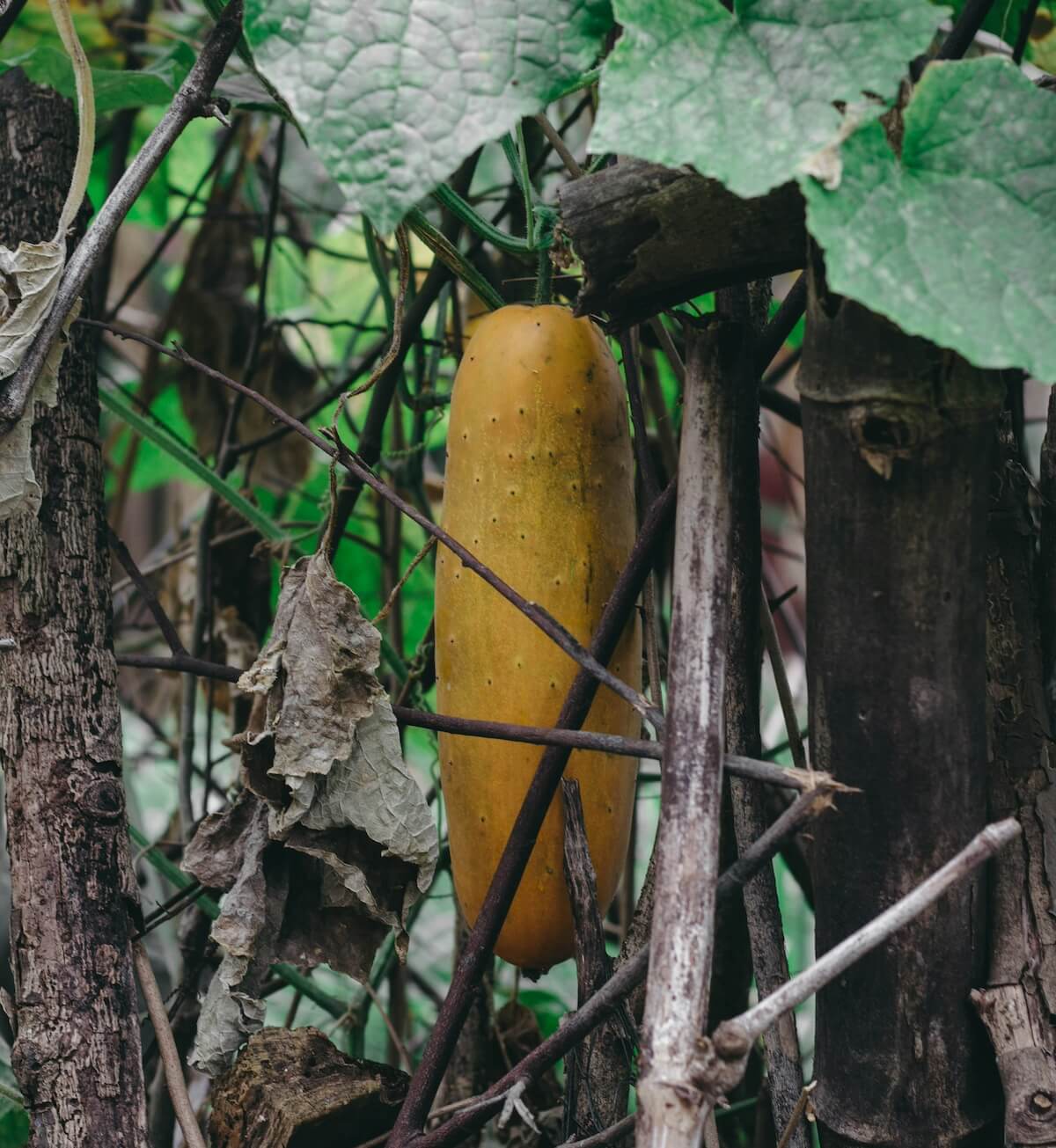
As a general guide, zucchini are at their best when they’re 10–15 cm (4–6 inches) long. Snap beans should be picked when the pods are fully formed but before the seeds begin to swell and show through the pod. Slicing cucumbers are best harvested while they’re still firm, deep green, and before the skin starts to yellow. Eggplants should be picked while the skin is still smooth and glossy—a dull, soft eggplant is already past its prime.
But—and this is an important but—these are general guidelines, not hard-and-fast rules. Your variety may have been bred for something very specific. A pickling cucumber harvested at the size of a typical slicing cucumber is a disappointment for the gardener… and probably a victory for the plant’s reproductive ambitions! Likewise, some bean varieties are naturally much shorter than others and are perfectly ready at a size where another variety would still be immature.
My advice? Read the seed packet. The recommended harvest size isn’t there just for decoration—it reflects the characteristics that variety was bred for. And who knows? Somewhere out there, there’s probably a zucchini variety bred specifically to satisfy gardeners with truly enormous appetites!
So, what shall we do?
The next time you discover a vegetable in your garden that’s about the size of your pet, just remember: at least your plant has everything it needs to do what plants are meant to do! Harvest it without hesitation—and then ask yourself whether you should check the garden a little more often… or maybe get a new pair of glasses!
How about you? Ever been surprised by a baseball bat–sized zucchini?
0 comments on “And the Zucchini Grew Huge…”