
I’m still in shock. The impossible happened. Yes, my friends, last summer it got hot in Québec City. Really hot! My hometown was hit by a genuine heat wave, with temperatures reaching 86–90°F (30–32°C), a humidex approaching 113°F (45°C), and—believe it or not—even a drought.
I’ve lived in Québec City for nearly 30 years, and I’d never seen anything like it.
Normally, in eastern Québec, we joke that you turn the heat off on June 30 and turn it back on by July 3—or July 5 if you’re not easily chilled. But in 2002, we didn’t just have one heat wave (those happen from time to time); we had three. No kidding! And heat waves usually go hand in hand with drought.
As you might expect, lawns across the region turned brown. Mine, however, stayed green because it’s generously mixed with white clover, which remains green even during dry spells. My neighbors’ lawns, on the other hand—those heavily treated with pesticides so that little besides Kentucky bluegrass could grow—were completely scorched. They were so dry they went “crunch, crunch” underfoot. It was astonishing. For a moment, it felt like we were in California, Australia, or even southern Ontario, rather than eastern Québec.
The rustling of the grass
Faced with this completely unfamiliar situation, I panicked. My neighbors’ lawns crackled underfoot, and even my bleeding hearts went into summer dormancy—something that’s unusual in eastern Québec but much more common in warmer parts of North America.
So I did what any self-respecting laidback gardener would do: absolutely nothing. I let the lawn fend for itself and allowed my flower beds to dry out. True, it wasn’t always a pretty sight, but I’ve never had an easier summer for being lazy in the garden. Just imagine—the lawn barely grew at all!
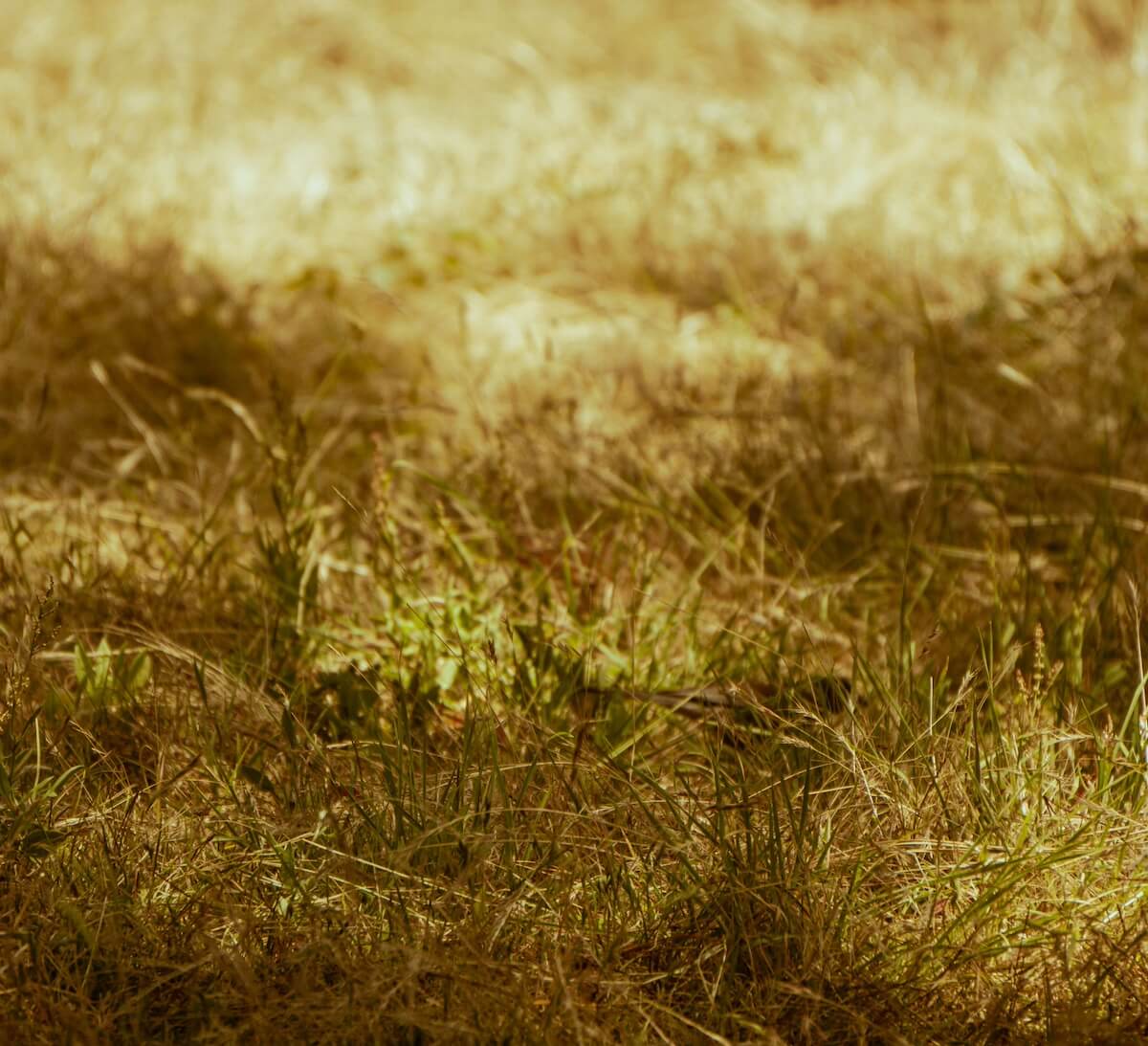
I only had to mow the lawn three times in seven weeks! (Actually, I didn’t have to mow it at all, because I still had a “kid” at home—and what are kids for if not mowing the lawn?)
I did have to move a few container plants into the shade. Otherwise, I would have had to water them (the horror!). But many of my plants grow in large containers—20 gallons (75 L) or more—the kind that take two people to lift. With that much potting mix around their roots, they can easily sail through a week or two of extreme heat without any extra watering.
Desperate watering
It was almost amusing to watch my neighbors rushing around with hoses and sprinklers, desperately trying to keep their lawns green when the grass was simply trying to enter its natural summer dormancy. Some watered every single day, yet their lawns were still browner than mine.
Of course, daily lawn watering was against the municipal watering restrictions where I live. But during such an exceptional drought, even the local authorities seemed unsure how to respond.
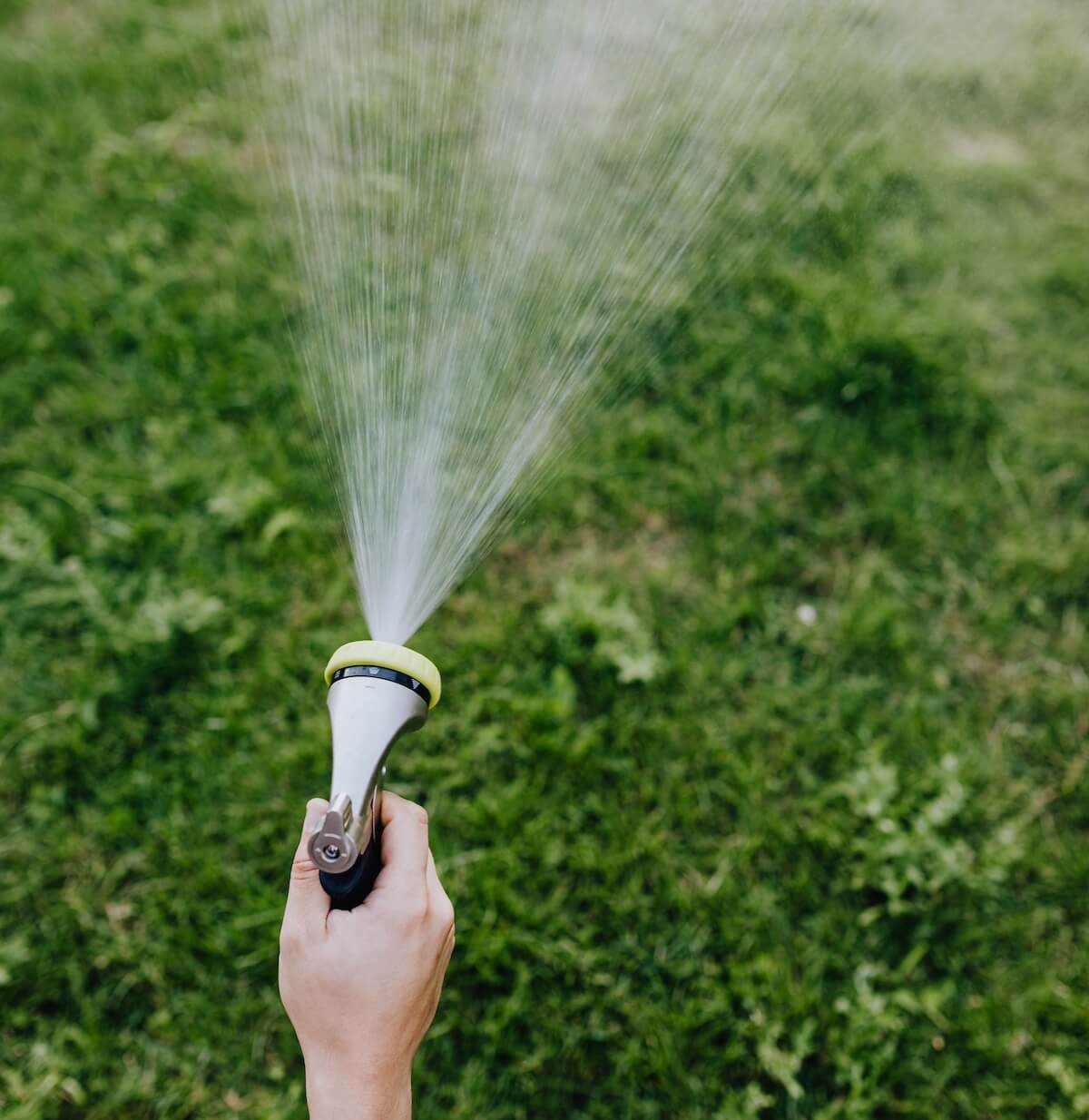
It’s not that Québec City was actually running out of water. The region normally receives rain every three or four days, and that year the abundant spring rains had left reservoirs well supplied. But like many municipalities that had long since adopted lawn-watering restrictions—partly to encourage water conservation and partly because that’s what modern cities do—Québec City found itself overwhelmed by an unprecedented situation and simply couldn’t enforce the rules consistently.
The ultimate test for the Laidback Gardener
The drought finally gave me the perfect opportunity to test just how effective mulch really is at conserving soil moisture.
I’m the only person in my neighborhood who keeps all of my garden beds covered with a thick layer of wood-chip mulch, and the results spoke for themselves. A few plants wilted slightly during the hottest weather, and some finished blooming a little earlier than usual, but that was about it. Even shrubs and perennials I had planted that spring came through the drought without any serious stress, thanks to the generous layer of mulch around them.
I’d give mulch 9 out of 10 for drought protection.
My neighbors, on the other hand, clearly preferred the look of bare soil in their flower beds and vegetable gardens. What a disaster! Even though many watered every day, their plants often looked stressed, and quite a few annuals died outright.
Bare soil—even with frequent watering—earns no more than 4 out of 10 in my book.
Yellow grass and acceptance?
Not everyone responded the way my neighbors did, though. In fact, I noticed that most homeowners simply let their lawns turn brown.
Maybe, after more than 20 years of public education, people have finally accepted that an established lawn naturally goes dormant during periods of heat and drought—and that it usually recovers once cooler, wetter weather returns. Or maybe they’re just as lazy as I am. Either way, the result is the same: the brown lawn greens up again in the fall, and then…
…you have to start mowing it all over again.
That summer of heat and drought was certainly an interesting experiment, but I hope things return to normal next year. Because if I wanted to spend every summer enduring weeks of scorching heat without a drop of rain, I’d move to Arizona…
As far as I’m concerned, the perfect summer is cool and rainy. I love the lush, green landscapes that are typical of eastern Canada, and I have no desire to spend the season dashing from my air-conditioned house to my air-conditioned car to my air-conditioned office, barely setting foot outdoors, as friends of mine in hotter climates often do.
Bring on the steady rain, dramatic thunderstorms, and the occasional burst of sunshine that make up a typical northeastern summer. But please—for the love of gardeners everywhere—someone hurry up and invent a lawn that mows itself… or at least a truly dwarf grass that never needs cutting.
Larry Hodgson has published thousands of articles and 65 books throughout his career, in both French and English. His son, Mathieu, has made it his mission to make his father’s writings accessible to the public. This article was originally published in Fleurs, plantes, jardins in December 2002.
0 comments on “One Hot Summer!”