
To get the most out of your larkspur and make them bountiful plants, sometimes all it takes is a few small changes. Larkspur (Delphinium sp.) are remarkable perennials. Hardy in zone 3 (USDA 3–7) and rarely affected by disease, it’s hard to believe they can flower so magnificently. However, in many cases, the plants tend to lose their lustre. They flower less, shrink, and sometimes even disappear. Here are five tips to prolong the life of your delphiniums.
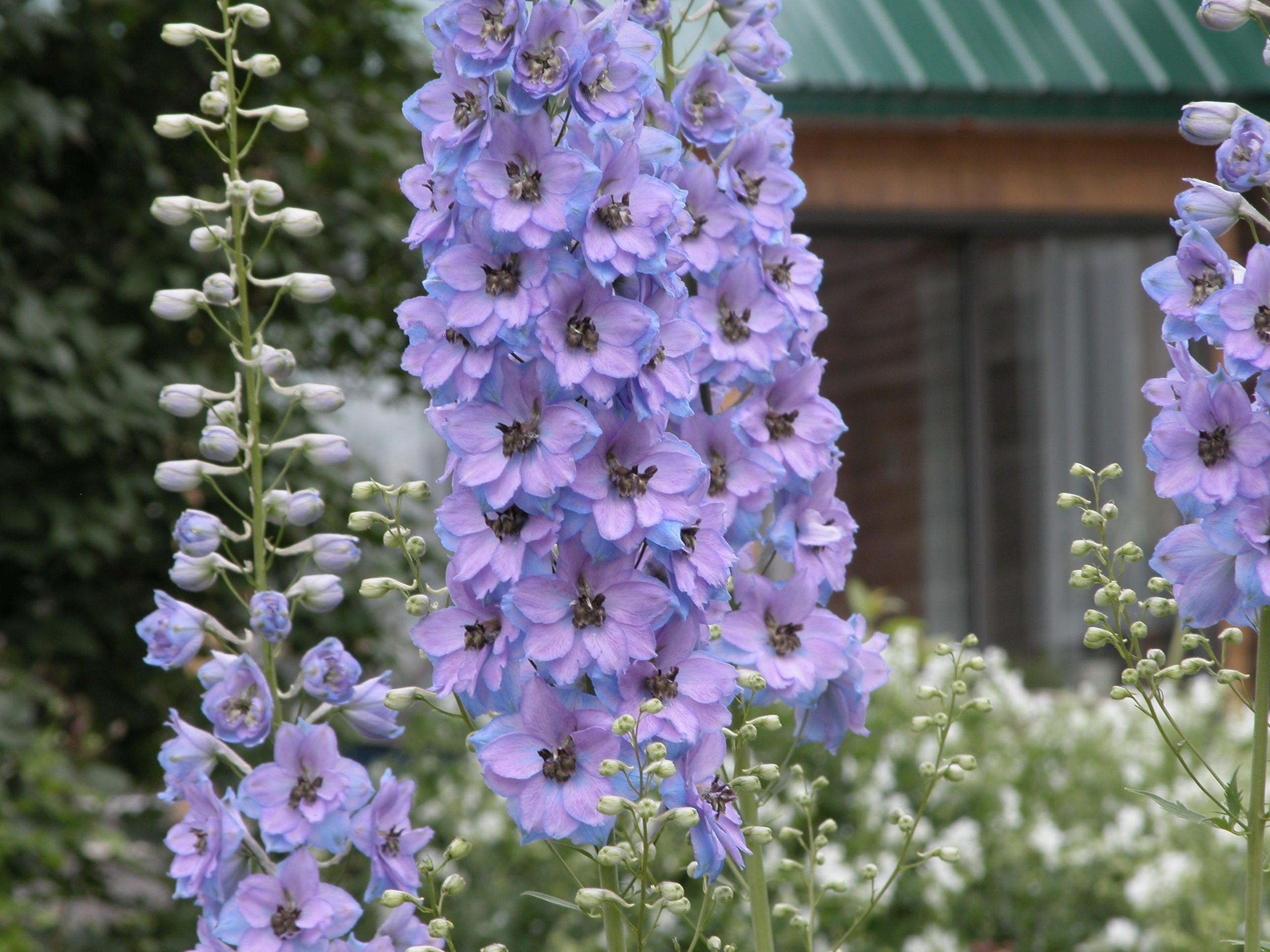
Secret #1: Rich, moist soil
Larkspur thrives in deep, fertile, and well-drained soil. While it will grow in other conditions, soil quality and richness make all the difference. A generous application of compost, worked deep into the soil at planting time, is ideal. Afterward, add more compost to the surface each spring. Finally, cover the soil with a thick layer of mulch to retain moisture and keep it cool.
Secret #2: Thinning
For plants that put on rapid growth in spring, a little thinning can make a big difference! By removing some stems and cutting them to the ground, you encourage the remaining ones to produce a spectacular bloom. Generally, remove one stem out of every four, keeping, of course, the strongest ones. This thinning also promotes good air circulation. It also reduces competition between stems for light. As a result, the stems are a little shorter and stronger!
Secret #3: Moral support
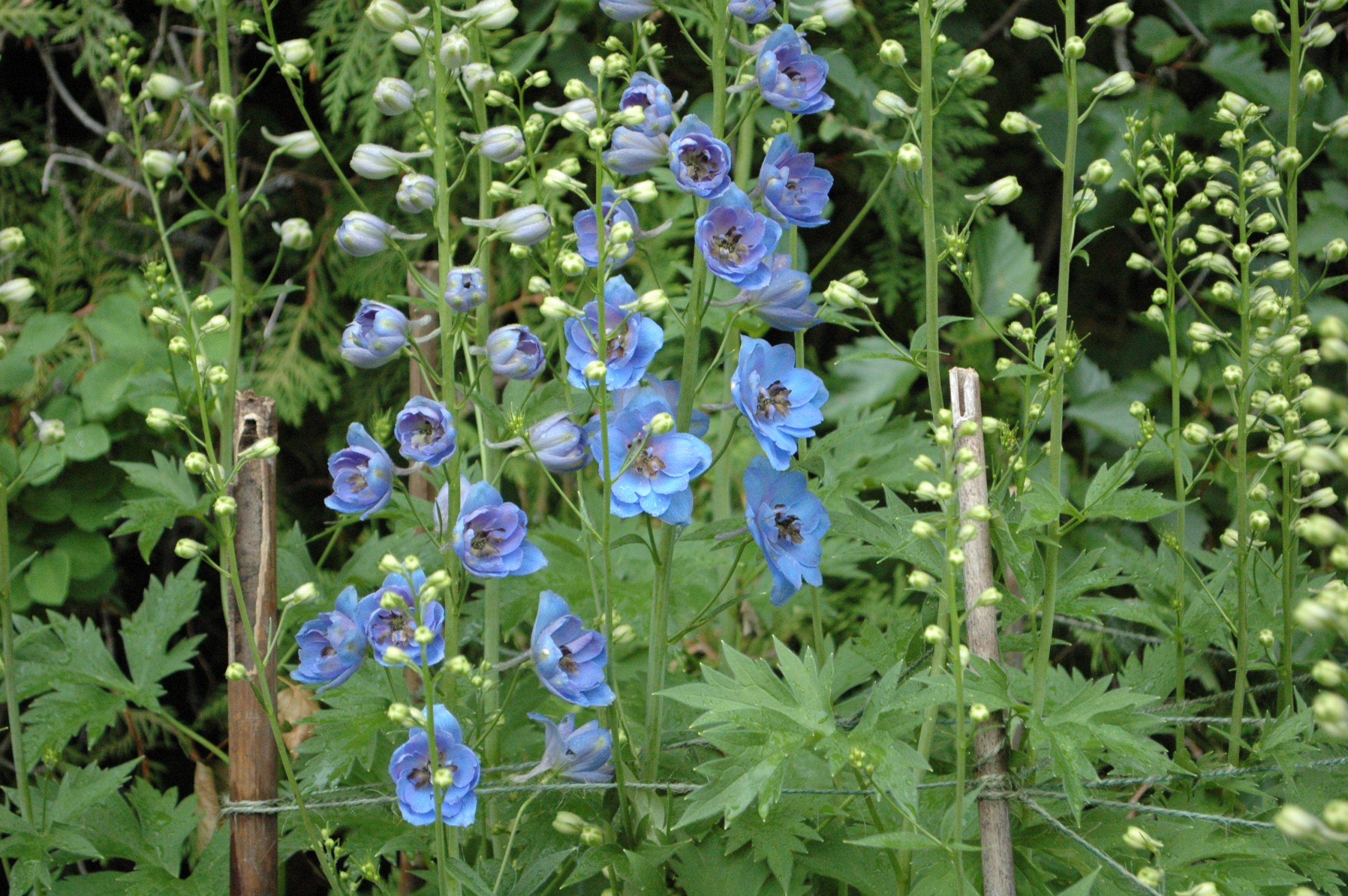
The major drawback of many delphinium cultivars is that their stems aren’t strong enough to support such large flower spikes. Therefore, stakes are essential to support the enormous flower clusters. Very long, thin stakes, about 1.5 metres in length (5 feet), should be used so they are inconspicuous. Install the stakes when the flower buds are visible but not yet open. To ensure perfect support, use several ties and continue tying as the plant grows.
Secret #4: A diet fit for a true gourmand
Just by looking at the enormous flowers of larkspur, you can tell that this plant appreciates regular fertilization. Regular fertilization encourages vigorous growth and abundant blooms. A liquid fertilizer application is recommended every two weeks. Begin as soon as the young shoots appear and continue until flowering time.
Secret no. 5: A little pinch
Regarding the flowering of delphiniums, you have two choices: Larger and for a shorter time OR smaller and more often.
The first option is for gardeners who want very large, fully open flower spikes. In this case, you’ll pinch them back. On the flower stalk of a delphinium, you’ll notice a dominant central spike. Looking closely, a little lower down, you’ll see two small lateral flower spikes, still developing. By pinching these secondary flower spikes, the main stalk will become larger!
Others prefer to leave these small flower stalks, resulting in a less abundant but longer-lasting bloom. Once the main stem has finished flowering, it is cut just above these smaller stalks, which then take over. This second flush of blooms is more understated, certainly, but still quite attractive.
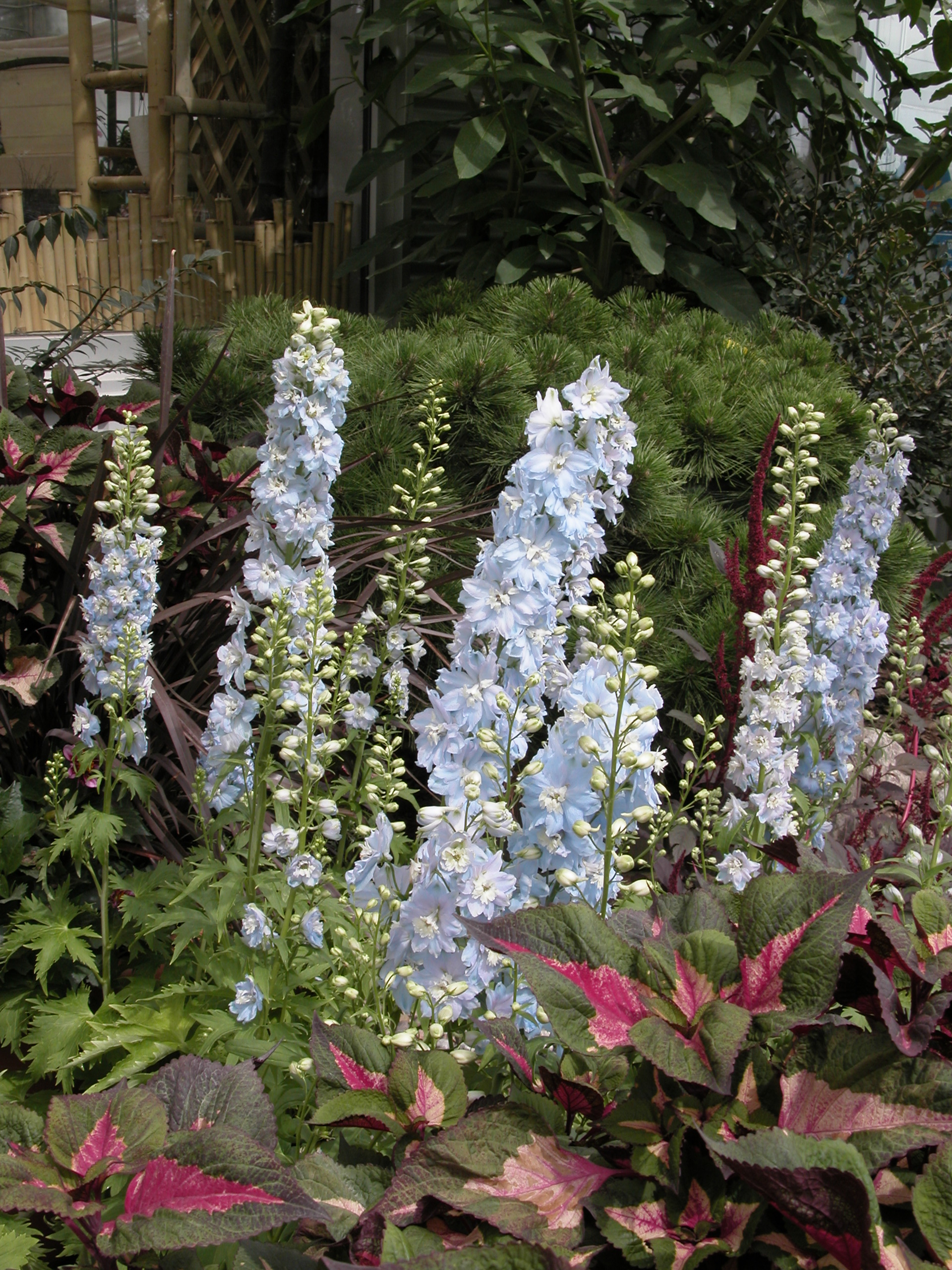
And that’s how to get satisfactory results with larkspur, which, we must admit, wouldn’t be in the top 10 best plants for a laidback gardener! Nevertheless, in gardens where larkspur are beautiful and spectacular, they make the envy of many gardeners. Nevertheless, when larkspur are at their best, they create a spectacular display and become the envy of many gardeners.
Good morning Julie, thanks for the info on delpheniums. I will start to put compost on them every year as I do tend to see a reduction in the amount of stems I get. I love the foliage plant in front of the photo with the caption “The magic fountain series…” Could you please let me know what it is, thank you, Susan