
In almost every video game, there’s that basic little enemy you come across right from the first level. The first time, you approach it with caution. By the end of the game, you’re being hit with about twenty of them at once without even batting an eyelid. The aphid is a bit like the Koopa of the vegetable patch: the quintessential run-of-the-mill villain, the one we love to hate, but who, in the end, isn’t really much of a problem!
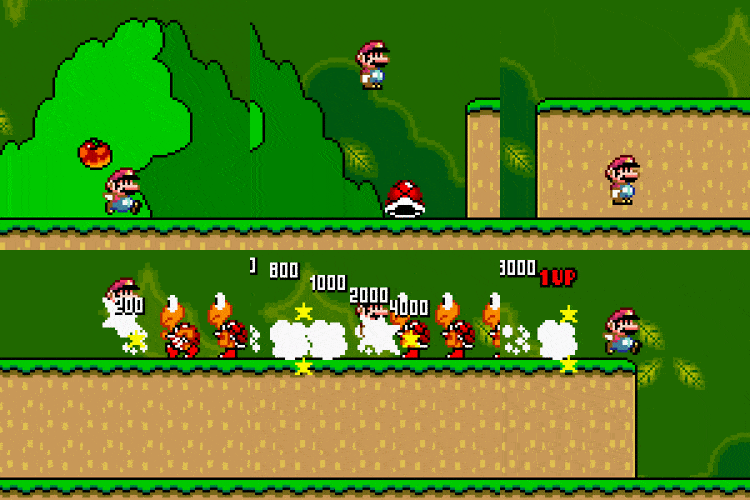
I’ll let you in on a secret: I’ve hardly ever waged a proper war on aphids in my garden (touch wood!). This gives me the luxury of finding them fascinating rather than resenting them. Because beneath its appearance as a tiny pest, the aphid conceals one of the strangest biological systems in the animal kingdom, and plays a role in the ecosystem that’s far greater than its mere reputation as a ‘pest’.
What exactly is an aphid?
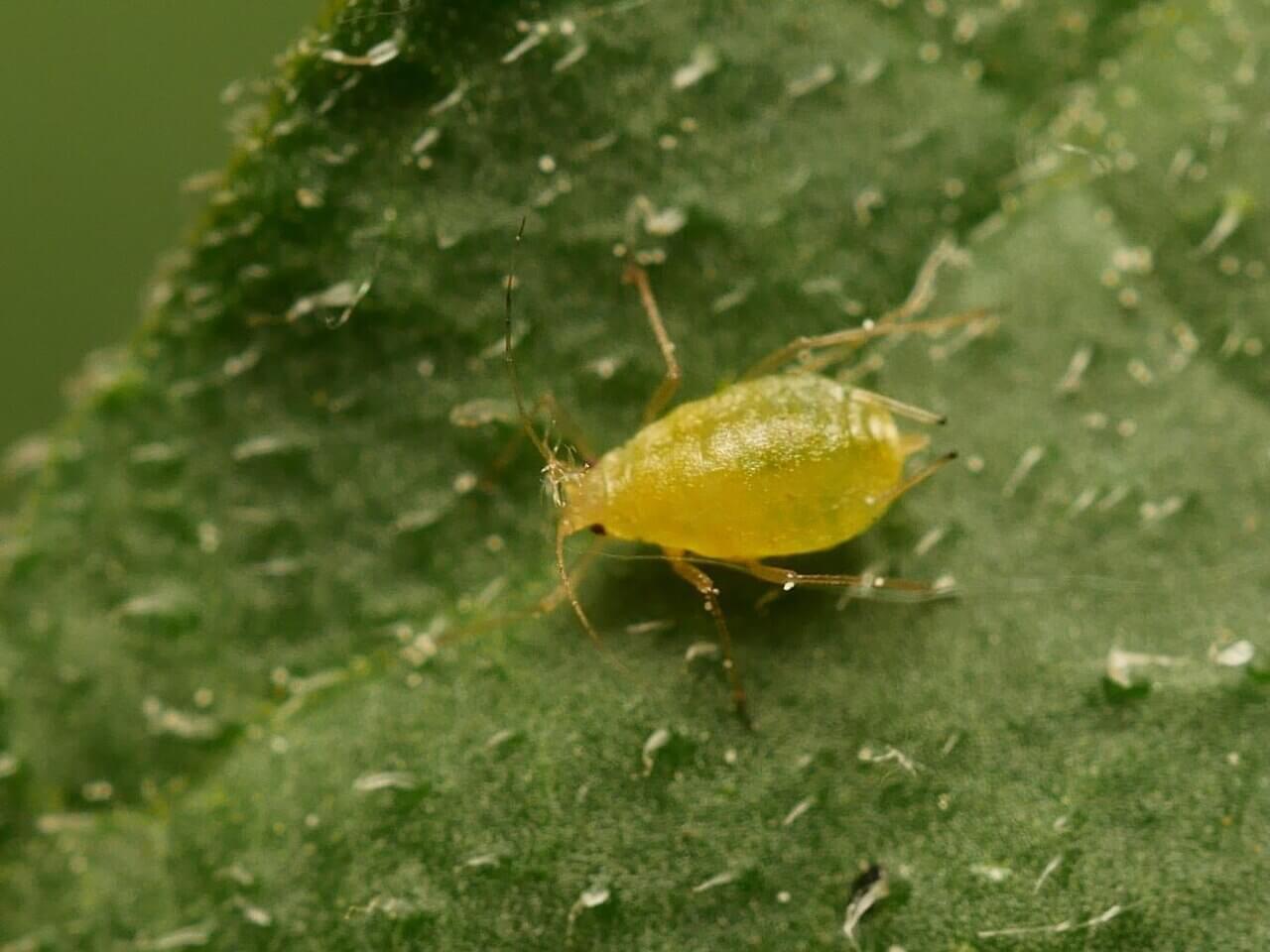
An aphid is a tiny, soft-bodied insect measuring about 1 to 7 mm (roughly 1/25 to 1/4 inch) long. It has a distinctive pear-shaped body and two small “tailpipes” on its rear end, called cornicles, which release defensive secretions. There are thousands of aphid species, in almost every color imaginable: green, pink, yellow, white, black, and more.
Do you seem to notice mostly black aphids in your garden? You’re not imagining it. Several common garden species really are black, including the black bean aphid (Aphis fabae), which is frequently found on beans, nasturtiums, and many other plants. On the other hand, there are also green species with excellent camouflage, such as the green peach aphid (Myzus persicae). Despite its name, this aphid is a generalist that feeds on a wide range of plants, making it just as common in home gardens—it simply tends to go unnoticed more often because it blends in so well.
Star Wars: Episode II – Attack of the Clones
Here’s where things get truly wild—borderline science fiction.
For much of the year, aphids don’t need males at all. Females reproduce by cloning themselves through a process called parthenogenesis. And instead of laying eggs, they give birth to fully formed, living young. That’s already unusual for an insect: not only are they skipping the eggs, but they’re producing daughters that are essentially identical copies of themselves. Admit it—that sounds a little like science fiction, doesn’t it?
But it gets even stranger. Aphid generations literally overlap. A female carries developing daughters inside her… and those daughters already contain the beginnings of their own daughters before they’re even born! It’s like a living Russian nesting doll: a pregnant aphid carrying a pregnant aphid, who is herself carrying the next generation.
This is one of the reasons aphid populations can explode so quickly. There’s no time wasted searching for a mate, and they can produce around 10 generations—or sometimes many more—in a single growing season. If the Stormtroopers had all been female aphids, maybe the Dark Side really would have won!
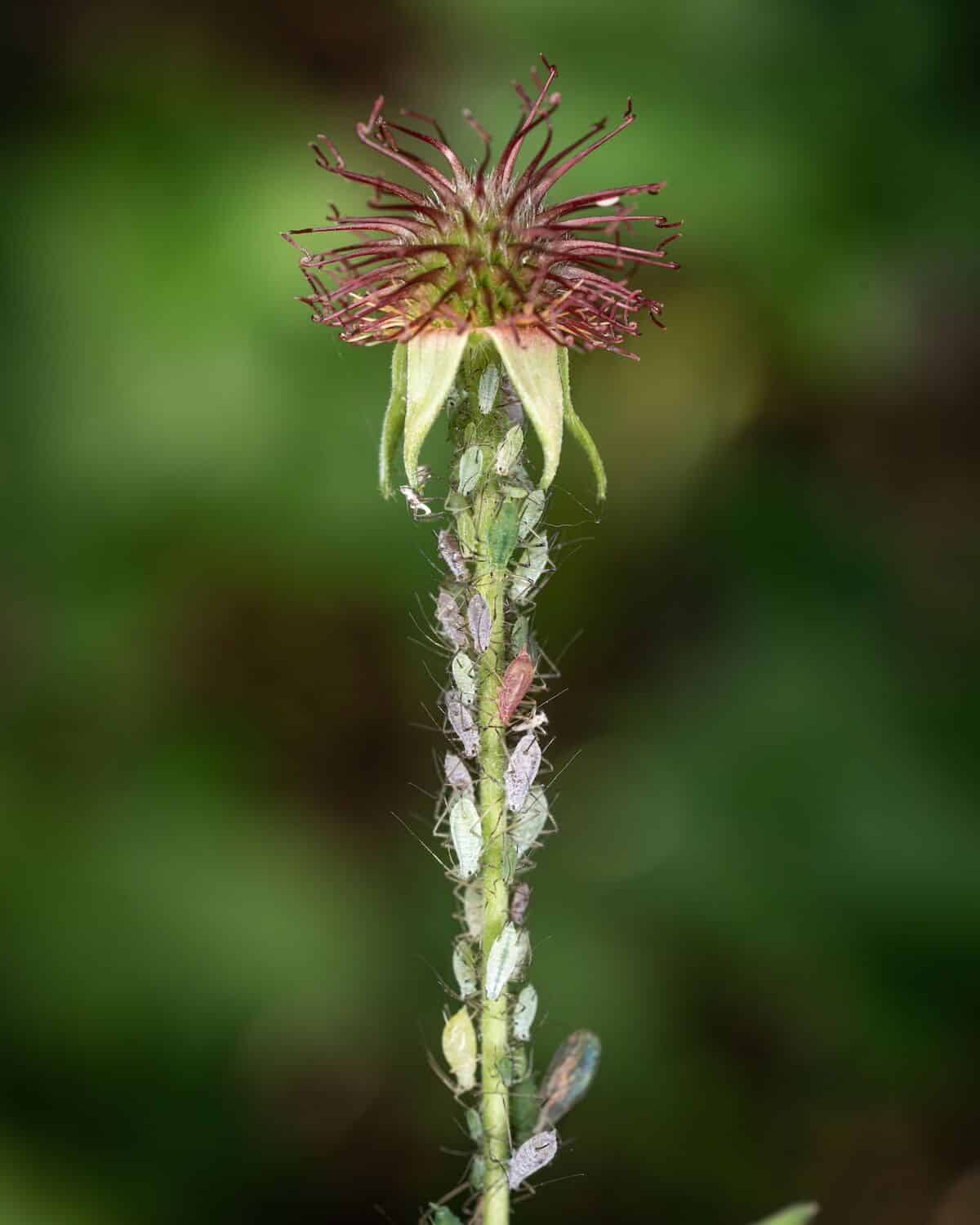
In the fall, as the days grow shorter, most aphid species switch strategies. They finally produce males and egg-laying females, which mate and produce cold-hardy eggs that survive the winter. That’s also why aphids indoors often never stop cloning themselves. Without the environmental cues of shorter days and colder temperatures, many species simply continue reproducing asexually year-round.
A real enemy of gardeners?
Now let’s talk about the damage aphids cause.
Aphids have piercing-sucking mouthparts. In other words, they feed by inserting a tiny straw directly into the plant’s phloem—the “sugar pipeline” that transports sugars throughout the plant. This sap is rich in sugar but relatively poor in protein. To get enough nutrients, an aphid has to consume enormous amounts of sap and excrete the excess sugar.
Instead of producing solid droppings, aphids excrete a clear, sticky substance called honeydew. So yes, it’s essentially aphid poop… except it’s syrup!
That honeydew is exactly what sooty mold is waiting for. The spores of this black fungus are floating around almost everywhere in the air, and they readily colonize sugary surfaces. Sooty mold doesn’t infect the plant itself, but it forms a dark coating that blocks sunlight and reduces photosynthesis. So there are really two separate problems: the aphids stealing the plant’s sap, and the fungus taking advantage of the sugary mess they leave behind.
What about those curled and distorted leaves?
As aphids feed, they inject a small amount of saliva into young plant tissues. Compounds in that saliva interfere with the normal development of cells that are still growing. The result? New leaves emerge twisted, curled, puckered, or blistered.
On top of that, aphids are among the most efficient insect vectors of plant viruses, carrying diseases from one plant to another. When you add it all up, it’s easy to see why aphids have earned such a bad reputation.
That said, a handful of aphids on an otherwise healthy, vigorous plant is rarely a disaster. It’s only when their numbers explode that they become a real problem.
An open-air buffet
And this is where aphids become one of the garden’s most important supporting characters.
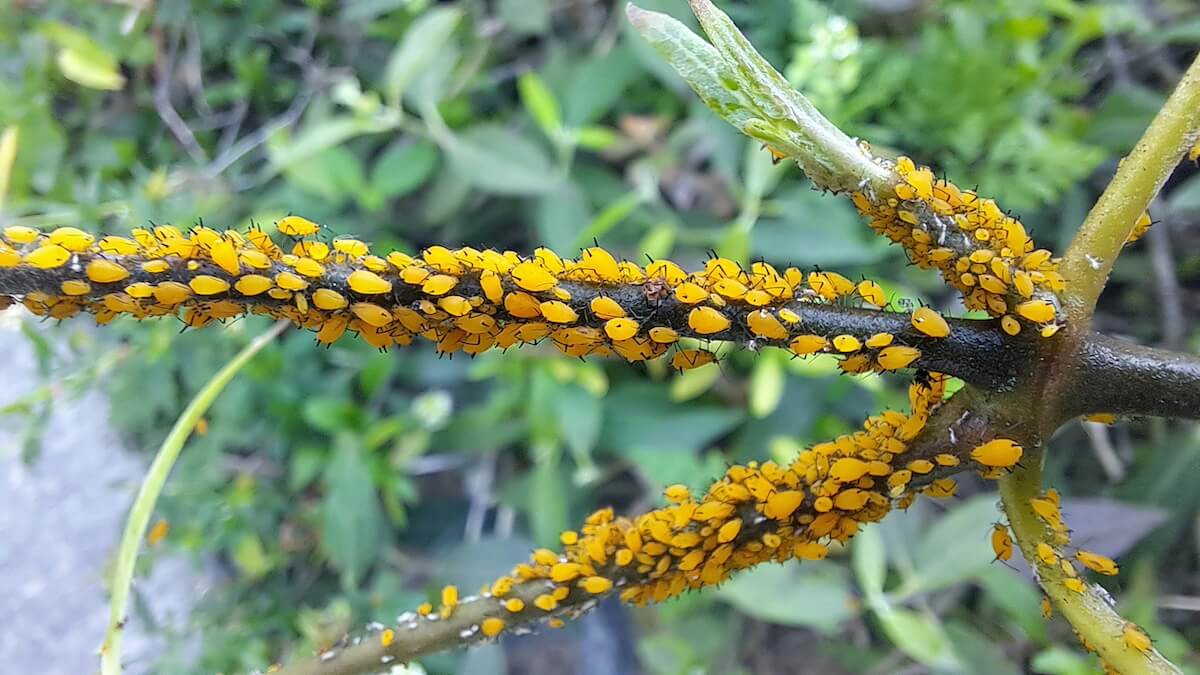
Soft-bodied, slow-moving, plump, and often present in huge numbers, aphids are the main course for an astonishing variety of predators.
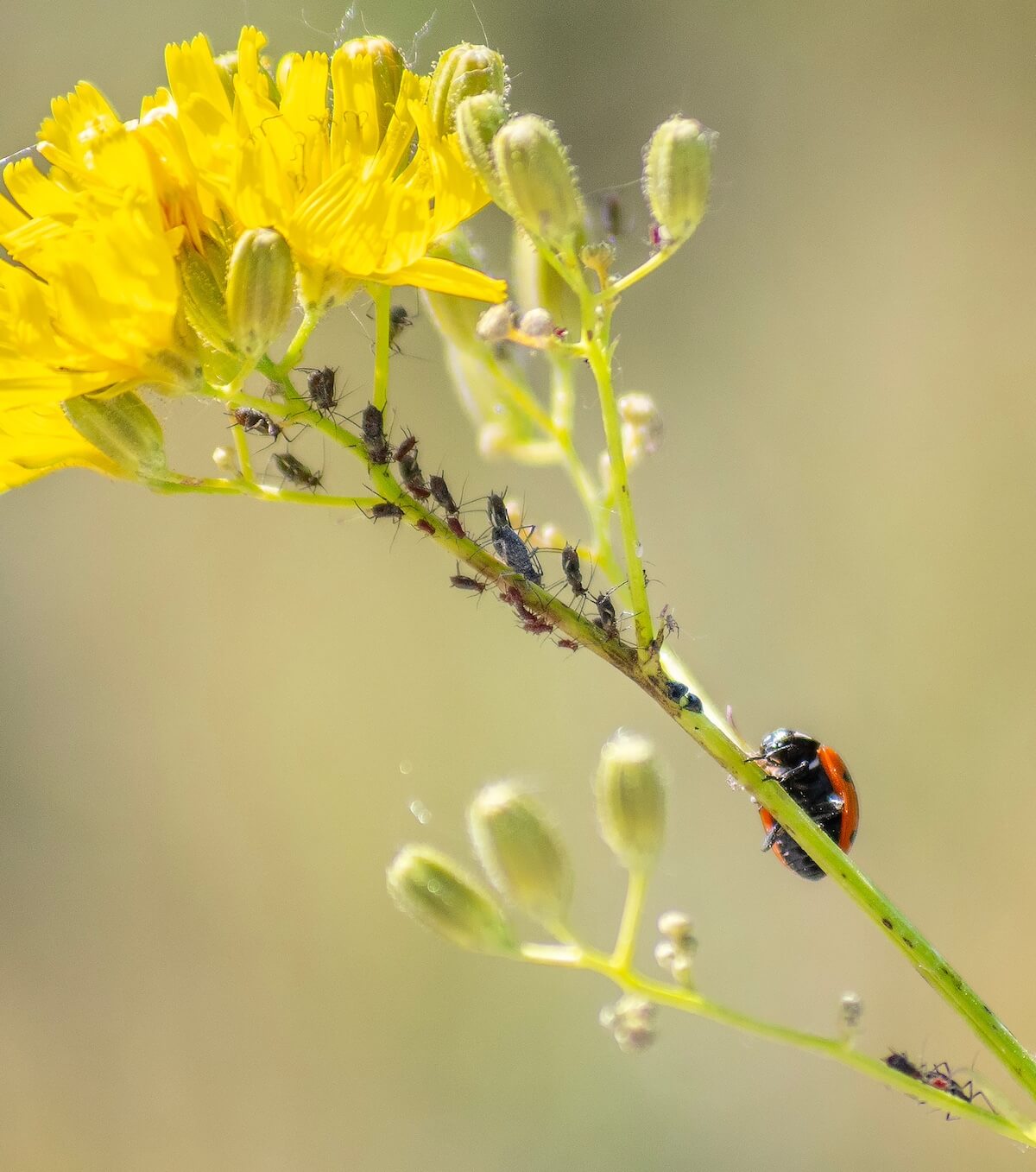
Among the first dinner guests are lady beetles. Both the adults and their alligator-like larvae can devour dozens of aphids a day. Then there are the larvae of green lacewings, appropriately nicknamed “aphid lions.” Some species even disguise themselves by carrying the dried skins of their victims on their backs. Charming, isn’t it?
Hoverfly larvae are also voracious aphid predators. Their parents are those harmless flies that mimic bees or wasps—and, as a bonus, they’re excellent pollinators.
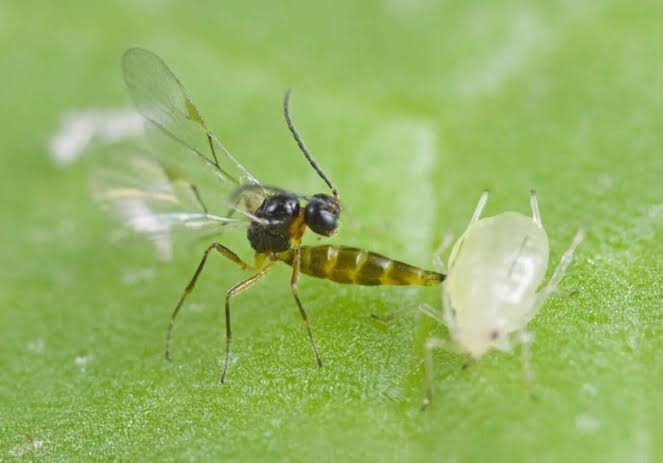
And then there’s my personal favorite, the undisputed champion of creepy: the tiny parasitoid wasps of the genus Aphidius. A female lays a single egg inside a perfectly healthy, living aphid. The developing larva slowly eats the aphid from the inside out until the victim swells and hardens into a tan, papery shell known as an “aphid mummy.” The wasp completes its development inside this dead aphid, then emerges by neatly cutting a perfectly round hole through the shell.
So if you ever spot swollen, tan, motionless aphids clinging to a stem, congratulations—you’re watching a tiny horror movie unfold in your garden.
Another role
But feeding predators directly isn’t the aphid’s only role in the ecosystem. That honeydew—the sugary syrup they leave behind—supports a whole community of other creatures. Adult wasps and hoverflies drink it for energy, some bees collect it to make a dark, flavorful honey known as honeydew honey, and countless other insects rely on it as a source of sugar.
Those springtime aphid colonies also provide food for the season’s first wave of beneficial predators. Once established, these predators stick around and help keep other, more troublesome pests under control. Like I said, aphids are a bit like the first enemy you meet in a video game: they’re everywhere, but they’re rarely the real threat.
There’s one important character I haven’t mentioned yet—one that loves honeydew so much it actually “farms” aphids the way a rancher tends cattle: ants.
But that’s a story for next week!
Do we really need to go to war?
As a self-confessed lazy gardener, my advice is simple: most of the time, there’s no need to bring out the big guns. A good spray of water washes away the aphids and, above all, a bit of patience gives the predators time to arrive for the feast (if you have a well-balanced ecosystem, of course!).
In fact, we’ve already tried the “imported super-predator” approach in Canada, and it turned into a cautionary tale. The multicoloured Asian lady beetle (Harmonia axyridis) was intentionally introduced to North America as a biological control agent against aphids. It is now widespread across much of Canada and the United States.
Larger, hungrier, and more prolific than many of our native lady beetles, it has contributed to declines in some native species by outcompeting them for food and even eating their eggs and larvae. It’s also the same species that invades homes by the thousands each fall, leaving behind a foul-smelling yellow-orange defensive fluid that can stain walls and window frames—and yes, it can even give a surprisingly painful nip if handled.
The lesson? Importing a hungry insect to solve a problem caused by another hungry insect isn’t always a great idea. A much better long-term strategy is to create habitat for the beneficial predators that already belong in your local ecosystem.
So… is the aphid really the bad guy?
In the end, aphids aren’t really the monsters they’re made out to be. They’re fascinating little insects that clone themselves, turn plant sap into syrup, and help feed a large share of the beneficial insects in your yard. We’ve labeled them as “pests” for so long that we rarely stop to appreciate them—and that’s a shame, because besides being rather cute, they sit at the center of a remarkable ecological drama.
So the next time you spot an aphid colony, before reaching for the insecticidal soap, take a minute to look more closely. You might see lady beetle larvae on the hunt, aphid mummies left behind by parasitoid wasps, shed skins clinging to the stems, and all sorts of other tiny stories unfolding. It’s well worth the look.
And if, while you’re watching, you notice a line of ants standing guard over your aphids, join me next week. The relationship between ants and aphids is one of the most fascinating partnerships in nature—and trust me, it’s worthy of a novel.
The point about ladybird larvae clearing an aphid colony if you let them establish is the part most pest guides skip. Good reframing.
My main beef with aphids is how prolifically they colonize my houseplants. I keep trying to fight them with soap & water, but they always bounce back — and lure ants into the house as well. I’m weary of washing sticky honeydew off my shelves and windowsills or caving and throwing out beloved plants!
Ew! I was aware of their parthenogenesis, but did not know that they are born pregnant.
They are also a vital protein source for small birds such as hummingbirds and chickadees. My reason for keeping them around.