
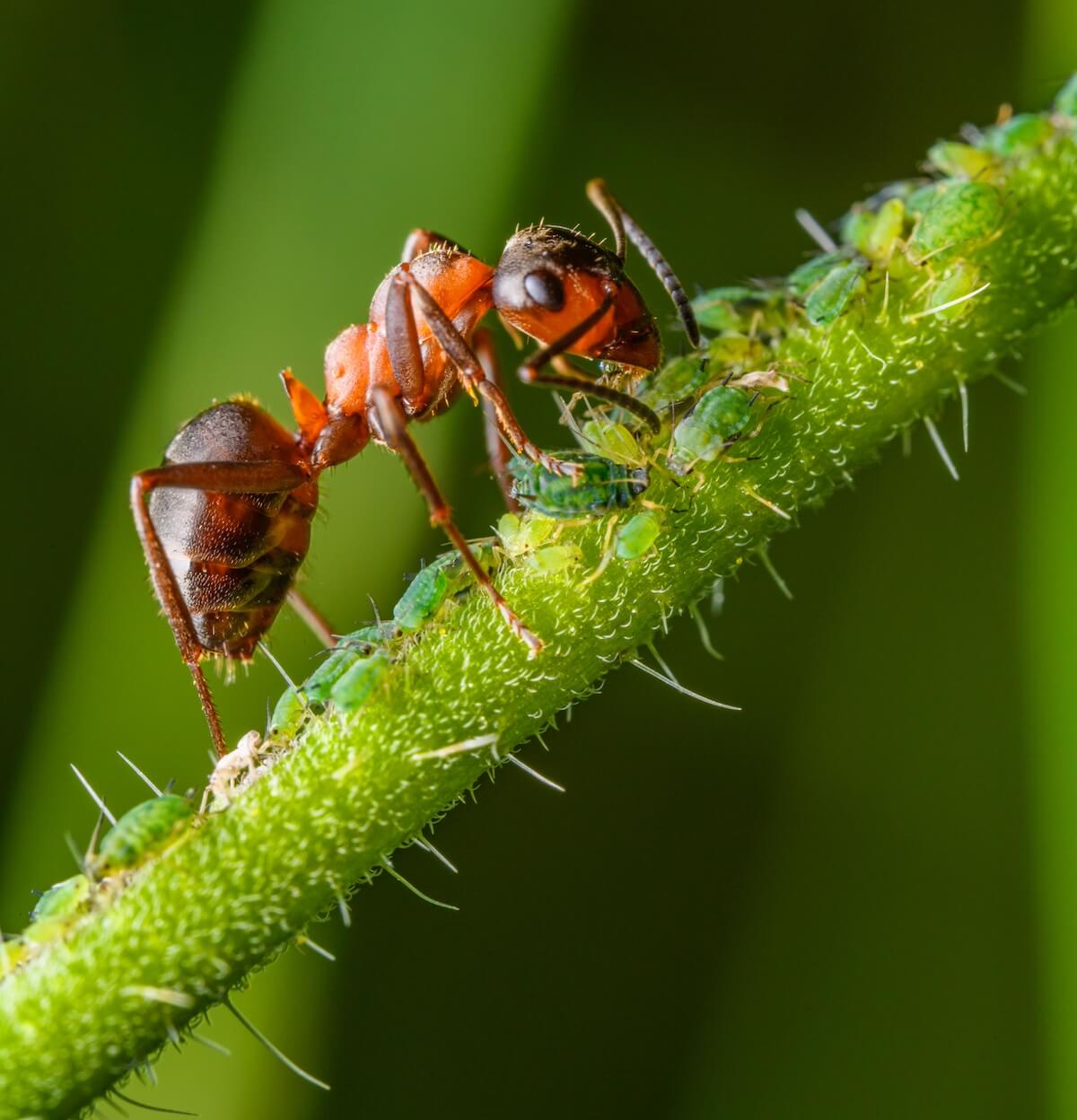
Last week, I left you with a teaser: that little line of ants standing guard around a colony of aphids. I promised you that the rest of the story was worth a novel. So, settle in, because what looks like a truce between two bugs is actually a farm. Yes, yes: the ants raise aphids much like we raise cows. And just wait until you see how far they take this concept.
A city at your feet
Before we talk about ant farming, we need to understand the ant queen. An ant colony isn’t just a bunch of insects going about their own business. It’s what’s called a superorganism: a colony that functions as a single living being, where each individual plays a role similar to that of a cell in a body. The queen handles reproduction, while the workers keep the colony running: digging, cleaning, feeding the larvae, foraging for food, and defending the nest. Some even specialize in very specific tasks.
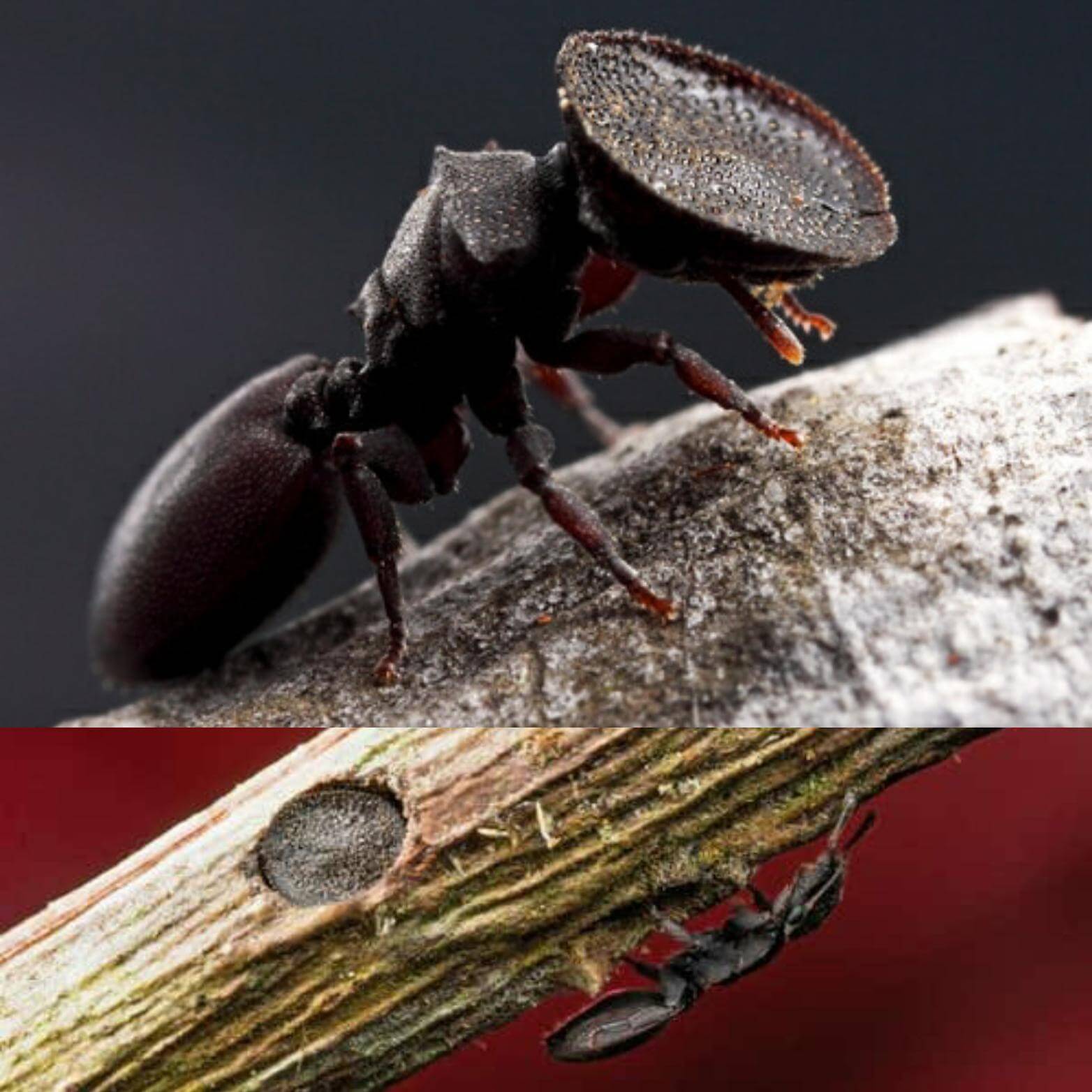
This ant (Cephalotes varians), found in the Caribbean and Florida, has a very specific role within its colony. Can you guess what it is? Its flat head serves as… a door! And it keeps predators from entering the anthill. Its entire life is devoted to its job as a doorman—it’s a very specific role!
This whole community communicates via pheromones (those famous chemical trails they follow in single file) and shares food mouth-to-mouth. In short, it’s a surprisingly well-organized little city. And like any city, it needs a reliable pantry. That’s where our aphids come in.
Aphid control
Do you remember honeydew—that sweet, syrupy excretion that aphids secrete while gorging themselves on sap? For many ants, it’s pure nectar. And rather than waiting for it to fall on its own, they’ve come up with a better solution: they “milk” their aphids. By gently stroking the aphid with its antennae, the ant coaxes it into releasing a droplet of honeydew, which it quickly laps up. A six-legged, two-millimeter-long dairy cow!
In exchange for this syrup, the aphids receive five-star service. The ants fiercely defend them against ladybugs, lacewings, and parasitoid wasps (in short, all the predators I told you about last week). They keep them clean, move them to juicier stems when the plant hosting their little farm runs out of food, and even go so far as to bring their eggs back into the anthill for the winter, before bringing them out again when spring arrives. The result: a well-protected herd thrives and reproduces more successfully.
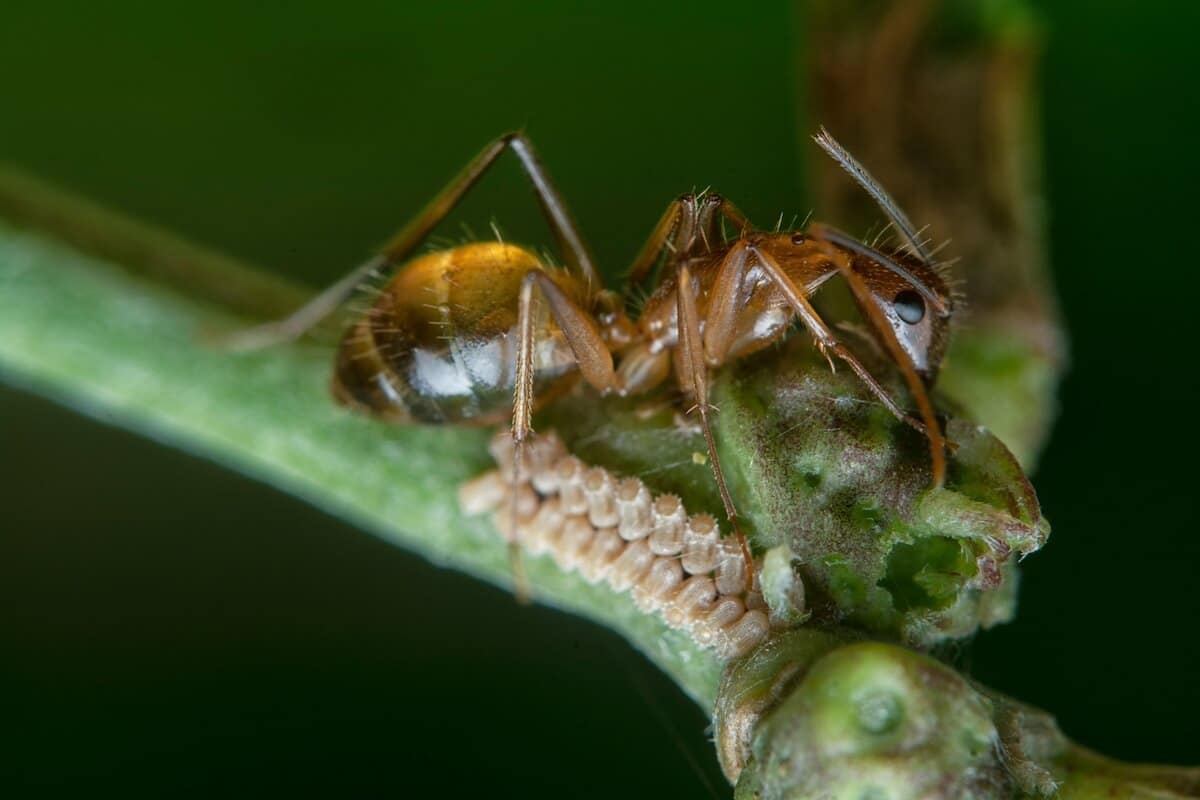
And this isn’t just something that happens in faraway places. Here in Canada, our three most common ant genera—Formica, Lasius, and Myrmica—are all known to “farm” aphids. Some Lasius species even raise root-feeding aphids underground, completely out of sight. There could be a tiny honeydew dairy farm operating beneath your flower beds right now!
Hostages or residents?
Okay. So far, it sounds like a nice partnership. Except that ants, like any good breeder, don’t like to see their livestock run away. And that’s where things get a little complicated.
When an aphid grows wings to go found a colony elsewhere, the ants sometimes just rip them off! Others secrete substances that outright sabotage wing development. And the craziest part: researchers have shown that ants of the genus Lasius (cousins of the ones we have here) leave chemical trails in their wake that “sedate” the aphids and slow their movement by about 30%. Translation: an aphid trying to make a run for it ends up a bit paralyzed, unable to get very far. And if the swarm gets too big? The ants eat a few of them, and that’s the end of it. We may milk our cows, but we don’t turn our noses up at a good burger—well, for ants, it’s the same thing!
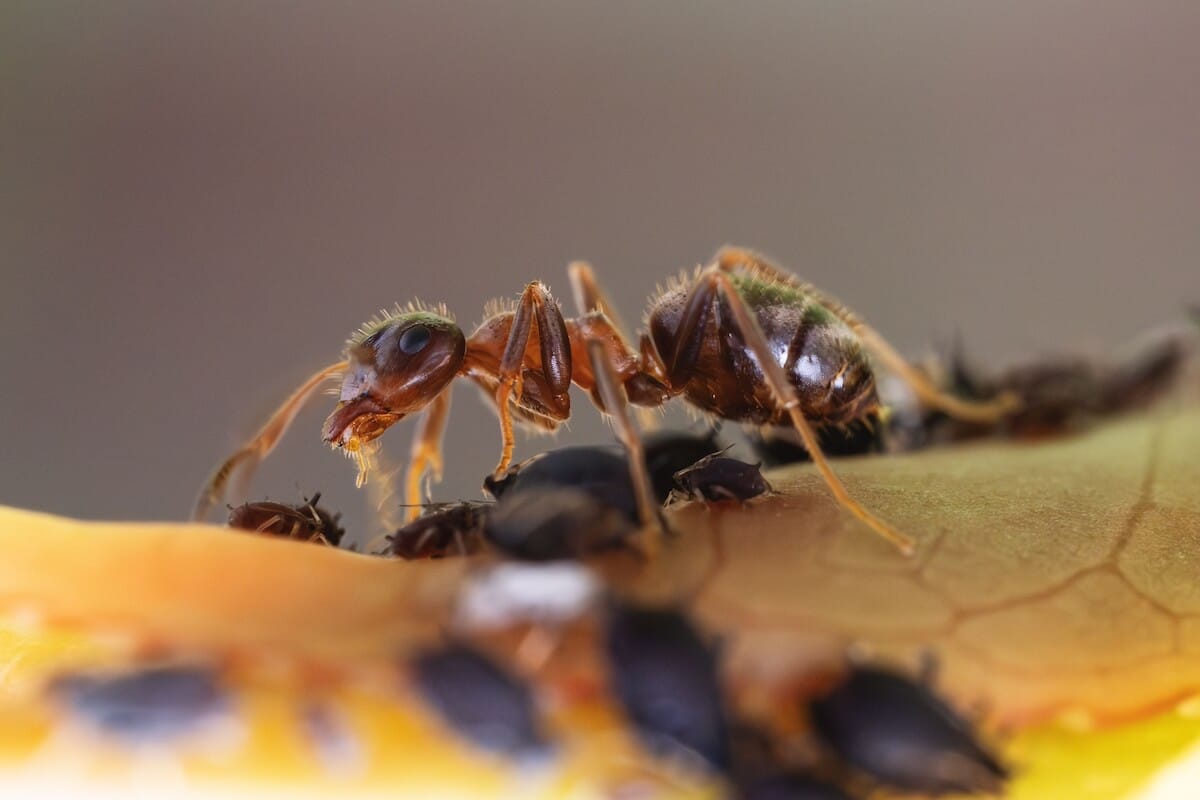
Put that way, it sounds like exploitation. But before we cry wolf, let’s ask ourselves a quick question: is it really that different from what we do? We raise chickens in a pen, we collect their eggs, we manage the size of the flock, and we don’t exactly let them go on a trip…! Ants do the same thing, on their own scale. It’s not cruelty—it’s agriculture. And honestly, I find it absolutely fascinating to see another species engage in animal husbandry.
In the garden, is there cause for concern?
Rest assured right away: ants don’t attack your plants. They don’t nibble on your leaves or hinder their growth (if you see them on your peonies, for example, it’s the sweet sap from the buds they’re after, not your flowers). A line of ants climbing up a stem is often a sign that an aphid colony is hiding down the line. It’s nothing dramatic in itself, but it’s worth taking a quick look to make sure the colony isn’t getting too big.
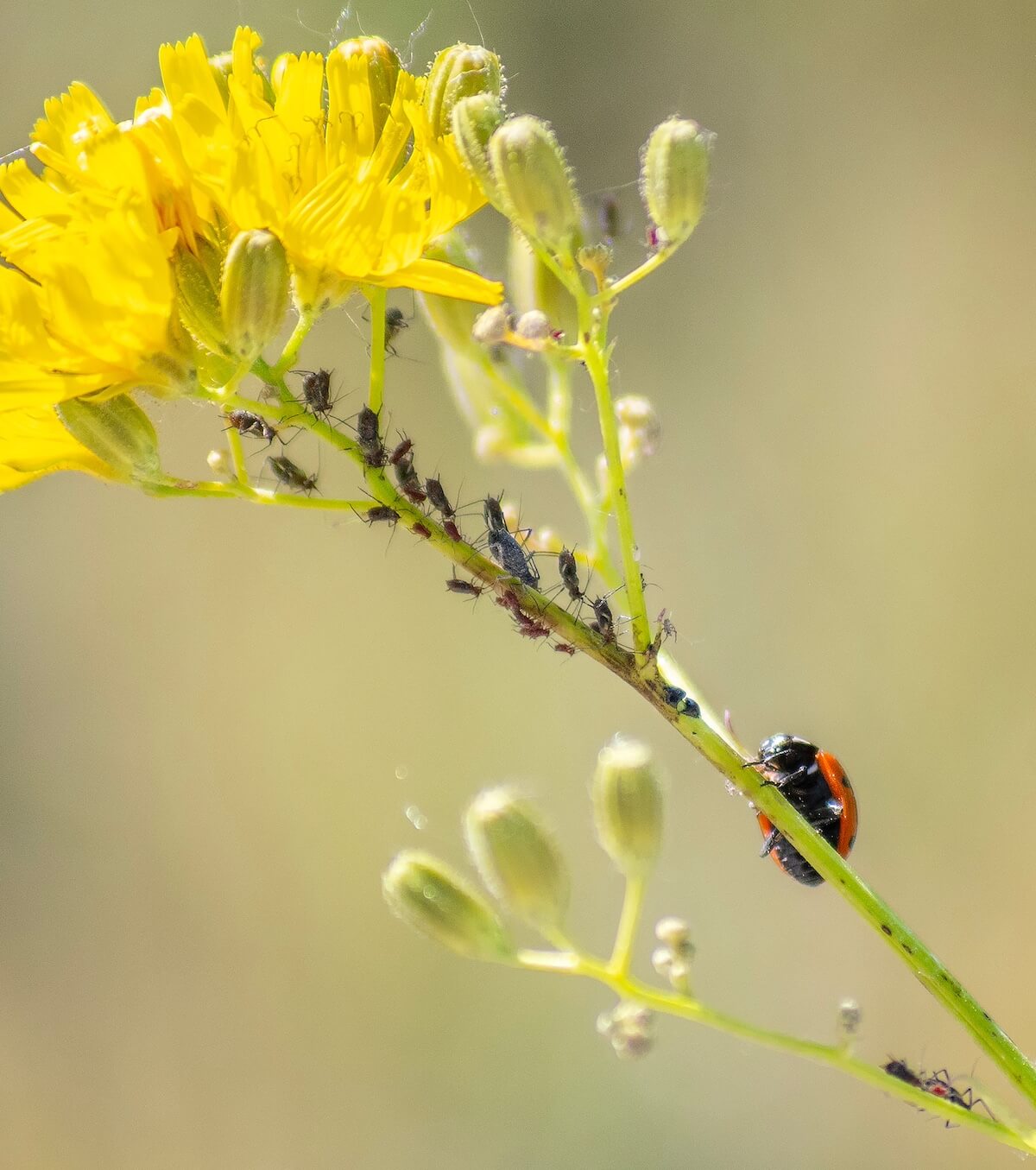
But does that mean you should declare war on them? Most of the time, no. Instead, remember what I told you last week: a little patience, and the predators will take care of it. The catch is that as long as the ants are standing guard, ladybugs and other predators have a hard time getting close to the aphid colony. So if an aphid colony really gets out of hand, it’s by dealing with the ants—that close-quarters guard—that you clear the way for the predators.
But we mustn’t forget that these tiny little ants do us a world of good. They aerate the soil by digging their tunnels, much like earthworms. They prey on a host of other unwanted insects. They help break down organic matter. And get this: they’re the ones who “plant” many of our woodland flowers! The seeds of wood anemones, bloodroot, and violets have a small, fat-rich appendage that ants love. The ants carry the seed back to their nest, eat the snack, and then leave the seed intact among their highly fertile waste. A free move to prime growing soil!
So, who’s calling the shots?
So here’s the famous novel: a story of tiny farmers, milk cows stuffed with syrup, residents with clipped wings, and flowers planted on the sly. If you see a line of busy ants on a stem, take a minute to watch the little farm bustling with activity. Watch them tap their aphids, stand guard, and patrol their herd. That’s what gardening is all about, too!
0 comments on “Ants and Aphids: Just Like on a Farm”